
Wolves vs Fulham: Tactical Analysis of 1-1 Draw
Wolves and Fulham shared a 1-1 draw at Molineux Stadium in a match that pitted two very different game models against each other. Wolves, under Rob Edwards, leaned into a compact, transition-heavy 4-2-3-1 with just 31% possession, while Marco Silva’s Fulham dominated the ball with 69% but could not convert their territorial control into a decisive advantage. The scoreline mirrored the underlying numbers: Wolves generated 1.4 xG from 11 shots, Fulham 1.53 xG from 13 attempts, with both sides creating enough to argue they might have edged it but neither doing quite enough to break the deadlock after the interval.
I. Executive Summary
The game’s tactical story was defined early. Wolves accepted long spells without the ball, built on a disciplined back four and double pivot, and looked to attack quickly through the lines. Fulham, mirroring the 4-2-3-1 structure, used their superior technical base and passing to pin Wolves back, circulating through Sasa Lukic and Sander Berge and pushing both full-backs high. Yet the difference lay in the speed and verticality of Wolves’ counters versus Fulham’s more patient, probing approach. Both approaches produced one goal apiece before half-time; the second half became a chess match of adjustments and substitutions without a decisive breakthrough.
II. Scoring Sequence & Disciplinary Log
Goal verification (2 goals, matching 1-1 final score):
- 25' M. Mane (Wolves) — assisted by Hwang Hee-Chan
- 45' A. Robinson (Fulham) — Penalty (no assist)
Chronology with VAR and cards:
At 25', Wolves struck first. M. Mane arrived from midfield to finish a transition move, fed by Hwang Hee-Chan. The Korean’s timing between the lines and the speed of the release exploited Fulham’s advanced full-backs, with Mane attacking the inside channel to put Wolves 1-0 up.
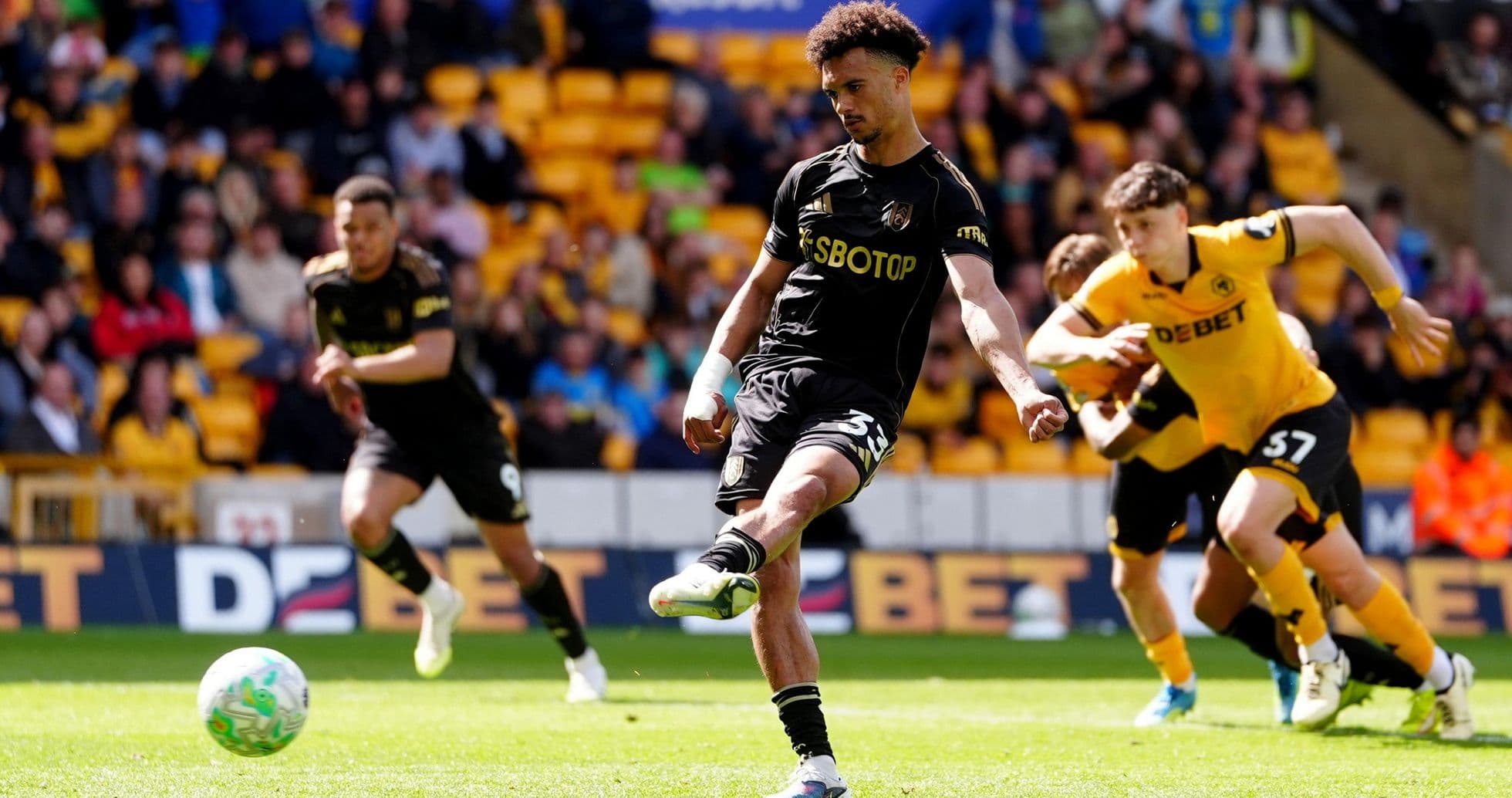
Fulham’s response crystallised on the stroke of half-time. In the 45th minute, a penalty was awarded, and at 45+1' a VAR check — “Penalty confirmed” involving Timothy Castagne — upheld the decision. A. Robinson then converted the spot-kick in the 45th minute, levelling the match at 1-1 and changing the half-time dynamic from Wolves protecting a lead to both sides reset at parity.
Disciplinary log (cards):
- There was a single booking in the match, for Wolves:
- 90+4' Andre (Wolves) — Foul
Card count lock: Wolves 1, Fulham 0, Total 1. No other cards occurred, and there were no red cards.
III. Tactical Breakdown & Personnel
Both sides lined up in a 4-2-3-1, but the interpretations were starkly different.
Wolves’ structure was conservative without the ball. J. Sa in goal sat behind a back four of D. M. Wolfe, L. Krejci, S. Bueno and Y. Mosquera. In front, Joao Gomes and Andre formed a hard-working double pivot, with R. Gomes and M. Mane as the advanced interiors, Hwang Hee-Chan drifting inside off the flank, and A. Armstrong as the lone forward. The 20 fouls and late booking for Andre reflect how much Wolves relied on disrupting Fulham’s rhythm in central zones.
The defensive plan was clear: compress the middle, show Fulham wide, and then spring quickly once possession was regained. Wolves took just 250 total passes, completing 173 (69%), but they turned those limited phases on the ball into relatively efficient attacking moments: 11 total shots, 7 from inside the box and 3 on target. Their 1.4 xG underscores that their chances, while fewer in volume than Fulham’s, were of reasonable quality. M. Mane’s goal epitomised this: a fast, direct progression after a regain, with Hwang Hee-Chan exploiting space between Fulham’s midfield and defence.
J. Sa’s role was more about managing space than shot-stopping. He made 4 saves, but with a goals prevented figure of -0.64, the data suggests he marginally underperformed the xG on target he faced, particularly around the penalty and close-range efforts. Still, Wolves’ low block and aggressive midfield screen limited Fulham to 13 shots, only 5 of which were on target.
Fulham, by contrast, were built to control. B. Leno anchored a back four of Timothy Castagne, I. Diop, C. Bassey and A. Robinson. Lukic and Berge formed a double pivot, with O. Bobb, E. Smith Rowe and A. Iwobi supporting Rodrigo Muniz. Their 580 total passes, 501 accurate (86%), and 69% possession show a side intent on dominating the ball and territory. They produced 13 shots (8 inside the box, 5 on target) and 1.53 xG, a slightly higher attacking output than Wolves but not enough to tilt the scoreline.
The key tactical tension was Fulham’s high full-backs versus Wolves’ counters. Robinson, who scored the penalty, repeatedly pushed on, giving Fulham width and an extra man in the final third but leaving space behind for Wolves to attack. Castagne’s involvement in the VAR-confirmed penalty incident at 45+1' also highlighted Fulham’s emphasis on getting both full-backs into decisive areas.
Substitutions in the second half were largely like-for-like and aimed at refreshing energy rather than changing shape. For Fulham:
- 46' Kevin (IN) came on for S. Berge (OUT)
- 67' R. Jimenez (IN) came on for Rodrigo Muniz (OUT)
- 67' J. King (IN) came on for A. Iwobi (OUT)
- 79' H. Wilson (IN) came on for E. Smith Rowe (OUT)
- 79' S. Chukwueze (IN) came on for O. Bobb (OUT)
These moves injected more direct running and penalty-box presence, especially with R. Jimenez and S. Chukwueze, but Wolves’ compactness held.
For Wolves:
- 72' T. Arokodare (IN) came on for A. Armstrong (OUT)
- 79' J. Bellegarde (IN) came on for Hwang Hee-Chan (OUT)
- 85' H. Bueno (IN) came on for D. M. Wolfe (OUT)
- 85' Pedro Lima (IN) came on for R. Gomes (OUT)
Edwards’ changes were about preserving intensity in the press and legs in the full-back areas, keeping the defensive block intact while maintaining a counterthreat. The late booking for Andre at 90+4' for Foul underlined Wolves’ commitment to see out the draw through aggressive midfield challenges.
IV. The Statistical Verdict
The numbers support the narrative of a balanced contest shaped by contrasting styles. Fulham’s 69% possession, 580 passes (501 accurate, 86%), and 13 shots translated into 1.53 xG — marginally superior to Wolves’ 1.4 xG from 11 shots. Yet Wolves, with only 250 passes (173 accurate, 69%) and 31% possession, managed to create nearly equivalent chance quality through efficient transitions and central compactness.
Defensively, both goalkeepers posted the same goals prevented figure of -0.64, with J. Sa making 4 saves and B. Leno 2. That symmetry suggests both sides allowed a similar profile of chances relative to the goals they conceded, with neither keeper decisively outperforming the expected data.
Discipline also reflected the tactical divide: Wolves committed 20 fouls and received the only yellow card (Andre for Foul at 90+4'), while Fulham conceded just 8 fouls and no bookings. Overall, the 1-1 result at Molineux Stadium is well-aligned with the underlying metrics: Fulham’s control did not translate into a clear attacking edge, and Wolves’ counterpunching came close but not close enough to steal all three points.
Related News
Bournemouth vs Liverpool Prediction: Key Stats and Betting Tips
Tottenham vs Aston Villa Predicted Lineups: Team News for Premier League Clash
Brighton vs Arsenal: Premier League Clash Preview
Manchester City vs Sunderland: Premier League Clash Preview
Tottenham vs Aston Villa: Early Relegation Battle

Brentford vs Chelsea Predicted Lineups: Team News and Match Insights