
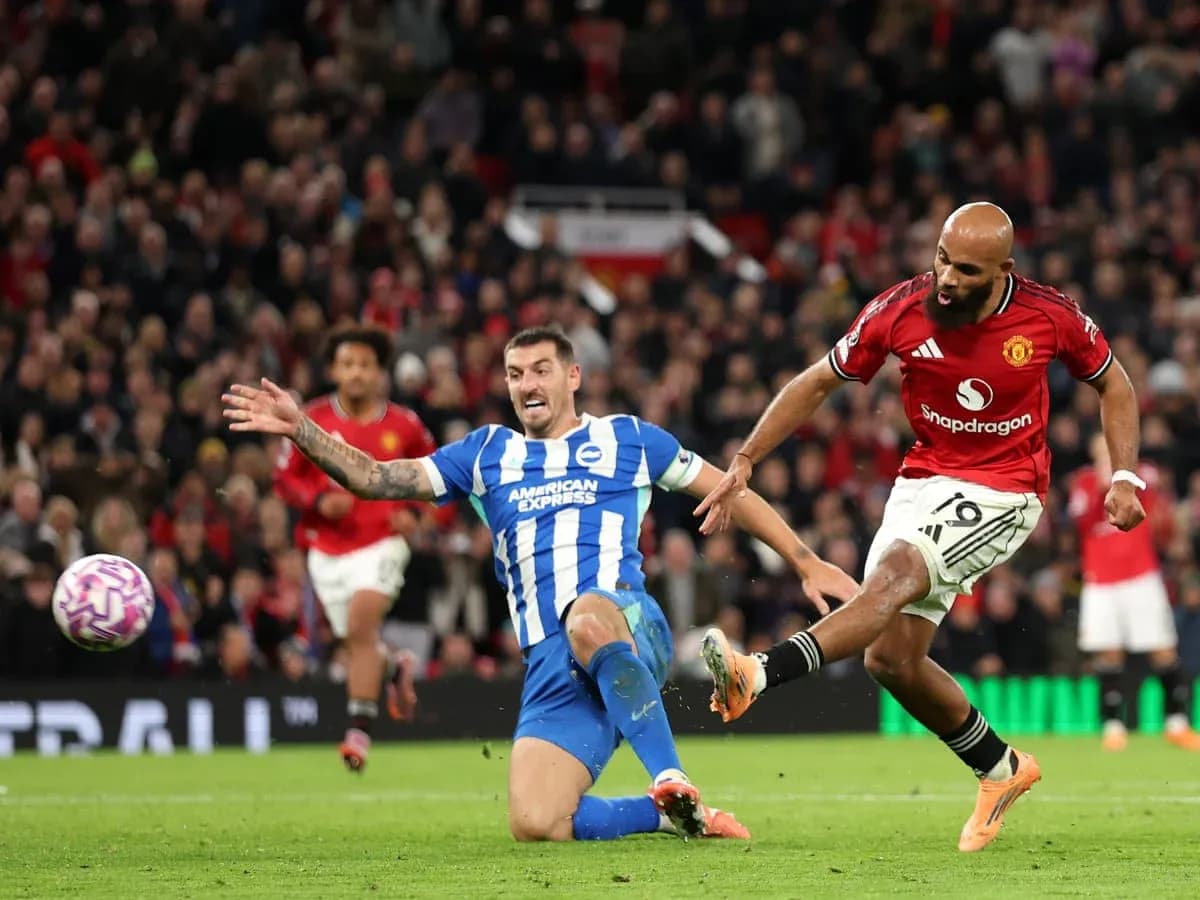
Brighton vs Manchester United: Premier League Final Day Showdown
Brighton host Manchester United at the Amex Stadium on the final day of the 2025 Premier League, with both sides playing for concrete European positions rather than the title or relegation. In the league phase, Brighton come into Round 38 in 7th place on 53 points (52 goals for, 43 against), aiming to lock in Europa League qualification, while Manchester United sit 3rd on 68 points (66 goals for, 50 against), protecting a Champions League place.
Head-to-Head Tactical Summary
The recent head-to-head record shows a genuinely competitive matchup with both teams able to hurt each other, and crucially, Brighton proving they can win at Old Trafford as well as at home.
On 11 January 2026 in the FA Cup 1/32 final at Old Trafford, Brighton won 2-1, leading 1-0 at half-time and seeing out a 2-1 victory. Earlier in the same Premier League year, on 25 October 2025 at Old Trafford, Manchester United won 4-2 after leading 2-0 at half-time, underlining their capacity to overwhelm Brighton when their attack clicks.
In 2025 in the Premier League, on 19 January at Old Trafford, Brighton won 3-1 after a 1-1 first half, showing they can adjust mid-game and exploit space when United chase. Going back to 24 August 2024 at the American Express Stadium (Brighton’s home ground), Brighton beat United 2-1, having led 1-0 at half-time, reinforcing the Amex as a difficult venue for United.
The most recent Amex league meeting before that, on 19 May 2024, saw Manchester United win 2-0 after a 0-0 first half, demonstrating that they can also deliver a controlled away performance when defensively solid. Across these five meetings, both sides have recorded wins home and away, with repeated multi-goal games pointing to an open tactical pattern where transitions and attacking risk-taking are decisive.
Global Season Picture
- League Phase Performance: In the league phase, Brighton’s 7th place is built on 14 wins, 11 draws and 12 losses from 37 matches, with 52 goals scored and 43 conceded (goal difference +9). Their home record is strong: 9 wins, 6 draws, 3 losses, 30 goals for and 17 against at the Amex, reflecting a solid defensive platform at home (17 goals conceded in 18 games). Manchester United, in 3rd, have 19 wins, 11 draws and 7 defeats, with 66 goals scored and 50 conceded (goal difference +16). Away from home, they have 6 wins, 8 draws and 4 losses, scoring 27 and conceding 26, indicating an effective but not dominant away side.
- Season Metrics: In the league phase, Brighton’s statistical profile shows a balanced but slightly attack-leaning side: 52 goals for and 43 against across 37 games (1.4 scored and 1.2 conceded per match), with 10 clean sheets and only 8 games without scoring. Their most-used shape is 4-2-3-1 (32 games), supporting a possession-oriented, structured build-up. Their yellow cards cluster heavily between minutes 46-60 and 76-90 (24 and 13 yellows respectively), pointing to increased defensive intensity and risk late in each half.
- Form Trajectory: In the league phase, Brighton’s recent form string “LWLWD” shows inconsistency: three losses in their last five but with the ability to respond immediately after defeats. They oscillate between strong performances and setbacks, which makes this final-day match a test of mental resilience as much as quality.
- Manchester United’s form “WDWWW” is that of a team finishing strongly: four wins and one draw in their last five league matches. This late surge has consolidated their top-three position and gives them momentum, especially in attack, heading into the final round.
Tactical Efficiency
Using the league-phase statistics as a proxy for tactical efficiency, Brighton can be described as a controlled attacking side (52 goals for, 1.4 per game) with a relatively secure defense (43 conceded, 1.2 per game). Their frequent use of 4-2-3-1 and 10 clean sheets indicate a structured block with enough numbers behind the ball to protect central spaces, while still committing enough players to create chances. The pattern of yellow cards concentrated after half-time suggests that their intensity ramps up once they settle into the game, which can help them compress opponents but also risks late fouls around their own box.
Manchester United’s numbers show a more aggressive, front-loaded tactical approach: 66 goals scored (1.8 per game) but 50 conceded (1.4 per game) in the league phase. Their flexible use of both 4-2-3-1 and 3-4-2-1 implies a willingness to tilt the pitch and overload advanced zones, at the cost of leaving space in transition. The combination of relatively few clean sheets (7) and a high scoring rate points to an “attack-first” balance.
Against this backdrop, Brighton’s tactical efficiency lies in controlled possession and structure, while United’s lies in volume of attacking actions and chance creation. Given United’s tendency to both score and concede away (27 for, 26 against), and Brighton’s strong home defensive record (17 conceded in 18), the matchup becomes a test of whether Brighton’s structure can dampen United’s higher attacking ceiling without sacrificing their own threat in transition and in wide overloads.
The Verdict: Seasonal Impact
From a seasonal standpoint, this fixture is pivotal for both clubs’ European trajectories rather than the title or relegation picture.
For Brighton, a positive result at the Amex against a top-three side would likely cement 7th place and with it Europa League participation in 2026. In the league phase, their +9 goal difference and strong home record give them a platform, but their recent “LWLWD” form means defeat could open the door for teams below to challenge their European slot. A win would validate their tactical model against elite opposition and strengthen the club’s case to retain key players and invest from a position of strength in the summer.
For Manchester United, arriving 3rd on 68 points with “WDWWW” form, this match is about locking in a Champions League place with authority and potentially securing 3rd over any late charge from teams behind. Given their 66 goals scored but 50 conceded in the league phase, a controlled away performance with a clean sheet would signal tactical maturation and defensive improvement, important for their competitiveness in Europe in 2026. Dropped points, especially a defeat, would not necessarily knock them out of the Champions League spots, but it would expose ongoing defensive fragilities and slightly undercut the narrative of a strong finish.
Strategically, a Brighton win would tighten the European race narrative by confirming them as a genuine upper-half force capable of consistently beating top sides. A Manchester United win, particularly with multiple goals, would underline their superior attacking index relative to Brighton’s more balanced profile and reinforce the idea that, despite defensive leaks, they are trending upwards as a Champions League-level attack. A draw would preserve the status quo: Brighton likely doing enough to stay in the Europa zone, and United confirming their Champions League return without fully answering questions about their away defensive stability.
In summary, this final-day meeting at the Amex is a high-leverage European positioning match: Brighton are playing to lock in Europa League status and prove they belong in the upper tier, while Manchester United are aiming to close the league phase with a statement that they are not just returning to the Champions League, but doing so with an attack that can carry into continental competition in 2026.
Related News
Bournemouth vs Liverpool Prediction: Key Stats and Betting Tips

Tottenham vs Aston Villa Predicted Lineups: Team News for Premier League Clash
Brighton vs Arsenal: Premier League Clash Preview
Manchester City vs Sunderland: Premier League Clash Preview
Tottenham vs Aston Villa: Early Relegation Battle

Brentford vs Chelsea Predicted Lineups: Team News and Match Insights