
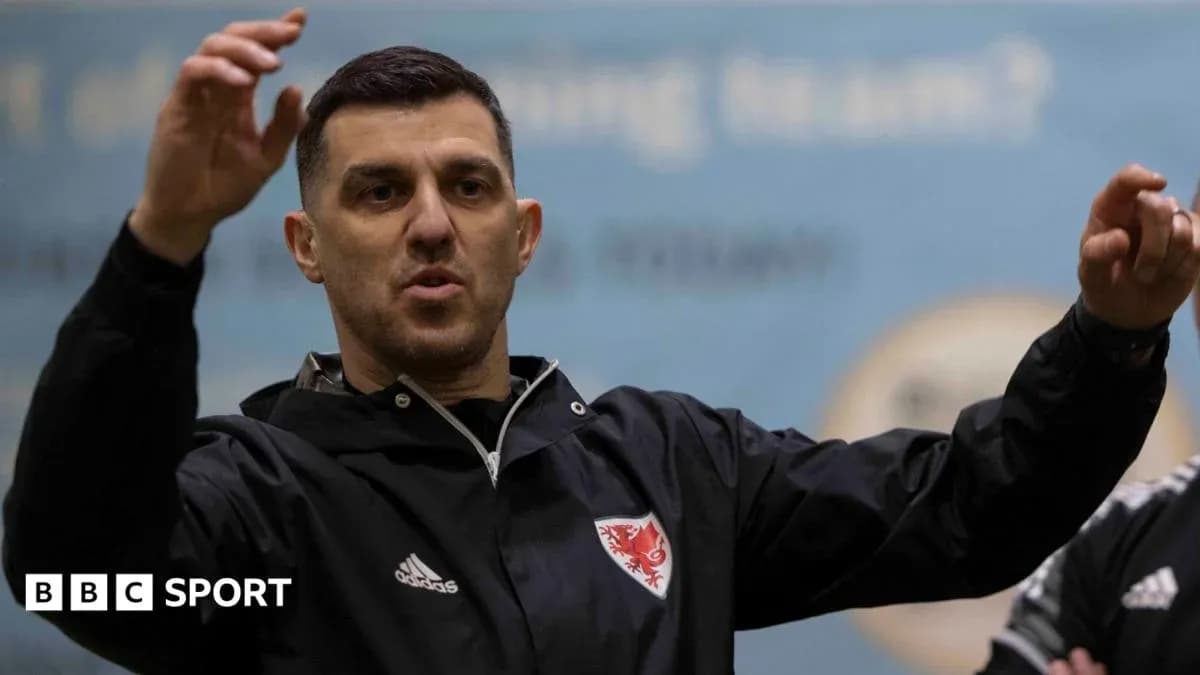
Wales Deaf Football Team's Journey: From Pain to Progress
Wales v England in Llandarcy on Friday night is more than a friendly for the Wales Deaf men’s side. It feels like a reset. Maybe even a reckoning.
Reborn in 2023, Wales burst back onto the deaf football scene with the swagger of a team making up for lost time. A draw with England, wins over Scotland and Ireland – three games, unbeaten, and a sense that something serious was building.
Then came 2024 and a brutal reminder of how quickly momentum can vanish.
From promise to pain in Turkey
The squad travelled to Turkey for the EuroDeaf Championships carrying hope and expectation. They left with neither. Four group games, four defeats. No points, only questions.
That tournament forced a hard look in the mirror. The Wales Deaf Football Association overhauled its backroom structure and turned to a familiar face to lead the rebuild: former Wales Deaf forward James Taylor.
Taylor, known to many as “Jamo”, stepped in with ideas, energy and a clear vision. His first result? England 7-1 Wales at St George’s Park in February 2026. A harsh welcome to international management.
“It hurt, and I believe it hurts harder as a manager. However, it provided a valuable benchmark for where we are as a squad,” he said. The scoreline stung, but it also stripped away any illusions. Wales knew exactly how far they had to climb.
The striker who never quite got there
Taylor’s own story is stitched with near-misses and what-ifs.
He grew up in a Swansea sporting household, his father a devoted Swansea City supporter. The family tale is famous: Taylor was born in the morning, and by the afternoon his dad was on the North Bank watching the Swans. His idol? Alan Curtis.
Years later, that same Alan Curtis would manage Taylor in Swansea City’s youth system at the old Vetch Field. “Legend and a gentleman,” Taylor calls him. The kind of coach who shapes careers and characters.
Taylor had earned his shot. He started out in grassroots football with local side Afan Lido, part of a dominant team from the age of eight to 16. “We won everything that was possible for us,” he recalled. A standout goal for the under-16s against Swansea City caught the attention of club scouts and opened the door to a two-year youth training scheme.
He was close. Very close.
But total deafness in his left ear created a barrier he could never quite break through.
“It's probably one of the reasons that let me down in the professional world, because anything that was coming to the left-hand side, I didn't hear,” he admitted.
Taylor did make one senior appearance for Swansea, against Haverfordwest in the West Wales Senior Cup in the 1997-98 season. Then his second season was wrecked by a serious ankle injury. When the time came for decisions on professional contracts, the answer was no.
“They did reassure me that if I went to any team and carried on scoring goals, they'd put me back in and keep looking at me, but unfortunately, those goals died away,” he said.
He returned to Afan Lido and later turned out for Port Talbot, Neath and Goytre – a solid Welsh league career, but not the professional path he once chased.
At 43, though, the story took an unexpected twist. Taylor pulled on the red shirt of Wales Deaf for the first time, the first of three caps that would eventually lead him to the touchline as head coach.
Rebuild, not retreat
That 7-1 defeat to England could have broken a less stubborn group. Instead, Wales treated it as a line in the sand.
In June, Taylor and his staff staged a talent identification day at Dragon Park in Newport. More than 20 new players turned up, some fresh faces, some returning after time away.
“It was a real success with a great turnout. There are a few new faces coming in, as well as a couple of familiar faces from old returning,” Taylor said. “The standard of football was good, the players took on board the information really well, and their attitudes and commitment were excellent.”
The message was clear: nobody’s place is safe, and nobody is shut out if they’re good enough and committed enough.
Wales tested themselves again recently against Newport Corinthians, a third-tier side in the Welsh pyramid. They lost 6-4, but the score only told part of the story.
“The thing that stood out for us against them was that our boys haven't had those minutes in their legs, where Newport Corries I'm sure have had a good pre-season,” Taylor said. Match sharpness, not talent, was the gap.
That is why Taylor is determined to cram the calendar with fixtures.
“We're not going to be going camp, camp, camp... it's only in a game when you can really see the development in the boys and the squad,” he insisted.
Eyes on Australia and Italy
Behind the immediate challenge of England in Llandarcy lies a bigger horizon.
Wales, like England, are aiming to qualify and travel to the inaugural Deaf International Football Association Deaf Football World Cup in Australia in November 2027. Six months later, the 2028 European Deaf Football Championships in Italy await.
Those tournaments are not distant dreams for Taylor. They are targets with a countdown clock already ticking. Every session, every camp, every friendly has to feed into that journey.
He wants a squad that grows together through real games, not just training drills and team meetings. A group hardened by setbacks, not spooked by them.
“We need to start making waves”
Friday night against England at Llandarcy (19:30 BST) is the next examination. Another step up. Another chance to measure progress against one of the strongest sides in deaf football.
Taylor is not interested in soft narratives or polite praise.
“We need to start making waves and noises,” he said. “I haven't taken on this management role just to post a load on social media. My hopes are to make Wales a force in deaf football.”
That force, he believes, will be built on commitment as much as quality.
“I'm only interested in the players who are 100% committed to Wales now,” he said. “I'm not saying they haven't in the past, but maybe seeing a bit more competition coming into camp will give them that push, not only for Wales, but in their personal football journeys as well.
“That's all I ever want to do is make the players the best version of themselves on a football pitch.”
From the boy at Afan Lido to the nearly-man at Swansea, from the late-blooming international to the manager trying to drag Wales up the deaf football ladder, Taylor has lived every side of the game’s cruelty and possibility.
On Friday in Llandarcy, he leads his team out again against England. The last meeting ended 7-1. This time, Wales want to prove that the days of going backwards are over – and that their rollercoaster story is finally climbing again.
Related News
Vinicius Jr. Faces Challenge as Mbappe Dominates at Real Madrid
Thomas Tuchel Faces Criticism After World Cup Defeat
Dominik Szoboszlai's Thunderbolt Performance Against Tottenham
Wrexham's Challenge Against Southampton: A Test of Resilience
Man United Injury Updates: Shaw, Baleba, Amad, and More
Ireland Squad Refresh: Coleman Left Out for Nations League