
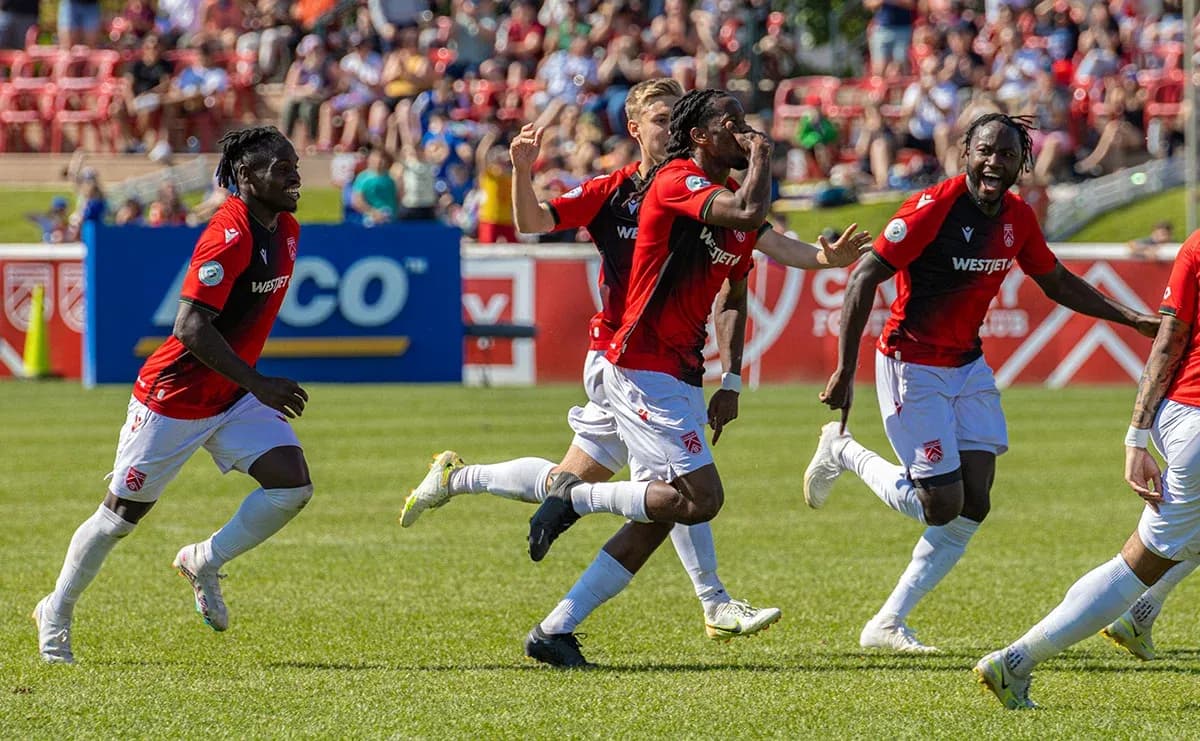
York United Upsets Cavalry FC in Canadian Premier League Showdown
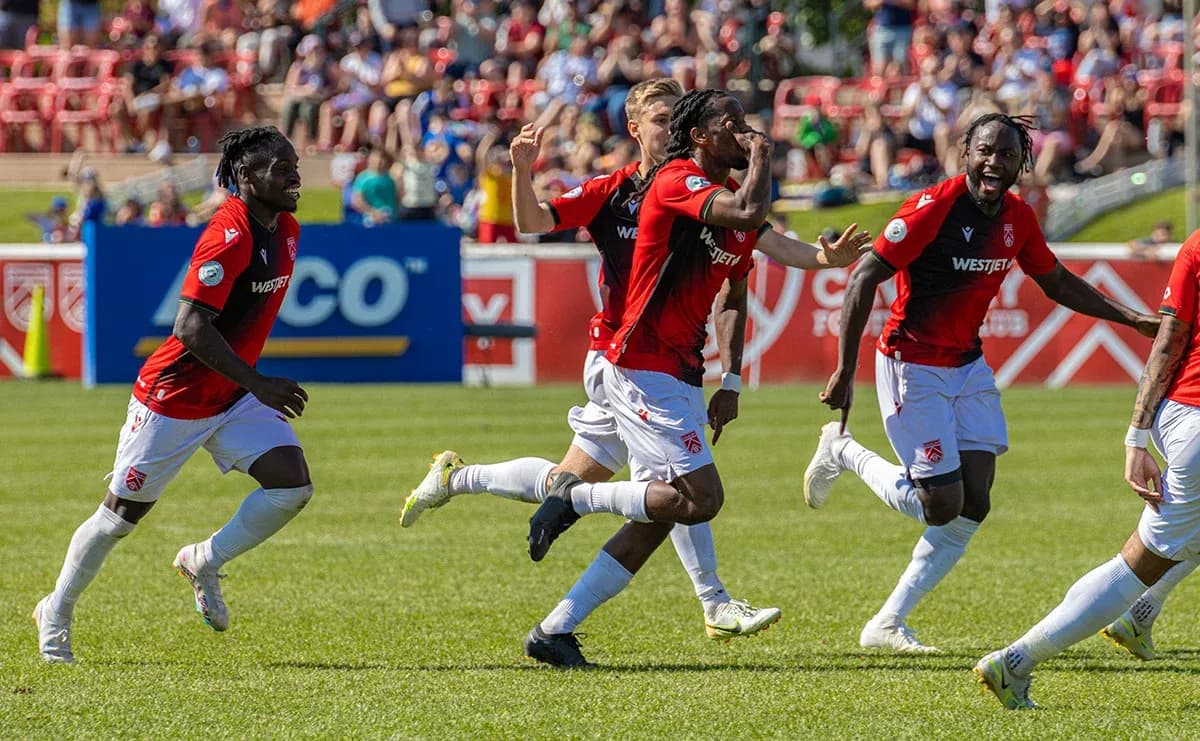
Under a cool Toronto sky at York Lions Stadium, York United and Cavalry FC wrote a strangely inverted chapter of the Canadian Premier League season. On paper, it was top versus seventh: Cavalry arriving as league leaders with 53 points and a formidable overall goal difference of 32, York clinging to seventh on 27 points and a worrying overall goal difference of -15. Yet across 90 minutes, the underdog’s season-long chaos found structure, and the league’s most complete side briefly lost its defensive script.
I. The Big Picture – A table turned on its head
Heading into this game, Cavalry had been the league’s metronome. Overall they were scoring 2.0 goals per match and conceding just 0.8, with 16 wins from 25. On their travels they still looked imposing: 1.6 away goals for, only 0.9 against, and seven wins in 13. York, by contrast, were a paradox. At home they were vibrant going forward – 2.3 goals scored per match – but conceded 2.3 as well, a team built for drama rather than control.
The formations told you both coaches were leaning into their identities. Mauro Eustaquio doubled down on York’s attacking volatility with a 3-4-3, trusting A. Campos behind a back three of R. Lopez, F. Sturing and L. Singh, and unleashing a front line of S. Yeates, S. Gonzales and A. Almagro. Tommy Wheeldon responded with his trusted 4-2-3-1: N. Ingham in goal, a back four led by the influential pairing of D. Klomp and A. Didic, and a creative line of three behind O. Graham-Roache spearheaded by T. Warschewski.
The first half was where York’s seasonal DNA – explosive starts – collided perfectly with Cavalry’s one structural vulnerability. York’s goals for timeline shows 25.71% of their strikes arriving between 0-15 minutes and another 17.14% between 31-45. Cavalry’s goals against pattern, meanwhile, is heavily back-loaded, but they do allow early jabs: 11.11% conceded in the opening quarter-hour and another 11.11% from 16-30. York’s aggressive press and verticality turned those windows into a 2-0 half-time lead, a reflection of a side that has scored early all year and, for once, did not immediately unravel.
II. Tactical Voids and Discipline – Edges in the chaos
There were no listed absentees, so both sides entered near full strength. The real absences were structural.
York’s season-long fragility without the ball – 54 goals conceded overall at an average of 2.3 per match – usually stems from the spaces their wing-backs leave and the strain on the back three. Yet Eustaquio’s selection of a hard-working midfield quartet in M. Ferrari, J. Cordova, O. Bassett and C. Guzman narrowed those gaps. Ferrari and Guzman in particular were tasked with collapsing onto Cavalry’s No. 10 lane, reducing the time and space for Warschewski to turn.
Discipline, however, remained a live wire. York’s yellow-card distribution spikes from 46-60 (20.55%) and 61-75 (23.29%), precisely the phase when they often lose emotional control. Cavalry, for their part, are no strangers to the referee’s notebook either, with yellow surges between 46-60 (23.73%) and a late-game edge that extends even into stoppage time.
The personalities behind those patterns were on the pitch. For York, S. Yeates arrived with six yellows and a high-intensity, box-to-box profile; L. Singh is another who lives on the disciplinary edge. For Cavalry, the bench held two card magnets in H. Paton and E. Kobza – players whose introduction can raise the temperature and the tackle count. Even without explicit card data from this specific match, the contest always threatened to tilt into a series of tactical fouls and emotional swings as Cavalry chased the game.
One more invisible tactical void hung over York: penalties. Overall they had converted just one of two, a 50% success rate that lingers in a player’s mind when entering the box. Cavalry, by contrast, had scored all four of their spot kicks this season, a quiet psychological advantage that usually allows their forwards to attack the area with less hesitation.
III. Key Matchups – Hunter vs Shield, Engine vs Engine
The headline duel was “Hunter vs Shield”: Tobias Warschewski against York’s brittle back line. Warschewski came in with seven goals and three assists, 44 shots with 21 on target, and 40 key passes – a complete attacking focal point. His threat is not only as a finisher but as a creative hub, dropping between the lines to feed runners like A. Musse and N. Edwards.
York’s answer was collective rather than individual. F. Sturing’s role as the central pillar of the back three was to track Warschewski’s movements while Lopez and Singh dealt with wide overloads. The risk in a 3-4-3 is always the far-side centre-back being dragged too high or too wide; York’s success hinged on their timing in stepping out without exposing the half-space behind them.
In midfield, the “engine room” battle pitted York’s technical core against Cavalry’s enforcers. Yeates, one of York’s most complete players with five goals, two assists and an 88% passing accuracy, operates as the rhythm-setter. His duel with E. Kobza – who brings 575 passes at 85% accuracy, 23 tackles and 16 interceptions – was about who could dictate tempo. If Yeates could receive on the half-turn and link quickly with Almagro between the lines, York’s 3-4-3 would constantly ask questions of Cavalry’s double pivot.
On the flanks, Almagro’s creative instincts (five assists and 20 key passes) tested Cavalry’s full-backs and the coverage from the wide centre-backs. Against him, Musse’s two-way contribution – five assists, 27 key passes, and a willingness to press – shaped how much of the game Cavalry could tilt into York’s half.
IV. Statistical Prognosis – A rare crack in Cavalry’s armour
Following this 3-1 result, the scoreline mirrored York’s attacking potential more than their season-long averages, and it forced Cavalry into unfamiliar territory. York’s home profile – 2.3 goals scored, 2.3 conceded – suggests volatility rather than control, but here they bent that volatility toward a disciplined first-half blitz and a managed second half.
From a statistical lens, Cavalry remain the more solid long-term proposition: 10 clean sheets overall, only 19 goals conceded in 25 matches, and a late-game scoring surge where 30.77% of their goals arrive between 76-90 minutes. York, conversely, concede heavily in the final quarter-hour, with 20.69% of their goals against coming from 76-90 and another 22.41% between 61-75. On another day, that late Cavalry wave might have turned 3-1 into a frantic finale.
But this match underlined an important tactical truth: when York’s early-game pressing (25.71% of their goals between 0-15 and another 25.71% from 46-60) intersects with an opponent’s brief defensive lapses, they can punch above their station. Cavalry’s perfect penalty record and usual defensive authority were not enough to override a first half in which York’s structure, intensity and front-three movement finally aligned.
In the broader arc of the season, Cavalry still project as the side whose underlying numbers and defensive solidity will keep them at the summit. Yet York’s performance at York Lions Stadium offered a reminder that in this league’s Group Stage, even the most dominant leaders can be dragged into a firefight – and, on the right night, outgunned.
Related News
Forge vs Pacific FC Prediction: Preview and Betting Tips
Forge vs Pacific FC Stats: Head-to-head Record and Historical Overview

Atlético Ottawa Triumphs Over Cavalry FC in Thrilling 3-2 Comeback
Forge vs HFX Wanderers FC: Canadian Premier League Clash
York United vs Cavalry FC: Clash of Canadian Premier League Rivals
Forge vs HFX Wanderers FC Predicted Lineups and Team News