
VAR Controversy: Neco Williams' Disallowed Goal Explained
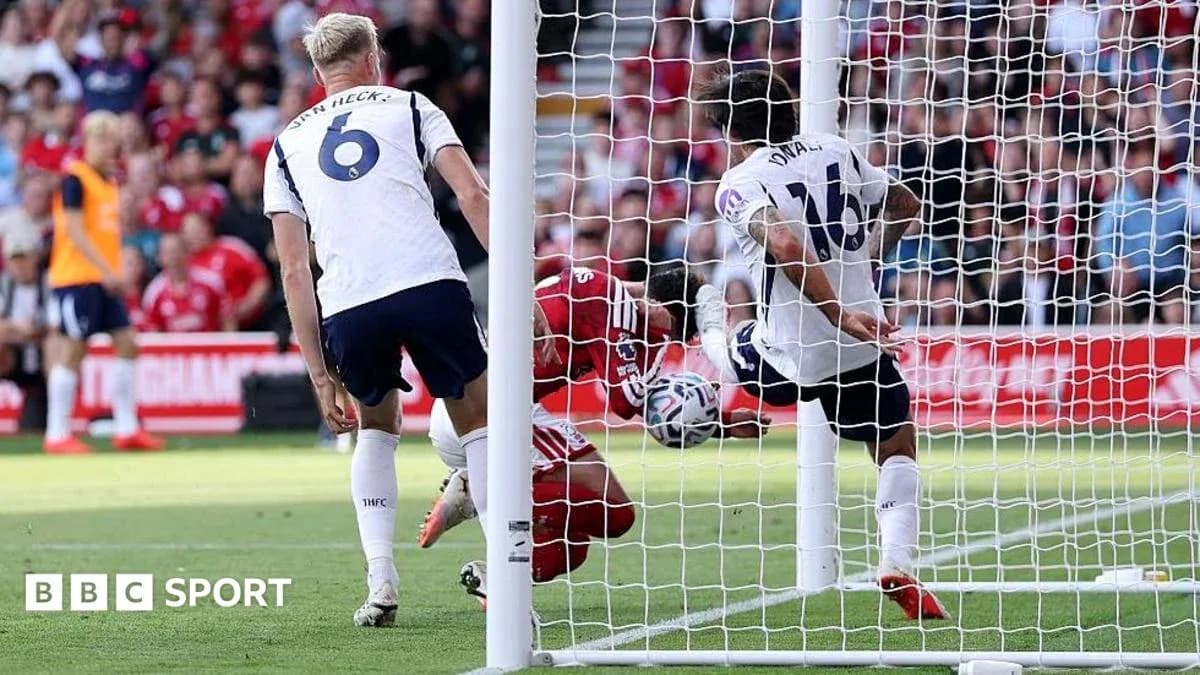
New footage has dropped, and it does what Nottingham Forest feared most: it shows the ball striking Neco Williams’ arm before his disallowed goal against Tottenham.
The clip, taken from a camera angle not used in the live coverage, clearly shows the Forest defender making contact with the ball first with his left arm, then his right forearm, before bundling it into the net in the 67th minute of the 0-0 draw. On this evidence, VAR Peter Bankes called it right.
But that’s not where the argument ends. It’s where it really starts.
VAR vindicated – but with a twist
On the day, Bankes stepped in to rule out the goal for accidental handball, sparking fury from Forest players, staff and supporters. Williams and head coach Oliver Glasner were adamant afterwards: there was no proof the ball had touched an arm.
Now there is.
The fresh angle vindicates the VAR’s decision. It does not vindicate the process in the eyes of Forest fans, because Bankes never saw this view. The VAR hub only had access to the broadcast cameras; this particular camera is one of several that do not feed directly into the match coverage.
So while Bankes will feel justified, the new detail underlines a harsh truth: he reached the correct outcome without the clearest evidence that existed.
On the angles he did have, Bankes believed the telltale sign was the ripple in Williams’ shirt as the ball grazed his right forearm. That was enough for him to judge there had been a handball in the attacking phase and to chalk the goal off.
Inside the refereeing body – now rebranded as Pro Ref, the successor to Professional Game Match Officials – there is no doubt. BBC Sport understands Pro Ref is completely satisfied with the decision. They see the new footage as confirmation that the VAR’s call was sound.
They are far less happy with how the story has snowballed.
Williams’ certainty meets cold evidence
Part of that irritation stems from Williams himself. The defender spoke with absolute conviction after the match, insisting there was no handball.
"I've seen the images and the replays and at not one moment did I think I handballed it," he told Sky Sports. "I have seen all the images and at not one moment can you tell that has clearly hit my arms, because it never. I knew straight away I've headed it down in between my arms. It didn't hit my arm."
The new footage shows something very different. The ball does not touch his head at all. It clips his left arm, then his right forearm, and then crosses the line. All in a split second. It is entirely possible Williams genuinely believed he had headed it, but the pictures are unforgiving.
Within Pro Ref, the feeling is simple: if Williams had not been so emphatic, the backlash would not have been as fierce. His certainty poured fuel on a fire that was already burning around VAR.
Nottingham Forest have been approached for comment.
‘Clear and obvious’? Not this time
Much of the debate since Saturday has hinged on one phrase: “clear and obvious”. Glasner referenced it. Williams echoed it on X. Many Forest fans have clung to it.
But that standard does not apply to every VAR intervention.
“Clear and obvious” covers subjective incidents – the ones that send the referee to the pitchside monitor: red cards, penalties, serious foul play. In those cases, the on-field decision stands unless the VAR believes there has been a clear and obvious error.
Handball in the attacking phase before a goal is treated differently. That falls into the “factual” category. Here, VARs are not weighing up opinions; they are hunting for evidence. If they believe they have proof of an offence, they intervene and the goal goes.
Bankes believed he had that proof from the replays available to him. Many viewers disagreed. Many still do. Yet there are just as many who argue you can see the handball clearly enough, and Bankes was one of them.
That’s the uncomfortable reality with VAR: even so-called factual decisions still lean on human judgement. One official sees certainty; another sees doubt.
A tale of two handballs
You don’t have to look far for a comparison. Last season, Benjamin Sesko scored for Manchester United against Liverpool with a goal that carried its own question mark. The ball appeared to brush the fingertips of the Slovenia striker before crossing the line.
On that day, VAR Stuart Attwell watched the replays and decided he could not be sure. The goal stood.
Later, referees’ chief Howard Webb admitted the ball “probably does hit the hand” but stressed that “the VARs need to see that conclusively”. Attwell didn’t feel he had enough. Bankes did.
Same law. Same technology. Different judgement.
It exposes the grey area that still sits at the heart of VAR. The system was sold as a way to strip out controversy. It has simply moved the arguments from one frame of reference to another.
A law under pressure
Webb has already flagged attacking handball as one law he would change. Under the current wording, any accidental handball by an attacker that leads directly to a goal must be penalised. That is why incidents like Williams’ are dissected frame by frame.
“The problem is the law forces VARs on every goal to look at what body part the ball went in off,” Webb said in pre-season briefings.
He argued for a simpler approach: only penalise when an attacker deliberately handles the ball or makes themselves “unjustifiably big”, and strip away the forensic examination of marginal, accidental contact. In that world, Williams’ goal – based on the original evidence available on the day – would likely have stood.
“It is a law I would definitely look to change. So Pro Ref and the Premier League are going to try and lobby for that to be changed," Webb said.
The Williams incident hands that argument fresh ammunition.
VAR’s lighter touch, heavy noise
This season, VAR is officially being used with a lighter touch. The numbers back that up: only two subjective interventions so far, at a rate of 0.06 per game, down from 0.15 last season.
The noise around it, though, has hardly quietened. Every big call still becomes a flashpoint. Every overturned goal becomes a talking point for days. The tribal nature of football guarantees it.
Now there is a clip that shows Neco Williams did handle the ball before scoring. The VAR who ruled it out never saw that angle, yet arrived at the right conclusion. The law, as it stands, demanded that outcome.
The question now is not whether this goal should have counted. It’s whether the sport is finally ready to change the rules that keep dragging VAR back into the spotlight.
Related News
Blackburn Rovers Selection Dilemmas Ahead of Portsmouth Clash
Portsmouth's Championship Struggles: Juggling Injuries and Squad Depth
Eva Olid Embraces Criticism Amid Manchester United's Tough Start
Burnley vs Derby County: A Must-Win Clash for Nicky Hayen
Spain’s Nations League Squad: Barcelona Players at the Core

Logan Dobbs: Gillingham's Surprise Package in League Two