
Tuchel’s England Reset: Cole Palmer and Trent Alexander-Arnold's Bold Returns
Cole Palmer has kicked the new season’s door off its hinges at Chelsea. Four goals, two assists, six games. The numbers jump off the page, but the chemistry is what really grabs you – his understanding with Morgan Rogers and Joao Pedro has given Chelsea’s attack a sharp, inventive edge.
“Cole has his numbers back,” Thomas Tuchel said. “Assists, decisive goals. I think he has a point to prove.”
He does. So does Tuchel.
Leaving Palmer out of the World Cup squad was the England manager’s biggest gamble. It backfired. Palmer limped through last season, injured and drained after the Club World Cup, a shadow of the player tearing up the Premier League now. The enforced breather may have been exactly what he needed. Rest, reset, revenge.
Could even that diminished version have helped England in North America? Many will say yes. But that argument is over. The real question is where he fits now.
Jude Bellingham owns the No 10 shirt after his World Cup heroics with Real Madrid. Bukayo Saka is back to full throttle on the right for Arsenal. Anthony Gordon has taken his England form to Barcelona and is flying off the left. Rogers, like Palmer, has become central to Tuchel’s plans.
Tuchel now has a luxury headache: how to get both Chelsea creators on the pitch without unbalancing a side already packed with attacking talent. Palmer’s form demands a solution. Finding it might define this next phase of Tuchel’s England.
Mainoo’s second chance
Kobbie Mainoo knows what it feels like to be invisible at a World Cup. The Manchester United midfielder was the only outfield player not to play a single minute at the tournament. This camp, Tuchel insists, will be different.
“I expect him to be on the pitch and it’s my duty to get him on the pitch,” the England boss said. “That was totally on me. He didn’t put a foot wrong during the World Cup.
“He was class in behaviour on the training pitch. There was big competition; we played Reece (James) in central midfield also. Elliot Anderson is amazing for us; Declan Rice is a very unique player.
“We trusted them more than we trusted Kobbie. It was difficult for him. It was on me.”
Mainoo has started the season strongly for United and the message is clear: he is no longer a spare part. The midfield queue is still brutal, but a three-week camp with four fixtures should finally give him the platform he never had on the biggest stage.
Trent’s return and Tuchel’s U-turn
Trent Alexander-Arnold playing for Real Madrid and getting an England call-up should feel routine. It doesn’t. It feels seismic.
This is the same manager who publicly said Alexander-Arnold was not the profile of right-back he wanted. The same manager who left him out even when Tino Livramento’s pre-World Cup injury opened a door. The same manager who questioned England’s ability to control games technically while ignoring one of the country’s most gifted passers.
Alexander-Arnold had not been in an England squad since the summer of 2025. Now he’s back.
“He was never non-selectable,” Tuchel said. “Now is his chance to show, come to camp, be the best version of himself. He comes as a right-back for us.”
His Real Madrid form alone hasn’t forced the issue. One assist in five games is modest by his standards. His outing in central midfield in the Champions League win over Inter Milan, a Jose Mourinho stopgap caused by injuries, underlined the eternal question: where do you get the best out of him?
Mourinho praised his attitude but pointed to lost balls and the physical demands of the role. At right-back, he is again in a straight fight – Dani Carvajal last season, Denzel Dumfries this one.
The picture hasn’t changed: outstanding on the ball, doubts without it. Tuchel’s stance has. How he uses Alexander-Arnold now, and whether this is a genuine reset or a short-term experiment, will be one of the defining stories of this international window.
From control to chaos?
After the defeat to Argentina, Tuchel went after England’s ‘DNA’. He said his players struggled to control high-pressure games with the ball, unlike Spain. It sounded like a manager crying out for more technicians.
The recalls of Palmer and Alexander-Arnold looked like a tacit admission: he had left too many of his best ball-players at home.
Yet on Friday, Tuchel nudged the conversation in a different direction. Maybe control isn’t the answer. Maybe England should lean into the storm.
“The more I reflect on it [the Argentina loss], it’s more buying into our strengths and playing more like in the second half against Croatia, or first half against France,” he said. “We get a lot of value out of it [this style]. This is what the Premier League reflects.
“Football is about adapting to situations, and football without any control is sometimes hard to digest for a coach. If you look at the 6-4 against France, people talk about it like it’s one of their nicest experiences ever to watch a football match.
“Maybe I have to compromise in my wish for control – maybe we need more chaos, to embrace the chaos. Maybe it brings out the best.
“We will adjust our style but always to put the strengths of the players on the first priority.”
Control or chaos? Tuchel sounds like a coach edging towards a hybrid: enough structure to survive, enough madness to hurt the best.
Gibbs-White squeezed out
Morgan Gibbs-White has every right to feel bruised. Fifteen Premier League goals and four assists for Nottingham Forest last season. A driving force in their survival. The same sharp form this year. Still no place.
The problem is the postcode he plays in: the No 10 zone, where England are overflowing. Palmer is back. Bellingham is immovable. Rogers is in. Eberechi Eze is in. At some point, the numbers choke the pathway.
“He was close but it’s always the same,” Tuchel said. “It makes no sense to choose three, four or five No 10s. It just doesn’t help anyone. We can see the form that Morgan is in. He ended the season strongly and was the key player for Forest to not be relegated.”
Gibbs-White will look at Eze and wonder. Eze, now at Arsenal, has not started a Premier League game this season and produced roughly half of Gibbs-White’s goal involvements last term. Yet Eze travels, Gibbs-White stays home.
Tuchel’s challenge to Palmer doubles as a warning to everyone in that crowded lane.
“It’s one thing to be chosen, like Cole, and get your ticket back to the squad, but it’s another thing to perform for England,” he said. “Cole, especially, needs to step up when he comes and show these kinds of numbers and performances to get his place, keep his shirt and justify the nomination.”
If Palmer doesn’t, Gibbs-White will be first in line.
Foden on the outside
Phil Foden is another casualty of the No 10 traffic jam. Left out of the World Cup squad, brought back into Tuchel’s groups in March and November 2025, and now cut again.
This one will sting. The Manchester City star had started the season encouragingly before a red card in the Manchester derby halted his momentum. In a position where England are loaded and Tuchel is turning back to other technicians like Alexander-Arnold, Foden’s path has rarely looked steeper.
His talent isn’t in question. His place in this manager’s plans very much is.
A new generation steps in
While familiar names fall away, Tuchel has swung the door wide open for England’s next wave.
Jordan Henderson, Ivan Toney, Ollie Watkins – all out. In come Myles Lewis-Skelly, Alex Scott and Rio Ngumoha, none older than 22, with Ngumoha only just 18.
Ngumoha is the headline. The Liverpool forward went with England to Florida for pre-World Cup training and has featured in five of Liverpool’s six games this season. No goals or assists yet, but enough quality to convince Tuchel he belongs at senior level.
Lewis-Skelly’s case is built on sheer authority. The deep-lying midfielder has been superb for unbeaten Arsenal, with two assists and the ultimate compliment: keeping £75m signing Bruno Guimaraes out of the champions’ starting XI.
Scott’s rise has been more gradual but just as impressive. He was arguably the key piece in Bournemouth’s charge into European football last season, a campaign that sparked serious interest from Chelsea and Manchester United. Now he has the England call to match.
“We had three players in prep camp with us [before the World Cup], Alex Scott, Rio Ngumoha and Josh [King], all three of them were fantastic members of the squad,” Tuchel said.
“Not only because they were nice and reliable and excellent characters, but they showed the quality, courage and curiosity on the pitch, which was very nice to see.”
Whether Tuchel shifts his tactics around this younger core is still unclear. What is clear is that the age profile of his squad has changed, sharply and deliberately.
The squad, the stakes, the Nations League
The final list underlines the reset.
- Goalkeepers: Jordan Pickford, Jason Steele, James Trafford.
- Defence built around youth and versatility: Alexander-Arnold, Jarrad Branthwaite, Trevoh Chalobah, Marc Guéhi, Lewis Hall, Ezri Konsa, Tino Livramento, Nico O’Reilly, Jarrell Quansah.
- Midfield: Elliot Anderson, Bellingham, Lewis-Skelly, Mainoo, Palmer, Rice, Scott.
- Attack: Dominic Calvert-Lewin, Eze, Gordon, Harry Kane, Ngumoha, Marcus Rashford, Rogers, Saka.
Spain at home on September 26. Czech Republic away on the 29th. Croatia away on October 3. Three Nations League fixtures, three different tests, one big audition for Tuchel’s new ideas.
He has recalled stars he once doubted, promoted kids who haven’t yet scored a senior international goal, and hinted he might abandon his obsession with control to “embrace the chaos.”
The pieces are on the board. Now we find out whether this new England can live in that chaos – and win in it.
Related News
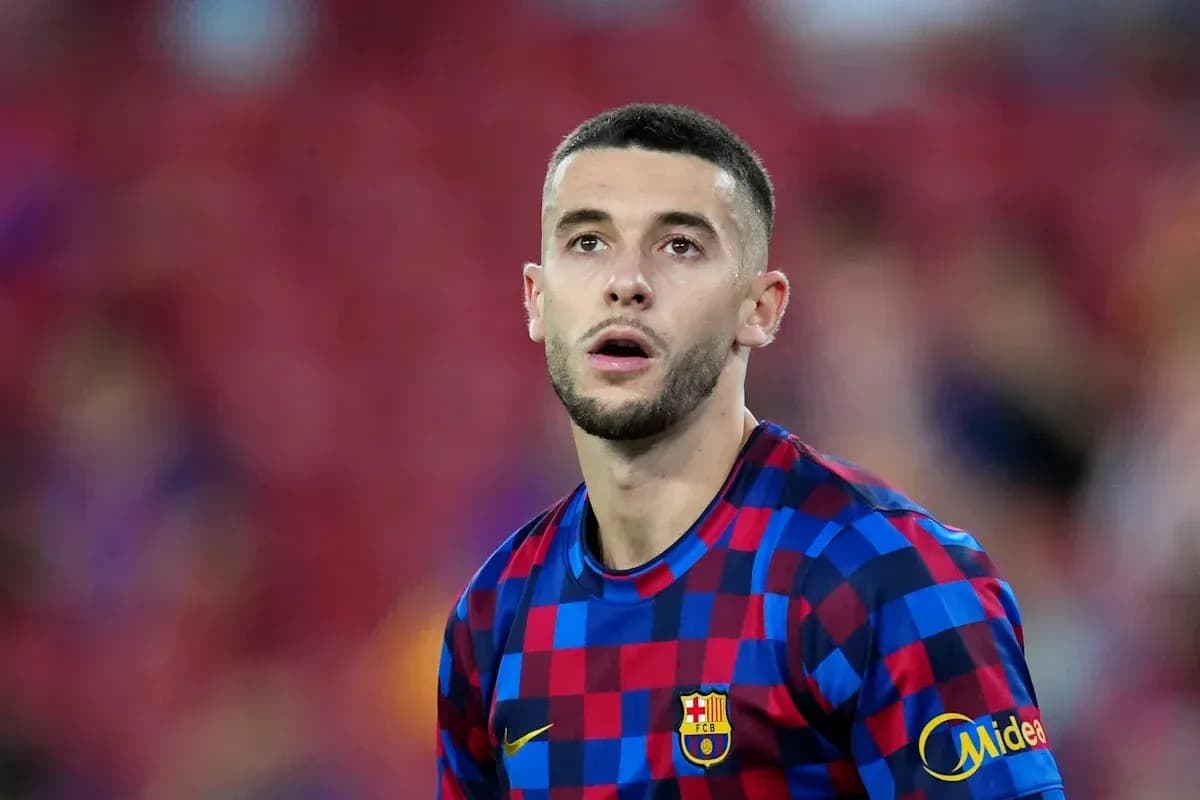
Hansi Flick Confirms Joan Garcia's Absence for Sevilla Match
Xavi's Oranje Revolution: Memphis Depay and Veterans Omitted

Tuchel’s England Reset: Cole Palmer and Trent Alexander-Arnold's Bold Returns
Bournemouth's Resilience Amidst Liverpool Challenge
Spain's Squad Changes for UEFA Nations League: Key Updates
Barcelona lose Joan Garcia for Sevilla trip as Iker Rodriguez steps up