
Tottenham's Scoring Struggles: De Zerbi's Challenge
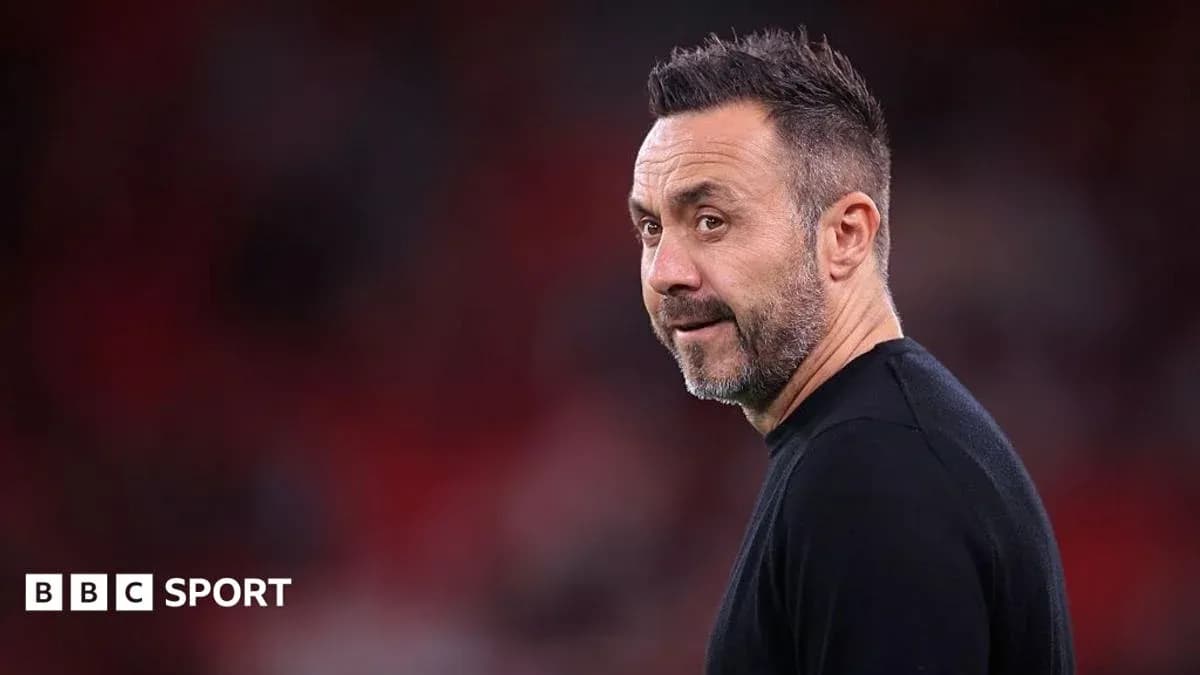
Four games into the season and the Premier League table has an odd quirk: only two clubs are still waiting for their first goal. Coventry City… and Tottenham Hotspur.
That’s Tottenham, who have thrown around roughly £320m on new signings, much of it on forwards and attacking midfielders. A club that has doubled down on firepower now finds itself blunt.
So what’s going on? The answer lies less in panic over personnel and more in the complex, high‑risk football Roberto De Zerbi is trying to hard‑wire into this squad.
The lure of the press
De Zerbi has not parked his principles at the door just because he has swapped Brighton and Marseille for north London. The Premier League has shifted since he left in 2024, but the Italian’s core ideas are still there, just dressed in slightly different colours.
His teams invite pressure. They slow the game down, roll the ball backwards, and almost dare opponents to come and get it. The moment that pressure arrives, they spring.
The idea is simple, the execution anything but. Draw the press in, then punch through it. Speed up, play forward, attack the space left behind those charging out of position. Direct passes. Aggressive carries. Big spaces for your forwards, fewer defenders between them and the goal.
As De Zerbi once put it in a 2020 coaching seminar: “The stronger the pressure of the opponent, the more vertical [our] action becomes. [The fewer opponents behind], the easier it becomes to go and score.”
We’ve already seen Spurs break lines and find their forwards in promising areas this season. The problem is what comes next.
A shape that’s hard to read – on purpose
In possession, Tottenham often resemble a 2-3-2-3. It isn’t always obvious at first glance, but the pattern is there.
Two centre-backs. In front of them, a holding midfielder – usually Rodrigo Bentancur – anchoring the middle, forming a fairly fixed trio at the base. Ahead of that, rotations everywhere.
Wingers, full-backs, and central midfielders constantly swap roles and zones. The shape stays, the names inside it change. If one player vacates a lane, another slides into it. The structure is non‑negotiable; who occupies which space is fluid.
On top of those positional rules come De Zerbi’s principles: tempt the press, play through the chaos, accelerate at the right moment. It is a style that clicked at Marseille between 2024 and 2026, where his side averaged 2.3 goals per game and his forwards thrived in open grass.
It has not clicked yet at Tottenham. But the framework is not failing. It’s misfiring in the final, decisive moments.
Learning to live in the tight spaces
For De Zerbi’s system to function, certain passes into the middle must be made. And they must be made under pressure.
That demands a specific type of player. Someone comfortable receiving the ball with opponents closing in, able to turn or combine in a phone box. Not everyone is built for that.
De Zerbi has already nudged his pieces around the board. Recognising that Sandro Tonali is more dangerous when he can face forward in bigger spaces, the coach has rotated him with Archie Gray, who starts on paper at right-back. Gray, just 20, has been asked to step into central pockets, receive under pressure and link play.
It is not his natural role, but he has handled those tight zones reasonably well and appears to grasp what his manager wants.
The return of James Maddison changes the picture again. Back from a shoulder injury for last Tuesday’s Carabao Cup tie at Liverpool, Maddison is exactly the type of player who thrives in crowded central areas. He can take the ball on the half-turn, ride a challenge, and thread passes into the teeth of a defence. That should help Spurs reach dangerous attacking zones more often.
Yet even with the right profiles, this approach hinges on repetition and trust. Players must internalise patterns that go against habits drilled into them by previous coaches.
Under Thomas Frank at the start of last season, Spurs largely bypassed the middle. They built down the flanks, treating central turnovers as a threat to be avoided at all costs. Now they are being asked to do the opposite: play into pressure, not away from it.
That mental shift does not happen overnight.
From good positions to bad decisions
Here’s the real issue: Spurs are getting into promising attacking situations. They are breaking lines. They are finding space behind midfields. And then, too often, the move dies.
Turning those breaks into goals relies on three things.
- First, the player on the ball has to spot the best pass.
- Second, the movement ahead of him must create that pass.
- Third, the technique has to be there to execute it.
Right now, the biggest blockage is in that first step. Spurs are either not recognising the through ball in behind or choosing not to play it.
The runs are there. Omar Marmoush, in particular, has made clever darts off the shoulder and into channels. The ball just hasn’t always followed. Gray has tried to slide passes down the line, but centrally Spurs have been far more hesitant.
That is where Pedro Porro could become vital. For Spain this summer, as they went on to win the World Cup, he often drifted into central pockets in possession and created from there. Those instincts marry neatly with De Zerbi’s demands.
As Porro returns and settles, his willingness to play forward, early and incisively, may be exactly what unlocks some of these half-chances. That is the kind of supply line De Zerbi’s forwards enjoyed at Marseille.
Width, crosses and the missing final touch
The Liverpool tie offered another glimpse of what might be coming.
On the left, Destiny Udogie repeatedly surged into dangerous positions once the game stretched. Andy Robertson has been reliable for Tottenham this season, but Udogie’s power and timing allowed him to tear into the gaps when Liverpool’s shape broke apart.
Those runs pushed Spurs into good crossing areas against a retreating, disorganised defence.
When an attacking side suddenly accelerates play, defenders tend to scramble backwards, desperate to protect the box. As they do, a new pocket of space opens up: the area in front of the back line. It’s perfect for late-arriving midfielders or strikers who drop off rather than sprint in behind.
Marmoush has tried to exploit that zone, peeling away to receive cut-backs. The passes haven’t always reached him.
Some of that is chemistry. Some of it is technical. On the right, Savio – a left-footed winger – is better at hitting the byline than whipping early cut-backs on his weaker side. On the opposite flank, Udogie and Robertson, both left-footed, have delivered more threatening balls across goal.
At Marseille, De Zerbi had a different balance. Both the right winger and right full-back were comfortable cutting back crosses on their right foot, feeding a penalty-box predator. Those deliveries were made to measure for Pierre-Emerick Aubameyang, whose movement at 37 was still razor sharp.
Tottenham do not yet have that same rhythm between wide players and central finishers. The patterns are there, but the details – the footedness, the timing, the angles – are still being tuned.
Close, but not close enough… yet
Look closely at Spurs’ attacks and you can see what De Zerbi is trying to build. The baiting of the press. The rotations in midfield. The sudden bursts through the lines. The full-backs hitting advanced areas. The forwards drifting into space as the defence panics and retreats.
So far, it all feels one beat off.
This is not a guarantee that everything will suddenly click. Tactics, no matter how sophisticated, are only as good as the players who execute them. At Marseille, De Zerbi had forwards who were ruthless in space and clinical in front of goal. Tottenham’s new-look attack still has to prove it can match that standard.
But the raw materials are visible. If Spurs sharpen their decision-making in the final third, if the through balls start to match the runs, if the wide men find consistency with their cut-backs and crosses, the goals should come.
For now, the numbers say Tottenham can’t score. The football says they are one or two precise touches away from changing that story entirely.
Related News
Tottenham's Scoring Struggles: De Zerbi's Challenge

Maty Ryan Dropped from Socceroos Squad for Brazil Matches

Celtic's Defensive Chaos Exposed Again by Ferencvaros in Europa League
NEC's Heavy Defeat to Juventus in Europa League Opener

Cole Palmer's Return to England Squad Ahead of Nations League

Troy Parrott's Impact in Betis Victory Over Getafe