
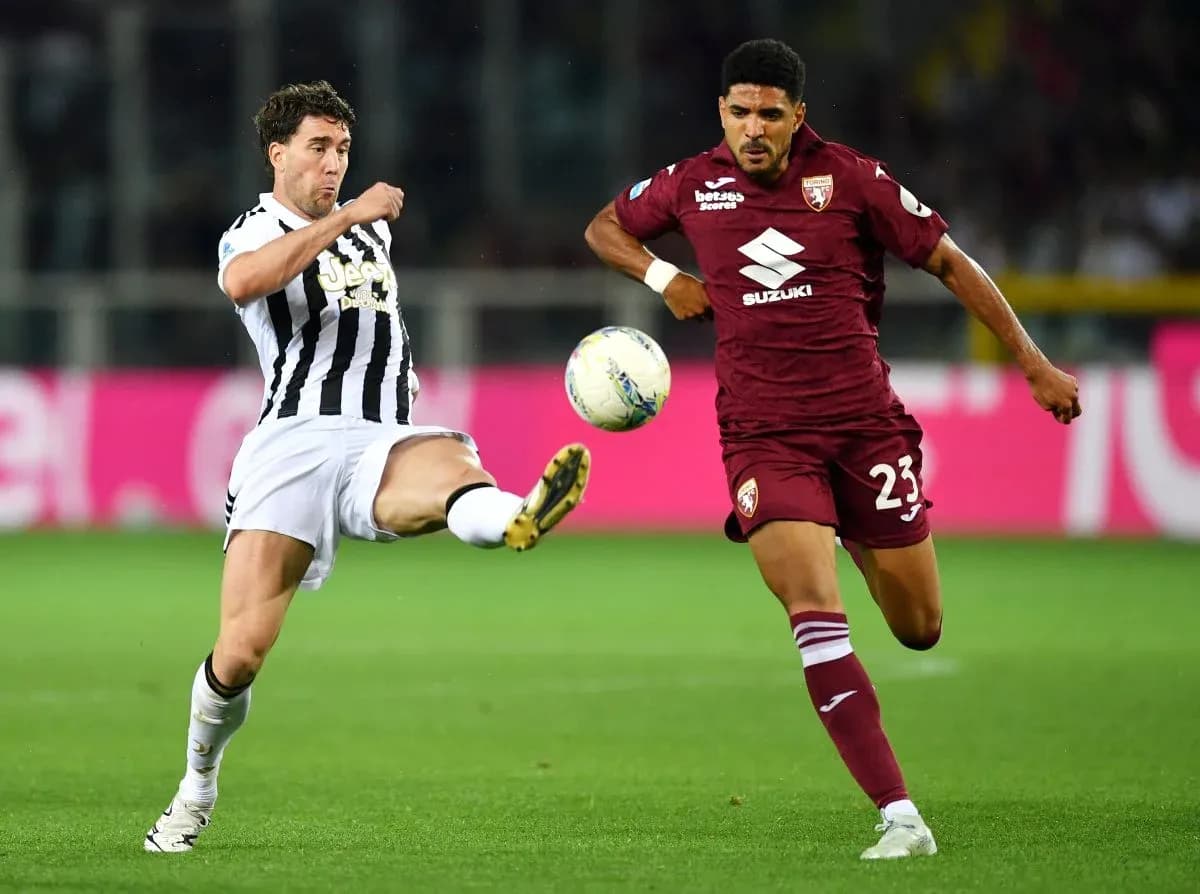
Torino vs Juventus: A Thrilling 2-2 Derby Draw
On the final evening of the Serie A season, Stadio Olimpico Grande Torino staged a derby that refused to obey the script. Torino, finishing 12th with 45 points and a goal difference of -19 (44 scored, 63 conceded overall), met a Juventus side closing in 6th on 69 points with a goal difference of 27 (61 for, 34 against overall).
Heading into this game, the numbers painted a clear hierarchy. Torino’s campaign had been streaky and fragile: they averaged 1.2 goals scored overall, conceding 1.7 per match, with their home output at 1.4 for and 1.5 against. Juventus, by contrast, lived in control: 1.6 goals scored and only 0.9 conceded overall, with their away profile a measured 1.4 for and 0.9 against.
Yet across 90 minutes under Luca Zufferli’s watch, the derby finished 2–2. Juventus led 1–0 at half-time, but Torino’s 3-4-1-2 under Leonardo Colucci clawed the game back, refusing to bow to the numbers. Luciano Spalletti’s Juventus, in their familiar 3-4-2-1, had enough structure to leave with a point, but not enough ruthlessness to impose their season-long superiority.
Tactical Voids and Discipline
Both coaches arrived with notable absences that reshaped their defensive cores. Torino were without Z. Aboukhlal (muscle injury), F. Anjorin (hip), L. Marianucci (knee) and, crucially, G. Maripan suspended for yellow cards. Juventus travelled without Bremer, also out through yellow-card accumulation.
For Torino, the Maripan absence pushed responsibility onto a back three of S. Coco, A. Ismajli and E. Ebosse in front of A. Paleari. Without their suspended organiser, Colucci leaned into compactness and numbers rather than individual dominance, trusting the double screen of E. Ilkhan and G. Gineitis to protect central zones.
Juventus, missing Bremer, turned to a trio of P. Kalulu, F. Gatti and L. Kelly in front of M. Perin. Spalletti’s structure still resembled the season’s template, but the absence of their primary penalty-box marshal subtly changed the risk profile, especially against the physical pairing of G. Simeone and D. Zapata.
Disciplinary trends added another layer to the tactical psychology. Heading into this game, Torino’s yellow-card pattern showed a clear late-game surge: 21.13% of their yellows arrived between 76–90 minutes, with another 21.13% in added time (91–105). Juventus, too, spiked late, with 23.08% of their yellows between 61–75 and 21.15% from 76–90.
That shared tendency meant the closing stages were always likely to be ragged and combustible. Torino’s only red in the league had come between 46–60 minutes, while Juventus had split their two reds across 31–45 and 76–90. This was a derby primed to tilt on fatigue and emotion, and the 2–2 final felt like the natural outcome of two sides living on that edge without fully tipping over it.
Key Matchups
For Torino, the “hunter” was clear: Giovanni Simeone, one of Serie A’s leading scorers this season with 11 league goals. Across 32 appearances, Simeone generated 59 shots with 28 on target, a volume finisher who thrives on early service and penalty-box chaos. His duels profile (294 contested, 112 won) underlined how much of his work comes with his back to goal, fighting for inches.
His target on the night was a Juventus defence that, heading into this game, had conceded just 34 goals in 38 matches, with only 18 on their travels. An away average of 0.9 goals conceded per match placed them among the league’s elite shields. Gatti’s physicality and Kelly’s timing were central to that, but without Bremer, Juventus lacked their most dominant aerial presence.
Simeone’s movement between Kalulu and Gatti, with Zapata pinning the line, forced Juventus’ back three into uncomfortable body positions. Torino’s wing-backs, M. Pedersen and R. Obrador, stretched the pitch, allowing N. Vlasic to operate in the half-spaces and slide passes into Simeone’s diagonal runs. Against a unit used to controlling the box, Torino’s twin-striker approach asked continuous, awkward questions.
On the other side, Juventus’ most dangerous “hunter” did not start but hovered in the squad list: K. Yıldız, with 10 goals and 6 assists in the league. Across 36 appearances, he produced 64 shots (40 on target) and 76 key passes, a dual threat who bends games from the left half-space. He also won 176 of 348 duels, showing how aggressive he is between the lines.
His task all season had been to probe defences like Torino’s, which had allowed 63 goals overall and 29 at home. With an overall concession average of 1.7 per match, Torino’s structure is prone to being pulled apart by clever movement and quick combinations – exactly the profile Yıldız embodies when on the pitch. Even when he was not in the starting XI here, his season context framed the danger zone: those pockets between Coco and Pedersen, and between Ismajli and Ebosse, are where Juventus’ best creator loves to live.
The Engine Room
If the front lines provided the fireworks, the game’s control centre lay in the duel between creators and enforcers. For Juventus, Manuel Locatelli was the metronome and shield. Across the campaign he completed 2805 passes at 88% accuracy, with 47 key passes and a defensive line of 102 tackles, 23 blocks and 39 interceptions. He also carried 9 yellow cards, the classic profile of a deep midfielder who lives on the edge to protect his centre-backs.
His opposite numbers in claret were E. Ilkhan and G. Gineitis, tasked with compressing his space and disrupting Juventus’ rhythm. Behind them, Torino’s season-long card profile – particularly the late spike – hinted at how often those midfielders are forced into recovery fouls as games stretch.
Further ahead, the creative duel was between Vlasic’s roaming role and Juventus’ twin playmakers Francisco Conceição and W. McKennie. Conceição’s 5 assists, 42 key passes and 54 successful dribbles from 102 attempts make him a one-man chaos generator between the lines. McKennie, with 5 goals, 5 assists and 48 key passes, adds a more vertical, late-arriving threat, while also contributing 40 tackles and 8 successful blocks.
Together, Conceição and McKennie formed a rotating “engine” behind D. Vlahovic, drifting into the spaces just outside Torino’s back three. Every time Locatelli could find them early, Juventus threatened to unpick a Torino side that has kept 12 clean sheets overall but still conceded heavily when the block is broken.
Statistical Prognosis and xG Logic
Following this result, the 2–2 draw felt like a statistical compromise between Torino’s volatility and Juventus’ solidity. Juventus’ season-long defensive numbers suggested they should restrict opponents to low xG: 0.9 goals conceded on their travels, 16 away clean sheets in total home-and-away combined, and only 7 defeats overall.
Torino, by contrast, entered with a profile that hinted at both danger and vulnerability. At home they averaged 1.4 goals scored and 1.5 conceded, a narrow negative margin that often leaves matches hanging on fine details. Their 11 failed-to-score outings overall showed how streaky their attack could be, but their biggest home win of 4–1 and their capacity to score 4 in a single match underlined an ability to explode when the structure clicks.
Blend those trends and the expected narrative before kick-off would have been a tight Juventus win or a low-scoring draw, with xG leaning towards a 1–1 or 1–2 type game in the visitors’ favour. Instead, Torino managed to drag the contest into their preferred zone: emotionally charged, stretched, and decided in the penalty areas rather than in midfield control.
Juventus’ own attacking averages – 1.4 goals scored away, with 26 on their travels – map neatly onto a two-goal output in a derby where their creators, especially Conceição and McKennie, could regularly find pockets. The fact that Torino matched that tally speaks to the impact of Bremer’s absence, Simeone’s penalty-box craft, and the way Colucci’s 3-4-1-2 was able to overload central channels.
From an xG perspective, the draw can be read as Juventus underperforming their defensive baseline rather than collapsing entirely, and Torino slightly overperforming against an elite back line. The season-long evidence still paints Juventus as the more sustainable project: a side whose 19 wins, 12 draws and only 7 losses are built on repeatable defensive habits and a growing creative spine around Locatelli, Yıldız, McKennie and Conceição.
But this derby, on this night, belonged to nuance rather than narrative. Torino ended their season by bending the numbers just enough to stand level with a superior side. Juventus, meanwhile, were reminded that even a defence conceding only 34 goals overall can be made to suffer when a striker like Giovanni Simeone, in a structure tailored to his instincts, is given just enough service and chaos to hunt.
Related News
Frosinone vs Como Prediction: Key Stats and Betting Tips

Fiorentina vs Napoli Prediction: Key Stats and Betting Tips
AS Roma vs Inter: Serie A Showdown on 19 September 2026
Inter’s Dominance in 5–3 Win Over Udinese
AS Roma vs Inter Prediction: Key Stats and Betting Tips
Lazio and AC Milan Battle to a 2–2 Draw: Early Serie A Insights