
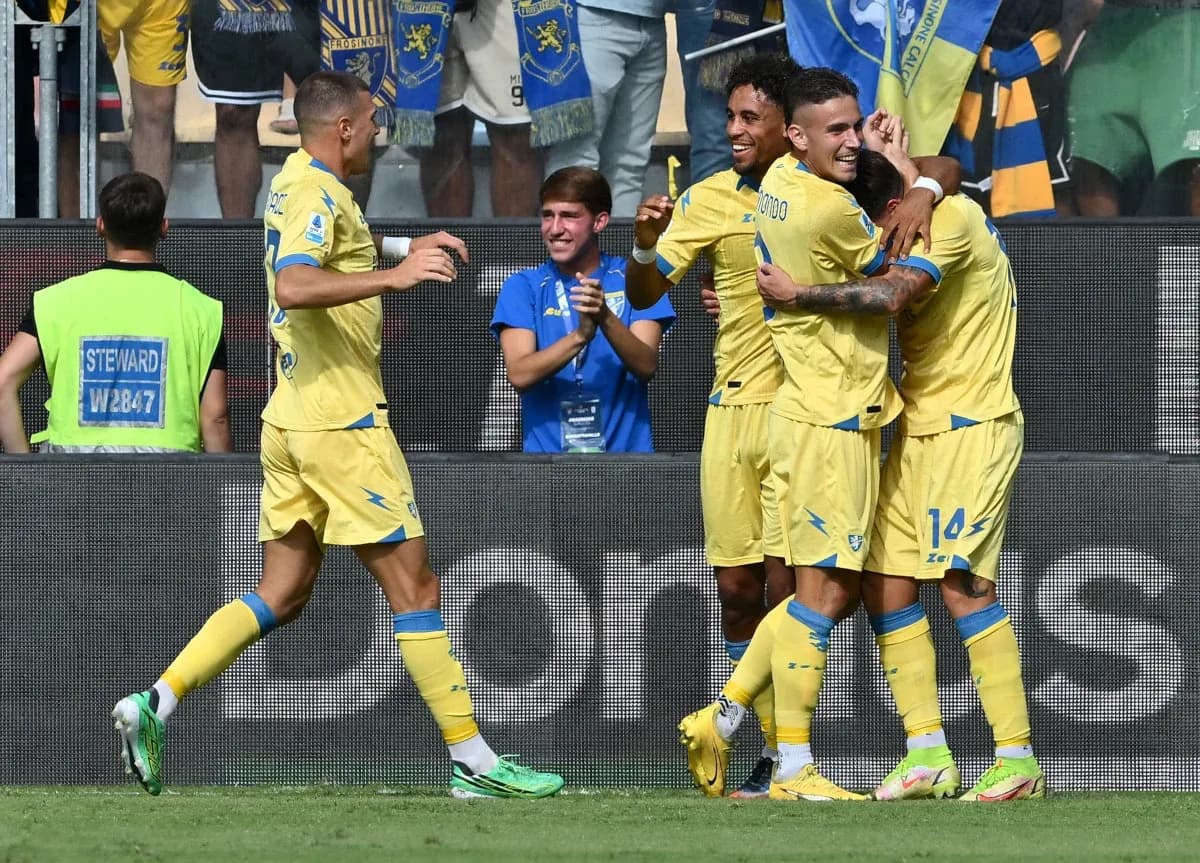
Frosinone's Tactical Mastery Secures 2–0 Victory Over Como
The afternoon at Stadio Benito Stirpe closed with a statement: Frosinone are no longer just plucky survivors in Serie A; they are a structured, aggressive unit capable of imposing their game on ambitious visitors like Como. A 2–0 home win, built by half-time and calmly managed to full-time, consolidates Frosinone’s rise to 6th with 10 points and a goal difference of +5, from 9 goals scored and 4 conceded in total. Como, level on 10 points but with a total goal difference of +3 (9 for, 6 against), leave Frosinone in 8th and with a clearer understanding of their own structural flaws.
I. The Big Picture – Two 4-2-3-1s, one clearer identity
Both sides mirrored each other on paper with a 4-2-3-1, but only one side made the shape feel coherent.
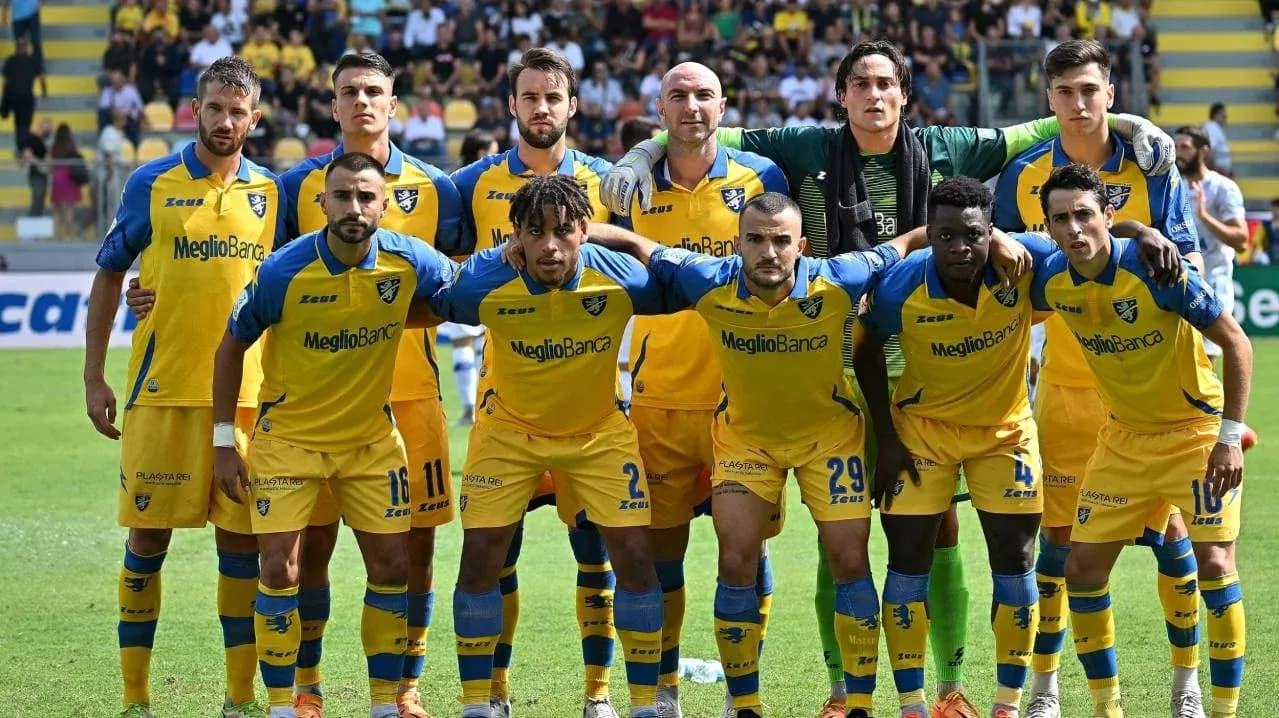
Massimiliano Alvini’s Frosinone lined up with L. Palmisani in goal behind a young but combative back four of A. Oyono, G. Calvani, I. Monterisi and G. Bracaglia. In front, the double pivot of G. Calo and P. Masini acted as the stabilising hinge, freeing a dynamic trio of F. Ghedjemis, R. Schmid and G. Kvernadze to swarm between the lines behind lone striker A. Raimondo.
Cesc Fabregas sent Como out in the same formation: J. Butez in goal, a back line of Y. Couto, J. Ramon, T. Chalobah and A. Valle, with L. Milla and L. Da Cunha as the double pivot. Ahead of them, A. Diao, N. Paz and M. Baturina supported centre-forward A. Douvikas. On their travels this season, Como had been efficient, with 7 away goals from 4 matches at an average of 1.8, but without a single clean sheet in total. That fragility reappeared in Frosinone.
Heading into this game, Frosinone had built their season on balance: 9 goals scored in total at an average of 1.8 per match and only 4 conceded at 0.8 per match. At home, they were scoring 1.7 and conceding 1.0 on average, suggesting controlled risk rather than chaos. Como’s total numbers told a different story: also 9 goals scored at 1.8 per match, but with 6 conceded at 1.2, and no clean sheets home or away. This was the underlying tension: Frosinone’s defensive structure against Como’s more open, transition-prone game.
II. Tactical Voids – Absences and disciplinary shadows
Frosinone entered the fixture without F. Grillitsch, ruled out with a thigh injury. On paper, that removed an experienced organiser from the centre of the pitch; in practice, it pushed even more responsibility onto Calo and Masini to manage tempo and protect the back four. They responded with a disciplined, unfussy performance, rarely leaving the centre-backs exposed.
Disciplinary trends framed the risk profile. Frosinone are one of Serie A’s more combative sides: G. Bracaglia leads the league’s yellow-card chart with 3 bookings in 5 matches, while Schmid, Raimondo and Calvani all sit on 2 yellows each. Team-wide, their yellow cards cluster between 46–60 minutes (25.00%) and are spread evenly across most other segments, underlining a side that ramps up intensity after half-time without losing control. Notably, they have no red cards in the league, despite that aggression.
Como’s cautions are fewer but more erratic: 25.00% of their yellows come late in each half (31–45, 46–60, 76–90, and even 91–105), a pattern that hints at fatigue-induced fouls and tactical desperation. In a match where Frosinone could dictate rhythm, those late-half lapses were always likely to be punished.
III. Key Matchups – Hunter vs Shield, Engine Room vs Engine Room
Hunter vs Shield: Raimondo and Kvernadze vs a porous Como block
The central attacking narrative belonged to A. Raimondo and G. Kvernadze. Raimondo came into the match as one of Serie A’s most efficient finishers: 4 goals from 10 shots, 6 on target, and a 7.02 average rating. Kvernadze, arguably Frosinone’s standout performer so far, had 3 goals, 1 assist, 9 total tackles and 30 duels won from 73 contested, plus 30 dribble attempts with 16 successful. He is both creator and disruptor, the winger who doubles as a pressing trigger.
Against them, Como offered a back line that had already conceded 5 goals away from home at an average of 1.3 per away match. T. Chalobah and J. Ramon struggled to compress space between the lines, especially with Milla and Da Cunha often dragged sideways by Frosinone’s rotating trio of Ghedjemis, Schmid and Kvernadze. Once Frosinone broke the first line of pressure, they could attack the half-spaces at pace, exactly where Como’s structure is weakest.
Engine Room: Calo & Masini vs Milla & Da Cunha
In midfield, the contest was about control rather than spectacle. Calo’s distribution and Masini’s work rate formed the quiet platform on which Frosinone’s front four could flourish. Their job was to blunt M. Baturina and N. Paz between the lines and to deny A. Diao the transition platforms he thrives on.
Baturina, one of Como’s technical leaders with 2 goals, 1 assist and an 89% passing accuracy, needs clean possession and angled support to hurt opponents. Instead, he often received under pressure, with Masini stepping out aggressively while Calo screened passing lanes into Douvikas. That forced Como’s attacks wide and into lower-percentage crossing zones, where Calvani and Bracaglia, between them responsible for 13 blocks and 12 interceptions in the league, could dominate aerially and on second balls.
On the right, Y. Couto’s adventurous runs met Kvernadze’s relentless two-way work. With 9 tackles, 1 block and 1 interception this season, Kvernadze is not just a flair winger; he is a defensive asset. His willingness to track Couto limited Como’s ability to overload that flank, and every turnover in that corridor became a launchpad for Frosinone counters.
For Como, the main creative spark remained A. Diao. With 2 goals, 1 assist, 7 tackles and 3 interceptions in total, he combines end product with pressing intensity. But against Frosinone’s compact 4-2-3-1 block, his influence was sporadic, too often receiving with his back to goal or forced into low-probability dribbles.
IV. Statistical Prognosis – Why 2–0 felt logical
The 2–0 scoreline at full-time echoed the underlying numbers each side carried into the game. Frosinone’s total average of 1.8 goals scored and only 0.8 conceded, plus 2 clean sheets already this season, pointed toward a side capable of building a lead and then closing the door. Their biggest wins – 2–0 at home and 0–3 away – show a team comfortable either dominating or counter-punching.
Como’s profile suggested the opposite: lively in attack, vulnerable at the back. With no clean sheets in total, an away defensive average of 1.3 goals conceded, and a tendency to pick up late yellow cards, they were always likely to wobble once chasing the game. Their best away result, a 1–4 win, came in a more open contest; Frosinone offered no such chaos.
Following this result, the tactical story is clear. Frosinone’s 4-2-3-1 is now an established identity: a disciplined double pivot, high-intensity wide creators in Kvernadze and Ghedjemis, and a penalty-box forward in Raimondo whose movement and finishing are already among the league’s most clinical. Behind them, a young but increasingly authoritative defence, led by Bracaglia and Calvani, marries aggression with structure.
Como remain a compelling, ambitious project under Fabregas, but this match underlined their next step: turning an entertaining, front-foot side into one that can withstand sustained pressure away from home. Until their back four and double pivot can protect leads and manage game states, afternoons like this in Frosinone will continue to expose the gap between their attacking promise and their defensive reality.
Related News
Fiorentina vs Napoli: Tactical Insights from Serie A Draw
AS Roma vs Inter: A Tactical Showdown in Serie A
AC Milan vs Lecce Predicted Lineups: Team News and Match Insights

Juventus vs Atalanta Predicted Lineups: Team News and Tactics
Frosinone vs Como Predicted Lineups: Team News for Serie A Clash

Fiorentina vs Napoli Predicted Lineups: Team News and Match Analysis