
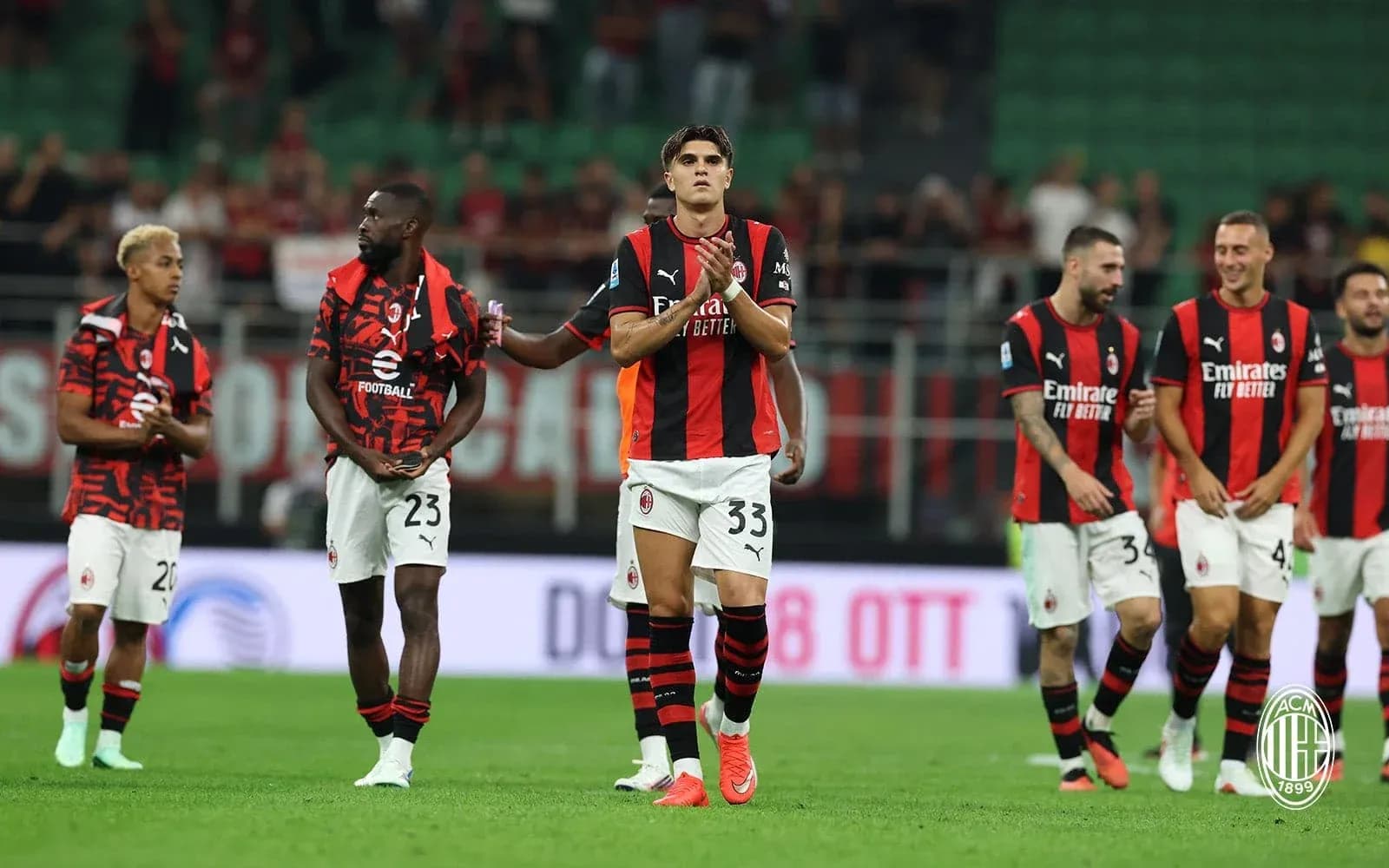
AC Milan's Tactical Dominance Revealed in 3-0 Victory Over Lecce
Under the San Siro lights, this was Ruben Amorim’s AC Milan fully revealing the tactical blueprint that has carried them into the Europa League places early in the Serie A season. A 3-0 win over Lecce in “Regular Season - 5” did more than add three points; it crystallised identities. Milan, fifth with 11 points and a goal difference of 6 (10 scored, 4 conceded overall), looked every inch a structured, possession-dominant side. Lecce, 12th with 6 points and a goal difference of -5 (5 scored, 10 conceded overall), showed both the promise of their attacking core and the fragility that continues to haunt them.
I. The Big Picture – Structures and Season DNA
Amorim stayed loyal to his 3-4-2-1, a system Milan have used in all 5 league fixtures. The back three of S. Pavlovic, K. De Winter and M. Gila set the platform, with P. Estupinan and S. Chukwueze acting as aggressive wing-backs from the listed midfield line. Ahead of them, L. Modric and A. Rabiot formed a double pivot that married control with verticality, while C. Pulisic and A. Saelemaekers floated behind lone striker G. Ramos.
The numbers heading into this game underlined how well this shape has bedded in. Overall this campaign, Milan had scored 10 goals and conceded 4 across 5 matches, with an overall average of 2.0 goals for and 0.8 against per game. At home, they had been ruthless: 2 wins from 2, 5 goals scored, none conceded, averaging 2.5 goals for and 0.0 against. The San Siro has effectively been a fortress.
Lecce arrived with a more malleable tactical identity. Eusebio Di Francesco opted for a 4-3-3 here, one of three different shapes they have already used this season (4-3-3 three times, 3-5-2 once, 4-2-3-1 once). The back four of A. Gallo, J. Siebert, K. Gaspar and Danilo Veiga screened W. Falcone, with a midfield trio of Y. Maleh, I. Ilic and S. Pierotti asked to connect to a front three of J. Monteiro, N. Stulic and L. Coulibaly.
Lecce’s season profile told a more chaotic story. Overall, they had 2 wins and 3 losses, with 5 goals scored and 10 conceded. On their travels, they had 1 win and 2 defeats, scoring 2 and conceding 4, averaging 0.7 goals for and 1.3 against away from home. They are dangerous in flashes but structurally porous.
II. Tactical Voids – Absences and Discipline
If Milan’s squad looked deep and coherent, Lecce’s came with important absences. M. Berisha (lacking match fitness), O. Gandelman (inactive), W. Geubbels (ankle injury) and Tiago Gabriel (injury) were all ruled out. None are in the matchday list, so their absence didn’t create direct holes in the starting XI, but it narrowed Di Francesco’s options to change the game from the bench, especially in attacking rotations and midfield energy.
On the disciplinary front, Milan’s season profile is quietly telling. Their yellow-card distribution is heavily backloaded: 25.00% of their cautions come between 46-60 minutes, another 25.00% between 61-75, 25.00% from 76-90, and 25.00% in added time from 91-105. This paints a picture of a side that pushes the physical and tactical line in the second half, when protecting leads or counter-pressing to kill games.
Individually, S. Pavlovic embodies that controlled aggression. Over the season he has made 13 tackles, 2 blocks and 1 interception, while committing only 3 fouls and taking 2 yellow cards. He is also listed among the league’s notable red-card profiles, a reminder that his intensity has a thin margin for error.
For Lecce, Danilo Veiga is the disciplinary flashpoint. With 3 yellow cards and a place among the league’s leading red-card profiles, he has committed 8 fouls while engaging in 57 duels and 15 tackles, blocking 2 shots. His duel volume shows how exposed he can be on that flank; his bookings underline the risk.
III. Key Matchups – Hunter vs Shield, Engine Room Battles
The “Hunter vs Shield” duel here was more systemic than individual: Milan’s multi-headed attack against Lecce’s shaky defensive record. Overall this campaign, Lecce had conceded 10 goals in 5 matches, averaging 2.0 against per game. Away, that average was 1.3, but that figure met a Milan home attack averaging 2.5 goals per game at San Siro, with 5 scored and 0 conceded at home before this fixture. The 3-0 scoreline felt like the logical collision of those trends.
Within Milan’s squad, the sharpest hunter has been Diego Moreira. Off the bench this season, he has 3 goals from 4 shots (3 on target), with a rating of 7.8 and 62 completed passes at 90% accuracy. Even though he started on the bench here, his presence loomed over the game: a high-impact runner to exploit tired legs if required. In front from early on, Milan never needed to chase, but his profile explains why opponents cannot relax against this bench.
For Lecce, L. Coulibaly carried the attacking burden from midfield. He came into the match with 2 goals and 1 assist in 5 appearances, taking 5 shots (3 on target) and winning 27 of 50 duels. His role on the right of the front three was to attack the half-space around Pavlovic and Estupinan. But with Milan’s back three stepping out confidently and Estupinan pinning him back with forward runs, Coulibaly’s usual surges were often forced into deeper, less threatening zones.
The “Engine Room” contest was perhaps the most decisive. A. Rabiot and L. Modric controlled the central corridors against I. Ilic and Maleh. Rabiot’s season line – 2 goals, 2 assists, 209 passes at 88% accuracy, 4 key passes – shows a midfielder who not only recycles but penetrates. Opposite him, Ilic has been Lecce’s main organiser, with 2 assists and 141 passes at 89% accuracy. Yet, under Milan’s press, Ilic’s ability to turn and play forward was smothered; he spent more time firefighting than threading passes into Stulic or Monteiro.
Wide, S. Chukwueze’s duel with Gallo and Maleh tilted the pitch. Chukwueze entered the game with 2 assists, 10 key passes and 14 dribble attempts with 8 successful. His direct running stretched Lecce’s left side, dragging Veiga and the central defenders into wider cover positions and opening interior lanes for Pulisic and Saelemaekers between the lines.
IV. Statistical Prognosis – xG Proxy and Defensive Solidity
While raw xG values are not provided, the season data gives a clear proxy for expected territory and chance quality. Milan’s overall average of 2.0 goals for per match, combined with an overall average of 0.8 against, and 2 home clean sheets in 2 matches, points to a side that consistently creates high-quality chances while allowing very few. They had not failed to score once this season heading into this game, and at home they had not conceded at all.
Lecce’s profile is almost the inverse. Overall, they average 1.0 goal for and 2.0 against per match. They have already failed to score in 3 of their 5 league games, and on their travels they average just 0.7 goals for. That attacking inconsistency, combined with a defence that concedes 3.0 goals per game at home and 1.3 away, suggests that their xG against is routinely higher than their xG for.
Overlaying these trends, a Milan win with a multi-goal margin and a strong xG advantage was always the most probable scenario. The 3-0 scoreline at San Siro, with Milan again keeping a clean sheet at home and adding to their tally of 10 goals overall, fits seamlessly into the statistical arc of their season. Lecce, brave in intent but undermined by structural looseness and key absences, were always likely to be chasing shadows once Milan’s first wave of pressure broke through.
Related News

Juventus vs Atalanta: Serie A Showdown Highlights
Frosinone's Tactical Mastery Secures 2–0 Victory Over Como

Fiorentina vs Napoli: Tactical Insights from Serie A Draw
AS Roma vs Inter: A Tactical Showdown in Serie A

AC Milan vs Lecce Predicted Lineups: Team News and Match Insights

Juventus vs Atalanta Predicted Lineups: Team News and Tactics