
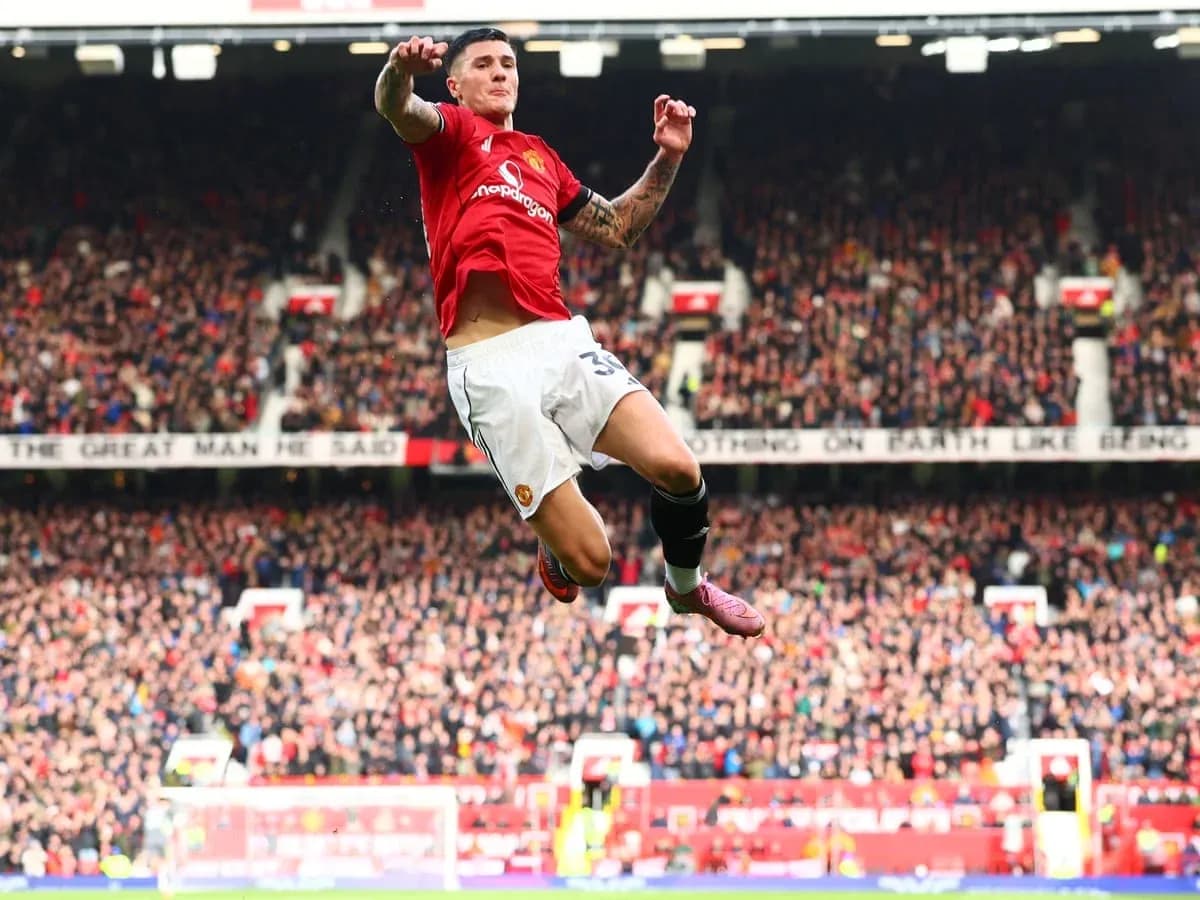
Sunderland vs Manchester United: Premier League Clash Preview
The lights will burn a little brighter at Stadium of Light in Sunderland on 9 May 2026, as Sunderland welcome Manchester United for a Premier League clash that means very different things to each club: consolidation and pride for the hosts, Champions League security and an outside title statement for the visitors.
Season Context
For Sunderland, this campaign has been about proving they belong back at this level. Sitting 12th with 47 points from 35 matches, they have combined resilience with occasional fragility (goal difference -9 from 37 scored and 46 conceded). Mid-table safety is virtually assured, but with just three games left, every point can nudge them closer to the top half and turn a solid return into a genuinely impressive one.
Manchester United arrive in the North East with heavier expectations. Third place with 64 points from 35 games reflects a side that is dangerous but not flawless (63 goals scored, 48 conceded). With a positive goal difference of 15 and a position described as “Promotion - Champions League (League phase)”, they are closing in on their primary objective; now the aim is to lock it in and keep pressure on the sides above them.
Form & Momentum
Sunderland’s recent league sequence of DLLWW paints a picture of a team that has mixed setbacks with timely responses (12 wins, 11 draws, 12 losses overall). The double defeat at the start of that run underlines their inconsistency (goal difference -9), but back-to-back wins to follow show a side capable of reacting positively (eight home wins from 17).
Manchester United’s WWWLD run underlines a generally strong rhythm (18 wins from 35) with only the occasional stumble (seven defeats). A three-game winning surge within that sequence highlights their capacity to build momentum (63 goals scored, average 1.8 per match in league statistics), while the late draw and defeat remind that their defensive record remains imperfect (48 goals conceded).
Head-to-Head Patterns
Recent history leans clearly towards Manchester United, especially in league play. The most current meeting finished Manchester United 2-0 Sunderland (Premier League, October 2025), a controlled home win that reaffirmed the gap between the clubs. At Stadium of Light, United also ran out convincing winners in Sunderland 0-3 Manchester United (Premier League, April 2017), showing they can dominate this fixture on Wearside. Sunderland’s reminder that they can bite back came in Sunderland 2-1 Manchester United (Premier League, February 2016), a spirited home victory that still lingers in local memory as proof that this ground can unsettle the visitors.
Tactical Preview
Sunderland’s tactical identity this year has been built on flexibility from a base of organisation. Their most-used shape is 4-2-3-1 (18 matches), giving them a clear double pivot in midfield and a line of three behind the striker to link with the lone forward. They have not been afraid to adapt, switching at times to 4-3-3 and 5-4-1 (five matches each), as well as 4-4-2 and 4-1-4-1 (three matches each) and even 3-4-3 (one match), underlining a willingness to tailor the game plan (12 wins, 11 draws, 12 losses overall).
In possession, Sunderland’s numbers suggest a side that builds patiently rather than explosively (37 goals in 35 league matches, average 1.1). The presence of G. Xhaka as a leading creator with six assists and 1,599 passes at 83% accuracy indicates a midfield metronome who can switch play and feed runners (33 key passes, rating 7.27). Alongside him, E. Le Fée contributes both graft and incision (five assists, 44 key passes, 81 tackles), making Sunderland’s central trio a genuine strength when they go with a three-man midfield. Their home record of 23 goals scored and 19 conceded in 17 matches suggests they are competitive and relatively balanced at Stadium of Light.
Defensively, Sunderland are combative but can be stretched. Players like T. Hume and D. Ballard rank high in duels (Hume 312 duels, 167 won; Ballard 285 duels, 168 won), while Reinildo adds aggression on the flank or as a left-sided defender (29 interceptions, 13 blocks). However, the overall concession of 46 league goals and a goal difference of -9 points to moments where that back line is exposed, especially when they push bodies forward. Their clean-sheet tally of 10 in league play shows that when the structure holds, it can be stubborn, but lapses remain a theme.
Manchester United, by contrast, have a clearer split between two main systems: 3-4-2-1 (18 matches) and 4-2-3-1 (17 matches). The back-three variant gives them an extra central defender and wing-backs to stretch the pitch, while 4-2-3-1 leans into their attacking midfield strength. With 63 goals from 35 league fixtures and an away return of 27 goals in 17 matches, they carry consistent threat both home and away.
In the final third, they are led by a diversified attacking cast. B. Šeško’s 11 league goals from 51 shots (34 on target) make him a natural focal point, while Matheus Cunha’s nine goals and 30 key passes hint at a hybrid forward who can both score and create. B. Mbeumo adds nine goals and 46 key passes, offering width and direct running. Behind them, Bruno Fernandes is the creative axis of the side: 19 assists, 121 key passes and 1,826 completed passes at 82% accuracy underscore his central role in unlocking defences and dictating tempo.
Out of possession, United are intense but not immune. Their concession of 48 league goals, including 26 away, shows that even with strong defensive personnel such as L. Shaw (71 tackles, 42 interceptions) and H. Maguire (87 duels won from 119), they can be opened up, particularly when committing numbers forward. Casemiro’s dual role as destroyer and late runner (88 tackles, 27 blocks, nine goals) gives them bite in midfield, but his nine yellow cards reflect the edge he plays with.
This tactical clash therefore sets up as Sunderland’s structured, adaptable block and set-piece threat against United’s more expansive, multi-layered attack. The hosts will likely lean on Xhaka and Le Fée to control central zones and release quick counters to B. Brobbey and other forwards, while United will try to pin Sunderland back with Bruno Fernandes between the lines and a rotating front line working the channels.
Statistical Snapshot
- Competition: Premier League, season 2025 — 9 May 2026.
- Venue: Stadium of Light, Sunderland.
- Prediction: Win or draw — Double chance : draw or Manchester United.
- Win Probabilities: Home 10% / Draw 45% / Away 45%.
- Model: Sunderland 35.5% — Manchester United 64.5%.
Betting Verdict
The prediction model leans strongly towards Manchester United avoiding defeat, and the bookmakers broadly agree, with away prices clustering around 1.90–1.97 and Sunderland out at roughly 3.7–4.0. United’s superior attacking numbers (63 league goals, strong recent run of WWWLD) and their dominant recent head-to-head record in league meetings support the “Double chance : draw or Manchester United” angle. Sunderland’s solid home record and the memory of that 2-1 win in February 2016 warn against writing them off entirely, but the balance of form, firepower and underlying metrics makes siding with United on the double-chance market the analytically sound play.
Related News

Tottenham vs Aston Villa Predicted Lineups: Team News for Premier League Clash
Brighton vs Arsenal: Premier League Clash Preview

Manchester City vs Sunderland: Premier League Clash Preview
Tottenham vs Aston Villa: Early Relegation Battle

Brentford vs Chelsea Predicted Lineups: Team News and Match Insights
Brighton vs Arsenal Prediction: Key Stats and Betting Tips