
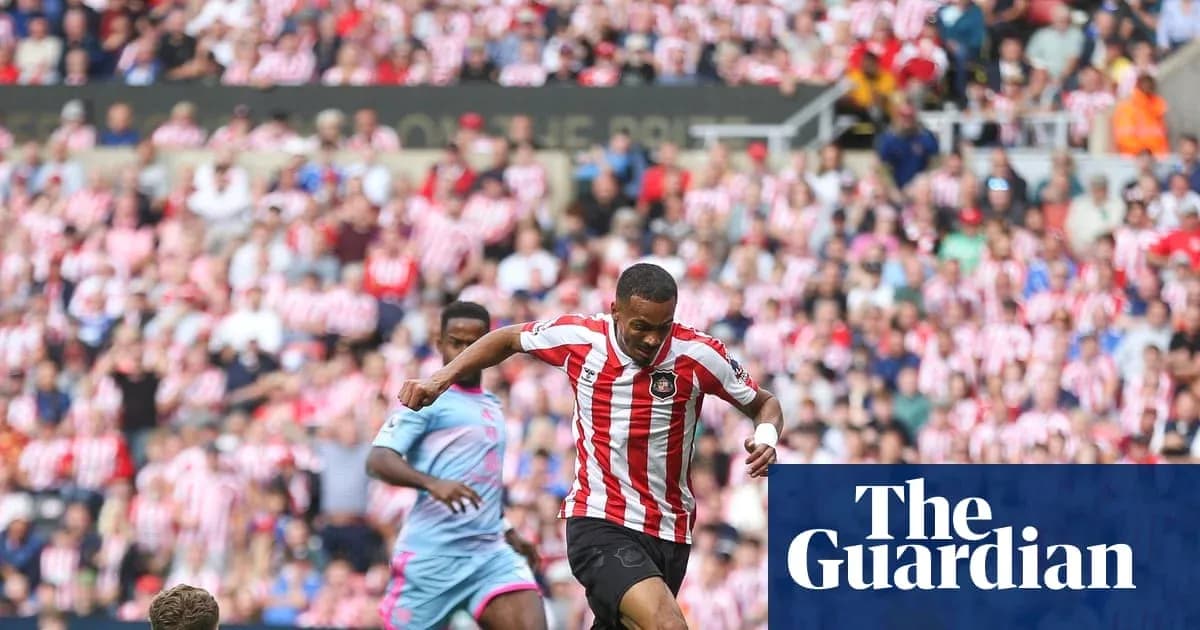
Sunderland Secures First Win Against Fulham with Late Goals
Álvaro Arbeloa stood still at the final whistle, lost in thought. On the opposite bench, Régis Le Bris simply exhaled. Relief, not joy, washed over him. This was a game framed by fear of losing, settled by two players who did not even start it.
Habib Diarra and Wilson Isidor came off the bench and tore up the script. Diarra’s burst, Isidor’s finish – one sharp move, one ruthless strike – and Sunderland finally had their first win of the season. Fulham, still pointless, were left nursing more than a narrow defeat. Isidor’s goal also snapped a 17-year wait for a Premier League victory against Fulham, a long, awkward statistic quietly buried on Wearside.
Sadiki sets the tone
For 45 minutes, the match crept along in low gear. Sunderland saw plenty of the ball but rarely threatened. Fulham, wary and conservative, carried even less bite.
One player rose above the drift. Noah Sadiki bossed central midfield with a calm authority, repeatedly snuffing out Fulham’s attempts to break. Time and again the Democratic Republic of the Congo international stepped in, intercepted, and reset. He turned what might have been dangerous transitions into routine clearances.
Fulham’s only real chance of the first half came when Alex Iwobi finally found a gap and slipped Josh King into space. King, from a tight angle, tried to conjure something special but misjudged it, his effort skewed and defeated by the geometry of the situation. Robin Roefs barely had to move. The Sunderland goalkeeper otherwise spent the opening period as a spectator.
At the other end, Bernd Leno had a similarly quiet time. Sunderland’s dominance of possession lacked teeth. Their attacks fizzled out before they could truly test Fulham’s No 1, the home side circulating the ball neatly without ever really carving the visitors open.
By half-time, the game sat in a nervous stalemate. The patterns were clear, the problems obvious. Up in the stands, owner Kyril-Louis Dreyfus did not need a scouting report to understand why Le Bris is pushing hard for a specialist right-winger and another striker before the transfer window closes. Sunderland controlled the ball but not the scoreboard.
Mukiele’s warning tackle
Le Bris at least had one major reinforcement back in his defence. Nordi Mukiele, restored to the heart of the back line after injury, quickly showed why his presence matters so much on Wearside.
Early in the second half, Fulham finally sprang Sunderland open. Sander Berge sliced the home defence apart with a superb through pass, sending Gonzalo García racing clear. García, who had scored in each of his first two competitive games since arriving from Real Madrid, seemed certain to continue that streak.
Then Mukiele arrived. One perfectly timed, full-blooded sliding challenge, and the chance vanished. The tackle did more than keep the scores level; it sent a message. Sunderland might be short of cutting edge up front, but they were not about to give anything away cheaply at the back.
Even so, García’s movement and pedigree hinted at a threat Sunderland could not ignore. Fulham began to stitch a few attacks together, their passes a little crisper, their confidence growing. The balance of the game started to tilt.
Le Bris reacted first.
The double change that changed everything
Spotting the shift, the Sunderland manager rolled the dice. Off went the ineffective Nilson Angulo and Brian Brobbey. On came Habib Diarra and Wilson Isidor, charged with injecting pace and directness into a game crying out for both.
The effect was almost immediate.
Enzo Le Fée, who had been quietly probing all afternoon, suddenly had runners to hit. He whipped a gorgeous first-time ball across the face of goal, begging to be finished. Isidor arrived right on cue. It looked harder to miss than score.
He missed.
Stretching to connect, Isidor somehow managed to steer the ball against the base of the post. The stadium groaned. Le Bris dropped to his knees in disbelief, hands to his head. Isidor stared at the turf, stunned. A golden chance gone, and with it, perhaps, Sunderland’s moment.
But the game had changed. Sunderland were now playing higher, faster, more aggressively. Fulham’s high defensive line, previously comfortable, suddenly looked exposed.
Redemption, at high speed
Isidor did not have to wait long for another opportunity. Sunderland pressed again, this time with Diarra driving into space and reading the gaps in Fulham’s back line.
Diarra whipped a superb ball across the box, fizzing into the danger area with purpose. Isidor attacked it, no hesitation this time. His shot, struck with venom and precision, ripped past Leno before the goalkeeper could properly set himself.
One chance squandered, the next buried. Redemption, delivered at high velocity.
The goal ignited the stadium and vindicated Le Bris’s bold changes. Diarra and Isidor had not just combined for a decisive moment; they had transformed the entire tempo of Sunderland’s play. Fulham, who had begun to edge forward, were suddenly scrambling backwards, their high line repeatedly threatened by the fresh legs and direct running of the home substitutes.
Diarra’s influence, though, was cruelly brief. An injury soon forced him off, Chris Rigg sent on in his place. The momentum, however, stayed with Sunderland. The damage had already been done.
Isidor’s finish ended the long winless Premier League run against Fulham, delivered Sunderland’s first victory of the campaign, and handed Arbeloa an early-season problem to solve. For Le Bris, it underlined something else: when the window closes, will he have enough firepower that such cameos no longer need to be perfect to decide nights like this?
Related News
PSG's Senny Mayulu Injured During France U21 Match
Italy’s Giacomo Raspadori Withdraws from Nations League Ahead of France Clash
Holger Rune's First ATP Tour Match Since Achilles Injury Set at Japan Open
Liverpool Faces New Setback as Cody Gakpo Leaves Netherlands Match Early
Denmark's Brian Riemer Confirms Patrick Dorgu Injury Withdrawal from National Squad
Real Madrid Concerned as Konaté Exits France Camp with Knee Injury