
Premier League and Championship: Navigating a Three-Week Break
The club game has slammed on the brakes – and this time, it is not a quick pit stop.
For the first time, the Premier League and Championship have shut down for three weeks, not the usual two. The calendar has been ripped up and stitched back together so that the four fixtures once split across September and October are now crammed into a single international window.
On paper, domestic football actually wins a week back. In reality, managers are staring at a different problem: how do you keep elite athletes sharp when they have no competitive football for 21 days?
Across England, the answers vary wildly.
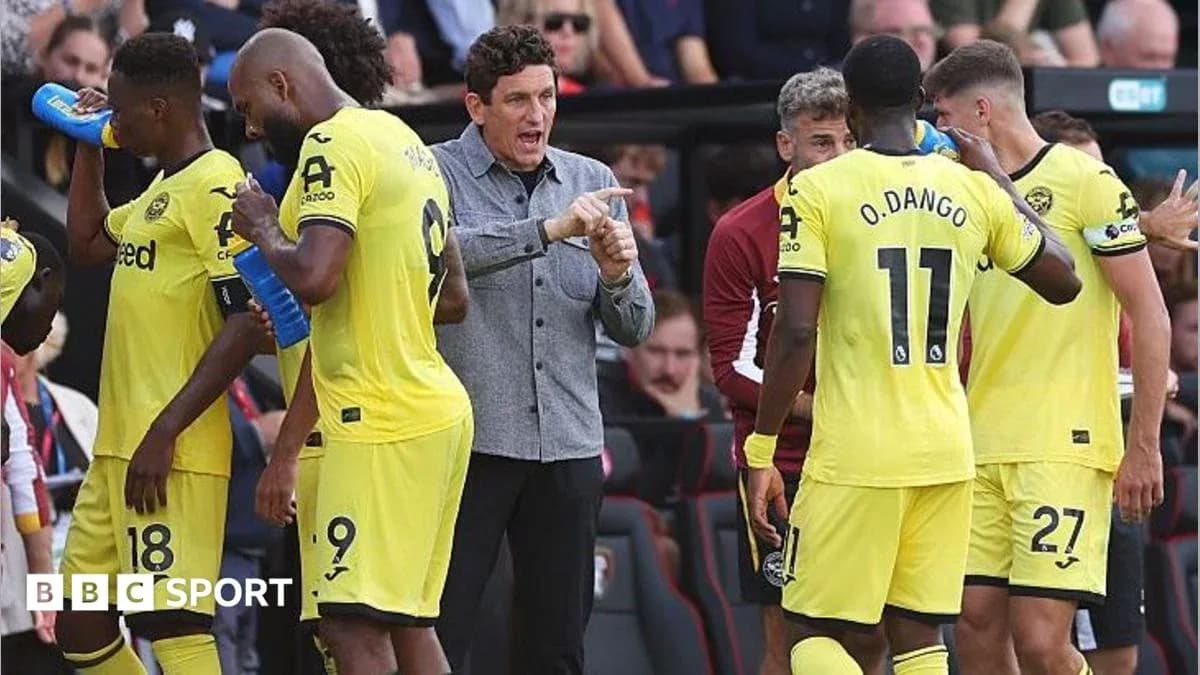
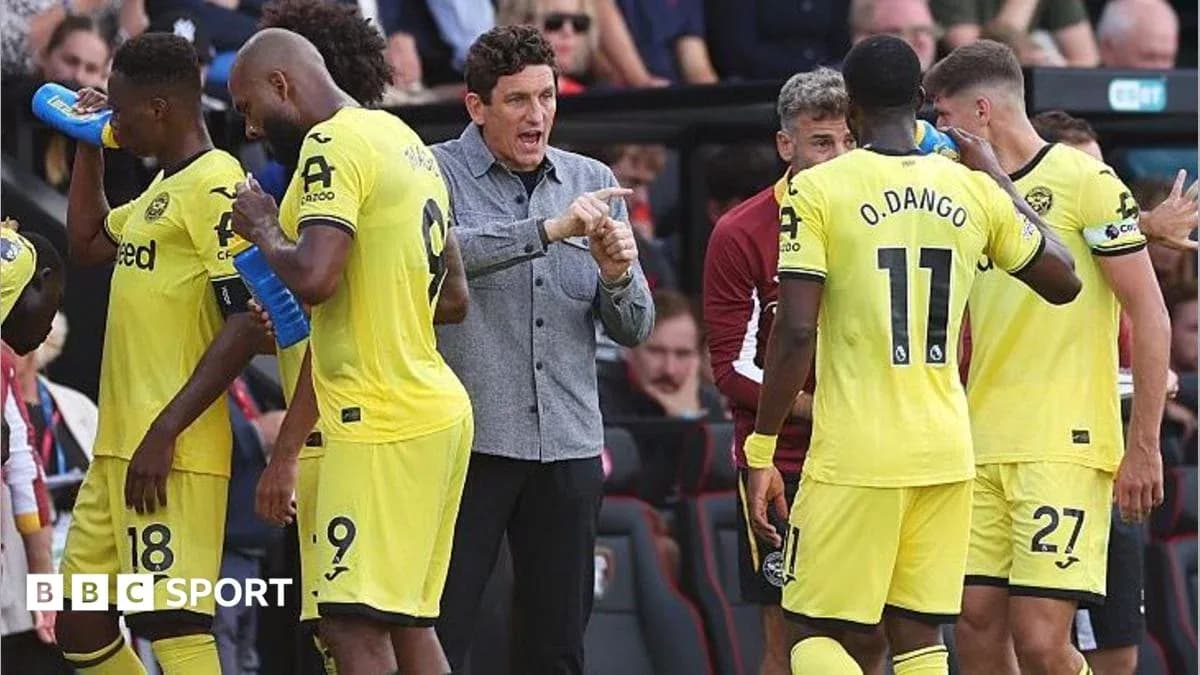
Brentford: a week off, a quiet return, and a secret friendly
At Brentford, the training ground is almost echoing.
The bulk of the Bees’ squad are away with their countries. Around a dozen players remain, among them Callum Wilson and Igor Thiago, plus five more working their way back from injury. Because they hosted Chelsea on the Friday before the break, Brentford’s pause is even longer than most.
Keith Andrews has chosen to lean into the gap. His first-team players have been given a full week off, armed with individual training programmes. They are free to leave the country, though nobody at the club expects to see long-haul trips rubber-stamped. Rest is one thing; jet lag is another.
The squad will regroup on Saturday, 26 September, when the real work starts again. From there, they build towards a behind-closed-doors friendly against another English club on the weekend of 3 October.
That low-key fixture could be crucial. It offers a potential route back for defenders Nathan Collins and Sepp van den Berg, with the rest of the group likely padded out by under-21 players. Match rhythm without the scrutiny, minutes without the pressure.
The second international window will be a different beast. Brentford play Brighton on Sunday, 8 November and are back again against Everton on Saturday, 21 November. The gap is shorter, the schedule tighter. Players might get the odd day off, but Andrews is planning a more traditional block of training and no friendly – just straight into Everton preparation.
Liverpool: skeleton crew, huge opponent
At Liverpool, the picture is familiar: a powerful squad scattered across the globe.
Those left behind will keep training, with a few days off to break up the monotony. It is hardly a full pre-season reboot. Manager Andoni Iraola knows he will be working with a reduced group and then rushing to knit his team back together at the last minute.
By the time his internationals return, he expects “no more than three days probably to prepare” for Manchester City’s visit to Anfield on 11 October. Three days to reset, recondition, and plan for the champions. The calendar has given him time; the call-ups have taken it away.
Aston Villa: Emery goes home, with purpose
Aston Villa’s break has a very different feel.
Unai Emery is heading back to Sevilla, the club where he won three Europa League titles in a row and carved his name into the competition’s history. This is not a nostalgic trip, though. Villa will face Sevilla in the 15th edition of the Antonio Puerta Trophy on Friday, 2 October.
The match carries weight beyond tactics and fitness. It honours Antonio Puerta, the Sevilla wing-back who died aged 22 on 28 August 2007 after suffering multiple cardiac arrests during a La Liga game against Getafe.
For Villa, it is a high-level friendly in a charged setting, a chance to keep those not on international duty sharp in a stadium that demands intensity. For Emery, it is a return to a place that shaped his career, with a squad that he now believes can compete with anyone.
Championship clubs: fewer call-ups, more opportunity
Drop into the Championship and the landscape changes.
Squads are not gutted in quite the same way. Many clubs lose only a handful of players. Blackburn Rovers, for instance, have just four call-ups.
For Tony Mowbray, that is a blessing. He walked back into Ewood Park in the summer and immediately ran into an injury crisis, with more than 10 players ruled out in the early weeks of the season. The break hands him something he has barely had since returning: time.
Rovers can now ease players back in. Gady Beyuku and Moussa Baradji have already made their comebacks. Scott Wharton is edging closer. After the trip to Portsmouth on Saturday, Blackburn headed home to Lancashire and straight into a few solid days on the grass.
The schedule has been relentless, with league games and the Carabao Cup piling up. This pause finally lets Mowbray work properly with his squad, to imprint ideas rather than simply recover and react.
But he is not turning it into a boot camp. Players will get a few days off at the end of the week. Someone like Yuri Ribeiro can fly back to Portugal if he wants, recharge, see family.
Then the pattern repeats. Training in the first half of week two, a short weekend break, and in week three a return to a normal pre-match rhythm ahead of Cardiff’s visit.
Mowbray is also hunting for a behind-closed-doors friendly against a Premier League or League One side. The aim is simple: give returning players valuable minutes and keep the rest of the squad ticking over. When the shorter two-week break arrives in November, the plan will be scaled down – a brief rest, then in-house games mixing senior and under-21 players.
League One: fixtures, call-offs, and the safety net
League One sits in an awkward middle ground.
The division carries on during international breaks unless a club has at least three players called up under EFL criteria, at which point they can request a postponement. This time, that rule has torn holes in the fixture list.
On each of the two weekends within this three-week window, only four of the 12 scheduled league matches have survived. The rest are off.
Clubs saw this coming and moved early. Many lined up Football League Trophy games across these three weeks, using a competition in which rotation is already the norm to keep players active. Those ties go ahead even when league matches fall by the wayside.
Twelve teams will end up playing two trophy matches during the break, with another 10 playing once. That safety net has stopped the schedule from collapsing completely.
Only Leyton Orient and Reading were staring at the prospect of a totally blank spell. In the end, both have had just one league game postponed, so neither will be left with all three weeks empty.
The calendar experiment is under way. Some managers are embracing rest, others are chasing rhythm, a few are scrambling for opponents behind closed doors. When the league restarts and the first tackles fly in, we will find out who used the silence best.
Related News
Barcelona's International Break: Flick's Limited Squad and Gavi's Determination
England Faces Late Squad Changes for Nations League Matches
Wales Faces Portugal in Nations League A: Tactical Dilemmas Ahead
International Break: Clubs Tackle Extended Pause
Jordan Graham in Hospital After Serious Road Traffic Accident
Manchester United's Troubling Start: Carrick vs Amorim