
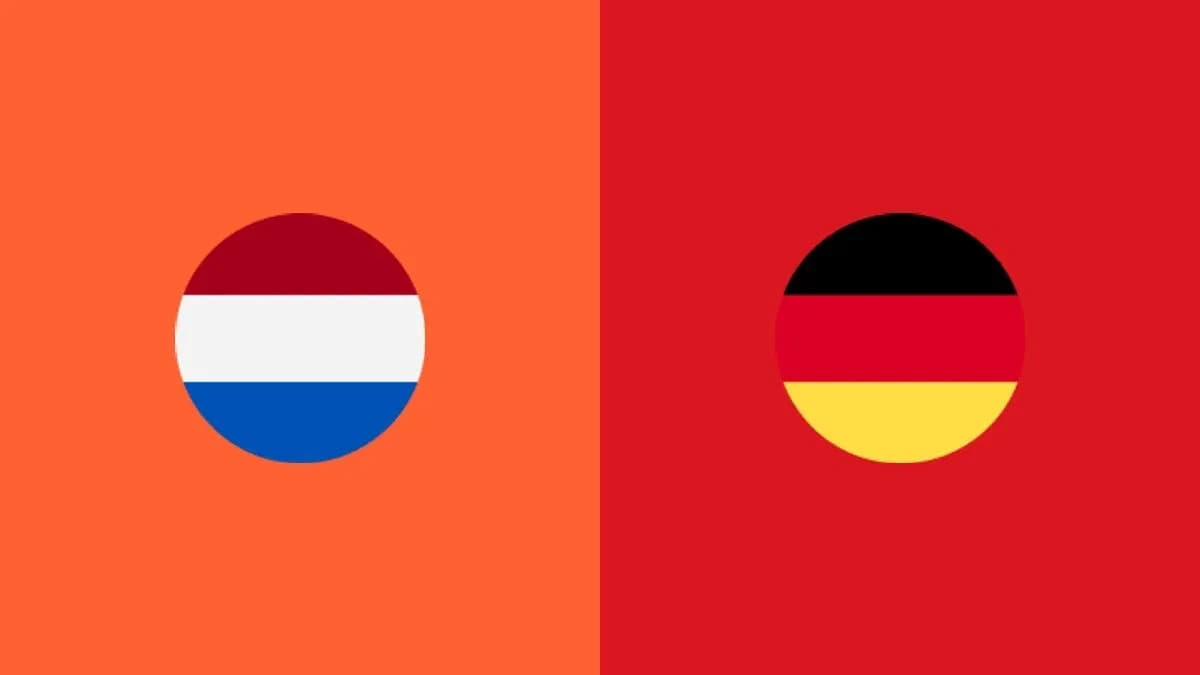
Netherlands vs Germany: A New Era Begins in Amsterdam
Two giants, two new bosses, one sharp opening statement on the line.
Netherlands host Germany in Amsterdam on 24 September 2026, with kick-off at 14:45 EST and 18:45 GMT, as the 2026–27 UEFA Nations League throws Jürgen Klopp and Xavi straight into the deep end.
This isn’t a gentle reset. It’s a hard reboot.
Xavi’s Oranje: Big Name Out, Big Call Made
Xavi takes his first step as Netherlands manager with a decision that already defines his reign: Memphis Depay, the country’s all-time record scorer, is out of the squad.
No injury caveats. No farewell cameo. Just omitted.
The Spanish great replaces Ronald Koeman after Oranje’s World Cup exit to Morocco, a campaign that exposed the fault line running through this Dutch side: fluid, dangerous going forward, but prone to cracks at the back. Eleven goals scored and six conceded in their last five matches tell that story clearly enough.
Their recent run — three wins, one draw, one defeat — peaked with a ruthless 5-1 dismantling of Sweden, but ended in frustration with a 1-1 draw against Morocco that wasn’t enough to keep them in the tournament.
Now Xavi inherits a team that still has heavyweight leaders and fresh legs. The projected XI is bold and aggressive:
Netherlands (4-3-3): Bart Verbruggen; Denzel Dumfries, Virgil van Dijk, Micky van de Ven, Nathan Ake; Ryan Gravenberch, Joey Veerman, Tijjani Reijnders; Jeremie Frimpong, Brian Brobbey, Cody Gakpo.
No injuries or suspensions are currently listed for the home side, giving Xavi a full deck to shuffle.
The headline act up front is Brian Brobbey. The 24-year-old arrives in Nations League duty with his reputation growing fast in England. A hat-trick for Sunderland in a wild 5-3 defeat to Manchester City, plus a bruising display against Premier League champions Arsenal, has underlined what he is: a handful. Strong, direct, relentless. Germany will have to build a plan around him, not just react to him.
With Frimpong’s pace and Gakpo’s movement either side, Xavi’s first Oranje lineup looks built to run at Germany, not wait for them.
Klopp’s Germany: A New Voice, A Different Edge
On the other bench stands a man who hardly needs an introduction.
Jürgen Klopp, the Liverpool legend, now wears the tracksuit of Die Mannschaft. He steps in after Julian Nagelsmann’s side crashed out of the World Cup with a 1-1 draw against Paraguay that ended their run, closing a tournament that started with a 7-1 demolition of Curacao and a 2-1 win over Ivory Coast but unravelled with defeats to Ecuador and Paraguay.
Two wins, two losses and that final draw across their last five games left Germany with more questions than answers, despite 13 goals scored and only five conceded. The numbers weren’t the problem. The timing and the temperament were.
Klopp’s response? Shake the tree.
He has named two separate 22-man squads to cover four Nations League fixtures in September and October — away to Netherlands, then Greece, then a second meeting with Greece and a clash with Serbia. This is not a gentle continuation of what came before. It’s a reset with sharp edges.
For the trip to Amsterdam and the following game against Greece on 27 September, the group is:
Marc-André ter Stegen, Alexander Nübel, Finn Dahmen, Hennes Behrens, Max Rosenfelder, Philipp Treu, Jonathan Tah, Nico Schlotterbeck, Nathaniel Brown, Josha Vagnoman, Yann-Aurel Bisseck, Joshua Kimmich, Nadiem Amiri, Yannik Engelhardt, Felix Nmecha, Anton Stach, Bambasé Conté, Kai Havertz, Chris Führich, Jamal Musiala, Lennart Karl, Younes Ebnoutalib, Serge Gnabry, Kevin Schade.
It’s a squad that blends established names with players still unknown to many outside Germany.
Between the posts, there’s a subplot of its own. Marc-André ter Stegen is back after serious injury, finally positioned to be Germany’s long-term No 1 after years in Manuel Neuer’s shadow. But he doesn’t walk straight into the team. Alexander Nübel, now at Besiktas, is expected to start in Amsterdam.
The projected XI reflects Klopp’s intent to keep a familiar attacking structure with a slightly unconventional back four:
Germany (4-2-3-1): Alexander Nuebel; Nathaniel Brown, Jonathan Tah, Nico Schlotterbeck, Joshua Kimmich; Felix Nmecha, Nadiem Amiri; Serge Gnabry, Lennart Karl, Jamal Musiala; Kai Havertz.
No injuries or suspensions are currently flagged for the visitors.
Kimmich at right-back, Brown at left-back, Havertz leading the line, Musiala floating in the pockets — it’s a side that can morph quickly between control and chaos. Musiala, with three goal contributions in his last three games for Bayern Munich, arrives in the kind of form that can tilt a tight match on its axis.
Selection Twists and Absentees
Both managers have already felt the first tug of bad luck.
On the Dutch side, Justin Kluivert and Donyell Malen have withdrawn through injury, trimming Xavi’s options in the wide attacking roles but not gutting his core structure.
For Germany, Brajan Gruda has pulled out of the squad, a minor disruption in a group that already carries a lot of moving parts as Klopp tests combinations.
Even so, both coaches retain strong, balanced squads. The absences tweak the picture. They don’t redraw it.
Recent Form and Old Wounds
This fixture arrives with a familiar edge.
Germany currently sit top of UEFA Nations League Group 2, while Netherlands occupy third place. The table adds urgency for the hosts: they need a positive result to close the gap and prevent the group from slipping away early.
History between these two in the Nations League is tight and tense. Their last meeting, in October 2024, ended 1-0 to Germany. The encounter before that, in September 2024 in the Netherlands, finished 2-2. Across the last five head-to-heads, Germany have two wins, Netherlands one, and two draws, with 11 goals shared between them.
The pattern is clear: these games rarely drift. They bite.
Netherlands arrive with a recent record that suggests volatility — heavy wins, narrow margins, and that painful World Cup exit to Morocco decided on progression terms. Germany’s form paints a different picture: explosive scorelines, but a team still learning how to sustain their level when the stakes rise.
Now both step into a new era with managers whose reputations are built on clear ideas and emotional intensity.
The Stakes in Amsterdam
This is a Nations League match on paper. On the pitch, it’s something else.
For Xavi, it’s the first chance to show what his Oranje will be without Memphis Depay at the heart of everything. Can Brobbey carry the weight? Can Gravenberch, Veerman, and Reijnders dictate the rhythm against a German midfield that likes to swarm and suffocate?
For Klopp, it’s the first look at how quickly his message lands. Can a back line with Kimmich at full-back and a new-look left side handle the direct running of Frimpong and Gakpo? Can Musiala and Havertz find each other between Van Dijk and Ake’s imposing presence?
The pressure in Amsterdam won’t just be on the players. It will sit firmly in the technical areas too.
One side needs to chase down the group leaders. The other wants to prove they deserve that top spot.
By the final whistle, we’ll know a lot more about what Klopp’s Germany and Xavi’s Netherlands really are — and which of these new projects is ready to move faster.
Related News

Real Madrid Faces Major Blow as Valverde Suffers Ankle Injury

Jarrad Branthwaite's Journey: From Injury Struggles to England Recall
Portugal Begins Nations League Defense Against Wales

Matthijs de Ligt's Manchester United Comeback After Surgery
Gavi's Journey: From Injury to Redemption in Spain's Squad
Andros Townsend Survives Pitch Roller Accident in Thailand