
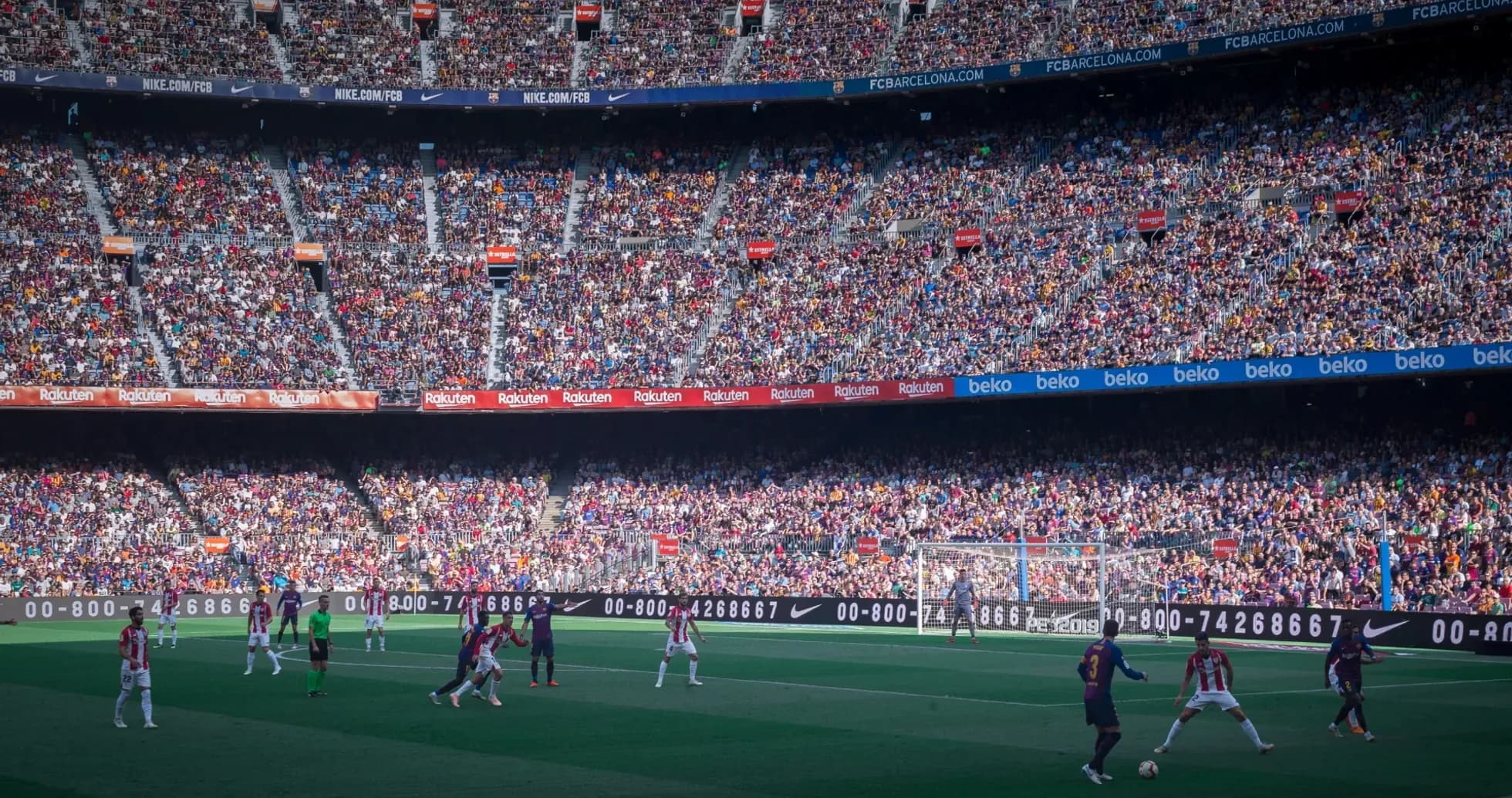
Napoli Secures Serie A Runner-Up Spot with Tactical Mastery Against Udinese
On a hot late-May afternoon at Stadio Diego Armando Maradona, Napoli closed their Serie A season with a 1–0 win over Udinese, a result that crystallised the contrasting identities of a side finishing 2nd and one settling into 10th. Following this result, the table underlines the gap: Napoli end on 76 points with a goal difference of 22 (58 scored, 36 conceded), Udinese on 50 with a goal difference of -3 (45 scored, 48 conceded). The scoreline was narrow, but the tactical story was rich.
I. The Big Picture – Conte’s final statement
Antonio Conte doubled down on his three-at-the-back principles, rolling out a 3-4-3 that looked almost ceremonial in its clarity. A. Meret anchored behind a back three of M. Olivera on the left, A. Rrahmani centrally and G. Di Lorenzo on the right. Ahead of them, the double pivot of S. Lobotka and S. McTominay formed the structural heart of Napoli’s game, flanked by M. Gutierrez and M. Politano as wide midfielders who often operated as wing-backs in the defensive phase.
Up front, the trio of E. Elmas, R. Hojlund and Alisson Santos gave Napoli three different reference points: Elmas between the lines, Hojlund as the central spear, and Alisson Santos stretching wide and attacking depth. It was a shape that echoed their season-long balance: at home they averaged 1.7 goals scored and just 0.9 conceded, a profile of controlled aggression.
Udinese, under Kosta Runjaic, responded with a 3-4-2-1 that was more cautious than the numbers might suggest. M. Okoye was protected by a back three of O. Solet, C. Kabasele and T. Kristensen. The wing lanes belonged to K. Ehizibue and J. Zemura, with J. Karlstrom and L. Miller as the central screen. Ahead of them, J. Piotrowski and A. Atta supported lone striker K. Davis, the club’s joint-top scorer this season with 10 league goals.
Across the campaign, Udinese’s away profile has been that of a volatile visitor: on their travels they scored 27 and conceded 27, averaging 1.4 goals for and 1.4 against. That symmetry framed this trip as a test of whether their transitional punch could pierce one of Serie A’s most secure home sides.
II. Tactical Voids – Absences and discipline
Both managers had to navigate significant absences that subtly redefined their plans. Napoli were without David Neres (ankle injury) and R. Lukaku (hip injury), two forwards whose presence would have tilted the attack towards more direct, penalty-box heavy football. Their absence pushed greater creative responsibility onto Elmas between the lines and increased the importance of Hojlund’s all-round game – pressing, link play and channel runs.
Udinese’s voids were even more structurally disruptive. J. Ekkelenkamp (leg injury) and N. Zaniolo (back injury) stripped Runjaic of two of his most progressive midfielders, players capable of carrying the ball and threading passes through pressure. H. Kamara’s suspension for yellow cards removed a flexible defensive option, while J. Arizala and A. Zanoli (both injured) further thinned the rotation. Without Zaniolo’s 6 league assists and dribbling threat, Udinese’s 3-4-2-1 inevitably became more about containment than incision.
Season-long disciplinary trends also coloured the contest. Napoli’s yellow-card curve peaks in the 61–75 minute window, where 30.61% of their cautions arrive, and they have seen both of their red cards in the 76–90 minute band – a sign of how fiercely they defend leads late on. Udinese, by contrast, pick up 26.76% of their yellows between 61–75 minutes and another 23.94% from 76–90, plus red cards in the 0–15 and 61–75 windows. This is a team that often ends games on the disciplinary edge.
III. Key Matchups – Hunter vs Shield, Engine Room wars
The headline duel was always going to be R. Hojlund against the Udinese back three, with C. Kabasele as the central “shield”. Hojlund closes the season with 12 league goals and 5 assists, built on 46 shots (25 on target) and 33 key passes. He is not just a finisher; he is a hub, drawing fouls (53) and duels (308, with 111 won) to open corridors for teammates.
Kabasele, meanwhile, embodies Udinese’s defensive identity. Across the season he has contributed 21 successful blocks and 36 interceptions, while committing 33 fouls and taking 5 yellows plus 1 red. He is aggressive, front-foot, and willing to risk contact to break attacks. In this match, Napoli’s 3-4-3 constantly tried to isolate Hojlund on his blind side, using Politano’s inside movements and Elmas’ drifting to pull Kabasele into decisions: step out and leave space behind, or hold the line and allow Napoli’s creators time.
In the “Engine Room” battle, S. McTominay and S. Lobotka faced J. Karlstrom and L. Miller. McTominay’s season numbers – 10 goals, 3 assists, 73 shots and 28 tackles – tell the story of a midfielder who arrives late in the box but also contributes heavily in duels (318 contested, 169 won). Lobotka’s quieter passing rhythm gave Napoli the metronome they needed to control tempo.
For Udinese, Karlstrom’s role was to screen and recycle, while Miller had to shuttle between pressing Lobotka and tracking Elmas in the half-spaces. Without Zaniolo’s ball-carrying, Udinese’s central pair were more destroyers than creators, and that imbalance left Davis increasingly isolated against Napoli’s back three.
On the flanks, Politano’s duel with J. Zemura and K. Ehizibue was another key theatre. Politano’s 5 assists and 37 key passes this season underline his role as Napoli’s wide playmaker; every time he received between Zemura and Miller, the Udinese block had to tilt, opening gaps for Gutierrez’s underlaps and Elmas’ inside runs.
IV. Statistical Prognosis – xG tilt and defensive solidity
Even without explicit xG numbers, the season data and the 1–0 outcome point towards a match where Napoli’s structural superiority translated into the higher-quality chances. At home they averaged 1.7 goals for and 0.9 against; Udinese away averaged 1.4 for and 1.4 against. Overlay that with Napoli’s 15 clean sheets overall and Udinese failing to score 11 times in total, and the likelihood of a Napoli win to nil was always high.
Napoli’s penalty record this season – 4 scored from 4, with 0 missed – shows a ruthlessness from the spot, while Udinese also boast a perfect 5 from 5. But the key detail lies with McTominay: his individual penalty record includes 1 missed effort this campaign, a reminder that even within a clinical collective, there are fine margins. Conte’s decision to keep primary penalties away from him was a small but telling adjustment in the risk calculus.
Defensively, Napoli’s consistency is underpinned by their goals-against averages: 0.9 at home and 0.9 overall, a symmetry that speaks to systemic solidity rather than venue-dependent form. Udinese’s 1.4 goals conceded on their travels, combined with the loss of creative midfielders, meant they were more likely to bend than break Napoli’s block.
Following this result, the narrative is clear: Napoli’s 3-4-3, even without some of its brightest attacking names, functioned as a mature, control-oriented machine, squeezing a mid-table Udinese who arrived with too many absences and too little invention. The 1–0 scoreline was the logical expression of the underlying numbers – a narrow margin on the scoreboard, but a wide gap in tactical coherence and season-long defensive reliability.
Related News
Frosinone vs Como Prediction: Key Stats and Betting Tips

Fiorentina vs Napoli Prediction: Key Stats and Betting Tips
AS Roma vs Inter: Serie A Showdown on 19 September 2026

Inter’s Dominance in 5–3 Win Over Udinese

AS Roma vs Inter Prediction: Key Stats and Betting Tips
Lazio and AC Milan Battle to a 2–2 Draw: Early Serie A Insights