
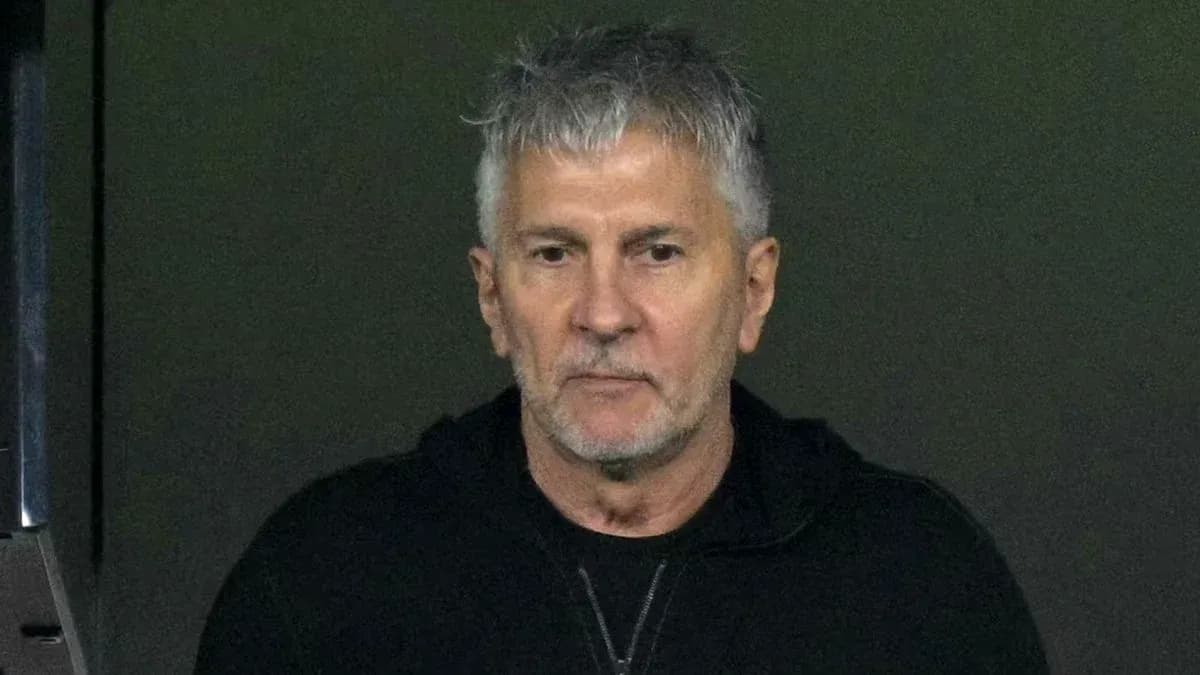
Lionel Messi Reflects on Father’s Death and Future in Heartfelt Tribute
Lionel Messi has thrown his playing future into serious doubt after publishing a raw, heartbreaking tribute to his late father, Jorge, who died last week at the age of 68.
The 39-year-old Argentina captain posted a long open letter on Instagram, laying bare the scale of his grief and the depth of the bond with the man who guided every step of his career. In the middle of that message came a line that sent a jolt through football.
“I only played football and now I have quite a few doubts about whether I'll keep doing it for much longer,” Messi wrote. “I don't know what I'm going to do without you, I don't know how to go on.”
For a player who has defined an era, it read less like a passing reflection and more like a confession. The game that has framed his life suddenly feels secondary.
World Cup agony under a shadow
Behind that run, Messi said, was a very personal mission: buy his father time.
“You asked me so much to play in the last World Cup, and it was in the days just before it started that you got the worst,” he wrote. “It was the first time you weren't going to be at a tournament, but Mum told me that you were going to get better and that you'd be well enough to travel. I told you we were going to reach the final so you could travel.”
Every whistle, every night in the team hotel, came with the same ritual. Messi checked his phone. He waited.
“Every time a match ended, I waited for and missed your message. That's when I realised the situation was really bad.”
The pressure finally told in the most human way. Messi admitted his body simply would not respond in the final.
“We reached the final and you couldn't be there. I wanted to win it to bring it to you and show you a new one. I couldn't: my legs wouldn't give any more. This time I tried to go against my body, but I couldn't. I never managed to feel good.”
He described returning home to a father who thought Argentina had lost the final on penalties and was in no state to relive the journey.
“When I arrived, you thought we had lost the final on penalties. We couldn't talk about anything that happened. You couldn't enjoy anything. We weren't champions, but you have no idea how much we enjoyed every single match. Once again, you were right: I had to be there and play it.”
The architect of a legend
Jorge Messi was never just a supportive parent watching from the stands. He was the driving force behind one of the most extraordinary careers the sport has seen.
It was Jorge who brokered the deal that took a slight, undersized teenager from Rosario to Barcelona, persuading the Catalan club to fund the growth hormone treatment his son needed. The first agreement, famously, was scribbled on a paper napkin. From there, a dynasty was built.
Messi’s tribute painted his father as far more than an agent.
“For many of them Mum took me because you were working. Obviously you never missed a single match,” he recalled. “How you suffered watching me and how you enjoyed it, even though you never gave me many compliments. You were dad, friend and representative. You were always the person you needed to be in every moment and you never got anything wrong. Beyond a few reproaches or arguments, you were always right. In the end it always turned out the way you said.”
The image is of a man who lived every kick, every setback, every title alongside his son, but who stayed just far enough in the background to let the football speak.
Football unites around its greatest
The reaction to Messi’s post was immediate and universal. Rivalries dissolved in the face of loss.
Cristiano Ronaldo, his great on-field adversary for more than a decade, stepped forward with a message that cut through the noise: “A huge hug to you and yours in these tough times, Leo. Much strength.”
Inter Miami co-owner David Beckham added his voice, writing: “We stand with you and your family, Leo – always.”
Teammates, former colleagues and opponents followed, crowding the comments with condolences and support. For once, the debate was not about goals, trophies or awards. It was about a son and his father.
A promise beyond the pitch
Messi closed his statement not with talk of titles or records, but with a pledge about the kind of father he wants to be.
“I'm going to miss you a lot, but you'll always be present, and especially in the upbringing of my children, because I teach them and raise them the way you both did with me,” he wrote. “Rest in peace and look after us from above the way you did down here. Thank you for everything.”
The words about his own future linger, though. “I only played football,” he admitted, before openly questioning how much longer he will go on.
For a player who has always seemed to find one more game, one more season, one more summit to climb, the question now is brutally simple: without the man who walked beside him from the first kick, does Lionel Messi still feel the need to keep playing at all?
Related News
PSG's Senny Mayulu Injured During France U21 Match
Italy’s Giacomo Raspadori Withdraws from Nations League Ahead of France Clash
Holger Rune's First ATP Tour Match Since Achilles Injury Set at Japan Open
Liverpool Faces New Setback as Cody Gakpo Leaves Netherlands Match Early
Denmark's Brian Riemer Confirms Patrick Dorgu Injury Withdrawal from National Squad
Real Madrid Concerned as Konaté Exits France Camp with Knee Injury