
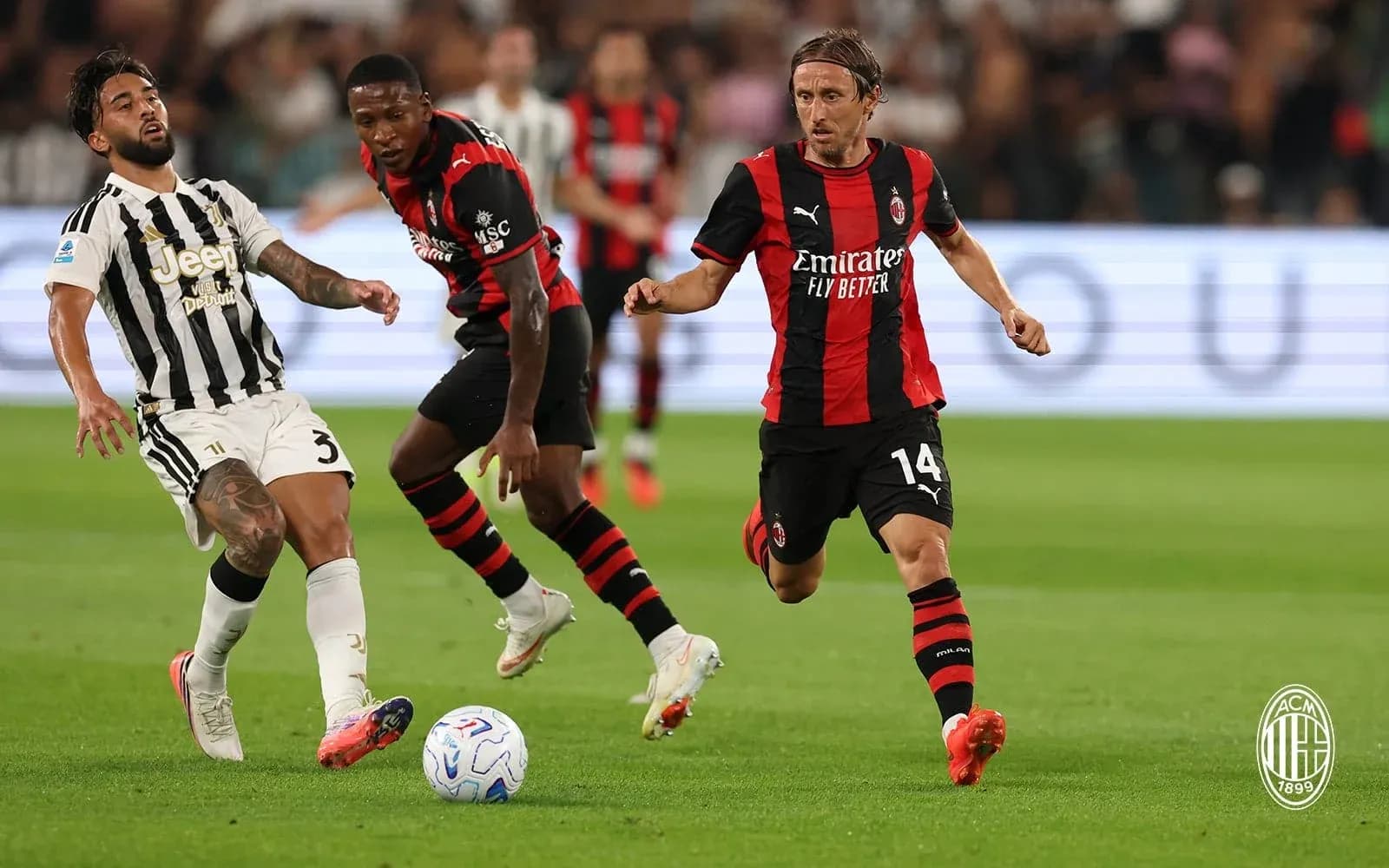
Juventus and AC Milan Draw in Tactical Stalemate
Under the Turin floodlights at Allianz Stadium, two sides with identical early-season rhythms met and refused to blink. Juventus and AC Milan arrived in Round 3 of Serie A with matching forms – two wins and a draw each, seven points apiece, and a goal difference of 3 – and they left still locked together after a 1–1 draw that felt more like a chess match than a shootout.
I. The Big Picture – Structures and Seasonal DNA
Following this result, Juventus remain a side defined by control and defensive parsimony. Overall this campaign they have scored 4 goals and conceded just 1 across 3 matches; that defensive record is underlined by an overall average of only 0.3 goals conceded per game. At home, their balance is clear: 3 goals scored and 1 conceded in 2 fixtures, with home averages of 1.5 goals for and 0.5 against. Luciano Spalletti has leaned heavily into stability, using a 4-2-3-1 in 2 of their 3 league games.
AC Milan, under Ruben Amorim, are built with more vertical intent. Overall this campaign they have 5 goals for and 2 against from 3 matches, with an overall attacking average of 1.7 goals per game and an overall defensive average of 0.7 conceded. On their travels, Milan have scored 3 and conceded 2 in 2 away games, averaging 1.5 goals for and 1.0 against. Amorim’s commitment to the 3-4-2-1 is total: it has been used in all 3 league matches so far.
The tactical contrast was clear from the first whistle. Juventus’ 4-2-3-1 set up as a classic home-side structure: G. Vicario behind a back four of Z. Celik, J. Lucumi, Bremer and P. Kalulu; a double pivot of M. Locatelli and Douglas Luiz; and a fluid band of three – F. Conceicao, N. Gonzalez, K. Alajbegovic – supporting R. Kolo Muani as the lone striker.
Milan’s 3-4-2-1, by contrast, built its threat through central overloads. M. Maignan anchored a back three of S. Pavlovic, K. De Winter and M. Gila. The wing-backs D. Moreira and P. Estupinan stretched the width, while L. Modric and Y. Musah formed the central hinge. Ahead of them, A. Saelemaekers and A. Rabiot floated behind G. Ramos.
II. Tactical Voids – Absences and Discipline
Juventus came into this game with a long injury ledger that inevitably shaped Spalletti’s options. J. Cabal (thigh), A. Cambiaso (ankle), J. Ekhator (muscle), W. McKennie (muscle), P. M. Sarr (muscle), K. Thuram (knee) and K. Yildiz (foot) were all ruled out, alongside the inactive A. Milik. That many absentees in defensive and midfield areas effectively locked in the reliance on Z. Celik at right-back and cemented the Locatelli–Douglas Luiz axis as non-negotiable.
Milan’s list was shorter but not insignificant. M. Gabbia missed out with an ankle injury, reducing depth in the back line and reinforcing the trust in S. Pavlovic, K. De Winter and M. Gila as the starting trio.
Disciplinary trends for both teams also framed the risk management. Heading into this game, Juventus’ yellow cards were spread across the match, but with a clear spike: 40.00% of their cautions had arrived between 46–60 minutes, and another 20.00% from 76–90 minutes, plus 20.00% in added time from 91–105. Milan’s bookings were even more back-loaded: 20.00% each in the 46–60, 61–75 and 76–90 windows, and a heavy 40.00% again between 91–105 minutes. Neither side had seen a red card in the league before this fixture, and that discipline underpinned the tactical bravery on display.
III. Key Matchups – Hunter vs Shield, and the Engine Room
The “Hunter vs Shield” narrative was more collective than individual. Juventus’ overall attacking average of 1.3 goals per game met a Milan defence that had conceded only 2 goals overall, with an overall average of 0.7 against. R. Kolo Muani, supported by the direct running of F. Conceicao and the creativity of N. Gonzalez and K. Alajbegovic, constantly tested the spaces between Milan’s wide centre-backs and wing-backs. The duel between Kolo Muani and K. De Winter in particular became a running subplot, with De Winter stepping out aggressively to prevent the Frenchman from turning.
On the other side, Milan’s most dangerous “Hunter” did not start but hovered in the background of the tactical story: A. Cisse, already on 2 league goals and 5 shots overall this campaign, waited on the bench as the late-game weapon. His presence shaped how Juventus managed depth, even before his introduction. Bremer and J. Lucumi rarely stepped too high, wary of leaving channels for Cisse or G. Ramos to attack.
In midfield, the “Engine Room” duel was compelling. For Juventus, M. Locatelli and Douglas Luiz were tasked with both screening and building. Locatelli’s positional discipline allowed Douglas Luiz to step higher and connect with K. Alajbegovic between the lines. Opposite them, L. Modric and Y. Musah offered complementary profiles: Modric as the tempo setter, Musah as the carrier who could break Juventus’ first line.
But the key swing figure for Milan was A. Rabiot. Already with 1 goal and 1 assist this season, Rabiot’s hybrid role between midfield and attack turned the 3-4-2-1 into a 3-5-1-1 without the ball. He dropped alongside Musah to compress Locatelli’s time, then surged past G. Ramos in transition. His aerial presence also gave Milan an outlet against Juventus’ press.
Out wide, D. Moreira and P. Estupinan were constantly measured against F. Conceicao and N. Gonzalez. When Milan’s wing-backs pinned Juventus’ full-backs deep, the visitors controlled territory; when Conceicao and Gonzalez managed to turn and run at them, Milan’s back three were dragged uncomfortably wide.
IV. Statistical Prognosis – Margins, xG Logic and What Comes Next
Even without explicit xG values, the underlying numbers and structures point to a finely balanced draw being an accurate reflection of the contest. Juventus, with 2 clean sheets overall from 3 games and no league defeats, built their game on control and a low defensive average of 0.3 goals conceded per match. Milan, with their overall attacking average of 1.7 goals and a more open away profile (1.5 scored and 1.0 conceded on their travels), brought enough punch to disrupt that defensive serenity.
Both sides also share a clinical streak from open play: neither has won nor missed a penalty in Serie A so far this season, with their penalty totals at 0. That forced chance creation to come from pattern and structure rather than spot-kick variance.
From a predictive lens, the draw keeps both projects on track. Juventus’ 4-2-3-1, already their most-used shape, looks increasingly tailored to integrating T. Koopmeiners – a top-15 league performer for both goals and assists – from the bench into a more prominent role, especially when injuries clear. Milan’s unwavering commitment to the 3-4-2-1, and the depth of creative options like S. Chukwueze (2 assists already) and A. Saelemaekers (1 assist), suggests their attacking ceiling remains high.
Following this result, the table says parity; the performance data suggests something similar. Juventus have the more watertight shield, Milan the slightly sharper collective blade. Over a season, that balance hints at both sides remaining in the upper reaches of Serie A – and at future meetings where a single tweak in the engine room, or a decisive moment from a hunter like A. Cisse or R. Kolo Muani, could tilt the narrative away from stalemate.
Related News

Fiorentina vs Napoli Prediction: Key Stats and Betting Tips
AS Roma vs Inter: Serie A Showdown on 19 September 2026

Inter’s Dominance in 5–3 Win Over Udinese
AS Roma vs Inter Prediction: Key Stats and Betting Tips
Lazio and AC Milan Battle to a 2–2 Draw: Early Serie A Insights
AC Milan vs Lecce Stats: Head-to-Head Record and Historical Context