
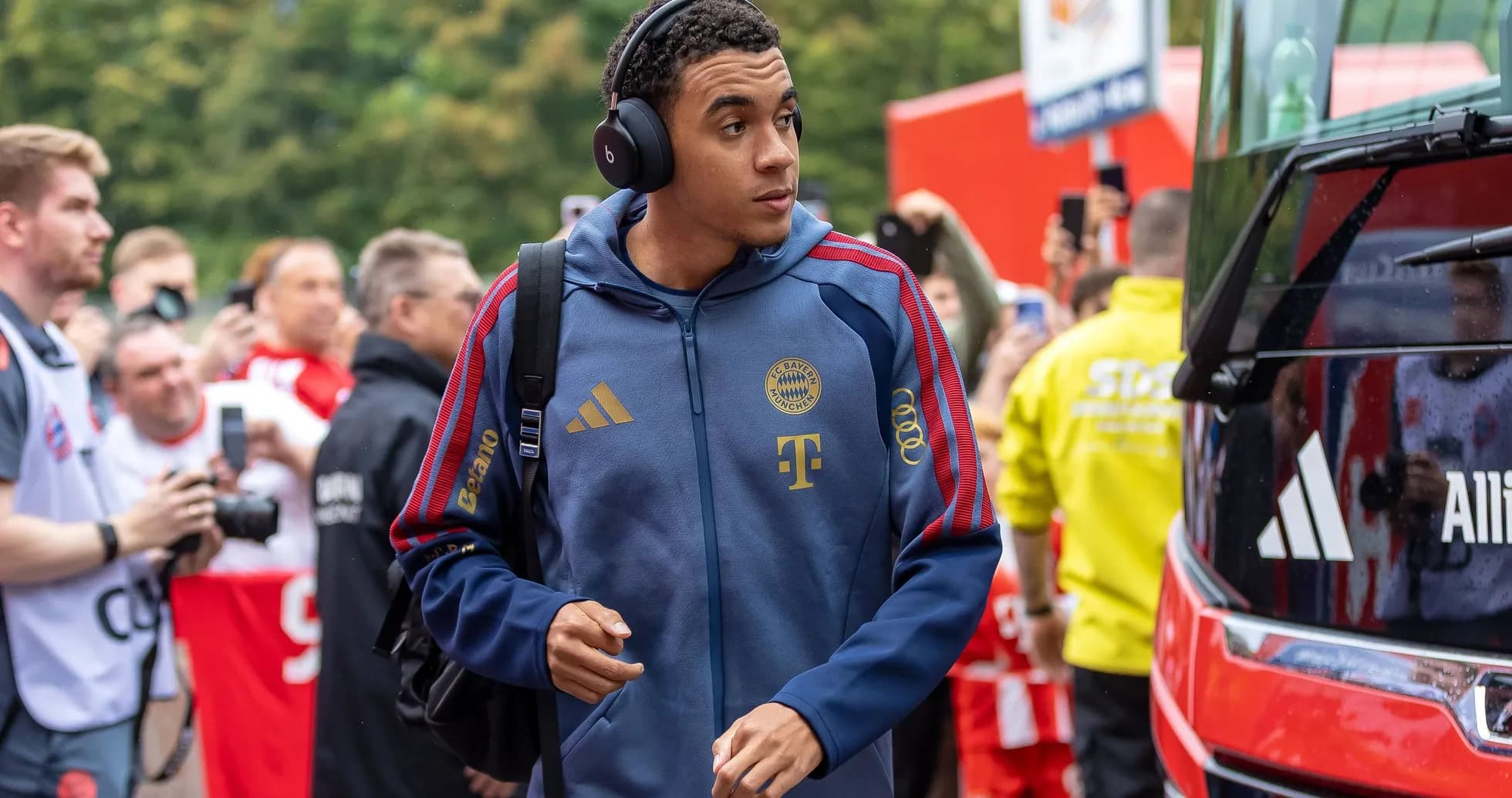
Jamal Musiala Addresses Health Concerns After Collapsing on Pitch
Jamal Musiala has moved to calm fears over his health after collapsing on the pitch for the second time in four days, revealing he has been diagnosed with brief but treatable neurological episodes.
The Bayern Munich midfielder went down during a 4-2 friendly win over Heidenheim earlier this week, slumping to the turf just six minutes after coming on as a substitute. Medical staff rushed on, helped him from the field and took him straight for tests, the image of a dazed 23-year-old jolting Bayern and Germany fans alike.
It followed a similar blackout against RB Leipzig in the Telekom Cup, two worrying incidents in quick succession involving one of European football’s most gifted young players.
Musiala explains diagnosis
Musiala chose to address the situation directly on Instagram after the Heidenheim match, outlining the cause of the collapses.
He wrote that he had been “diagnosed with brief, temporary but easily treatable episodes of absence, which are caused by a neurological dysfunction.” He also made a point of stressing that he remains “optimistic” about both his treatment and his ability to continue competing at the top level.
The message was clear: this is serious, but it is not the end.
Reassurance from Bayern
Any lingering doubts were further eased by Bayern sources, who spoke to German press agency DPA. Inside the club, the line is firm: there is currently no indication that Musiala’s career is in danger.
Officials underlined that his participation in the last two fixtures had been “completely unproblematic” from a medical standpoint, with every step cleared in consultation with specialists. What they have not done is set a firm date for his return to competitive action. For now, there is no official prognosis on when he will be back in a Bayern shirt in a meaningful match.
What are absence seizures?
The diagnosis points to absence seizures, historically known as “petit mal” – a form of epilepsy that can present in short, sudden lapses.
Typically, a person abruptly stops what they are doing and seems to “switch off” for 10 to 20 seconds. They may stare blankly, sometimes with a brief upward flutter of the eyes, before snapping back into normal awareness and activity.
According to the Epilepsy Foundation, these episodes are triggered by “brief abnormal electrical activity in a person’s brain” and can develop in adults over time without being recognised. Some people can suffer “hundreds of brief absence seizures a day”, yet the condition is generally considered manageable with targeted treatment and does not necessarily limit physical activity.
For an elite athlete, that distinction matters. The challenge lies in control and monitoring, not in a blanket restriction on their profession.
Bayern’s season looms
All of this unfolds with Bayern’s competitive season about to start. The champions open against arch-rivals Borussia Dortmund at Signal Iduna Park in the German Super Cup, now rebranded as the Franz Beckenbauer Supercup.
After lifting a domestic double last season, Bayern then launch their Bundesliga title defence at home to VfB Stuttgart on Friday, August 28. It is the sort of stretch where Musiala would normally be central to the plan, a creative fulcrum expected to decide big games.
This time, Bayern will move step by step. Club officials and medical staff intend to proceed cautiously, tracking his response to treatment and training before making any call on his involvement.
The fixtures are coming fast. The decision on Musiala will not.
Related News
PSG's Senny Mayulu Injured During France U21 Match
Italy’s Giacomo Raspadori Withdraws from Nations League Ahead of France Clash
Holger Rune's First ATP Tour Match Since Achilles Injury Set at Japan Open
Liverpool Faces New Setback as Cody Gakpo Leaves Netherlands Match Early
Denmark's Brian Riemer Confirms Patrick Dorgu Injury Withdrawal from National Squad
Real Madrid Concerned as Konaté Exits France Camp with Knee Injury