
Jamal Musiala’s Health Scare: Understanding Absence Epilepsy
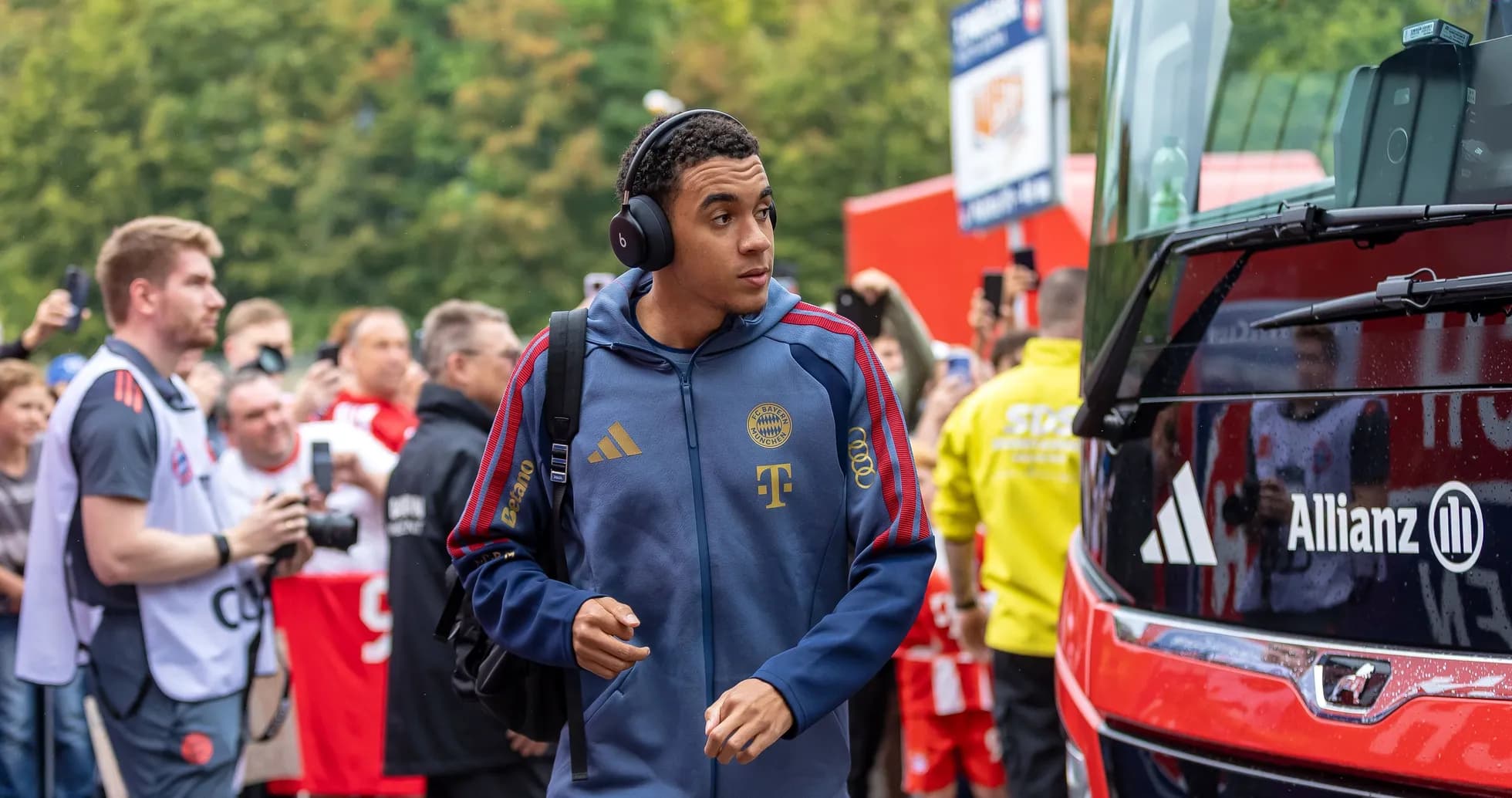
When Jamal Musiala suddenly crumpled to the turf in Bayern’s friendly against RB Leipzig on Saturday, the first reaction in the stadium was fear. Then confusion. He was back on his feet quickly, but the pictures of the 23-year-old sinking to the ground without contact spread fast.
For Dr Regina Becker, a neurologist who once worked at the University Hospital of Munich’s Ludwig Maximilian University and now heads the “Munich Schwabing Neuro Centre”, the scene was instantly familiar.
“Because it happened so suddenly and he then obviously recovered quickly, as a neurologist I immediately thought of an epileptic seizure,” she explains.
Musiala’s second collapse, on Tuesday against 1. FC Heidenheim, confirmed that suspicion. In a public statement, the Bayern and Germany star spoke of “temporary brief absences caused by a neurological dysfunction”. In medical terms: absence epilepsy.
What actually happens in Musiala’s brain
Absence epilepsy does not start in the muscles or the heart. It starts deep in the brain.
“Absence epilepsy originates in the so-called thalamus, the diencephalon, which controls consciousness,” says Dr Becker. “Anyone who has a dysfunction there can suddenly become unresponsive.”
In that moment, the brain flips into an exceptional state. Neurons fire uncontrollably. The communication line between the thalamus and the cerebral cortex – the region where we consciously perceive the world – breaks down.
The result can look harmless. Or terrifying.
“The patient no longer takes in their surroundings, stares into space or, as in Musiala’s case, even falls over. To outsiders, the patient often appears frozen.”
How the player experiences it
The drama for viewers is often greater than for the person affected.
“Most patients have no warning beforehand. It suddenly comes over them and they have no chance to react,” Dr Becker explains. “Sometimes they do not even notice the seizure itself. Afterwards, they simply carry on as if nothing had happened.”
That raises a brutal scenario for a footballer: could Musiala be about to take a penalty, begin his run-up – and then just collapse?
“Yes, that is conceivable,” says Becker without softening the reality.
Why he must come off – even if he feels fine
Both times Musiala has collapsed in a match, he has been substituted immediately. Medically, his heart and organs are not the problem.
“In itself, the patient has no problem with the cardiovascular system, the organs function normally,” says Becker.
Still, for a professional footballer, there is no debate.
“Carrying on is not possible for reasons of liability and duty of care. Factors such as heat and hyperventilation in particular could trigger further seizures, even if he himself is quickly fit again after a seizure.”
The body might be ready. The responsibility is not.
Why now – and why at 23?
Absence epilepsy is usually something paediatric neurologists see, not team doctors in the Bundesliga.
“Normally, this form of epilepsy occurs between the ages of four and 10,” Becker says. There are variants, though. “There are also forms such as juvenile absence epilepsy, where the illness only appears later. In any case, 23 is late for a diagnosis.”
That does not mean the condition suddenly arrived with the first TV pictures.
“We do not know whether this had also happened to him earlier and has now simply become more frequent and happened in public for the first time.”
What can drive that increase?
“Provided there is a genetic predisposition, environmental factors such as high temperatures, dehydration or stress can contribute to the frequency of seizures increasing, or even to the first seizure occurring at all.”
One thing, however, can be ruled out. Musiala suffered a broken fibula about a year ago, a serious injury but in a completely different area of the body.
“No, that has nothing to do with it,” Becker says.
“Very promising medications” – and how they work
Musiala himself has called his condition “treatable”. Becker backs that up clearly.
“Yes, there are very promising medications for absence epilepsy. Most patients become completely seizure-free as a result.”
The treatment does not wait for the next episode. It aims to prevent it.
“Patients are given what are known as seizure-suppressing medications, which prevent the uncontrolled firing of neurons and are intended to suppress epileptic seizures,” she explains.
The drugs are taken daily as a preventive measure. They need time to build up.
“They take the medication daily as a preventive measure, and it builds up the necessary level in the blood within two to three weeks. During this time, doctors carry out regular checks to see how the level is developing and whether the dose needs to be adjusted. Once that level has been reached, there is normally sufficient protection against further seizures.”
Ethosuximide, valproic acid – and side effects
What is Musiala likely to be taking?
“The treatment of choice is ethosuximide,” says Becker. “In principle, it is a very well-tolerated medication, but it can lead to headaches and tiredness.”
Another option is on the table, too.
“Valproic acid, which is also very effective, can have stronger side effects such as weight gain, hair loss or drowsiness. It has to be tried individually to see which medication is the best fit. Most patients tolerate both medications well.”
This is not a short sprint. It is a long management plan.
“Even if the medications make someone seizure-free after a short time, they are taken for several months or years,” Becker explains.
In children, there is a real chance the epilepsy fades away in adulthood and the medication can be stopped. When the illness appears later, the outlook shifts.
“If the illness occurs later, lifelong therapy may be necessary. So the question cannot be answered in general terms, it varies from person to person.”
Can he keep playing at the top level?
For Bayern, for Germany, and for Musiala himself, one question towers above the rest: does this threaten his career?
Dr Becker is clear.
“No, with this form of epilepsy I have no concerns about his future career.”
There is, however, a delicate phase ahead.
“In the adjustment phase of the medication, which is now presumably beginning, he will have to ease off a little so that the body has a chance to adapt.”
Training loads, match minutes, climate, stress – all of it will be managed more tightly for a while. The aim is simple: stabilise the medication, stabilise the brain, stabilise the player.
Musiala has spoken in the past about his neuro-athletics work and praised it publicly. That training, though, is not a secret attempt to treat undiagnosed epilepsy. It cannot replace medication. It cannot control the thalamus.
The next step belongs to the doctors, the lab values and the slow, methodical process of finding the right dose. Only then will the ball roll for him again at full speed – and the real question becomes how quickly one of Europe’s brightest talents can turn medical certainty into footballing freedom.
Related News
PSG's Senny Mayulu Injured During France U21 Match
Italy’s Giacomo Raspadori Withdraws from Nations League Ahead of France Clash
Holger Rune's First ATP Tour Match Since Achilles Injury Set at Japan Open
Liverpool Faces New Setback as Cody Gakpo Leaves Netherlands Match Early
Denmark's Brian Riemer Confirms Patrick Dorgu Injury Withdrawal from National Squad
Real Madrid Concerned as Konaté Exits France Camp with Knee Injury