
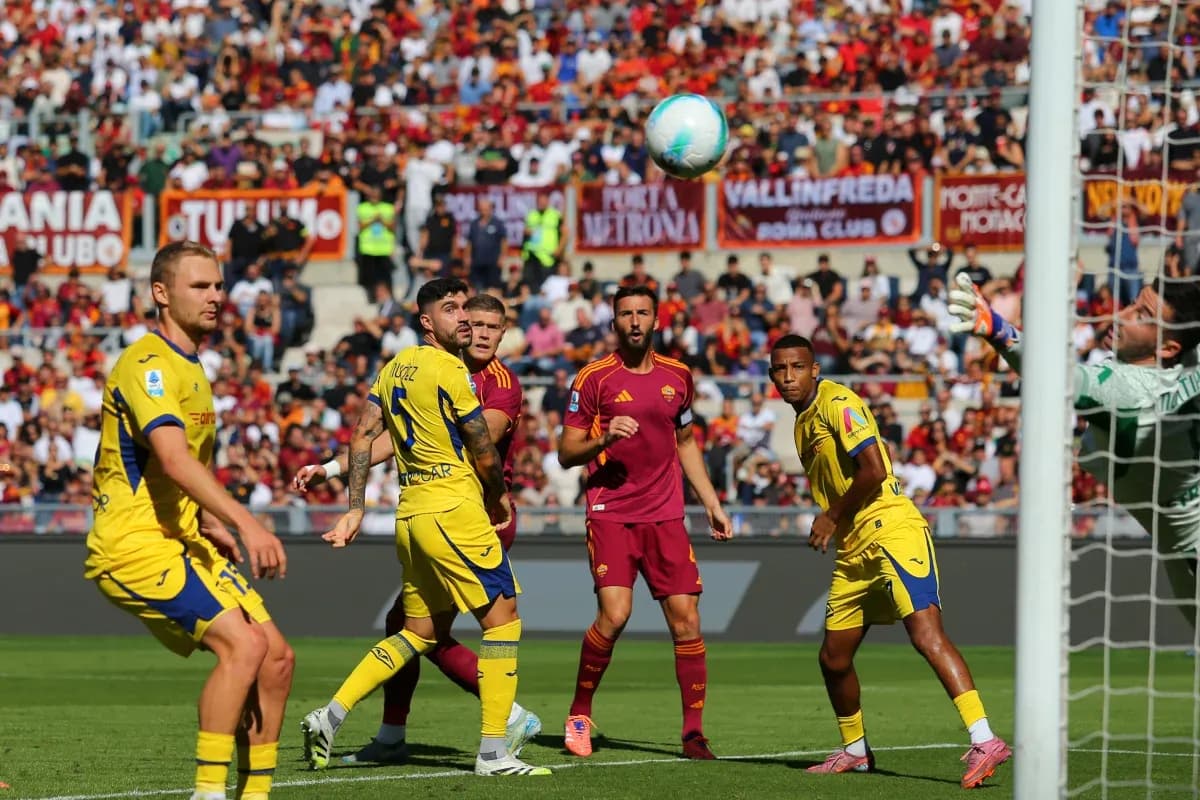
Hellas Verona vs AS Roma: Season Finale Analysis
The season closed at Stadio Marcantonio Bentegodi with a result that felt brutally in line with the numbers. Hellas Verona, rooted in 19th with 21 points and a goal difference of -36 (25 scored, 61 conceded in total), bowed out of Serie A with a 0–2 home defeat to AS Roma. The visitors, already locked into 3rd on 73 points and a goal difference of 28 (59 for, 31 against overall), played like a side whose campaign had been built on structure and clarity.
Following this result, the contrast between the two clubs’ seasonal DNA was written across the pitch. Verona’s 3-5-2 under Paolo Sammarco has been about survival and damage limitation: only 3 wins in total, with just 1 at home, and an attack that averaged 0.6 goals at home across 19 matches. Roma, by contrast, arrived on the back of a “WWWWW” form line, a team comfortable in its 3-4-2-1, scoring 1.4 goals on their travels and conceding only 1.1 away.
Tactical voids and absences
Both coaches had to navigate significant absences, and the gaps shaped the game’s texture.
For Verona, the midfield screen was thinned. Roberto Gagliardini, one of Serie A’s leading card collectors with 10 yellows, missed out through suspension. His 73 tackles, 13 successful blocks and 54 interceptions this season had been central to Verona’s attempt to slow games down and protect a fragile back line that conceded 1.6 goals on average in total. Without him, Jean-Daniel Akpa Akpro (another high-card presence with 9 yellows) had to assume more responsibility as the primary disruptor, flanked by Sandi Lovric and A. Harroui. The absence of G. Orban (red card), a 7-goal forward, also stripped Verona of one of their few direct threats in behind.
Roma were likewise without key structural pieces. L. Pellegrini’s thigh injury removed a natural conduit between midfield and attack, while E. Ndicka’s absence forced Piero Gasperini Gian to lean fully into a back three of G. Mancini, D. Ghilardi and Mario Hermoso. Wesley Franca’s suspension for a red card also mattered: his 5 goals, 6 yellows and high-intensity pressing from midfield had been a recurring theme in Roma’s season.
Yet Roma’s depth softened the blow. Matías Soule, Paulo Dybala and Donyell Malen formed a fluid attacking triangle behind and around the lone striker slot, each capable of dropping between Verona’s lines and exploiting the spaces that Gagliardini would usually close.
Disciplinary trends told their own story. Heading into this game, Verona’s yellow-card timing showed a clear mid-game spike: 24.72% of their yellows between 46–60 minutes and 21.35% between 31–45, a pattern of stress as matches opened up. Roma, meanwhile, clustered their yellows late: 23.53% between 61–75 and another 23.53% between 76–90, a side that often defended leads under pressure but rarely lost control.
Key matchups – Hunter vs Shield
The most obvious narrative was Donyell Malen against Verona’s beleaguered defence. Malen came in as one of Serie A’s top scorers with 14 goals and 2 assists in 18 appearances, firing 49 shots with 31 on target. He had also scored 3 penalties but missed 1, a reminder that even Roma’s cutting edge carried a hint of volatility from the spot.
Opposite him, Verona’s back three of L. Montipo behind V. Nelsson, A. Edmundsson and N. Valentini had spent the season under siege. Overall they conceded 61 goals, with 28 of those at home; the home defensive average of 1.5 goals against per match mirrored the final 0–2 scoreline almost too neatly. Without Gagliardini in front of them, the trio were exposed to Roma’s rotations: Soule drifting into the right half-space, Dybala receiving between the lines, Malen darting across the line to attack the channels either side of Valentini and Nelsson.
On their travels Roma had scored 26 goals in 19 games, an average of 1.4, but the pattern of this match suggested a side content to manage risk. With Mancini and Hermoso both among the league’s most carded defenders (9 yellows each), their aggression had to be balanced by game-state awareness. Both are also progressive passers – Mancini with 22 key passes and Hermoso with 10 across the season – and their ability to step out and break Verona’s first line meant the visitors could sustain pressure without overcommitting.
The engine room – creators and enforcers
In midfield, the duel between Roma’s ball players and Verona’s scrappers defined the tempo. Bryan Cristante anchored Roma’s central box, supported by N. Pisilli, with Z. Celik and D. Rensch stretching the width. Ahead of them, Dybala and Soule acted as twin 10s. Dybala’s season numbers – 6 assists, 55 key passes and 54 dribble attempts – underlined why Verona’s compact 3-5-2 was set so deep: any space between the lines would be fatal.
Soule, with 6 goals, 5 assists and 95 dribble attempts (35 successful), offered the chaos to Dybala’s orchestration. His willingness to drive at defenders forced Lovric and Harroui to collapse centrally, opening up the flanks for Celik and Rensch to advance. For Verona, Akpa Akpro’s 44 tackles and 7 successful blocks this season showed in microcosm: he could disrupt, but he could not alone turn defence into attack.
Martin Frese, one of Verona’s most combative figures with 84 tackles, 10 successful blocks and 8 yellow cards, tried to push from wing-back, but the lack of a reliable out-ball – no Orban, no Gagliardini stepping through pressure – meant Verona’s transitions were stunted. K. Bowie and T. Suslov were left feeding on hopeful balls into channels against a Roma side that had kept 18 clean sheets in total, 7 of them away.
Statistical prognosis and xG lens
Even without explicit xG data, the season-long trends make this 0–2 feel almost pre-written. Heading into this game:
- Verona failed to score in 11 of 19 home matches and 20 times in total.
- Roma failed to score only 4 times away and 7 in total, while keeping 7 away clean sheets.
- Roma’s overall goals-for average of 1.6 and Verona’s goals-against average of 1.6 aligned neatly with a multi-goal away performance.
The “Hunter vs Shield” dynamic ultimately leaned heavily Roma’s way: an attack led by Malen, Soule and Dybala against the league’s second-worst defence by goals conceded, stripped of its primary destroyer in Gagliardini. The “Engine Room” battle was similarly tilted: Roma’s technical midfield and wing-backs against a Verona unit built more for resistance than construction.
Following this result, the narrative of the campaign crystallised. Roma’s 3rd place finish and 28-goal positive difference were the product of a clear structure, individual quality in the final third, and a defence that conceded just 31 times in 38 matches. Verona’s relegation to Serie B, with only 3 wins and a blunt attack, was the inevitable outcome of a season spent firefighting.
At Bentegodi, the final whistle felt less like a twist and more like confirmation: the numbers had been pointing here all along, and Roma’s controlled 0–2 away win simply traced the season’s underlying xG logic onto the scoreboard.
Related News
Frosinone vs Como Prediction: Key Stats and Betting Tips

Fiorentina vs Napoli Prediction: Key Stats and Betting Tips
AS Roma vs Inter: Serie A Showdown on 19 September 2026
Inter’s Dominance in 5–3 Win Over Udinese

AS Roma vs Inter Prediction: Key Stats and Betting Tips
Lazio and AC Milan Battle to a 2–2 Draw: Early Serie A Insights