
Genoa vs Como: Diverging Paths in Serie A After Three Rounds
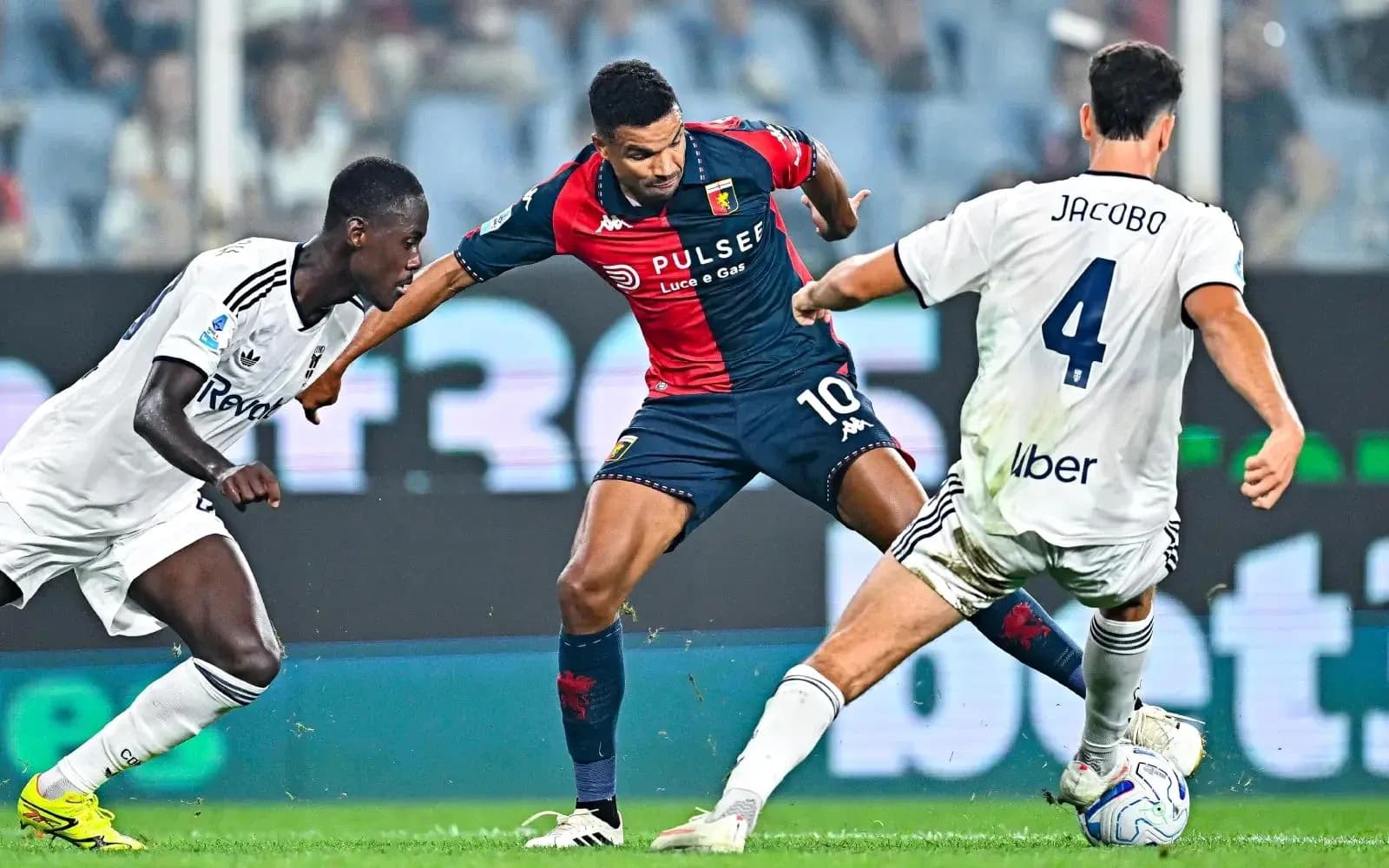
Under the floodlights of Stadio Luigi Ferraris, this “preview” has already written its own epilogue. Genoa’s 4-1 home defeat to Como, in Round 3 of Serie A, crystallised the early-season trajectories suggested by the numbers: a side drowning in structural doubt against one gliding into the league with a clear tactical identity.
I. The Big Picture – Diverging Paths After Three Rounds
Following this result, the table tells a blunt story. Genoa sit 19th with 0 points from 3 matches, their overall goal difference at -6, built from 1 goal scored and 7 conceded. At home, they have played 2, lost 2, scoring just 1 and conceding 6. The season’s statistical DNA is harsh: overall they average only 0.3 goals for per game and 2.3 against; at home, that becomes 0.5 scored and 3.0 conceded.
Como, by contrast, leave Genoa in third place on 7 points from 3 matches, with an overall goal difference of +4 (7 for, 3 against). All of their football so far has been on their travels: 3 away games, 2 wins, 1 draw, 7 scored, 3 conceded, with an away average of 2.3 goals for and 1.0 against. Their 4-1 victory here also matches their biggest away win profile of 1-4, underlining that this is not a one-off explosion but part of a coherent attacking pattern.
The formations mirrored that divergence. Daniele De Rossi went with a 3-4-1-2, trying to compress the middle and give Genoa a front pair of Lorenzo Colombo and M. Osmajić, with Tommaso Baldanzi as the advanced midfielder. Cesc Fàbregas, in the opposite dugout, trusted again in his 4-2-3-1, the shape he has used in all three league games, with Tasos Douvikas as the lone forward, supported by a fluid trio of M. Baturina, Assane Diao and N. Paz.
II. Tactical Voids – Absences and Discipline
Genoa’s squad for this fixture was stretched in subtle but significant ways. C. Drameh was unavailable (inactive), while E. Havel (thigh injury) and L. Venturino (knee injury) also missed out. None are headline stars, but in a team already conceding heavily, the absence of rotational options matters; De Rossi had to lean again on the same defensive core.
Como were without J. Addai due to an Achilles tendon injury, but Fàbregas’ structure is deep enough in the attacking midfield line that his absence did not fracture their plan.
From a disciplinary standpoint, Genoa’s season-long profile is already worrying. Their card distribution shows yellow cards spread across phases: 16.67% of their yellows come in each of the 0-15, 31-45, 61-75 and 91-105 minute windows, with an additional block of 33.33% in unspecified ranges. That scatter suggests a team that can lose control at almost any moment. Individually, Leo Østigård is already a central figure in that story: 3 yellow cards in 3 appearances, plus 4 blocked shots and 4 interceptions, paint him as both last-ditch saviour and disciplinary risk. D. Sow and Alexsandro Amorim add one yellow each to the tally, reinforcing the sense of a midfield that defends reactively rather than proactively.
Como, by contrast, have a cleaner sheet. Their season card map shows a single yellow concentrated in the 46-60 minute band, a neat, almost surgical disciplinary profile that mirrors their controlled approach. Even their most influential midfielder, Baturina, carries only one yellow in three games, despite being heavily involved in duels and fouls drawn.
III. Key Matchups – Hunter vs Shield, Engine Room Battles
The “Hunter vs Shield” duel in this game was defined by Como’s attacking core against Genoa’s fragile defensive block. On one side, Como brought three players already among the league’s early top scorers: Baturina, Diao and Douvikas, each with 2 goals. Baturina’s season line before and through this game is that of a modern No.10: 2 goals, 1 assist, 90 passes at 87% accuracy, 5 key passes, and the vision to occupy the half-spaces behind the striker. Diao adds verticality and chaos – 2 goals, 1 assist, 12 dribbles attempted with 6 successful, and 26 duels contested, winning half. Douvikas, with 2 goals from 9 shots (5 on target) and 8 fouls drawn, is a classic focal point: he pins centre-backs, wins contact, and opens lanes.
Opposite them, Genoa’s “shield” was led by Østigård, whose 4 blocked shots and 4 interceptions across the season underline his willingness to step out and sacrifice himself. Yet the numbers around him betray systemic cracks: Genoa’s defence has allowed 7 goals overall, 6 of them at home, with no clean sheets and 2 games in which they have failed to score. The back three of Østigård, A. Marcandalli and M. Ellertsson, protected by a midfield that includes Sow and J. Vásquez, simply could not compress the space between lines quickly enough against Como’s rotating trio of Baturina, Diao and Paz.
In the “engine room” duel, Genoa tried to build around Sow and Baldanzi, with Morten Frendrup offering legs and aggression. Sow’s 91 completed passes at 91% accuracy show that he can recycle possession, but his low tackle and interception numbers hint at a screen that is more technical than destructive. Baldanzi, deployed as the advanced midfielder behind the front two, had to thread passes into Colombo and Osmajić, yet he was often outnumbered by Como’s double pivot of M. Perrone and L. da Cunha, plus the dropping movements of Baturina.
Como’s midfield triangle won the day. Perrone and da Cunha controlled tempo and first passes, while Baturina and Diao, both among the league’s early assist leaders with 1 each, repeatedly found pockets between Genoa’s midfield and defence. Yan Couto, with 1 assist and 160 passes at 89% accuracy this season, provided width and progression from right-back, further stretching Genoa’s 3-4-1-2 and isolating wing-backs like S. Sabelli.
IV. Statistical Prognosis – What This Game Tells Us About Both Sides
Even without explicit xG numbers, the season data and this 4-1 scoreline sketch a clear prognosis.
For Genoa, the overall averages are brutal: 0.3 goals scored and 2.3 conceded per match, with 2 of 3 games ending in failure to score. At home, the pattern is even more alarming: 1 goal for, 6 against in 2 fixtures, no wins, no draws. Their tactical shifts – two games in a 3-4-2-1, one in a 3-4-1-2 – have not altered the defensive leak, nor have they unlocked Colombo, who has 0 goals but 1 assist and 4 key passes, suggesting a striker starved of high-quality service and forced to drop in.
Como, meanwhile, look sustainably dangerous. On their travels they average 2.3 goals for and 1.0 against, with no failures to score and no defeats. Their biggest away win of 1-4 is now a lived reality at Ferraris, and the structure behind it – a settled 4-2-3-1, a coherent attacking trio, and full-backs like Yan Couto adding creativity – points to a team whose underlying process matches the scorelines.
Following this result, the narrative is stark. Genoa are a side whose defensive numbers and disciplinary scatter hint at more suffering unless De Rossi can tighten the distances between his lines and reduce the reliance on emergency defending from Østigård. Como are the inverse: a newly confident force, with Baturina and Diao orchestrating and Douvikas finishing, whose away form and attacking metrics suggest that nights like this 4-1 in Genoa will not be isolated flashes, but part of a sustained push at the top end of Serie A.
Related News

Fiorentina vs Napoli Prediction: Key Stats and Betting Tips
AS Roma vs Inter: Serie A Showdown on 19 September 2026

Inter’s Dominance in 5–3 Win Over Udinese

AS Roma vs Inter Prediction: Key Stats and Betting Tips
Lazio and AC Milan Battle to a 2–2 Draw: Early Serie A Insights

AC Milan vs Lecce Stats: Head-to-Head Record and Historical Context