
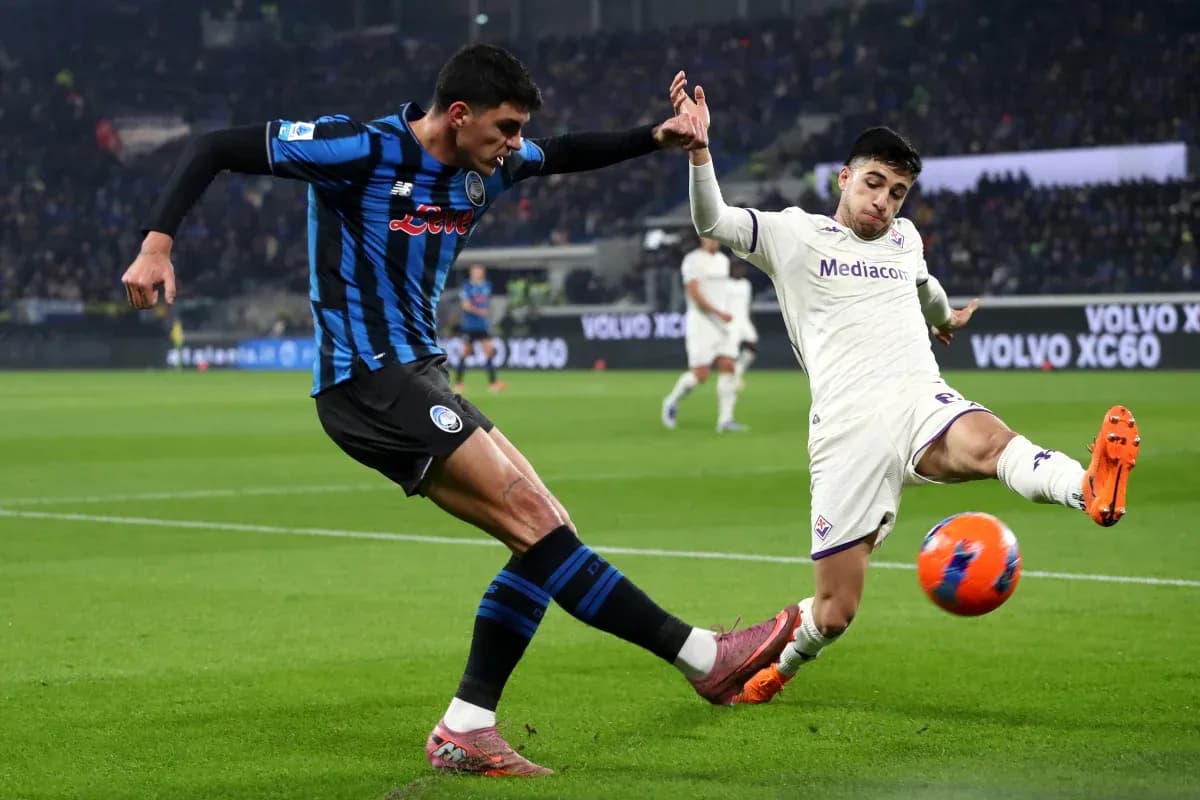
Fiorentina vs Atalanta: Serie A Season Finale Analysis
Under the Tuscan lights of Stadio Artemio Franchi, the final chapter of Fiorentina’s Serie A season closed with a stalemate that felt more like a balance sheet than a celebration. A 1–1 draw with Atalanta in Round 38 encapsulated both clubs’ seasonal DNA: Fiorentina’s fragility and grind, Atalanta’s structured aggression and higher ceiling.
I. The Big Picture – Two Paths Crossing at Franchi
Following this result, the table tells the story of contrasting campaigns. Fiorentina finish 15th with 42 points, their goal difference at -9, the product of 41 goals scored and 50 conceded overall. They have been the league’s embodiment of equilibrium and anxiety: 9 wins, 15 draws, 14 defeats across 38 matches, with both home and away goals-for averages locked at 1.1.
Atalanta, by contrast, close in 7th on 59 points, their goal difference a healthy 15 from 51 goals for and 36 against overall. They have been sturdier and sharper: 15 wins, 14 draws, 9 defeats, with a defensive record that has kept them in the European conversation. At home they conceded just 15 goals; on their travels, 21, for an away goals-against average of 1.1.
The tactical shapes on the night mirrored the season’s patterns. Paolo Vanoli leaned into Fiorentina’s most-used structure, a 4-3-3 that has started 15 times this campaign, while Raffaele Palladino doubled down on Atalanta’s identity with a 3-4-2-1, the system they have deployed in 34 matches. What unfolded was less a chaotic finale and more a controlled, strategic duel between a side desperate to stabilise and one intent on confirming its status.
II. Tactical Voids – Absences and Discipline
Both managers entered with notable absences that shaped the chessboard. Fiorentina were without M. Kean (calf injury), removing a direct, vertical option in attack, and F. Parisi (knee injury), a key outlet from left-back. Perhaps most structurally significant was the suspension of L. Ranieri due to a red card – a defender who has combined 34 tackles, 13 successful blocks and 24 interceptions this season. His absence forced Vanoli to trust P. Comuzzo alongside D. Rugani, with R. Gosens repurposed into a more conservative full-back role rather than the raiding wing-back he can be.
Atalanta were also shorn of depth and defensive flexibility. L. Bernasconi (knee injury) and O. Kossounou (thigh injury) were unavailable, limiting Palladino’s options to rotate his back line or shift to a more conservative late-game block. The starting trio of G. Scalvini, I. Hien and H. Ahanor thus carried the full weight of the defensive burden.
The disciplinary subtext to Fiorentina’s season loomed large. Their yellow cards skew heavily towards the closing stages, with 25.30% of bookings arriving between 76–90 minutes, and a further 15.66% in the 91–105 window. Red cards also spike late: 66.67% between 76–90. This is a team that often defends on the edge as legs and concentration wane. That context made Ranieri’s suspension feel like both a symbol and a practical problem: a defender who has already seen red this season missing a match in which Fiorentina needed calm heads.
Atalanta’s own card profile is similarly backloaded: 23.33% of yellows in the 76–90 window, 21.67% between 61–75. Palladino’s side push the intensity late, and with a red card already shown between 0–15 and another between 76–90 this season, their aggression can tip into risk.
III. Key Matchups – Hunter vs Shield, Engine Room vs Enforcer
Even from the bench, the shadow of Atalanta’s attacking firepower hung over the match. N. Krstović, with 10 league goals and 5 assists in 33 appearances, embodies the “Hunter” archetype: 75 shots, 34 on target, 21 key passes, and 39 dribbles attempted with 17 successful. He is both finisher and facilitator, leading Atalanta in both goals and assists in Serie A. Alongside him in the squad, G. Scamacca offers another 10 goals, including 2 from the spot, giving Palladino a devastating one-two punch to rotate into the front line.
The “Shield” they were testing belongs to a Fiorentina defence that, heading into this game, conceded 50 goals overall, 21 at home. That translates to a home goals-against average of 1.1 – numerically modest, but contextually fragile given their tendency to suffer in late phases and their reliance on last-ditch defending. Vanoli’s back four on the night – Dodo, Comuzzo, Rugani, Gosens – had to compensate for the absence of Ranieri’s aggression and aerial presence. With Marin Pongračić, Serie A’s most-booked player this season with 12 yellows, only on the bench, Fiorentina’s “Shield” was younger, less cynical, and more reliant on structural discipline than on individual duels.
In midfield, the “Engine Room” battle was defined by contrast. Fiorentina’s trio of G. Fabbian, R. Mandragora and M. Brescianini offered industry and balance, but not the same level of creative incision as Atalanta’s hybrid core. For Palladino, M. De Roon anchored the structure, screening the back three, while M. Pasalic and Y. Musah provided vertical runs and ball-carrying. Ahead of them, L. Samardzic and K. Sulemana floated between the lines, linking to G. Raspadori.
The real creative gravity in Atalanta’s season, though, sits with C. De Ketelaere, who started this one on the bench. Across the campaign he has 5 assists, 63 key passes and 102 dribbles attempted with 51 successful, operating as the primary conduit between midfield and attack. His presence in reserve gave Palladino a late-game “surge” option to exploit tired legs in a Fiorentina side that already concedes a high share of cards in the closing stages.
Up front for Fiorentina, A. Gudmundsson carried dual responsibility. In Serie A he has contributed 5 goals and 4 assists, with 32 key passes and 39 dribbles attempted (20 successful). He is both outlet and creator, tasked with stretching Atalanta’s back three and linking with R. Piccoli and J. Harrison. His own disciplinary record – 4 yellows and 1 red – underlines how much of his work happens on the edge, both physically and emotionally.
IV. Statistical Prognosis – A Draw That Fits the Numbers
Strip away the emotion of the final day and the 1–1 feels mathematically inevitable. Fiorentina’s season-long average of 1.1 goals for and 1.3 against overall collides neatly with Atalanta’s 1.3 scored and 0.9 conceded. On their travels, Atalanta have averaged 1.4 goals for and 1.1 against; Fiorentina at home, 1.1 scored and 1.1 conceded. The equilibrium is almost too neat.
Defensively, Atalanta’s 13 clean sheets overall (7 at home, 6 away) point to a side usually capable of shutting games down. Fiorentina’s 10 clean sheets (6 at home, 4 away) are respectable but undermined by the volume of matches where they failed to score – 11 in total. That attacking inconsistency is why a single goal felt like their ceiling here, even before kick-off.
In an xG-informed lens, Atalanta’s superior defensive record and higher goal output suggest they would typically edge a fixture like this on chances created and quality of opportunities. Fiorentina’s structure under Vanoli, however, is built to compress games, slow tempo and drag opponents into attritional battles. Their 15 draws overall are the statistical echo of that approach.
Following this result, the narrative is clear. Fiorentina survive, but must evolve: their late-game indiscipline and thin attacking margins leave no room for error. Atalanta, meanwhile, confirm their place among Serie A’s European contenders, armed with a deep attacking arsenal and a tactical system that consistently tilts xG in their favour – even on nights when the scoreboard refuses to fully cooperate.
Related News
Frosinone vs Como Prediction: Key Stats and Betting Tips
Fiorentina vs Napoli Prediction: Key Stats and Betting Tips
AS Roma vs Inter: Serie A Showdown on 19 September 2026
Inter’s Dominance in 5–3 Win Over Udinese
AS Roma vs Inter Prediction: Key Stats and Betting Tips
Lazio and AC Milan Battle to a 2–2 Draw: Early Serie A Insights