
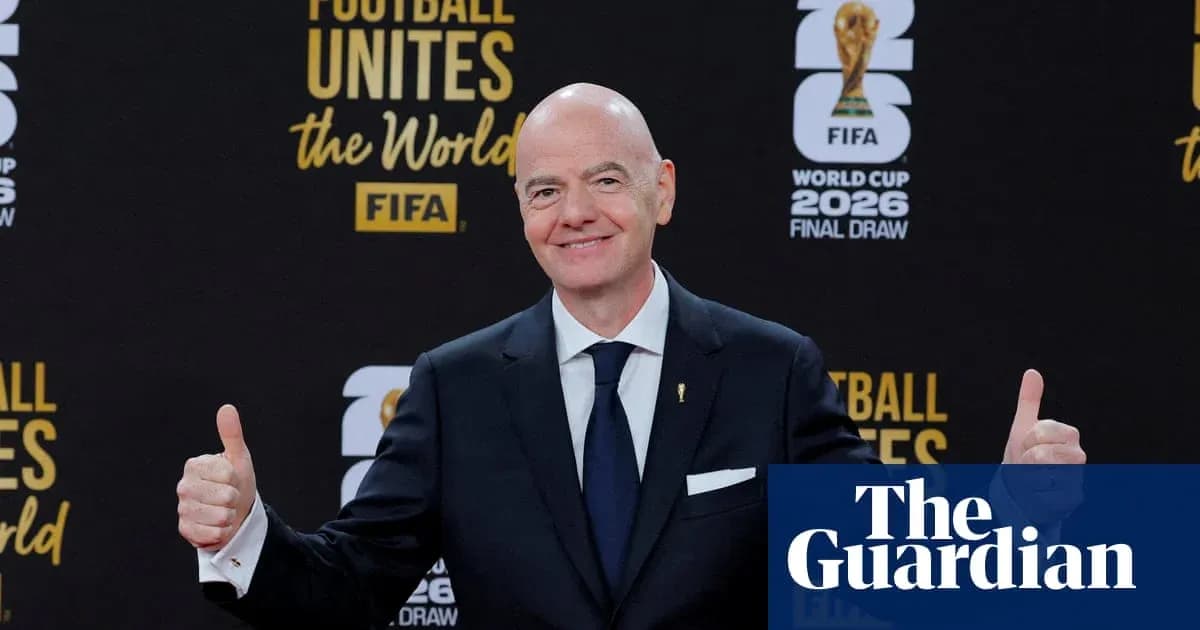
Fifa's New Revenue Strategy: More Tournaments and Higher Ticket Prices
Fifa’s bold new money-making plan has been laid bare in a 25-page sales deck – and it pulls no punches about where the cash is supposed to come from: more tournaments, higher ticket prices and taking on debt.
The document, titled “Fifa Forward Enterprise Member Materials” and seen by the Guardian, is the pitch being used to persuade the game’s 211 national associations to sign off on a radical restructuring of world football’s commercial engine. At its heart is a proposal to spin off Fifa’s commercial operations into a new company and sell 20% of it to a group led by US investor Joshua Kushner, brother of Jared Kushner, Donald Trump’s son-in-law.
The architect of the prospectus is JP Morgan, the same US banking giant that stood behind the doomed European Super League project five years ago. The language is corporate. The ambition is vast.
More tournaments, more debt, more strain
JP Morgan’s presentation spells out the growth strategy in blunt terms. Fifa, it argues, will drive up revenues through “a growing tournament portfolio”, “third party sources of capital and debt financing”, and a sharper focus on “high yield” partnerships and events.
One line leaps off the page: a plan to more than double the number of global tournaments each year, from 200 to 450. If even partially realised, that schedule would pile fresh pressure on a calendar already creaking under player workload and travel demands.
The World Cup itself sits at the centre of the vision. Staging it more often is the most obvious lever to pull, echoing Gianni Infantino’s previously floated idea of a biennial tournament. The deck does not spell out a concrete World Cup cycle change, but the direction of travel is clear: more showpieces, more often.
The commercial push stretches into broadcasting too. JP Morgan flags a strategy to “expand and optimize media rights monetization”, a phrase that points towards shifting more of the sport’s biggest events – including the World Cup – behind subscription paywalls or onto streaming platforms, away from traditional free-to-air exposure in many markets.
Ticket prices are also earmarked to rise as part of the growth plan, adding another layer of revenue extraction from supporters.
Cash on the table – and big questions behind it
To sweeten the deal, Fifa is dangling immediate money in front of its members. The deck reiterates the previously reported $20m sign-up payment on offer to each of the 211 associations, a windfall that could land as early as January.
Beyond that, the projections are even more eye-catching. The four-year Fifa Forward funding payments, the core development money that flows to each association, are forecast to climb to $24m per member in the 2035–39 cycle.
JP Morgan frames this as unlocking the potential of an “undermonetized” asset. To make its case, it sets Fifa’s stated annual revenue of $3.6bn against the financial muscle of the US major leagues: the NFL at $21.2bn, Major League Baseball at $13.1bn and the NBA at $12.5bn.
Yet those comparisons have already jarred with some inside the game. Fifa is a global governing body with 211 members; the NFL, MLB and NBA are closed, club- or franchise-based competitions designed to maximise profit. Lining them up side by side glosses over that fundamental difference.
Why debt, when the coffers are full?
The document landed in inboxes on Wednesday night and the backlash was instant. Senior figures across world football were quick to question why Fifa, of all organisations, needs to borrow.
The governing body currently sits on cash reserves of around $4bn and has accumulated revenues of $15bn over the current four-year cycle. Against that backdrop, the decision to pursue debt financing – and to sell a fifth of its commercial arm to outside investors – has raised eyebrows.
One leading official queried the basic logic of loading debt onto an organisation with such strong reserves. Another pointed to the flawed comparison with US leagues as a sign that the sales pitch is being driven more by investor logic than by the realities of global football governance.
The timeline has also unsettled some. According to the deck, “Investors will be given access to a term sheet and select materials” in August – before Fifa’s own members have voted on the plan. That sequence, where external financiers get a head start on the details ahead of the associations who technically own the game’s global body, has not gone unnoticed.
The silent investor – and the invisible women’s game
For a proposal of this scale, the sales deck is strikingly thin on detail about the investor group itself. Beyond identifying Kushner as the buyer of the 20% stake, there is scant information on who else is involved, what returns they are targeting or what their exit route would be.
Those omissions go to the heart of concerns about control. Once 20% of Fifa’s commercial arm is in private hands, how much influence will those investors wield over future World Cup hosts, competition formats or broadcast arrangements? The deck does not say.
There is another glaring absence. Across all 25 pages, women’s football is not mentioned once. No separate strategy, no dedicated projections, no sign that the women’s game has been factored into this grand monetisation plan at all.
At a time when women’s football is booming in audiences and participation, and when Fifa has repeatedly trumpeted its commitment to growing the women’s game, that silence is deafening.
Fifa has been approached for comment. The answers it gives – and the questions its members are willing to ask – will reveal how much of world football is ready to trade a slice of its future for a bigger cheque today.
Related News

Raphinha’s Hat-Trick Powers Barcelona to 7-2 Victory Over Racing Santander
Carabao Cup Fourth Round Draw: Liverpool Set to Clash with Chelsea, Arsenal to Face Fleetwood Town
Key Football Matches to Watch in Azerbaijan This Autumn
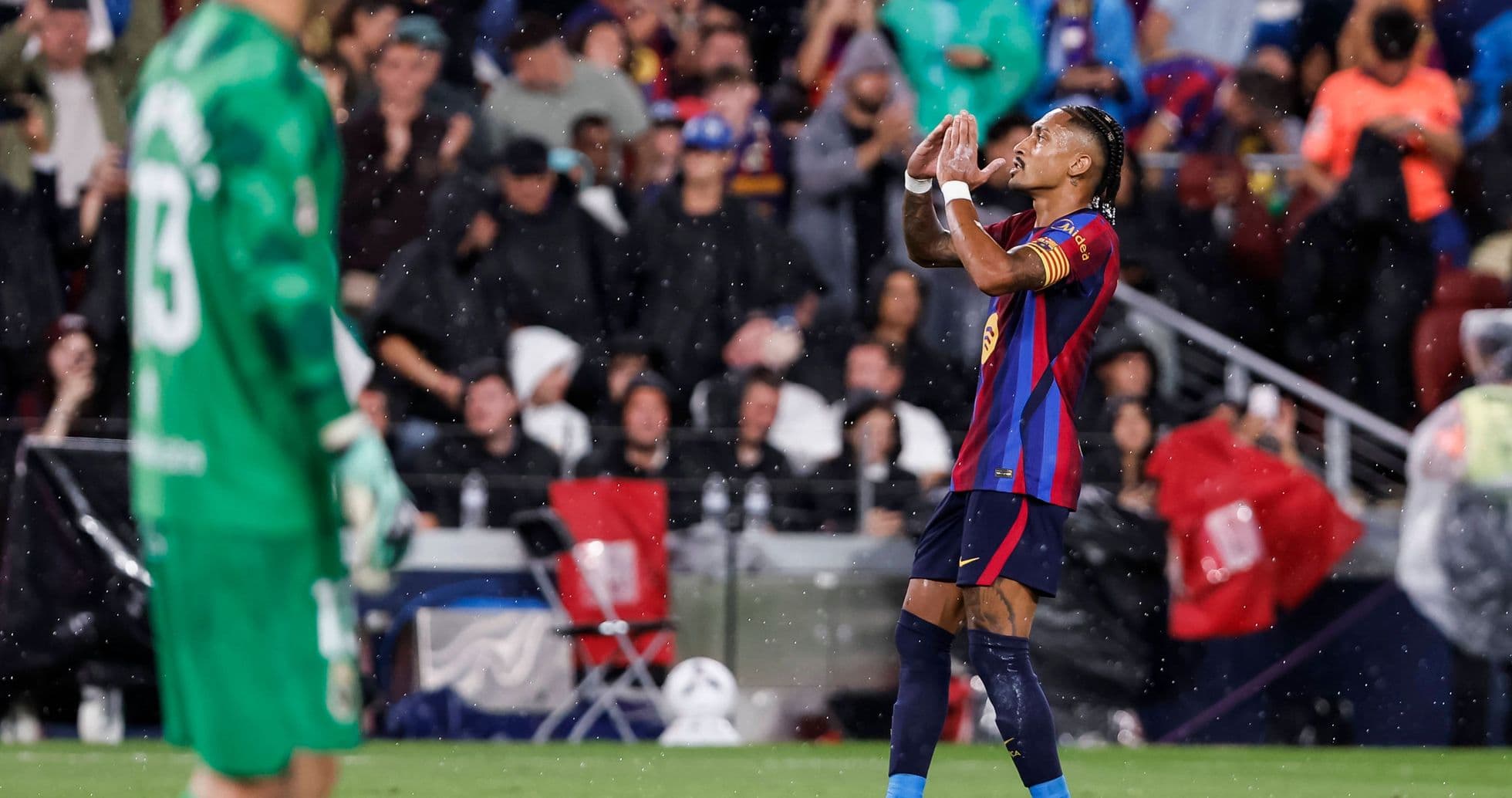
Raphinha's Hat-Trick Drives Barcelona to 7-2 Triumph Over Racing Santander
Hansi Flick Leads Barcelona to Record-Breaking Seven Wins in a Row
Gavi Reflects on Injury Return as Barcelona Dominate Racing Santander 7-2