
Bournemouth's Historic Journey: From -17 to European Victory
“From -17 to Europe.”
The banner in the away end at Anoeta said everything. A reminder, in a single line of fabric, of just how far Bournemouth have travelled – and how far they still intend to go.
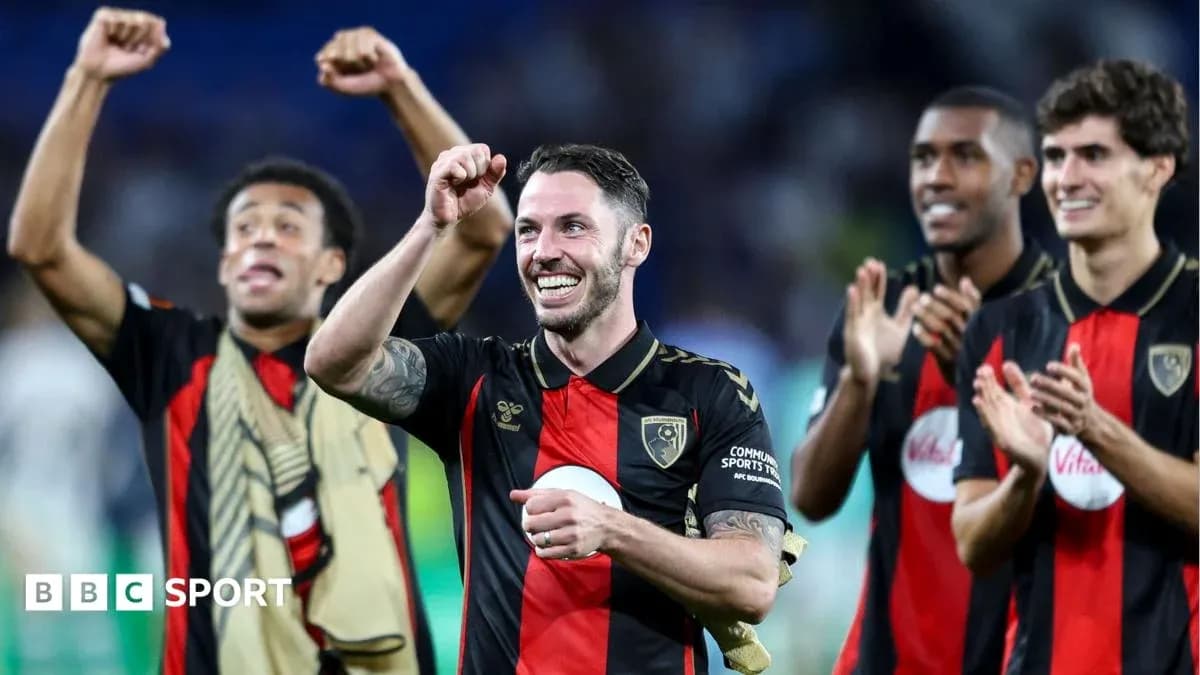
On their first night in European competition in 127 years of existence, they didn’t just turn up. They went to San Sebastian, took on a Real Sociedad side packed with pedigree, and won 2-1. An opener in the Europa League, away, in a stadium that has swallowed up bigger names. This is no small step for a club that once stared down the barrel of oblivion.
For an entire generation of Cherries supporters, the Premier League is all they’ve really known. Eleven years have passed since that first promotion to the top flight. To them, this may feel like the next logical rung on the ladder for a smart, ambitious club. Europe as a natural progression.
To the thousands bouncing in the away section, it felt like something else entirely. It felt like a dream they were never supposed to have.
Back in 2008, Bournemouth were fighting not for Europe, but for their life. Administration brought a 10-point deduction and relegation to League Two. The following season, the price of merely staying in the Football League was even harsher: a 17-point penalty and a promise not to appeal, after they failed to secure a Company Voluntary Arrangement and were judged not to have met the conditions to exit administration.
Survival was the only word that mattered then. The idea of a £100m-rated midfielder threading passes to a Brazil winger to win a European tie would have sounded like fantasy.
Yet here they were. Alex Scott striding around San Sebastian with authority, showing precisely why elite Premier League clubs are circling. Rayan rising to meet the moment, underlining why Bournemouth will point to a reported £130m release clause and insist on every last pound if anyone wants to prise him away.
This was not a novelty act. This was a proper European away performance.
Real Sociedad are no soft touch. They are led by World Cup winner Mikel Oyarzabal and beat Atletico Madrid to lift the Copa del Rey last season. At home, in Europe, they expect to impose themselves.
For 45 minutes, Bournemouth refused to let them. Marco Rose’s side were relentless without the ball, snapping into challenges, pinning Sociedad in and forcing turnover after turnover high up the pitch. When they had possession, they were composed enough to carve out chances even against a set defence. It was bold, it was aggressive, and it was brave.
The pressure finally told after the break – but from the other direction. Sociedad came out snarling, their edge returning as the Anoeta crowd roared them on. The adrenaline that had fuelled Bournemouth’s first-half surge began to ebb, legs growing heavier, decisions a fraction slower.
Rose saw it too.
“It was very intense and tough,” he told TNT Sports. “Brilliant first half in everything. The way we won balls and the possession high up. In the second half, we needed to suffer because we were not so sharp.”
Suffer they did. Bournemouth’s reputation is not built on defensive steel, and memories of leads slipping away in each of their first four Premier League games this season were hard to ignore as Sociedad cranked up the tempo.
This time, though, they held. Djordje Petrovic stood tall, his sharp reflexes bailing out tiring legs in front of him. Blocks, clearances, tackles on the stretch – the kind of gritty work that rarely makes the highlight reels but wins European away nights.
When the whistle went, it was a famous victory, the sort that gets replayed in supporters’ heads for years.
“It is a big occasion. A big moment for the club, and they should be applauded for it,” former Cherries full-back Charlie Daniels said on BBC Radio Solent.
The roots of this night stretch back to January 2009 and the appointment of Eddie Howe. He took over a club in crisis and somehow dragged them clear, finishing nine points above the drop despite that 17-point handicap. Six and a half years later, in his second spell, he had them in the Premier League. The journey from -17 to the top flight felt miraculous enough.
So there was symmetry, and no little emotion, in seeing Adam Smith lead Bournemouth out for their first European tie. Smith first arrived on loan in the 2010-11 season, returned permanently in 2014 and has never really left, chalking up close to 400 league appearances.
“Adam has been with the club for so long,” Daniels said. “Dedicated himself to the club, and it's such a proud moment, not only for him, but for his family, his team-mates and old team-mates to see how he's grown - not only as a player but as a man as well.
“To lead out the Cherries on this historical night is fantastic.”
It was more than symbolic. At 35 years and 141 days, Smith became the oldest English outfielder to make his debut in a major European competition since Ipswich’s Reginald Pickett in 1962. A small line in the record books, a huge one in Bournemouth’s story.
No one understands that story better than the club captain. He has lived the chaos and the climb: relegation in 2020, the scramble to get back, the constant battle to rebuild as bigger clubs come calling for Bournemouth’s best players. The churn has barely stopped. Even qualification for Europe could not keep hold of Andoni Iraola, who returns to the Vitality Stadium with Liverpool on Sunday.
That is the reality now. Bournemouth develop, others covet. Managers move on, players are picked off, squads are reshaped almost annually. The pattern is unlikely to change.
But nights like this change how a club sees itself. They change how everyone else sees it too.
From -17 to Europe, the banner said. The next question is obvious: if this is what Bournemouth can do on their first European outing, where does this journey end?
Related News
Bournemouth's Historic Journey: From -17 to European Victory
Floyd Samba Shines on Debut with Two Goals for Manchester City
Arsenal Revives Interest in £80m Kroupi as Arteta Seeks Versatile Striker

Tottenham's Icardi Move: A Solution to Goal Drought
Liverpool Eye January Signings: Lamine Camara and Tyrick Mitchell

Arsenal's January Transfer Targets: Kroupi and Schade