
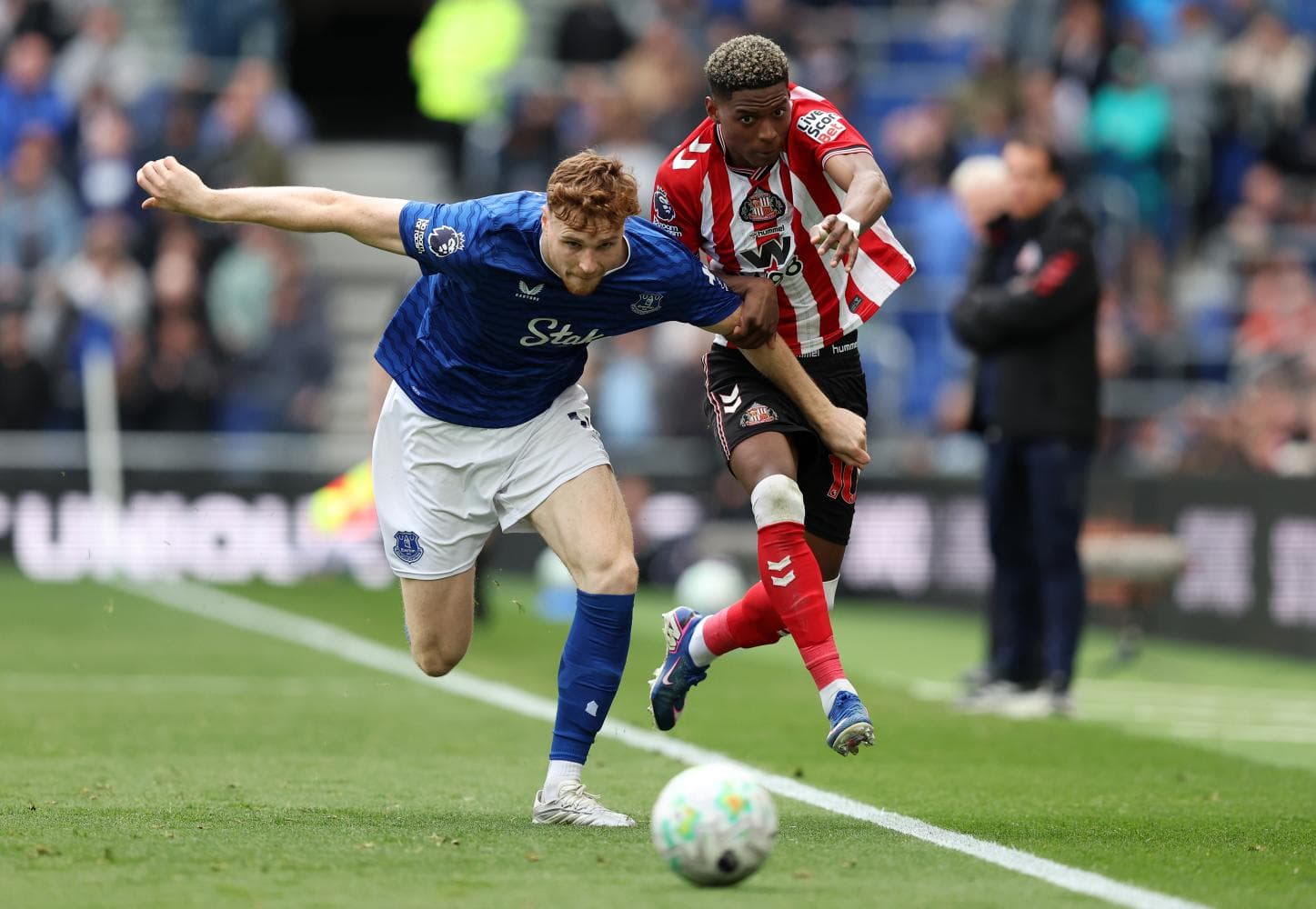
Everton 1–3 Sunderland: Match Analysis and Tactical Insights
Everton 1–3 Sunderland at Hill Dickinson Stadium, a result that dents Everton’s late push for a top-half finish and strengthens Sunderland’s position in the upper mid-table. Coming into the day Everton sat 11th on 49 points, while Sunderland were 9th on 51; Sunderland’s comeback win widens the gap between the sides and underlines the visitors’ greater efficiency in both boxes.
Everton made the first significant change on the Sunderland side of the ball when, on 23 minutes, Sunderland reshaped their back line: Luke O'Nien replaced Omar Alderete, an early defensive substitution that hinted at a tweak in build-up and aggression. Two minutes later, Everton’s midfield bite was noted by the referee as Tim Iroegbunam went into the book for tripping in the 25th minute, a yellow card that reflected the hosts’ attempt to disrupt Sunderland’s rhythm.
The breakthrough came for Everton on 43 minutes. Merlin Rohl struck the opener, finishing a move created by centre-back Michael Keane, who provided the assist with a forward contribution from the back. That goal sent Everton into half-time 1–0 up and seemingly in control.
Early in the second half, the tone shifted. Just two minutes after the restart, in the 47th minute, Jake O'Brien was booked for holding, Everton’s second yellow card and a sign of growing defensive strain as Sunderland increased their attacking intent.
The pressure told on 59 minutes. Sunderland levelled through Brian Brobbey, who converted a chance fashioned by Enzo Le Fée’s creativity, the midfielder supplying the assist to make it 1–1. The equaliser was swiftly followed by a proactive change from Sunderland: in the 60th minute Chemsdine Talbi replaced Trai Hume, adding fresh legs and attacking thrust in the wide areas.
Everton responded with a double substitution in the 73rd minute to regain control of the contest. Tyrique George came on for the booked Tim Iroegbunam, while Thierno Barry replaced Beto at centre-forward, signalling Leighton Baines’ desire for more mobility and direct running in the final third.
The decisive phase arrived in the 77th minute, when Sunderland made a triple change that transformed the attacking structure. Chris Rigg replaced Nilson Angulo, Wilson Isidor came on for goalscorer Brian Brobbey, and Habib Diarra replaced Noah Sadiki. Those three fresh attacking and midfield options gave Sunderland extra energy between the lines and in transition.
Just four minutes later, in the 81st minute, Sunderland’s reshuffle paid off. Enzo Le Fée, now increasingly influential, struck to put the visitors 2–1 ahead, finishing a move assisted by Chris Rigg, one of the new introductions. Everton tried to react late: in the 88th minute Dwight McNeil replaced Merlin Rohl, and Séamus Coleman came on for Jake O'Brien, adding experience on the right flank and at full-back as the hosts chased an equaliser.
Instead, Sunderland killed the game in stoppage time. In the 90+1 minute, Wilson Isidor, another of the 77th-minute substitutes, made it 3–1, finishing a move set up by Habib Diarra. Both scorer and provider were late entrants, underlining the impact of Regis Le Bris’ bench. Everton’s frustration was capped deep into added time when James Garner received a yellow card for tripping in the 90+6 minute, the home side ending a bruising second half with three bookings and a collapsed lead.
Fixture Statistics & Tactical Audit
- xG (Expected Goals): Everton 1.07 vs Sunderland 0.73
- Possession: Everton 49% vs Sunderland 51%
- Shots on Target: Everton 4 vs Sunderland 3
- Goalkeeper Saves: Everton 0 vs Sunderland 3
- Blocked Shots: Everton 2 vs Sunderland 0
The underlying numbers suggest Everton generated slightly better chances in volume and quality, edging xG 1.07–0.73 and leading 4–3 on shots on target, while possession was almost evenly split at 49%–51%. Sunderland, however, were markedly more ruthless in front of goal, converting all three of their efforts on target into goals (clinical finishing: 3 goals from 0.73 xG and 3 shots on target), while Everton turned four shots on target and 1.07 xG into just a single strike. Sunderland’s keeper Robin Roefs made three saves to preserve the lead, whereas Jordan Pickford was left exposed with no registered saves as each Sunderland shot on goal found the net. Everton’s two blocked shots versus Sunderland’s zero underline that the visitors were more effective at creating clearer looks, and that Everton’s defensive structure failed to protect their penalty area once the momentum turned.
Standings Update & Seasonal Impact
Everton started the day 11th with 49 points, 47 goals scored and 49 conceded (goal difference -2). The 1–3 defeat adds one goal to their tally but three to their goals against, leaving them on 49 points with 48 goals for and 52 against, a new goal difference of -4. They remain marooned in mid-table, with their outside hopes of climbing into the top half severely undermined by dropping points at home this late in the season.
Sunderland began 9th on 51 points, with 40 goals scored and 47 conceded (goal difference -7). This win moves them to 54 points, with 43 goals for and 48 against, improving their goal difference slightly to -5. The result consolidates their top-half position and opens up a larger buffer over Everton below them, keeping them in the conversation for a higher mid-table finish and, depending on other results, an outside shot at pushing further up the Premier League standings.
Lineups & Personnel
Everton Actual XI
- GK: Jordan Pickford
- DF: Vitaliy Mykolenko, Michael Keane, James Tarkowski, Jake O'Brien
- MF: Tim Iroegbunam, James Garner, Iliman Ndiaye, Kiernan Dewsbury-Hall, Merlin Röhl
- FW: Beto
Sunderland Actual XI
- GK: Robin Roefs
- DF: Reinildo Mandava, Omar Alderete, Nordi Mukiele, Lutsharel Geertruida
- MF: Noah Sadiki, Granit Xhaka, Nilson Angulo, Enzo Le Fée, Trai Hume
- FW: Brian Brobbey
Expert's Post-Match Verdict
This was a match defined by in-game management and finishing. Leighton Baines’ Everton controlled long stretches and fashioned the better xG profile (1.07 vs 0.73) but failed to turn territorial and statistical parity into scoreboard dominance, with only one goal from four shots on target. Once ahead, Everton’s defensive line gradually lost compactness, reflected in Sunderland needing just three shots on target to score three times (clinical conversion: 3/3 on target). The timing of Everton’s substitutions at 73 minutes brought energy but did not address the structural issues between midfield and defence that Sunderland began to exploit.
Regis Le Bris, by contrast, changed the game from the bench. The triple substitution on 77 minutes, introducing Chris Rigg, Wilson Isidor and Habib Diarra, directly produced the second and third goals, with Rigg and Diarra each providing assists and Isidor scoring the clincher. Sunderland’s marginal edge in possession (51%) and their perfect finishing efficiency suggest a side that accepted a lower shot volume but maximised the quality and execution of the chances they did create (3 goals from 0.73 xG). Defensively, three saves from Roefs and zero from Pickford underscore a narrative of Sunderland’s resilience versus Everton’s fragility. Tactically, Sunderland’s flexible 4-2-3-1 adapted better over 90 minutes, while Everton’s similar shape lacked the in-game adjustments to protect a lead and cope with Sunderland’s late attacking wave.
Related News
Bournemouth vs Liverpool Prediction: Key Stats and Betting Tips
Tottenham vs Aston Villa Predicted Lineups: Team News for Premier League Clash
Brighton vs Arsenal: Premier League Clash Preview
Manchester City vs Sunderland: Premier League Clash Preview
Tottenham vs Aston Villa: Early Relegation Battle
Brentford vs Chelsea Predicted Lineups: Team News and Match Insights