
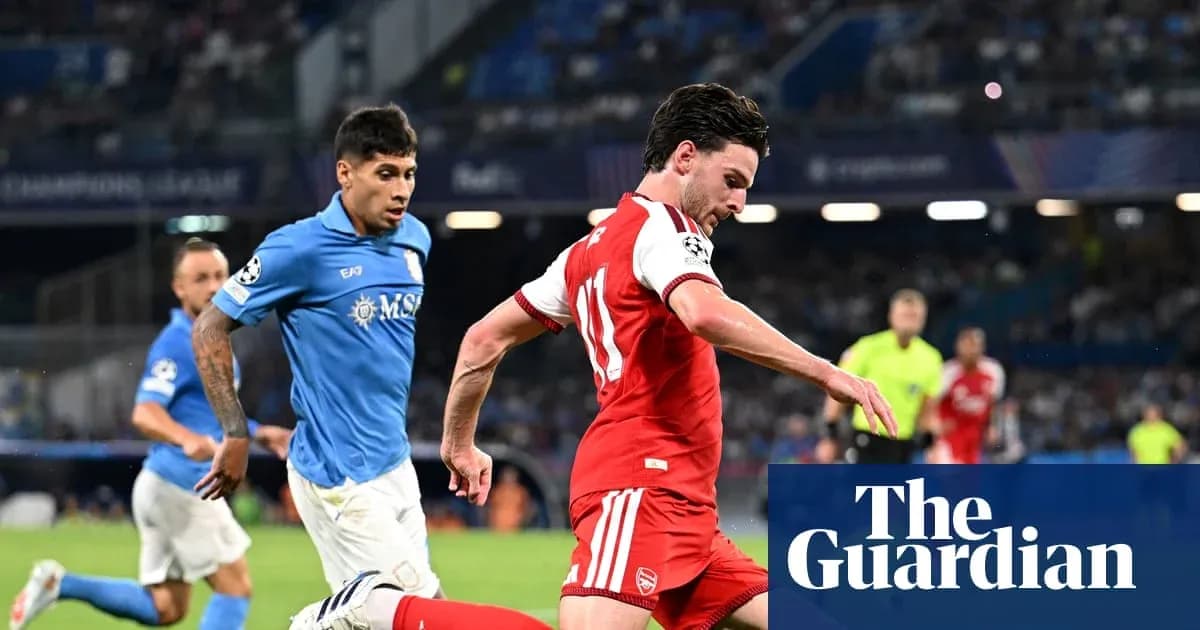
Declan Rice's Resilience: Arsenal's Concerns Over His Workload
Declan Rice insists his body can take the strain again. Arsenal are not so sure.
The midfielder ground his way through 69 games for club and country last season, then revealed during the World Cup that he had been playing through neural back and hamstring pain, at one stage requiring a pain‑killing injection after a hamstring injury in December. That admission set alarm bells ringing at Arsenal, who know exactly how much they lean on him.
They are watching him closely now. Rice had only three weeks off in the summer before reporting back a week ahead of the Community Shield. There was the option of more rest after his World Cup exertions; he turned it down. He wanted to be there from the start.
On the pitch, he has barely paused for breath. Rice came off the bench to replace Bruno Guimarães in the win over Manchester City in Cardiff and has started every Arsenal game since, while Guimarães’ own return from injury is handled with more caution. Arsenal did not spend £75m on the Brazil international simply for luxury. The plan was clear: share the load, protect Rice from another season of constant firefighting.
Yet old habits are hard to break. In Wednesday’s Champions League victory away to Napoli, Rice stayed on for the full 90 minutes, while Mikel Merino made way for Guimarães. When the tempo rises and the stakes sharpen, managers reach for their most trusted player. For Arsenal, that is still Rice.
He does not see a problem.
“I think for the last six seasons, even since my West Ham days when they were in Europe, I’ve played 60-plus every season,” he said. “So I think it is sustainable because I’ve shown that I can do it.
“It’s just about maintaining it, maintaining the level and the consistency of the performances. For me, that’s the main thing, showing up every week, giving a good account of myself and helping the team win. I’ve been lucky enough to be able to do that. So I’m really hungry to be able to do that again this season.”
Rice talks like a player who knows his own body and trusts it. Arsenal’s medical staff read the same numbers and see risk.
World Cup toll, club concerns
Rice admitted he “found things tough” during the World Cup, the cumulative effect of a bruising Premier League campaign, Champions League nights and then tournament football in heavy heat. The neural hamstring problem never truly left him.
“I feel really good at the minute, in really good form, so we’ll make it continue,” he said. “I think everyone knew I had an issue with a neural hamstring. But also on the top of the Premier League season, which was so demanding, the Champions League, to then play a World Cup in that heat really does take its toll.
“I’m a player that goes on the pitch, wants to be fresh and give 100% every time I put on an England shirt. Yes, there were stages where I felt really, really good and stages where I didn’t feel so good. There were a few things that frustrated me, just with myself, just not feeling 100%. It’s one of those things I just had to manage.”
That word – manage – now defines his season. Arsenal will try to manage his minutes; Rice will try to manage his own expectations, the instinct to play every game, to carry every midfield.
International demands won’t help. He is expected to be named in Thomas Tuchel’s England squad for Nations League fixtures against Spain, Czechia and Croatia when it is announced next Friday. Four matches, high intensity, little margin for rotation. Arsenal are likely to push for Rice and Bukayo Saka to be given a breather somewhere in that schedule.
Whether England listen is another matter. Managers talk about player welfare, then watch tight games tilt and send their mainstays back into the fray. Rice’s reliability makes him a target for overuse as much as a cornerstone of any plan.
He has shown he can live at that level, 60 games and more, year after year. The question now is not whether Declan Rice believes he can do it again.
It is how long Arsenal dare let him keep proving it.
Related News
Chelsea Enters New Era Under Clearlake Capital Control

Vinicius Jr. Faces Challenge as Mbappe Dominates at Real Madrid
Thomas Tuchel Faces Criticism After World Cup Defeat
Dominik Szoboszlai's Thunderbolt Performance Against Tottenham
Wrexham's Challenge Against Southampton: A Test of Resilience

Man United Injury Updates: Shaw, Baleba, Amad, and More