
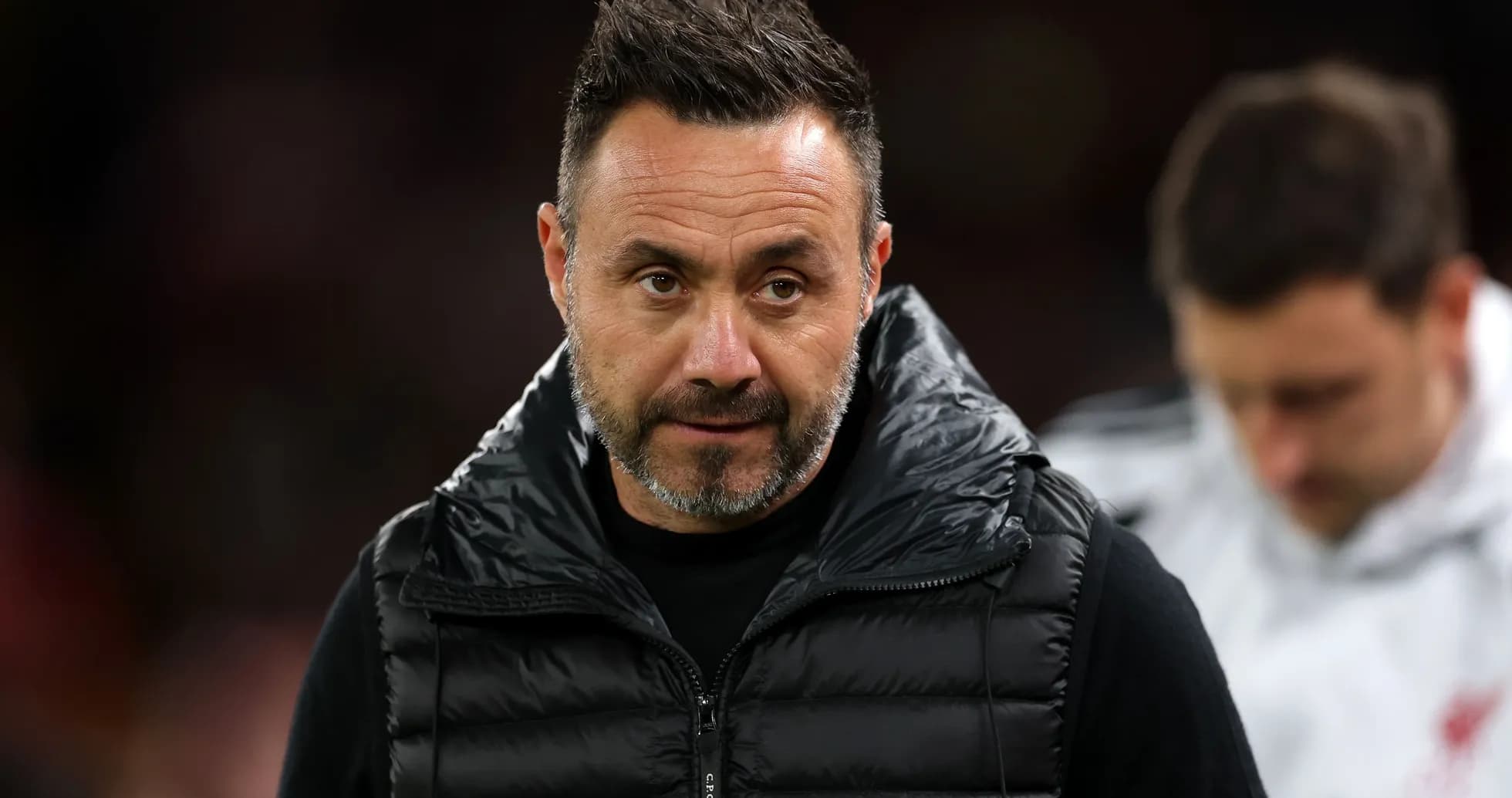
De Zerbi's Silence Speaks Volumes After Spurs Defeat
The silence said everything.
As the final whistle cut through a flat, frustrated Tottenham Hotspur Stadium, Roberto De Zerbi chose not to utter a word to his players. No instant inquest. No furious dressing-room speech. Just a deliberate, calculated quiet.
"Maybe it is better. I didn't speak with the players today because I didn't want to say nothing," he explained later, making it clear the silence was about control, not conflict. "No, I have nothing with them."
This was not a manager withdrawing. This was a manager simmering.
Tactical collapse that De Zerbi won’t forgive
What angered him most was not simply the defeat, but the way it unfolded. Spurs conceded while temporarily down to ten men, Micky van de Ven off the pitch with a facial injury. Then came the killer: a direct, route-one goal from a long goal kick. Basic, predictable, and exactly what they had prepared for.
"We conceded an unacceptable goal from a long kick with a long ball and we knew before the game," De Zerbi said, his irritation obvious. He highlighted that Aston Villa have played 86 per cent more long balls this season than last, something he and his staff had drilled into the squad across "many, many meetings."
They knew it was coming. They still failed to deal with it.
For a coach who builds his identity on structure, detail and control, that kind of lapse cuts deep. This wasn’t about being outclassed. It was about switching off.
Leaders under the spotlight
De Zerbi did not dodge responsibility. He took it. But he also drew a sharp line under what he expects from his senior players when the game turns.
"It's my responsibility, I take my responsibility," he said. "But in that moment of the game, when the game is different than ball possession than playing in the last third… the moment when we have to defend and we have to defend compact the leaders have to be leaders and to lead the team."
He acknowledged that Spurs cannot dominate in the final third for 90 minutes. There is an opponent. And this opponent, Aston Villa, as he pointed out, are “not a so bad team, it's a good team.” When the match shifts into a different phase, when it becomes about resilience and compactness rather than patterns and possession, he expects his experienced core to take charge.
On Saturday, they didn’t. And he knows it.
Solanke struggle adds to the storm
As if the defensive frailty was not enough, De Zerbi is also wrestling with the form and fitness of Dominic Solanke. Signed to be the focal point of the attack, Solanke has started the season looking far from the ruthless, confident forward Spurs thought they were getting.
"We need more from him for sure," De Zerbi admitted. Yet there was no public scapegoating, only a blunt assessment. "He's one of my players, I like Dom as a player and I stay with him until the end."
The problem, as he sees it, is twofold: physical and psychological.
"His physical condition is not good enough for sure, but it's normal for him," he said, suggesting Solanke is still playing catch-up. Then came the sharper point. "Maybe he's not good enough in the confidence of himself in this moment because he's much better than this Dom Solanke."
The message was clear: the player on the pitch right now is not the real version. De Zerbi believes there is more in him. Much more. But belief and fitness have to catch up fast.
International break becomes a training ground
For many managers, a three-week international break after a damaging defeat would feel like an interruption. For De Zerbi, it looks more like an opportunity.
With a chunk of his squad heading off to represent their countries, he expects those players to maintain their rhythm and sharpness away from the club. The real work, though, will happen with those who stay behind.
"The players who go with the national team they have to play, they have to work," he said. "And the other players like [Conor] Gallagher, Solanke, Tosin [Adarabioyo], [Marcos] Senesi, Savio for sure we have to work more because of the physical condition I didn't like in this game."
That is the plan: an intensive block for the core staying at the training ground, aimed at rebuilding legs, lungs and, perhaps just as importantly, authority on the pitch.
The silence in the dressing room on Saturday night won’t last. When De Zerbi does speak to his players again, the message will be sharper, the demands higher. The question now is simple: when this team returns from the break, will it still be fragile, or will those leaders he keeps calling for finally emerge?
Related News
Stepanov’s Dream Debut for Ukraine in Doubt After Injury at De Kuip
Liverpool's Momentum Chase at Bournemouth: Iraola's Return
Leeds United vs Crystal Palace: A Clash of Early Season Stakes
De Zerbi's Silence Speaks Volumes After Spurs Defeat
Andros Townsend's Bizarre Incident with Pitch Roller in Thailand
Benfica's Marco Silva Prepares for O Clássico Showdown