
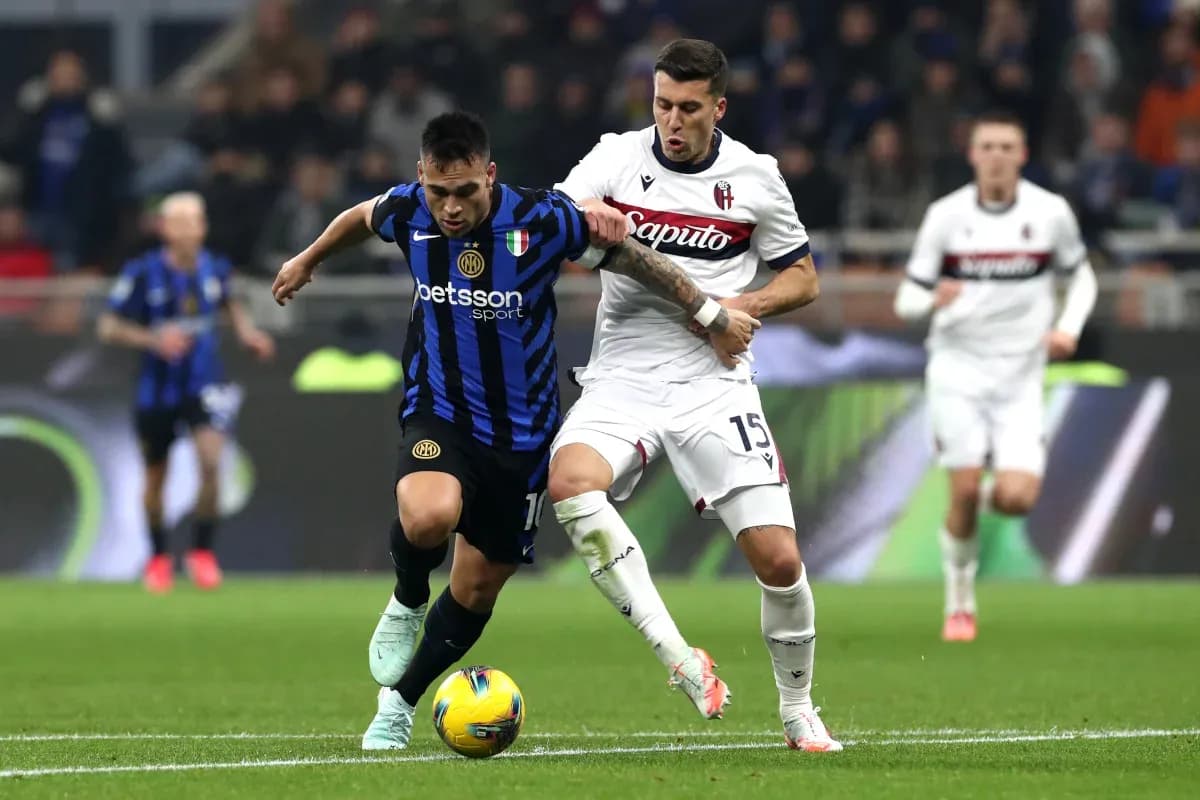
Bologna vs Inter: A Tactical Showdown in Serie A's Final Round
Stadio Renato Dall’Ara closed its Serie A season with a six-goal drama that felt less like a dead rubber and more like a tactical stress test for two clubs with very different identities. Bologna, finishing 8th with 56 points and a goal difference of 3 (49 scored, 46 conceded overall), went toe‑to‑toe with champions Inter, who ended top on 87 points and a towering goal difference of 54 (89 for, 35 against overall). Following this result in Round 38, the 3-3 draw crystallised what these sides have been all season: Bologna, brave but flawed; Inter, ruthless yet occasionally open when pushed into chaos.
I. The Big Picture – Structures and Seasonal DNA
Bologna lined up in a 4-3-3 under Vincenzo Italiano, a bolder, more front‑foot shape than their more common 4-2-3-1 used in 27 league games. L. Skorupski sat behind a back four of L. De Silvestri, E. Fauske Helland, J. Lucumi and J. Miranda. In front, a three‑man midfield of L. Ferguson, R. Freuler and T. Pobega provided legs and distribution, supporting a fluid front line of F. Bernardeschi, S. Castro and J. Rowe.
Heading into this game, Bologna’s season had been defined by a split personality: at home they averaged 1.0 goals for and 1.2 against, while on their travels they jumped to 1.6 scored and 1.2 conceded. Only 6 home wins from 19, with 9 defeats, underlined why they finished outside the European places despite 10 away victories. Yet 12 clean sheets overall and a biggest home win of 4-0 showed they could dominate when their pressing and structure clicked.
Inter, under Cristian Chivu, arrived with their trademark 3-5-2, a system they had used in all 38 league games. J. Martinez started in goal, protected by a back three of Y. Bisseck, S. de Vrij and Carlos Augusto. The midfield five – A. Diouf, N. Barella, P. Sucic, P. Zielinski and F. Dimarco – formed a technical and athletic carousel behind the strike pair of F. Esposito and L. Martinez.
Inter’s seasonal profile was that of a juggernaut. Heading into this game they had averaged 2.3 goals scored overall (2.6 at home, 2.1 on their travels) and just 0.9 conceded (0.8 at home, 1.0 away). Eighteen clean sheets in total and only 5 defeats from 38 underlined their control. Their biggest away win, 0-5, and a best away attacking output of 5 goals in a single match spoke to a side comfortable suffocating opponents in any stadium.
II. Tactical Voids – Absences and Discipline
Both managers had to redraw their plans due to notable absentees. Bologna were without K. Bonifazi, N. Cambiaghi, N. Casale, R. Orsolini and M. Vitik. The loss of Orsolini in particular removed a key attacking reference: he had scored 10 league goals and, crucially, had a mixed record from the spot with 4 penalties scored but 2 missed. Without his one‑v‑one threat and shooting volume, Italiano leaned on Bernardeschi and Rowe to stretch Inter horizontally.
At the back, the absence of Bonifazi and Vitik reduced Bologna’s depth in central defence, putting more responsibility on Lucumi and Fauske Helland to manage Inter’s forwards in open space.
Inter’s omissions were just as significant but framed differently. M. Akanji, D. Dumfries and M. Thuram were all rested, while H. Calhanoglu missed out due to lacking match fitness. That meant Chivu entered without his usual right‑side power runner (Dumfries), his key penalty specialist and deep playmaker (Calhanoglu, who had scored 4 penalties but missed 1 this season), and his complementary striker to L. Martinez (Thuram, 13 goals and 6 assists). The result was a slightly more experimental front line, with F. Esposito stepping in alongside L. Martinez and a midfield that leaned more on Barella, Zielinski and Sucic for progression.
Disciplinary trends for both sides added an edge to the contest. Bologna’s yellow cards peaked between 61-75 minutes with 26.87% of their bookings, and 25.37% came between 76-90 – a clear late‑game surge when fatigue and desperation met. Their red cards also clustered in the second half, with 33.33% between 61-75 and another 16.67% in the final quarter‑hour. Inter, by contrast, were cleaner but still spiky late on: 31.25% of their yellows arrived in the 76-90 window, and they managed to go through the league campaign without a single red card. In a chaotic, end‑season 3-3, those patterns hinted at where control might be lost.
III. Key Matchups – Hunter vs Shield, Engine Room
The headline duel was “Hunter vs Shield”: L. Martinez, Serie A’s top scorer for Inter with 17 league goals and 6 assists, against a Bologna defence that conceded 1.2 goals per game both at home and on their travels. Martinez’s profile is that of a complete forward: 69 shots, 39 on target, 37 key passes and 253 duels contested, winning 115. His ability to drop off, combine and then attack the box would constantly test the positional discipline of Lucumi and Fauske Helland.
On the flanks, F. Dimarco – the league’s leading assist provider with 16 – was a perpetual tactical problem for Bologna. His 96 key passes and 7 goals from the left made him both creator and finisher, and his crossing lanes into Martinez and Esposito were a recurring threat. Up against De Silvestri and Bernardeschi’s side, Dimarco’s engine and delivery often pinned Bologna’s right‑back deep, limiting Bologna’s ability to counter down that channel.
In the “Engine Room”, N. Barella’s duel with R. Freuler and L. Ferguson defined much of the midfield narrative. Barella, with 8 assists and 53 tackles across the season, combined ball‑winning with vertical passing. Freuler’s role was to screen, recycle and prevent Inter from playing easily into the half‑spaces where Sucic and Zielinski drifted. Ferguson, operating slightly higher, was tasked with timing his presses onto Inter’s regista zone and breaking forward to support Castro and Rowe.
IV. Statistical Prognosis – xG Logic and Defensive Solidity
Even without explicit xG numbers, the season‑long patterns sketch a clear expected‑goals landscape. Inter, averaging 2.3 goals scored and 0.9 conceded overall, typically generate and restrict chances at a level consistent with a dominant xG differential. Bologna, with 1.3 scored and 1.2 conceded overall, operate much closer to parity.
The 3-3 scoreline at Dall’Ara can be read as a convergence of those trends under end‑season conditions: Inter’s attack still created enough volume to hit their usual output, but a rotated XI without Calhanoglu and Thuram naturally lost some control and efficiency, inviting transitions. Bologna, emboldened by a more attacking 4-3-3 and freed from pressure on the final day, exploited the spaces left by Inter’s wing‑backs and the back three.
Defensively, Bologna’s 12 clean sheets overall show they can be compact when their block is intact, but 9 home defeats and 23 goals conceded at home underline how vulnerable they become when stretched. Inter’s 18 clean sheets and only 19 goals conceded on their travels speak to a side that, on most days, strangles the opposition’s xG. Here, though, with key defensive and structural pieces rotated or absent, that solidity frayed just enough to produce a spectacle.
Following this result, the tactical verdict is that the draw slightly flatters Bologna in the context of the full season, but accurately reflects the balance of this particular match: a champion side easing off the handbrake, and an ambitious mid‑table team seizing one last chance to trade punches with the best.
Related News
Frosinone vs Como Prediction: Key Stats and Betting Tips

Fiorentina vs Napoli Prediction: Key Stats and Betting Tips
AS Roma vs Inter: Serie A Showdown on 19 September 2026
Inter’s Dominance in 5–3 Win Over Udinese
AS Roma vs Inter Prediction: Key Stats and Betting Tips
Lazio and AC Milan Battle to a 2–2 Draw: Early Serie A Insights