
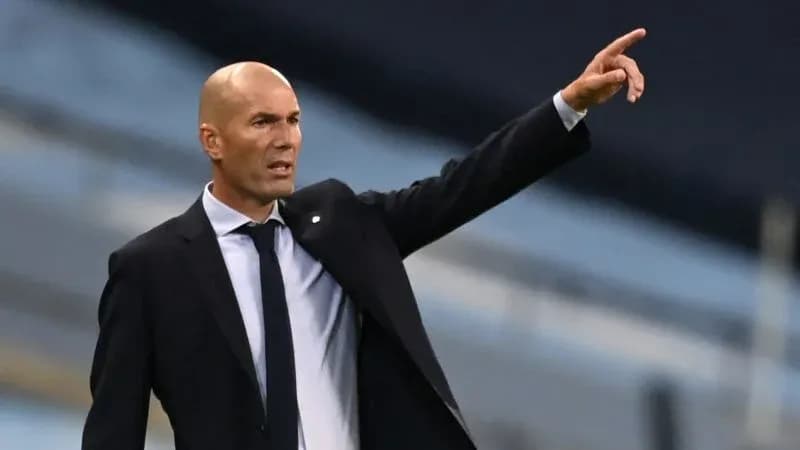
Zinedine Zidane Appointed Head Coach of France
Zinedine Zidane is back where many in France always believed he would end up. At the top of the national team. The French Football Federation confirmed on Tuesday that the 54-year-old has been appointed head coach of Les Bleus on a four-year deal, succeeding Didier Deschamps after the disappointment of the 2026 World Cup.
Deschamps walked away after 14 years in charge, his reign ending not with a coronation but with a sense of missed opportunity. France arrived in North America as one of the clear favourites, loaded with talent and scar tissue from recent near-misses. They left with neither the trophy nor the bronze medal, knocked out in the semifinals by eventual champions Spain before losing the third-place playoff to England.
Into that void steps Zidane. A national monument, now handed a national repair job.
“Nothing greater than the French national team”
Zidane has been circling this role for years, ever since he left Real Madrid for a second time in 2021. The timing always seemed to hinge on Deschamps. Once the World Cup ended and the long-serving coach chose to step aside, the path finally cleared.
“I have often said there is nothing greater than the French national team. It is therefore a joy and obviously a great honor to become the coach of France. It is also a responsibility,” Zidane said at his unveiling, paying tribute to the man he replaces. He thanked FFF president Philippe Diallo, the executive committee and “saluted the fourteen years of Didier and his staff,” before adding a pointed line about his own intentions: “Needless to say, I have a lot of ambition for the French Team!”
Ambition has never been in short supply with Zidane. Nor has expectation. This appointment fuses both.
He now chases the same rare double as Deschamps: World Cup winner as player and as manager. The club is exclusive. The pressure, immense.
A hero returns – and a ghost, too
For many in France, Zidane’s return to the national setup feels inevitable, almost restorative. He is not just a former captain; he is the face of the country’s greatest footballing awakening.
In 1998, in a fevered Paris, Zidane scored twice with those famous darting runs and bullet headers in the World Cup final against Brazil, sealing a 3-0 win and France’s first star above the crest. Two years later, he was again the conductor as France lifted the European Championship, becoming the first reigning world champions to follow up with the Euros. It was a two-year spell that changed the country’s relationship with its national team.
Yet his story in blue never quite tidied itself into a fairy tale. It ended under a cloud in Berlin in 2006, with the world watching as the No. 10 was sent off in the World Cup final for headbutting Marco Materazzi. France lost to Italy on penalties, and Zidane walked down the tunnel, shoulders squared but career over.
That image has never fully left the French psyche. His return now offers a different kind of redemption – not for the player, whose legend is secure, but for the story. France fans will hope that the man who once left the stage in anger can now reshape it from the touchline.
From Madrid maestro to international novice
This is Zidane’s first job in international management, but it is hardly a leap into the unknown. His coaching reputation was forged at Real Madrid, and it is cast in silver.
At the Bernabéu, he delivered three consecutive Champions League titles, an unprecedented run in the modern era. He added two La Liga crowns and two Club World Cups, managing a dressing room packed with egos, Ballon d’Or winners and global brands. He navigated that pressure with a calm authority that players trusted and opponents feared.
The international game is different. Fewer training sessions, less time on the pitch, more time managing emotions, cycles, and tournaments. Yet Zidane’s track record in knockout football is exactly what France crave. His Champions League résumé is a manual in handling two-legged ties, momentum swings, and high-stakes nights. Those lessons now transfer to a national team that expects to win every competition it enters.
The target is obvious. The next World Cup in 2030 looms large. For Zidane, anything short of a serious tilt at the trophy will feel like underperformance.
The Mbappé era, Zidane’s way
What Zidane inherits is not a rebuilding job but a refinement. France are stacked, particularly in attack. Kylian Mbappé remains the centrepiece, a global superstar entering what should be his prime years under a coach he has openly admired. Around him swirl options: Ousmane Dembélé, Michael Olise, Désiré Doué, Bradley Barcola and more emerging talents from an academy system that keeps churning out forwards.
The challenge is not about finding firepower. It is about balance. Since lifting the World Cup in 2018, France have often lurched between attacking brilliance and structural fragility. At times they have looked unstoppable; at others, strangely disjointed, the front line detached from the rest of the team.
Zidane’s task is to bring harmony to that chaos. To knit together an offensive arsenal without sacrificing the defensive rigidity that underpinned Deschamps’ greatest triumphs. He did something similar at Madrid, convincing stars to run, press and sacrifice when it mattered, while still giving them room to decide games in moments.
He will need to do it again, this time with an entire country watching.
A new era, familiar stakes
The job Zidane takes is both dream and burden. He follows a coach who delivered a World Cup, a Nations League, and multiple deep tournament runs across more than a decade, yet left amid frustration at what might have been in 2026. He steps into a dressing room filled with players who grew up idolising him, now asked to see him not as a poster on the wall, but as the man who will pick – and drop – them.
His name alone guarantees a hero’s welcome. That will not last long if the results do not match the mythology.
Zidane has chased this role quietly for years. Now he has it, the question shifts: can the icon of 1998 and the architect of Madrid’s European dominance turn France’s recent near-misses into another golden era – and write the final, defining chapter of his own football story from the dugout?
Related News
Ilia Topuria Accuses Justin Gaethje After UFC Defeat
Tyson Fury vs Anthony Joshua Fight Date and Venue Confirmed
Switzerland Calls Up In-Form Sion Striker Winsley Boteli for Nations League
Bournemouth Secures Historic 2-1 Win Over Real Sociedad in Spain
Portugal Announces Squad for 2026 UEFA Nations League; Cristiano Ronaldo Expected to Play
Raphinha Channels Ronaldo Nazario as Barcelona's Leading Striker After Position Change