
World Cup Workers Threaten Strikes in Major US Cities
As the World Cup countdown ticks toward 11 June, a different kind of tension is building in several US host cities – not on the pitch, but behind the bars, in the kitchens and along the hotel corridors that will carry the weight of the tournament.
From Los Angeles to Seattle to Philadelphia, thousands of hospitality and food service workers are threatening to walk out just as the world’s biggest single-sport event arrives, warning that the spectacle could be staged on the backs of people who can’t afford to live anywhere near it.
LA workers ready to strike on the World Cup’s doorstep
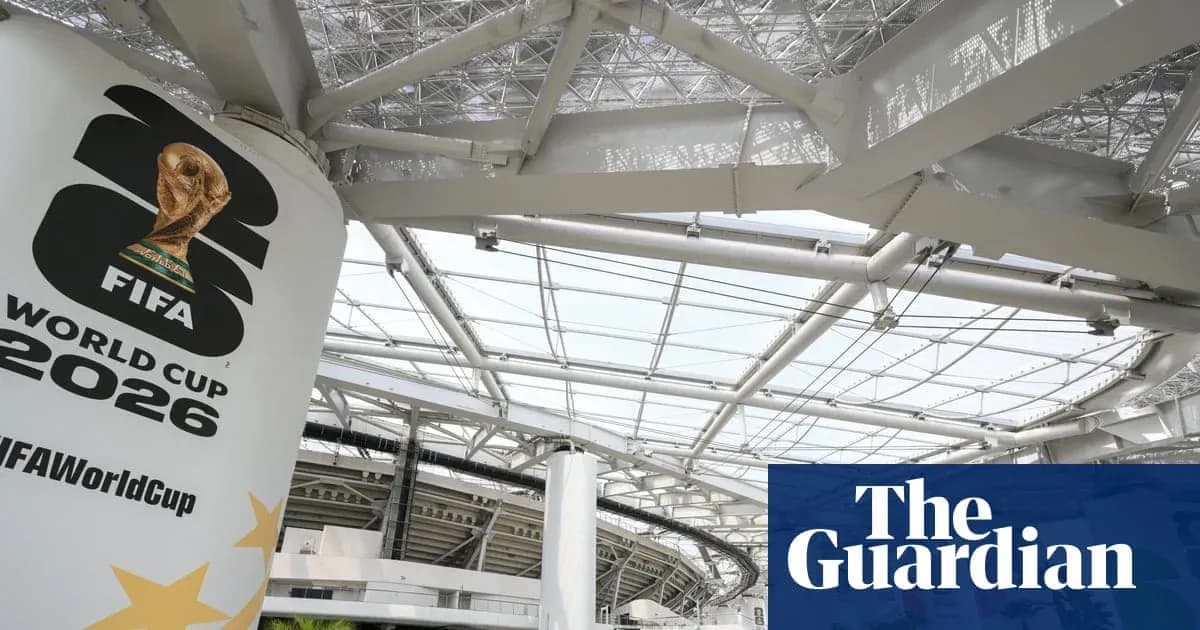
At SoFi Stadium in Los Angeles, where the US is set to open its World Cup campaign against Paraguay on 12 June, roughly 2,000 workers have already taken their first shot.
Represented by Unite Here Local 11, they voted by a resounding 96% to authorize a strike as they fight for a new contract that delivers higher wages and protections from Immigration and Customs Enforcement.
- Cashiers.
- Dishwashers.
- Cooks.
- Bartenders.
- Concessions workers.
- Food attendants.
The people who feed and serve the crowds at one of the country’s most high-profile venues could walk off the job at any moment.
“We’re just trying to make things fair,” said Eva Miles, a bartender at SoFi since the stadium opened in 2021. She travels two hours each way to get to work, priced out of the neighborhoods around the glittering arena. Some of her colleagues, she said, endure even longer commutes.
“Without us, they don’t have a stadium. Are they going to cook? Are they going to pour those drinks? Are they going to serve these people?” she asked.
Workers are pushing for pay above $30 an hour, arguing that the billions flowing through the World Cup should reach the staff who make matchday possible.
“Let’s see them live on our wage, let’s see them raise a family,” Miles said. She loves the job, loves meeting new people, loves giving guests the kind of experience they pay heavily for. That, she argued, is exactly why the current situation makes no sense to her: “I know they’re spending a lot of money on this Fifa World Cup, so I don’t understand why we can’t get what we want and everybody be happy.”
The dispute in Los Angeles runs deeper than pay. Unite Here, the ACLU of Southern California and LAANE have filed a formal complaint with the California Privacy Protection Agency and the state’s department of justice, challenging Fifa’s accreditation policy, which they say forces workers to divulge immigration information just to work the tournament.
For a union whose roots stretch back to the 1912 Bread and Roses strike in Lawrence, Massachusetts – a historic uprising of immigrant textile workers – the issue is particularly charged.
Enrique Fernández, general vice-president for immigration, civil rights and diversity at Unite Here, stressed how many of the union’s members are immigrants who will be staffing hospitality venues across World Cup host cities. The union counts workers from nearly 200 countries.
“They experience the effects of anti-immigrant policy and rhetoric every day, and they don’t need the added stress of tracking ICE agents at their workplaces,” Fernández said.
SoFi Stadium declined to comment, pointing instead to Legends Global, the concessionaire that employs the workers.
“Legends Global has enjoyed a strong relationship with Unite Here Local 11 for more than a decade and remains committed to reaching a fair agreement through good faith negotiations,” a spokesperson said in an email. “We look forward to delivering an outstanding hospitality experience for fans at the Fifa World Cup matches at Los Angeles Stadium (SoFi Stadium).”
The message was clear: they intend to keep the show on the road. Whether they can do it without disruption now rests on the bargaining table.
Seattle hotels on edge near Lumen Field
Up the West Coast, another World Cup venue faces its own labor flashpoint.
In Seattle, workers at the Embassy Suite Hilton near Lumen Field – where six World Cup games will be played – have also voted to authorize a strike. Unite Here Local 8 reported a 94% vote in favor from the roughly 100 workers at the hotel.
Their demands echo those in Los Angeles: pay increases, year-round health insurance, protections from ICE and better staffing levels.
“We need the wages to improve,” said front desk employee Hayden Eyerly, who described years of meager raises – about 80 cents an hour annually under the current contract – as costs for basics such as gas have surged.
Some workers, he said, regularly lose their health insurance during the tourism offseason because their hours drop. Staffing levels, he added, still haven’t climbed back to what they were before the pandemic, leaving departments stretched thin.
“Everyone is very tired. Every department has been working on a skeleton crew,” Eyerly said. “We’re trying to make real changes, a real positive impact in our lives. We all deserve to work one job, we all deserve to come home and have the energy to be there for our families.”
Many of his coworkers are immigrants. Eyerly said their immigration attorney had advised them not to speak publicly out of concern that doing so could trigger retaliation affecting their status.
Hilton has tried to project calm. A spokesperson said the hotel has contingency plans if a strike hits and added: “We remain committed to negotiating in good faith to reach a fair and reasonable agreement that benefits both our valued Team Members and our hotel.”
The World Cup will bring the crowds. Whether there will be enough staff to serve them remains an open question.
Philadelphia prepares for a World Cup summer – and a showdown
On the opposite coast, Philadelphia is staring at a hard deadline.
Workers at six hotels in the city, represented by Unite Here Local 274, are threatening strikes during the World Cup after their contracts expired without new agreements. The hotels have been given a strike deadline of 12 June – the day after the tournament begins – if fresh deals are not in place.
For a city banking on a projected $770m economic boost from the World Cup, the stakes are enormous.
At the Wyndham Philadelphia Historic District, server Maciah Magloughlin said staff are pushing for significant wage hikes, a cap of 15 rooms per day for housekeepers, ICE protections for immigrant workers and more affordable health coverage for dependents.
“The hotels have the money to give us what we deserve,” Magloughlin said, pointing to that $770m figure for the wider region. “What we’re fighting for is that the people who hold this industry up on their back also get a piece of that, because people are fighting to send their kids to school or take time off or buy groceries, and that’s not fair, especially when we’ve got such a big summer coming.”
The Wyndham, like other employers in the spotlight, has tried to strike a conciliatory tone while negotiations continue.
“We respect our team members’ rights to engage in legally protected activities and look forward to reaching a fair contract. While discussions are ongoing, we remain committed to ensuring our guests enjoy their stay,” the hotel said in a statement.
A World Cup built on fragile ground
World Cups are usually sold as engines of economic growth, marketing bonanzas for cities and countries eager to showcase themselves to the world. The numbers for this one in the US are eye-catching. The images will be glossy.
Yet in three major host cities, the tournament is already exposing a familiar fault line: who actually benefits when global sport rolls into town?
For the bartenders commuting hours to SoFi, the front desk staff in Seattle juggling lost health coverage and the housekeepers in Philadelphia pushing for a cap on rooms, the World Cup is not just a festival of football. It is leverage.
Their message, in different cities and different venues, is strikingly similar: if the world is coming, they want their share of the moment – and they are prepared to put the tournament itself under pressure to get it.
Related News

Raphinha’s Hat-Trick Powers Barcelona to 7-2 Victory Over Racing Santander

Carabao Cup Fourth Round Draw: Liverpool Set to Clash with Chelsea, Arsenal to Face Fleetwood Town
Key Football Matches to Watch in Azerbaijan This Autumn

Raphinha's Hat-Trick Drives Barcelona to 7-2 Triumph Over Racing Santander

Hansi Flick Leads Barcelona to Record-Breaking Seven Wins in a Row

Gavi Reflects on Injury Return as Barcelona Dominate Racing Santander 7-2