
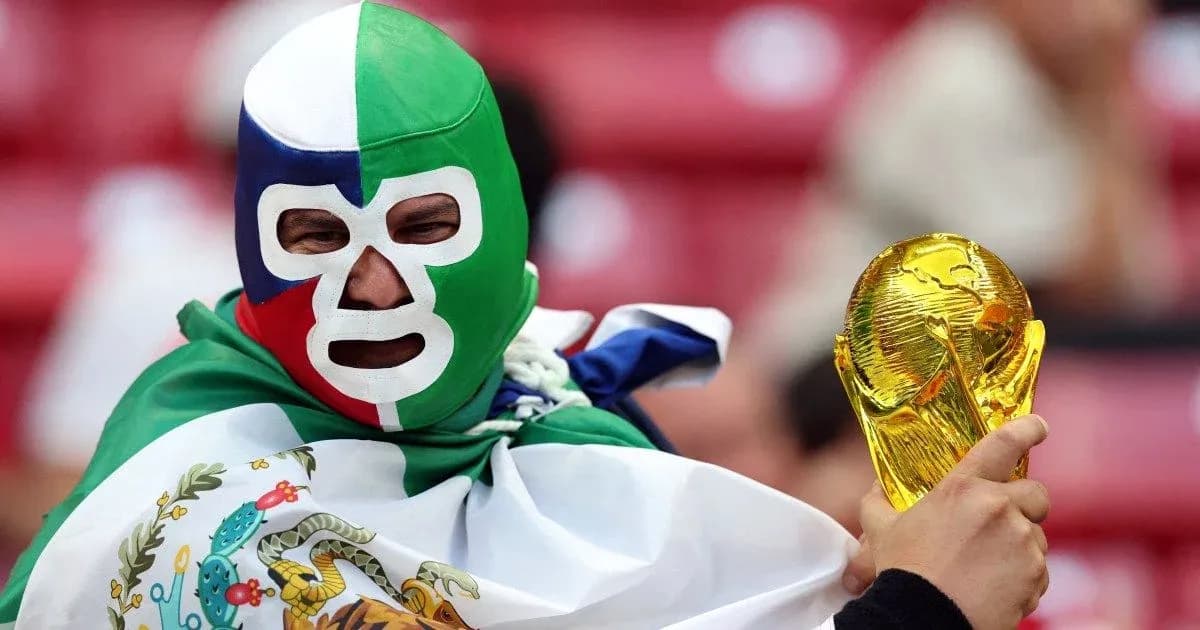
World Cup Thursday: Mexico vs South Korea Highlights Key Matches
The World Cup rolls into Thursday with four more group games and a tournament already crackling with subplots. Mexico against South Korea is the late kick-off and the pick of the pack, a clash between two sides who opened with wins and now stare at an early ticket to the knockouts.
Around them, Canada test their status as co-hosts against Qatar, Switzerland face a stubborn Bosnia and Herzegovina, and Czechia meet a South Africa side that rarely flinches against European opposition on this stage.
Thursday’s fixtures at a glance
- Czechia vs South Africa – Atlanta Stadium, Atlanta – noon (16:00 GMT)
- Switzerland vs Bosnia and Herzegovina – Los Angeles Stadium, Los Angeles – noon (19:00 GMT)
- Canada vs Qatar – Vancouver Stadium, Vancouver – 3pm (22:00 GMT)
- Mexico vs South Korea – Guadalajara Stadium, Guadalajara – 7pm (01:00 GMT Friday)
Four games, four very different stories.
Mexico vs South Korea: history on Mexico’s side
Mexico know this fixture. They have faced South Korea twice before at World Cups and won both, including that sharp, nervy 2-1 victory at Russia 2018. The pattern is familiar: El Tri usually find a way.
Numbers back that instinct. Opta’s supercomputer ran 25,000 simulations of this Group A contest. Mexico came out on top in 49.1 percent of them. South Korea won just 24.3 percent, with 26.6 percent ending level.
Both sides arrive with momentum after opening wins. That gives this game a different edge: not survival, but control. Win here and the path to the knockouts suddenly looks clear.
Czechia vs South Africa: data vs pedigree
Czechia and South Africa have barely crossed paths. Just one previous meeting, and no World Cup history between them.
South Africa, though, tend to grow when a European flag appears opposite. They stunned France 2-1 on home soil in 2010 and have lost only one of their last four World Cup games against European teams. They know how to punch up.
Czechia’s own experience against African opposition is less flattering. Their only previous World Cup meeting ended in a 2-0 defeat to Ghana. Even so, the models lean heavily their way this time: Opta gives Czechia a 54.9 percent chance of victory, South Africa 21.8 percent, with the rest pointing to a draw.
So the numbers say Czechia. The history says: be careful.
Switzerland vs Bosnia and Herzegovina: first World Cup duel
Switzerland and Bosnia and Herzegovina have never met at a World Cup. Their lone encounter came in a 2016 friendly in Zurich, when Bosnia walked away 2-0 winners thanks to Edin Dzeko and Miralem Pjanic.
That result lingers, but it does not define this contest. In 25,000 simulations, Switzerland won 61.6 percent of the time. Bosnia prevailed in 17 percent, with 21.4 percent ending in a draw.
Switzerland arrive as the established tournament side, Bosnia as the dangerous outsider with a memory of how it felt to beat them before. The margins, though, look far steeper this time.
Canada vs Qatar: hosts backed to dominate
Host nations usually relish meetings with Asian opposition at World Cups. History is blunt about it: Mexico beat Iraq in 1986, France swept past Saudi Arabia in 1998, and Russia hammered Saudi Arabia in 2018. Three games, three home wins.
Canada are tipped to extend that streak. Opta’s model gives them a hefty 72.9 percent chance of victory. A draw appears in 16.5 percent of simulations. Qatar are left with just a 10.6 percent chance of an upset.
The numbers paint a one-sided picture. The pressure of being hosts will test Canada, but precedent is firmly on their side.
Golden Boot race ignites early
The goals have started to stack up, and so has the intrigue.
Lionel Messi sits alone at the top of the Golden Boot standings with three goals, courtesy of a hat-trick in Argentina’s opening win over Algeria. He has set the early pace. The chase is already fierce.
- Kylian Mbappe (France)
- Erling Haaland (Norway)
- Folarin Balogun (USA)
- Kai Havertz (Germany)
- Yasin Ayari (Sweden)
- Elijah Just (New Zealand)
- Harry Kane (England)
It is a roll call of established superstars, emerging leaders and surprise contenders. One match in, the field is stacked, the margins thin, and every half-chance suddenly feels like a Golden Boot moment.
DR Congo and Cape Verde rewrite the script
The opening round has already bent expectations. Two of the most powerful images have come from teams many expected to simply make up the numbers.
DR Congo’s historic breakthrough
Yoane Wissa delivered a moment that will live for generations in the Democratic Republic of the Congo.
Facing Portugal, ranked fifth in the world by FIFA, the Leopards fell behind early in Houston. Then, shortly after half-time, Wissa rose and headed home the DRC’s first-ever World Cup goal. The 1-1 draw secured their first World Cup point in 52 years and their first at the tournament under the country’s current name.
It was more than a result. It was a release. Congolese fans in the stadium and across the world erupted, celebrating a team that had waited half a century to return and refused to play the role of victim.
Cape Verde stun Spain
Cape Verde’s debut could easily have been a gentle introduction against one of the tournament favourites. Spain expected to control, to impose, to win.
They did not. The 0-0 draw is arguably the shock of the first round. The newcomers held their shape, held their nerve and held Spain at bay to claim a historic first World Cup point.
Paired with the DRC’s draw against Portugal and Iran’s 2-2 slip against New Zealand, the early message is clear: reputations are not winning games on their own.
Colombia back with intent
Colombia’s World Cup return began with a performance that mixed flair with control.
Against debutants Uzbekistan at Mexico City Stadium, Luis Diaz dictated the tempo. He set up Daniel Munoz for the opener, then struck Colombia’s second after the interval. Uzbekistan briefly punctured the script through Abbosbek Fayzullaev, but the South Americans responded, reset and closed out a 3-1 win.
The result hands Colombia an early boost in Group K after missing the 2022 tournament in Qatar. The football, and the swagger behind it, suggested they do not intend to be bystanders this time.
Ronaldo’s sixth World Cup starts with a stumble
Cristiano Ronaldo walked into this tournament as one of only two men, alongside Lionel Messi, to appear in six World Cups. At 41, he remains a central figure, a global draw, a symbol of longevity at the very top.
The opening game, though, did not follow his script.
Against DR Congo, Ronaldo had chances in the second half but could not convert. On a day when Messi, Mbappe, Haaland and Kane all found the net in their first outings, Portugal’s captain finished empty-handed and his team dropped points in a 1-1 draw.
It leaves Portugal under early pressure in Group K and Ronaldo searching for rhythm in what could be his final appearance on this stage.
Hydration breaks: protection or disruption?
One of the tournament’s most contentious innovations is not a tactical tweak or a VAR protocol. It is the hydration break.
FIFA introduced the pauses to help players cope with the summer heat across the US, Canada and Mexico. Player welfare is the stated priority. Not everyone is convinced.
The criticism intensified after Curacao’s meeting with Germany in Houston. Curacao scored before a hydration break, then conceded twice before half-time in an eventual 7-1 defeat. Former England striker Alan Shearer argued the stoppage “killed their momentum”. Roy Keane likened the breaks to timeouts, insisting they chop up the natural flow that makes football unique.
The breaks also hand coaches a window for tactical recalibration and, as some fear, broadcasters extra space for advertising. The tension between safety and spectacle is now part of every match played in the heat.
A World Cup shaped by African presence and diaspora
Beneath the results, another story is unfolding: the scale and impact of sub-Saharan Africa’s representation.
A record six sub-Saharan African nations are here. South Africa’s Bafana Bafana were the first to appear, losing 2-0 to Mexico in the opener, but the continent’s traditional powers have followed. Ghana’s Black Stars, quarterfinalists in 2010 and spiritual heirs to Cameroon’s 1990 run and Senegal’s 2002 heroics, are back. Senegal themselves return, and Ivory Coast appear at their first World Cup since 2014, now carrying the aura of two Africa Cup of Nations titles.
Among the most intriguing sides are DR Congo and Cape Verde. The Leopards are at their first World Cup since 1974, when the country competed as Zaire. Many of their current players were born in Europe, mirroring a trend also seen in Cape Verde’s squad. The Blue Sharks have already justified their journey with that stubborn, headline-grabbing draw against Spain.
The path to this tournament has not been smooth. Some teams, officials and fans have wrestled with travel and visa complications. At one stage, many supporters with African passports faced a requirement to post $15,000 bonds to enter the United States. The policy was eventually dropped, but too late, critics say, for some to salvage their travel plans.
One symbol from Africa’s last home World Cup is missing as well. The vuvuzela, the plastic horn whose constant buzz defined South Africa 2010, is banned this time. The soundtrack is different, the presence no less vivid.
With an African-born diaspora of more than three million people across the US and Canada, the continent’s six representatives can still expect powerful backing. Every tackle, every sprint, every goal will echo far beyond the stands.
Teams that mirror changing societies
Look across the squads and another pattern emerges: teams built from multiple faiths, cultures and identities, sharing the same shirt.
England, France, Spain and Sweden all field players from a blend of ethnic and religious backgrounds, including both Christian and Muslim footballers. Spain’s teenage sensation Lamine Yamal and Sweden midfielder Yasin Ayari are part of a growing generation of Muslim players performing at the sport’s highest level.
For some observers, these squads are more than tactical puzzles. They are working examples of how people from different backgrounds can combine under pressure, while debates over immigration, identity and integration rage in parts of Europe.
On the pitch, the image is simple and powerful: a goal, individual prayers offered in different ways, then teammates embracing. One team, one objective, many stories.
The football will dominate Thursday. Mexico’s tilt at South Korea, Canada’s test as hosts, Switzerland’s push for control, South Africa’s resistance. Behind it all, a World Cup already shaped by surprise results, old legends, new heroes and a continent determined to turn representation into deep runs.
Related News
Raphinha’s Hat-Trick Powers Barcelona to 7-2 Victory Over Racing Santander
Carabao Cup Fourth Round Draw: Liverpool Set to Clash with Chelsea, Arsenal to Face Fleetwood Town
Key Football Matches to Watch in Azerbaijan This Autumn
Raphinha's Hat-Trick Drives Barcelona to 7-2 Triumph Over Racing Santander
Hansi Flick Leads Barcelona to Record-Breaking Seven Wins in a Row
Gavi Reflects on Injury Return as Barcelona Dominate Racing Santander 7-2