
World Cup Drama: Socceroos, Colombia, and Ronaldo Shine
The World Cup has finally found its edge. The group stage is hardening, tempers are fraying, and a few giants have reminded everyone exactly why they still own the stage.
Socceroos lose a key pillar on the right
Australia’s margin for error was already slim. Now it’s thinner.
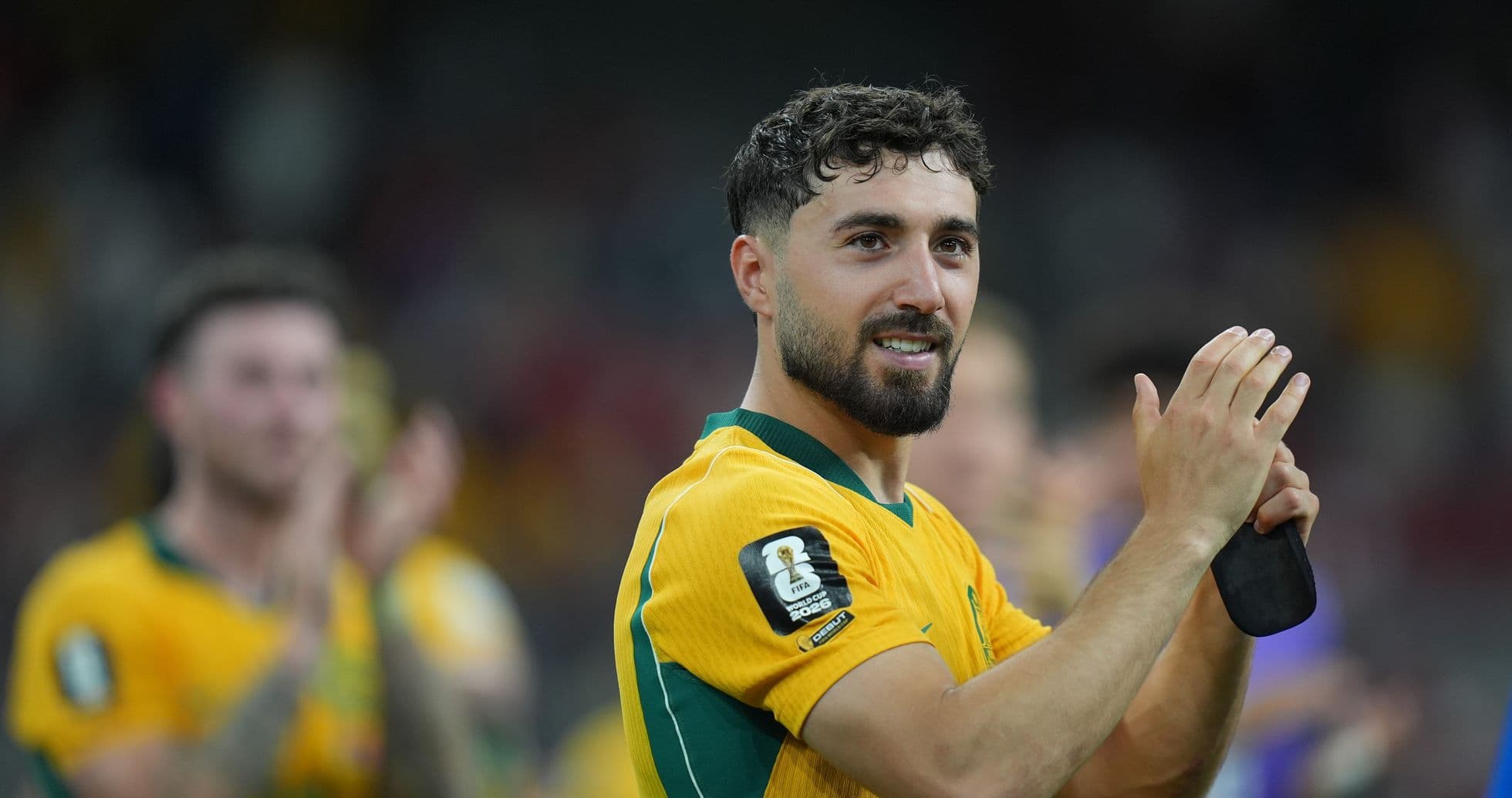
After starting both of the Socceroos’ matches at this World Cup, right wing-back Italiano is set to miss the crucial clash with Paraguay through injury, joining Mat Leckie on the sidelines. For Tony Popovic, it’s a significant blow in an area that had quietly become a strength.
Italiano only stepped in because of Lewis Miller’s injury, but once he did, he refused to give the shirt back. He ran himself into the ground to help keep Turkiye scoreless on Matchday 1, then backed it up with a full 90 minutes against the USA. In a tournament that punishes any weakness out wide, he had become Australia’s constant.
Popovic’s caution has been a theme of this campaign, and it was brutally exposed in Seattle. Australia sat deep against the USA, conceded twice before the break, and looked stuck in reverse. Then the shackles came off. Connor Metcalfe, Nestory Irankunda and Cristian Volpato arrived from the bench, and the whole tone of the game changed in an instant.
Former Socceroo Craig Foster wants that intent from the first whistle against Paraguay, not as a rescue act.
He told 1170 SEN Breakfast that Popovic’s conservative streak is simply “the way that he coaches,” but pointed out that the price of caution at this level is often paid on the scoreboard. He praised Popovic for delivering automatic qualification – something Australia had not achieved “for some time” – yet pushed for a braver attacking selection.
Foster believes Volpato and Irankunda have to be involved early. Volpato’s brief cameo, he said, was “phenomenal” and “has to make a statement to the coach.” The logic is clear: get ahead, then lean on the defensive structure that has already shown it can be as stubborn as Ghana’s deep block.
Popovic now faces the classic tournament dilemma: trust the system that got you here, or unleash the young pace that might actually take you further.
Colombia climb, Congo cling on
Elsewhere, Colombia made their move.
Right-back Daniel Muñoz delivered the decisive moment, scoring in the 76th minute to secure a 1-0 win and send Colombia to the top of Group K with six points. Efficient, controlled, and exactly the sort of result that shapes a group.
Congo, by contrast, are living on the edge. They sit on a single point, yet still have a route through as one of the best third-placed sides if they can beat Uzbekistan on Sunday. One game to save a campaign. No margin for missteps.
Fire and respect in Boston: Bellingham vs Queiroz
In Boston, the football barely flickered. The emotions did.
A drab, ill-tempered 0-0 draw ended with England and their opponents locked in more conversation than creativity. The flashpoint came right on the touchline: Jude Bellingham flew into a heavy challenge on Jerome Opoku, right in front of the dugouts, escaped a card, and suddenly the technical areas were alive.
Carlos Queiroz, the veteran coach and former Manchester United assistant, confronted Bellingham as the players walked off. The two exchanged words in a heated discussion that summed up a match laced with frustration.
Queiroz later explained that Bellingham “had a bad reaction with some bad names” after the tackle. He said his first instinct had been to calm the situation, worried his player might not be fully fit after the challenge. Emotions spiked, tempers flashed, and then, as he put it, “one word created a bit of fire but we cooled down.” His verdict on the whole episode was as sharp as ever: “Football is not dancing in a saloon with tuxedos. It's not a show.”
Bellingham, for his part, called it a “silly tackle” born from trying too hard to win the ball. He admitted he caught Opoku after following through, said he spoke to him afterwards, and pointed out that the opposition bench leapt up to chase a yellow card. When he realised Queiroz was the same man who once sat beside Sir Alex Ferguson, he stressed his “great respect” and framed the confrontation as nothing more than a shared competitive edge.
On the table, the point matters. The result opens Croatia’s path: they move to third in Group L with three points after finally posting a win at this World Cup. England and Ghana sit above them on four, separated only by goal difference.
Croatia now face Ghana on June 28. Win, and they’re through to the Round of 32. Draw, and they’re left sweating on the numbers as a potential third-placed qualifier. Panama, already eliminated, meet England the same day with only pride left to chase.
England hit the block, Ghana slam the door
If England’s win over Croatia hinted at something stirring, Ghana slammed that door shut at Foxborough.
For 95 minutes, Ghana parked the bus, turned the key, and walked away. England were forced to pick locks they never quite found. The match turned physical, the officials struggled to get a grip, and the spectacle sagged under the weight of stoppages and niggle. Declan Rice’s yellow card, borne of pure frustration, told its own story.
The 0-0 draw leaves England top of the group on goal difference, Ghana second, but the mood around Gareth Southgate’s side darkened.
Micah Richards did not hold back. He argued England simply “weren't brave enough” against a low block, criticising the volume of safe passes and the reluctance to take risks in tight spaces. Against a team camped deep, he said, you have to force the issue. England didn’t.
Harry Kane explained his own muted impact. He revealed he had been effectively man-marked by Thomas Partey, denied the space to drop deep and then arrive late in the box. Ghana defended their area with discipline, forcing England wide. Crosses came in, but the first contact never did. The middle of the pitch, Kane said, was “so compact” that threading passes through felt almost impossible.
He argued that England grew into the game, started to find one-on-one situations out wide, and carried more threat as the minutes ticked away. Yet the breakthrough never came. “You go through games like that,” Kane said, pointing to the realities of a World Cup where compact, organised opponents will happily drag you into a stalemate.
Wayne Rooney, who knows Queiroz’s methods better than most, saw a familiar pattern. He called it a typical performance from a side coached by the Portuguese: disciplined, deep, suffocating. For Rooney, the key for England was always going to be quality delivery into the box – and that was where most of their chances eventually emerged.
Still, he urged calm. England, he said, retain “a great chance of finishing top of the group.” The message: no need for panic, but a clear warning that this team must find more imagination against stubborn defences.
New twist from 12 yards: FIFA change the shootout script
Away from the group-stage grind, FIFA are preparing to tinker with one of football’s most brutal rituals.
Penalty shootouts at this World Cup, from the Round of 32 onwards, will be preceded by a single coin toss instead of two. At present, one toss decides the end, the second decides which team shoots first. That double blow famously hurt Arsenal in a Champions League final when they lost both tosses, were forced to kick second into a stand full of PSG fans, and ultimately lost the shootout.
The new system is simple: one toss, one winner. That captain chooses either to shoot first or to pick the end. The other captain gets the remaining option. The aim is to strip out the sense of compounded disadvantage and bring a little more balance to a process already loaded with pressure.
The drama from the spot will remain. The margins around it just got a little fairer.
Ronaldo answers the question – emphatically
Cristiano Ronaldo heard the doubts. At 41, after a flat 1-1 draw with DR Congo in Portugal’s opener, the questions grew louder: was he still worth a starting place, and was Roberto Martinez simply too wary to drop him?
Against Uzbekistan, he supplied the only answer that ever really matters.
Ronaldo scored twice in a 5-0 demolition that all but seals Portugal’s passage to the knockout rounds. The finishing was ruthless, the timing immaculate. On a World Cup stage suddenly lit up by double strikes from Lionel Messi, Kylian Mbappé and Erling Haaland the day before, Ronaldo refused to be left out of the conversation.
He spoke candidly afterwards, describing a “difficult, dark week” when it felt as though he had already been pushed towards retirement. He insisted he held on through work, not sentiment, saying he believes “more in hard work than in football.” The sense was clear: this was not nostalgia, it was defiance.
Roy Keane, never one for sentimentality, leapt to his former teammate’s defence. For Keane, Ronaldo “was never gone.” He called him “the man,” likened his status to that of Tom Brady among global sporting icons, and hailed the finishing as the hardest part of the game – something Ronaldo still does better than almost anyone.
At a tournament obsessed with the next generation, the old master has walked back into the spotlight and reminded everyone he is not ready to leave the party just yet.
Grief in the France camp
Amid the noise and narrative, the French camp has been struck by something far more human.
Didier Deschamps has left the squad after the death of his mother. The French Football Federation confirmed that he will miss training sessions and will not be on the bench for the final Group I match against Norway.
In agreement with FFF president Philippe Diallo, Deschamps has handed temporary control of the team to his long-time assistant Guy Stephan, who will lead the squad until the head coach returns. For a group chasing another deep run, it is a moment that cuts through tactics and selection debates. Football pauses. Life does not.
US hype meets a hard ceiling
Across the Atlantic, one of the loudest storylines of this World Cup has been the swagger around the USA. The trash talk has flowed, the belief has swelled, and their win over Australia only fed the noise.
Not everyone is buying it.
Former goalkeeper Tim Howard has delivered a blunt reality check. On the Unfiltered Soccer Podcast, in debate with Landon Donovan, he insisted it is “literally impossible” for the USA to win this World Cup. His argument is rooted in the sheer weight of opposition: to lift the trophy, he said, the US would need to produce the greatest performance in their history four times in succession, beating four global powerhouses in the Round of 16, quarter-finals, semi-finals and final.
For Howard, that isn’t bravado, it’s mathematics. “The US cannot, unequivocally, win the World Cup,” he said, calling the path required “just the reality.”
The Americans have the platform, the noise, and a growing sense of self-belief. The question now is whether this team can bend reality to match the rhetoric, or whether this World Cup will simply mark the point where ambition met its limit.
Related News
Raphinha’s Hat-Trick Powers Barcelona to 7-2 Victory Over Racing Santander
Carabao Cup Fourth Round Draw: Liverpool Set to Clash with Chelsea, Arsenal to Face Fleetwood Town
Key Football Matches to Watch in Azerbaijan This Autumn
Raphinha's Hat-Trick Drives Barcelona to 7-2 Triumph Over Racing Santander
Hansi Flick Leads Barcelona to Record-Breaking Seven Wins in a Row
Gavi Reflects on Injury Return as Barcelona Dominate Racing Santander 7-2