
World Cup Knockout Stage Showdowns: Canada, France, Brazil, and More
The World Cup tightens now. No more safety net, no more gentle calculations about goal difference. Four days, eight ties, and a straight fight for quarterfinal places.
Some giants are already circling each other. Some underdogs are still swinging. Here are the last‑16 clashes that demand attention.
Canada vs Morocco
July 4, Saturday, Houston Stadium – 17:00 GMT
Canada’s past and present collide in this one, and the story begins in Montreal.
Yassine Bounou spent his first three years there. Former Canada coach Benito Floro tried to convince the goalkeeper to wear the maple leaf. Bounou said no, chose Morocco, and that decision has haunted Canada ever since.
The last time they faced him at a World Cup, in Qatar, Bounou stood firm. Canada lost 2-1 and went home at the group stage.
This time, they arrive with something they didn’t have then: belief. Two wins in the group phase have changed the mood. Canada no longer feel like tourists; they look like a team that expects to belong in the knockout rounds.
Jesse Marsch has leaned into that. The US-born coach has built his attack around pace and aggression from wide areas. Tajon Buchanan will drive at Morocco from the right, while Alphonso Davies pushes up from left back into a full-time attacking role. Davies has already cleared his biggest hurdle – a hamstring issue – returning in the group match against South Africa, his first action since Bayern Munich’s Champions League semifinal.
In midfield, Marsch has been forced into a reshuffle. Nathan-Dylan Saliba steps in for Ismael Kone, who suffered a broken leg against Qatar. It strips Canada of a key piece, but it also gives Saliba the sort of stage players dream about.
Morocco, though, know exactly what they are. Their attacking “reload” has not truly caught fire, but they carry a different kind of threat. They trust their defensive structure. Above all, they trust Bounou.
For the Atlas Lions, the equation is simple: stay in the game, drag it deep, and back their goalkeeper if it goes to penalties. They’ve lived off that resilience before. One more time could be enough.
Lurking beyond this tie is another heavyweight: the winner will likely run into France in the quarterfinals. No one will say it out loud yet, but both sides know this could be the doorway to a defining night.
France vs Paraguay
July 4, Saturday, Philadelphia Stadium – 21:00 GMT
Paraguay have been here before with France. The memories are old, but they still sting.
In 1958, France trailed them in the second half before exploding into a 7-3 win. In 1998, at the World Cup on home soil, it took an extra-time strike from Laurent Blanc to finally break La Albirroja’s resistance.
History says Paraguay can push France to the edge. The present says this French team might not let them get close.
Didier Deschamps’s side are not just winning; they are tearing past opponents. Paraguay showed against Germany that they can suffocate an attack, but Kylian Mbappe brings a different kind of problem. He doesn’t just stretch defences, he shreds their nerve.
France will probe through the middle, where Michael Olise and Adrien Rabiot dictate the tempo. Olise offers guile between the lines; Rabiot brings balance and late runs. Width will come from the flanks, with the possibility of Theo Hernandez surging forward and all three – Olise, Rabiot, Hernandez – happy to shoot from distance.
Paraguay will try to lean on the authority of Gustavo Gomez at the back, to slow the game, to drag France into a scrap instead of a sprint. But if the game opens up, the French attack can feel relentless, wave after wave.
France know Paraguay’s history. This time, they will want to leave nothing to chance.
Brazil vs Norway
July 5, Sunday, New York/New Jersey Stadium – 20:00 GMT
Some statistics make Brazil bristle. This is one of them.
Only three nations hold a winning record against the five-time world champions: Netherlands, Hungary and Norway. The Norwegians have the most remarkable claim of all – they have never lost to Brazil. Two wins, two draws. No defeats.
The last meeting on this stage still burns in Brazilian memory. France 1998, group stage. Norway were awarded a late penalty after US referee Esse Baharmast spotted a foul that many initially missed. Kjetil Rekdal scored, Norway won 2-1, and advanced at Morocco’s expense. Brazil still topped the group, but the sense of injustice lingered.
Norway have not been back to a World Cup since that tournament. Their 1998 run ended in the first knockout round against Italy, and that remains the only other time they have reached the elimination phase. For them, this is not just a match. It is a return to a long-abandoned stage, with a familiar giant standing in the way.
Brazil arrive searching for something more elusive: rhythm. They have looked disjointed at times in this tournament, waiting for a spark. Against Japan, it came from the bench.
Endrick, the teenager carrying so much of Brazil’s future on his shoulders, changed the tone when he entered. He will be dwarfed physically by Norway’s towering defenders, but his movement, his fearlessness, give Brazil a different dimension. He might not start, but he could again become the man who tilts the tie.
Norway will lean on their structure, their height, their memory of that 1998 night. Brazil will try to turn the game into a contest of skill and speed rather than duels in the air.
The winner moves on to face Mexico or England. For Brazil, it is a chance to settle an old score. For Norway, it is a chance to prove that their record against the Seleção is no quirk of history.
Mexico vs England
July 5, Sunday, Mexico City Stadium – 00:00 GMT on Monday
Altitude versus attitude. Juan Carlos Osorio, Mexico’s former coach, framed it perfectly.
Mexico City sits at 2,240 metres above sea level. The air is thin. Legs grow heavy. Minds fog. Combine that with El Tri’s high-tempo, possession-based attack, and opponents often find themselves chasing shadows and gasping for breath.
So far, Mexico have been ruthless on home soil in this World Cup cycle. Four games, four wins, eight goals scored, none conceded in Guadalajara and Mexico City. The numbers tell a story of control.
Their style underlines it. Mexico want the ball. They set the rhythm through possession, then cut through with the forward pairing of Raul Jimenez and Julian Quinones, the Colombia-born striker who has clicked seamlessly into the attack.
England know the history between these nations reads in their favour: six wins, two losses, one draw, including a 2-0 victory at Wembley at the 1966 World Cup. But Mexico City has not been kind to them. No wins, two defeats, one draw. And one of those losses came in a match defined by Diego Maradona’s Hand of God, the moment that propelled Argentina towards the title and left English football scarred.
This time, England arrive with Harry Kane leading the line and Thomas Tuchel on the touchline. Tuchel has tried to manage the altitude by bringing his team in as close to kickoff as logistics allow, hoping to reduce the time their bodies have to react to the thin air. FIFA, for their part, have looked at shifting the start time to dodge potential storms.
On the pitch, though, there will be no hiding. England must impose themselves against a Mexico side that thrives in these conditions and in this stadium.
The prize is enormous. Brazil or Norway await the winner. Survive the altitude, and the path only gets steeper.
USA vs Belgium
July 6, Monday, Seattle Stadium – 00:00 GMT on Tuesday
Maybe the United States are finally starting to convince people. The numbers are beginning to back them up.
Their 2-0 win over Bosnia-Herzegovina in the group stage was more than just a scoreline. It was their first World Cup victory over a UEFA opponent since 2002. A long, frustrating drought snapped in decisive fashion.
The cost, however, was steep. Folarin Balogun’s suspension leaves a glaring hole up front. Striker depth is thin, and Mauricio Pochettino has only two centre-forwards to turn to: Ricardo Pepi and Haji Wright. One of them must carry the burden in a match where chances may be scarce.
Belgium arrive with their own story of survival. Against Senegal, they were staring at a two-goal deficit and the edge of elimination. Then Rudi Garcia rolled the dice.
In one of the boldest tactical calls of this World Cup, he withdrew Kevin De Bruyne and Jeremy Doku, bringing on Dodi Lukebakio and holding midfielder Nicolas Raskin. It looked conservative on paper. On the pitch, it unlocked the team. Belgium’s attack finally sprang to life, and by the 86th minute the comeback was complete.
That resilience, that ability to change the script mid-game, makes Belgium dangerous. This is a country the size of the US state of Massachusetts, yet it has beaten the USA six times in a row since their first World Cup meeting in 1930. The streak hangs over this tie like a cloud.
The US squad know it. They want to rip it up.
The stakes are clear: Portugal or Spain await the winner. To get there, the USA must prove that their step forward against Bosnia-Herzegovina was not a one-off, while Belgium must show that their escape against Senegal has hardened, not flattered, them.
Portugal vs Spain
July 6, Monday, Dallas Stadium – 19:00 GMT
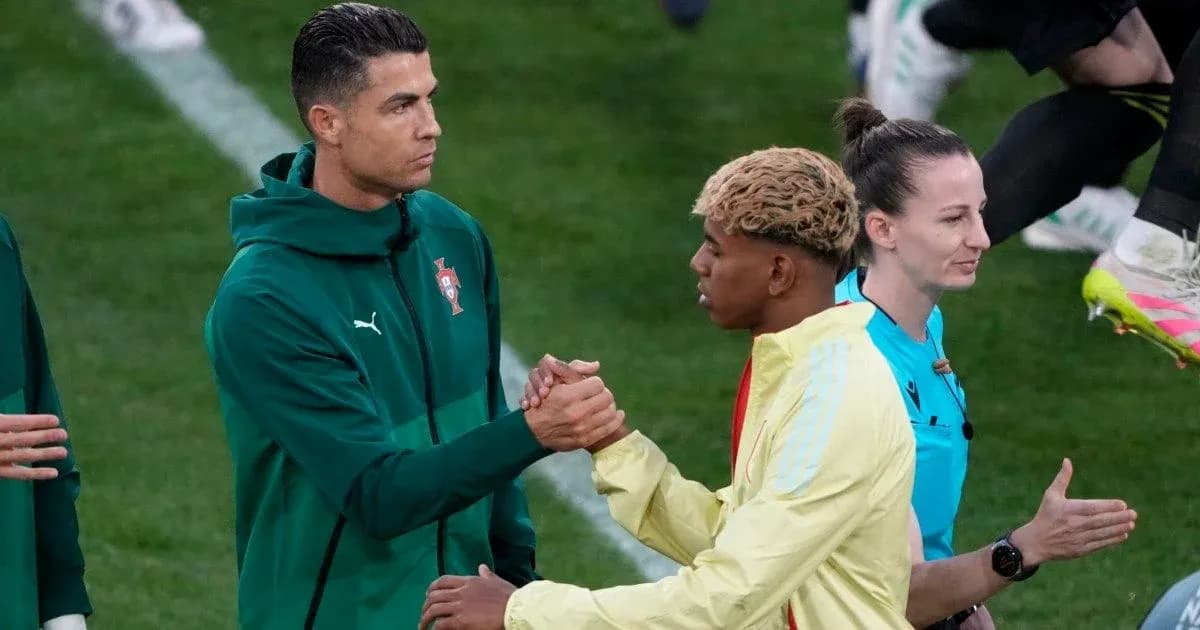
Some fixtures feel like they belong to the latter stages of a World Cup. Portugal vs Spain is one of them.
This is exactly the kind of night Portugal had in mind when they hired Roberto Martinez. The brief was simple: manage a generational transition, extract the maximum from Cristiano Ronaldo, and keep this team competitive at the very top.
For a while, it looked like Martinez had found the balance. Ronaldo was scoring, the attack was flowing. Then came the group match against Croatia, tight, tense, and still level deep into the second half.
Martinez blinked first. He took off Bruno Fernandes. He took off Vitinha. Then he made the call many thought he would avoid for as long as possible: he substituted Ronaldo. Portugal still found a late winner, a sign that this team can decide games without their all-time talisman on the pitch.
Across the halfway line, Spain are gathering speed. Dani Olmo has taken control of the midfield, driving the team forward with his passing and movement. Lamine Yamal, still so young, is beginning to look at ease on the biggest stage, while Mikel Oyarzabal has given La Roja a clinical edge in front of goal.
These two know each other’s scars. At the 2010 World Cup, Spain shut down Ronaldo and Portugal in a 1-0 win on their way to lifting the trophy. Eight years later, Ronaldo struck back with a hat trick in a wild 3-3 draw in Russia, a game that felt like a personal duel between him and an entire nation.
This time, the stakes are just as high, but the dynamics are different. Spain’s collective rhythm against Portugal’s evolving identity under Martinez. Yamal’s emergence against Ronaldo’s enduring presence, whether from the start or off the bench.
One of them will leave Dallas with their World Cup dream sharpened. The other will leave with a sense that an era has slipped away.
Related News
Ilia Topuria Accuses Justin Gaethje After UFC Defeat

Tyson Fury vs Anthony Joshua Fight Date and Venue Confirmed
Switzerland Calls Up In-Form Sion Striker Winsley Boteli for Nations League
Bournemouth Secures Historic 2-1 Win Over Real Sociedad in Spain
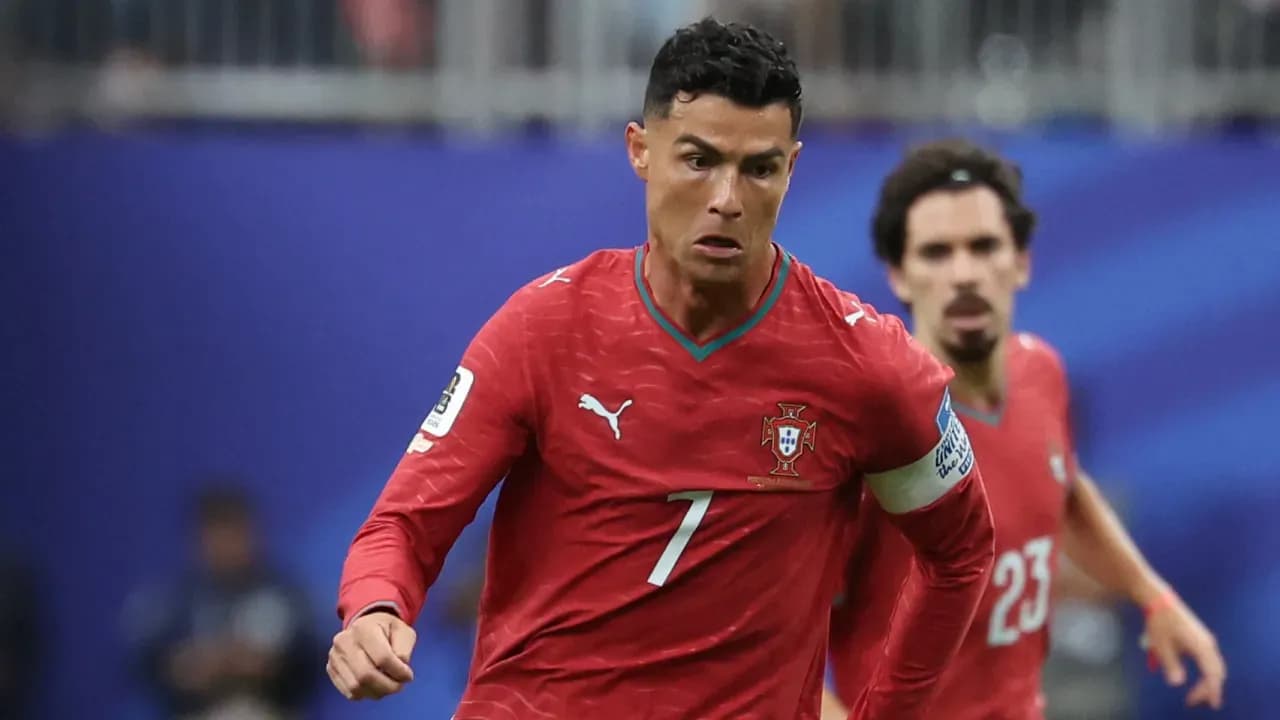
Portugal Announces Squad for 2026 UEFA Nations League; Cristiano Ronaldo Expected to Play

Raphinha Channels Ronaldo Nazario as Barcelona's Leading Striker After Position Change