
World Cup Highlights: Egypt's Historic Win and Stormy Matches
The World Cup caravan rolled through North America on Sunday and into the small hours with everything from apocalyptic weather warnings to political flashpoints and a slice of pure football history.
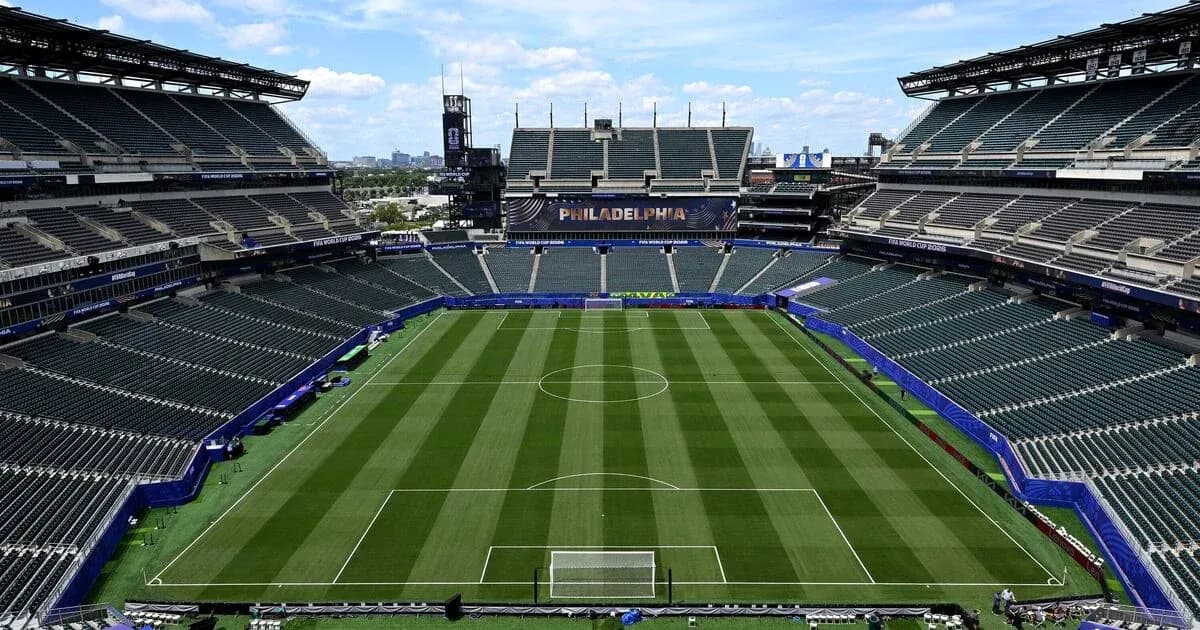
Storms over Philadelphia put France–Iraq in doubt
France’s late kick-off against Iraq in Philadelphia is under serious threat from the sky above rather than the opponents in front of them. Local forecasts predict a barrage of thunderstorms around the city, with “damaging winds, intense lightning, and a risk of isolated tornadoes” expected.
Under FIFA’s safety protocol, a single lightning strike within eight miles of the stadium stops everything. Players are hauled off, fans are moved to the concourses or emergency shelters, and then the clock starts: 30 minutes without another strike before anyone is allowed back out.
“They'll start to evacuate the stadium to the main concourse and seek emergency shelter,” explained Lauren Lambrugo, chief operating officer of Philadelphia Soccer 2026. “And then it has to wait 30 minutes prior to them bringing everybody back on the field.”
If the storm sits overhead, that could mean a long, fragmented night – or no football at all.
Egypt finally arrive on the World Cup stage
In Vancouver, the story was not the weather but a wait that felt almost as long as a storm delay. Egypt, a giant of African football, had never won a World Cup match. That line in the record books has gone.
They did it the hard way. New Zealand struck first, Finn Surman losing his marker and thundering in a textbook corner header, the kind that will live on in coaching clips. Egypt looked flat. Mohamed Salah curled a free-kick just wide. Half-time: New Zealand 1-0 Egypt, and the script was threatening to turn into another cautionary tale.
Then Egypt ripped it up.
They came out flying, pinning New Zealand back. Ziko dragged them level just before the hour, reward for relentless pressure. The equaliser changed everything. Suddenly, every Egyptian touch carried menace.
Salah, so often the man with the burden, became the man with the release. A neat one-two, a low finish, and his first goal of this World Cup had Egypt in front and the game in his hands. It felt inevitable the moment he moved onto the return pass.
New Zealand staggered. Egypt did not stop. Trezeguet arrived to make it 3-1, the goal that turned relief into celebration and sealed a first ever World Cup victory for the Pharaohs.
The scenes were not confined to the stadium. Footage from Vancouver showed Salah out in the streets, singing and dancing among fans as Egypt’s players and supporters allowed decades of frustration to spill out into a single, joyous night.
Cape Verde refuse to blink against Uruguay
Thousands of miles away in Miami, Cape Verde continued their remarkable debut campaign by standing toe-to-toe with Uruguay and refusing to fall.
Kevin Pina lit up the night with a 30-yard free-kick that screamed into the net, a laser of a strike that stunned the South Americans and briefly silenced their fans. Uruguay responded as you’d expect: a quickfire double before half-time, Ronald Araujo and then Canobbio turning a deficit into a 2-1 lead, the second a classic six-yard-box finish after Araujo’s header across goal.
Most teams would have folded. Cape Verde did the opposite.
Helio Varela came off the bench and needed just three minutes to punish a calamitous moment from Fernando Muslera, the veteran goalkeeper stranded in no man’s land. Varela pounced and rolled the ball into an empty net for 2-2.
Cape Verde could even have stolen all three points late on. Instead, they left with another draw, another statement, and a live shot at qualification: beat Saudi Arabia and they go through. For Uruguay, two draws and a fractured camp leave Marcelo Bielsa under pressure and in need of a performance against Spain.
Their task just got harder. Bielsa confirmed Giorgian de Arrascaeta and Ronald Araujo – both yet to feature – have “no chance” of playing in the final group game. They will not be seen again before a potential round-of-32 tie, and Uruguay are far from certain to get that far. Lose to Spain and, if Cape Verde or Saudi Arabia win, two points will almost certainly not be enough to sneak through as one of the best third-placed sides.
Spain reset, Yamal arrives on the biggest stage
Spain, stung by a goalless draw with Cape Verde in their opener, answered every question in Atlanta with a ruthless 4-0 dismantling of Saudi Arabia.
The tone changed the moment Lamine Yamal returned to the starting XI. The teenager needed just minutes to make his mark, arriving to tap in a low cross from Mikel Oyarzabal. Spain looked sharper, quicker, more dangerous with him on the pitch – no surprise to anyone who has watched his rise at Barcelona.
Oyarzabal, criticised for his display in the first game, flipped the narrative. Provider for the first, scorer of the second and third, he had two goals before the first hydration break. Spain were 3-0 up inside 22 minutes and cruising.
After the interval, Marc Cucurella’s shot forced an own goal from Hassan Al Tambakti, the eighth own goal of these finals, to make it 4-0. Spain even had a fifth ruled out for offside after a lengthy VAR check on Ferran Torres.
They never needed to leave third gear. The European champions now have one foot in the knockouts and, more importantly, a performance that restores belief. Yamal, speaking afterwards, underlined just how quickly his dreams have become reality.
“I've always dreamed about being at a World Cup, and being able to score in my first start is a dream,” he said. Not long ago, he added, he was watching the World Cup “in class at school.”
Belgium and Iran serve up frustration
The day’s other heavyweight fixture, Belgium vs Iran in Los Angeles, never caught fire. It ended 0-0 and felt every inch of it.
Iran thought they had the breakthrough when Mehdi Taremi found the net, only for VAR to rule it out for offside. Belgium had their moments, most notably a late chance for Maxim De Cuyper that he hit straight at Alireza Beiranvand, but the quality was lacking.
The turning point should have been Nathan Ngoy’s red card. The Belgian defender hauled down Taremi just past halfway, with no covering defender. VAR checked, the red stood, and Belgium were left to play out the closing stages a man down.
Iran failed to make it count. Roy Keane, watching on ITV, did not bother to sugarcoat it, branding the game “rubbish” and criticising the passing, movement and decision-making from both sides.
The draw leaves each nation on two points from two games, with everything riding on the final round: Belgium face New Zealand, Iran take on Egypt, who suddenly look a very different proposition.
Anthem boos and protests shadow Iran’s campaign
Iran’s football is only half their story at this tournament. Their national anthem was booed again, for a second game, and protests around the team show no sign of easing.
Outside the stadiums, Iranian fans have used the World Cup as a platform. In Los Angeles before the opener against New Zealand, and again ahead of the Belgium match, dissenting voices made their stance clear, accusing the team of supporting the regime and insisting “that team is not our team and they don't represent us.”
Inside, captain Alireza Jahanbakhsh tried to steer the conversation back to unity.
“We play for all the Iranians in Iran, outside Iran, with whatever ideology, whatever preferences they have,” he said. “The most important thing we can do as a team is to perform well, to make sure we put our heart on the pitch, and to do everything to make them happy.”
The split remains, and Iran’s World Cup continues to unfold against that political backdrop.
England: injuries, curfews and a flag that didn’t make it in
England’s preparations for their second group game, against Ghana in Boston, have been anything but quiet.
On the pitch, Thomas Tuchel is juggling fitness concerns. Declan Rice remains a doubt after hobbling off in the win over Croatia. Bukayo Saka, managing an Achilles issue, trained separately on Saturday but then completed a full session behind closed doors in Kansas City on Sunday. Saka insists he is fine and the problem has not worsened, though Tuchel had suggested he might wait until the final group game against Panama before risking him.
Off the pitch, the England squad are operating under a strict curfew. Dan Burn revealed players had to cut short a concert – country artist Ella Langley – to make it back in time. Burn leaned into the experience, cowboy hat and boots included, and namechecked Harry Kane as a big country music fan who has even been curating records on the team’s hotel turntable.
The supporters have run into their own rules. An England flag featuring a submarine was barred from the opener against Croatia due to FIFA’s ban on military imagery. Barrow FC, the club linked to the design, responded with a tongue-in-cheek post blurring out the submarine.
England fans have already started to filter into Boston, hoping to match the noise and colour Scotland’s Tartan Army brought to the tournament. A win over Ghana would secure a place in the knockouts and could be enough to top the group. Tuchel’s selection, especially around Saka and Rice, will say plenty about how much risk he is willing to take to get it done early.
Doku’s dilemma and the backlash that followed
The most contentious off-field debate of the day centred on Belgium winger Jeremy Doku. He missed the Iran match with a chest infection, according to Belgian outlet RTBF, but his situation is complicated by his desire to leave the camp for the birth of his first child in the second week of July.
Doku has been open about the pull he feels.
“It's my first child, so I would definitely want to be there,” he said. “If you ask me what I want, my answer is that nobody wants to miss the birth of their first child. But I also know that football involves many other considerations. I know the federation supports its players and understands their situations. We'll see what we can do.”
That stance drew fierce criticism from France Pierron, a presenter on L’Equipe’s channel, who called the birth of a child “a disgusting moment” where “the father is useless, he's just an extra,” and argued Doku should not leave a “privilege” like a World Cup.
Her comments sparked outrage. She has since apologised and, according to reports in France, been suspended.
From within the players’ fraternity, the reaction has been very different. England forward Ollie Watkins, himself a father of two, defended Doku’s position.
“It only happens once, your first child,” Watkins said. “Welcoming them into the world is a blessing, and you don't get that opportunity (again). There are a lot of times when you're away from family and friends during the season, and it's a very difficult period, so to miss that would be tough.
“I don't think it's anyone else's business. If he goes back and does that, that's fair enough.”
For Doku, the decision looms. For Belgium, his absence is already being felt.
Brazil wary of Scotland’s bite
Over in Group C, Brazil are one result away from the knockouts. A draw against Scotland would be enough to see them through, and likely suit both teams. Lucas Paqueta wants no part of that calculation.
“All the teams at the World Cup deserve respect,” he said. “You have to study them and prepare as best as possible to face them. We have great respect for Scotland, but we also know we need to play our game and follow what the coach asks of us. Regardless of the opponent, our goal in every match is to win.”
Brazil may have the luxury of margin. They are refusing to act like it.
Anthem boos, raw meat and the oddities of tournament life
World Cups always throw up the strange alongside the serious. ITV pundit Andros Townsend left fans baffled after sharing a picture of what looked like raw beef on his plate, sparking a minor storm of its own on social media.
Curacao goalkeeper Eloy Room, meanwhile, became an unlikely cult hero after his heroics in a 0-0 draw with Ecuador, the kind of performance that sticks in the memory long after bigger names have gone home.
And in the background, strict team rules, long travel days and the grind of group-stage football continue to shape this tournament’s rhythm.
The storm ahead
From Egypt’s long-awaited breakthrough to Cape Verde’s stubborn refusal to bow, from Spain’s reawakening to the political and personal crosscurrents swirling around Iran and Belgium, Sunday felt like a snapshot of this World Cup in all its complexity.
Now all eyes turn to Philadelphia, where thunderheads gather over France vs Iraq and the clock ticks towards kick-off. Will the night belong to Kylian Mbappe and company, or to the lightning that could send everyone running for cover?
Related News
Raphinha’s Hat-Trick Powers Barcelona to 7-2 Victory Over Racing Santander
Carabao Cup Fourth Round Draw: Liverpool Set to Clash with Chelsea, Arsenal to Face Fleetwood Town
Key Football Matches to Watch in Azerbaijan This Autumn
Raphinha's Hat-Trick Drives Barcelona to 7-2 Triumph Over Racing Santander
Hansi Flick Leads Barcelona to Record-Breaking Seven Wins in a Row
Gavi Reflects on Injury Return as Barcelona Dominate Racing Santander 7-2