
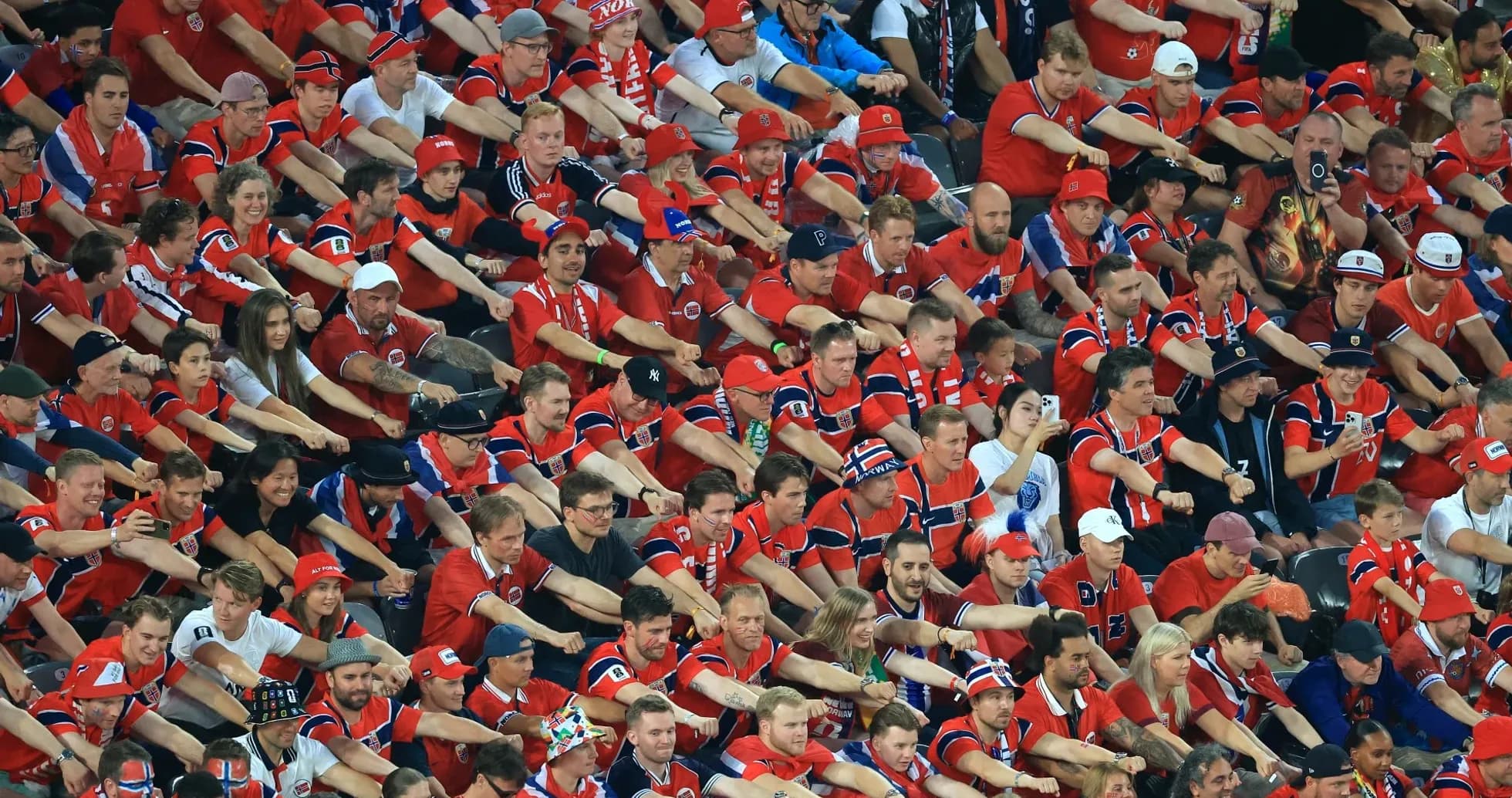
World Cup Group Stage Drama: Key Matches on Friday
The World Cup group stage is hitting its sharp end, and Friday feels like a hinge in the tournament.
Twelve hours, six cities, three groups, and a pile of nations clinging to the edge of the Round of 32. Some are chasing first place. Others are just trying to stay alive for one more game.
A day that could flip three groups
The schedule is brutal, the stakes clear.
- Norway vs France – Boston Stadium, USA – 3pm EDT (19:00 GMT)
- Senegal vs Iraq – Toronto Stadium, Canada – 3pm EDT (19:00 GMT)
- Cape Verde vs Saudi Arabia – Houston Stadium, USA – 7pm CDT (00:00 GMT Saturday)
- Uruguay vs Spain – Estadio Guadalajara, Mexico – 6pm CST (00:00 GMT Saturday)
- Egypt vs Iran – Seattle Stadium, USA – 8pm PDT (03:00 GMT Saturday)
- New Zealand vs Belgium – BC Place, Vancouver, Canada – 8pm PDT (03:00 GMT Saturday)
Group G, H and I will all move from theory to reality by the time the final whistle blows in Vancouver. Thirteen Round of 32 places are still open. Several giants and upstarts are staring at the same narrow doorway.
Norway vs France: a familiar imbalance, a new prize
France and Norway know each other well, but not like this.
This is their 16th meeting, the first since a 4-0 French friendly win in 2014, and it comes with Group I’s top spot on the line. Both are already through. The question now is seeding and statement.
History leans hard in one direction. Norway have just two competitive wins over France, the last way back in a European Championship qualifier in 1987. Their World Cup record against European opposition is even more stark: five games, no wins, three defeats, two draws.
France arrive with a very different trend line. Les Bleus have won their last five World Cup matches against European teams, a run that underlines why Opta’s supercomputer hands them a 59.4 percent chance of victory. A draw, rated at 20.6 percent, would still be enough for them to finish top of the group. Norway are given a 20 percent shot at taking all three points.
For Norway, this is about breaking patterns. For France, it’s about confirming what the numbers already suggest.
Senegal vs Iraq: one door open, one barely ajar
In Toronto, the margins are harsher.
Senegal cannot top Group I anymore, but their World Cup still hangs in the balance. They remain unbeaten against AFC sides at the tournament, with a draw against Japan in 2018 and a win over Qatar in 2022. Iraq, making a rare appearance on this stage, have never faced African opposition at a World Cup.
The models are ruthless. Opta’s simulations give Senegal a 77.2 percent chance of victory. Iraq sit at just 8.6 percent, with the draw at 14.2 percent.
The probability lines tell the story of their paths. Senegal still boast a 72.2 percent chance of reaching the last 32. Iraq’s hopes are reduced to a sliver: 1.1 percent. One side still controls its destiny. The other is clinging to permutations.
Cape Verde vs Saudi Arabia: a knife-edge in Houston
If there is a pure tension fixture on Friday, it may be in Houston.
Cape Verde and Saudi Arabia meet for the first time at a World Cup, and both know the numbers. Saudi Arabia’s record against African teams at the tournament is quietly impressive: just one defeat in five games, with two wins and two draws.
Yet the balance of probability tilts towards the island nation. Opta’s model gives Cape Verde a 40.8 percent chance of winning, with Saudi Arabia at 33.9 percent and the draw at 25.3 percent.
Behind those figures sits the bigger picture: Cape Verde have a 66.7 percent chance of reaching the last 32. Saudi Arabia’s prospects stand at 33.3 percent. Every tackle in midfield, every set piece, will feel like it carries the weight of a continent and a confederation.
Uruguay vs Spain: history says draw, data says something else
Guadalajara gets the heavyweight tie of the day.
Uruguay and Spain have not met at a World Cup in more than 30 years, but the record is curiously balanced: two matches, two draws. A 2-2 thriller in the final round of the 1950 tournament. A goalless stalemate at Italia ’90.
This time, the numbers are not neutral. Spain arrive as reigning European champions and heavy favourites in Opta’s 25,000 pre-match simulations. They win 62.4 percent of those scenarios. Uruguay take 15.7 percent. The draw lands at 21.9 percent.
The past suggests another deadlock. The present points firmly towards Spain. One of those threads will snap under the Mexican lights.
Egypt vs Iran: history in the stands, history on the line
Seattle hosts a meeting with almost no shared World Cup history, but plenty of subtext.
Egypt and Iran have faced each other only once before, at the 2000 LG Cup in Tehran. That night finished 1-1 before Egypt won 8-7 on penalties. Hossam Hassan, now Egypt’s coach, scored. Ali Daei, Iran’s iconic striker, equalised.
On this stage, they start from scratch. Iran bring an unbeaten World Cup record against African teams: a win over Morocco in 2018, draws with Angola in 2006 and Nigeria in 2014. Egypt bring a generation desperate to leave a deeper mark on the tournament.
Opta’s model tilts slightly towards the Pharaohs. Egypt are given a 42.9 percent chance of victory. The draw sits at 32.2 percent. Iran’s win probability is 24.9 percent.
For both, this is more than a meeting of styles. It’s a chance to stretch the tournament into July.
New Zealand vs Belgium: one streak must bend
The night closes in Vancouver with a game that looks lopsided on paper, but not entirely in memory.
New Zealand’s last World Cup appearance, in 2010, ended with two draws against European sides: Slovakia and then defending champions Italy. They left South Africa unbeaten, a curiosity in tournament history.
Belgium arrive with a different quirk in play. They could become the first European team since their own 1998 side to draw all three group matches at a World Cup.
Opta’s supercomputer is unforgiving. Belgium have an 80.3 percent chance of victory, with a draw at 11.8 percent. New Zealand win just 7.9 percent of simulations.
If there is to be a shock, it will come against the run of almost every number.
The table as it stands: Mexico perfect, giants through, gaps still open
By Friday, six groups are already done. The picture is crowded at the top.
Mexico sit alone with a perfect record, nine points from nine, after sweeping Group A. They are joined in the Round of 32 by South Africa, Switzerland, Canada, Bosnia and Herzegovina, Brazil, Morocco, USA, Australia, Germany, Ivory Coast, Ecuador, Netherlands, Japan, Sweden, France and Norway.
Group G remains tangled: Egypt lead on four points, Iran and Belgium both sit on two, New Zealand on one. Group H has Spain on four, with Uruguay and Cape Verde on two. Group I is cleaner: France and Norway are through, but first place is still in dispute.
Groups J, K and L will settle everything on Saturday. Thirteen Round of 32 spots are still unclaimed. The margins are getting thinner by the hour.
Drama off the pitch: late winners, orange streets and a World Cup in two cities at once
The football has already supplied its chaos.
Turkiye’s 3-2 win over the United States at SoFi Stadium came with a 98th-minute winner in a Group D match that meant nothing on paper and everything in the stands. The US had already locked up top spot, Turkiye were already out, yet the game turned into a wild, open contest in front of nearly 70,000 fans. Mauricio Pochettino rotated heavily, making nine changes and handing seven players their first World Cup starts, and still the match throbbed to the final kick.
Mexico, meanwhile, turned the Azteca into a celebration ground. A 3-0 win over Czechia completed a flawless group stage: three games, three wins, three goals on the night. Mateo Chavez broke the deadlock after the break, Julian Quinones added his second of the tournament, and substitute Alvaro Fidalgo finished the job. Czechia’s hopes died there. Mexico’s reward is a Round of 32 tie against one of the best third-placed teams.
In Kansas City, the story was orange. More than 35,000 Netherlands supporters, according to local reports, flooded downtown for the Oranje Fanwalk before their match against Tunisia. They gathered at the Power & Light District, marched behind the iconic orange bus, and turned the streets into a travelling home end. Locals and neutral fans joined in, creating one of the biggest fan marches of the tournament.
Then came one of the strangest images of the World Cup so far. During the final Group E games, FIFA President Gianni Infantino appeared on the big screens at both Ecuador vs Germany and Curacao vs Ivory Coast at the same time, in different cities. Social media lit up with jokes about him being in two places at once. On the pitch, the night was just as sharp: Ecuador stunned Germany 2-1, Ivory Coast beat Curacao 2-0 and booked their own place in the last 32.
Africa’s surge and a World Cup of borders
The African storyline is growing louder by the day.
Ten African teams qualified for this expanded 48-team World Cup. As many as eight could still reach the knockout rounds. Morocco and South Africa are already there. Ivory Coast have also secured their place. Egypt, Algeria, DR Congo, Ghana and Cape Verde walk into their final group games knowing qualification remains in their own hands.
The numbers hint at a historic showing. The scenes in the stands and fan zones across North America confirm it.
One of the tournament’s most moving moments came before Colombia’s Group K game against DR Congo. As the anthems began, thousands of Colombian fans fell silent to let a lone DR Congo supporter sing his anthem alone, unbroken. When he finished, the stadium erupted around him. Applause, cheers, embraces. The images spread quickly across social media. Colombia later won 1-0 and sealed their Round of 32 spot, but the memory that lingered was that brief, respectful silence.
Away from the noise of the stadiums, the World Cup is colliding with the politics of movement. Speaking on The Take, journalist Boima Tucker described a tournament that both celebrates global unity and exposes the hard edges of border policy.
Travelling through host cities, he found Moroccan and Senegalese fans in New York, Cape Verdean communities in Massachusetts, thousands of Ghanaians packing a watch party in Toronto. People opening their homes, their streets, their stories for a month of football.
At the same time, he pointed to the hurdles many have faced just to be part of it. Iran’s national team have been based in Tijuana, Mexico, crossing into the US only for matches. Officials and relatives of players have struggled with visas. Those obstacles, Tucker argued, inevitably seep into performance: athletes trying to focus on the field while navigating bureaucracy in the background.
He also framed the World Cup as a mirror of wider inequalities, a global system that restricts movement even as it sells a vision of shared celebration. High-profile reunions might make headlines, he said, but they rarely shift the structures that created the separation in the first place.
And yet, in the middle of all that, football still stitches people together. Tucker spoke of immigrant communities celebrating side by side, of fans crossing ethnic, national and class lines for 90 minutes at a time.
He hoped this World Cup would be remembered as a rare moment when those borders, visible and invisible, briefly loosened.
The next 24 hours will decide who stays and who goes. The question is whether the football can keep stretching those lines, on and off the pitch, just a little further.
Related News

Raphinha’s Hat-Trick Powers Barcelona to 7-2 Victory Over Racing Santander

Carabao Cup Fourth Round Draw: Liverpool Set to Clash with Chelsea, Arsenal to Face Fleetwood Town
Key Football Matches to Watch in Azerbaijan This Autumn

Raphinha's Hat-Trick Drives Barcelona to 7-2 Triumph Over Racing Santander

Hansi Flick Leads Barcelona to Record-Breaking Seven Wins in a Row

Gavi Reflects on Injury Return as Barcelona Dominate Racing Santander 7-2