
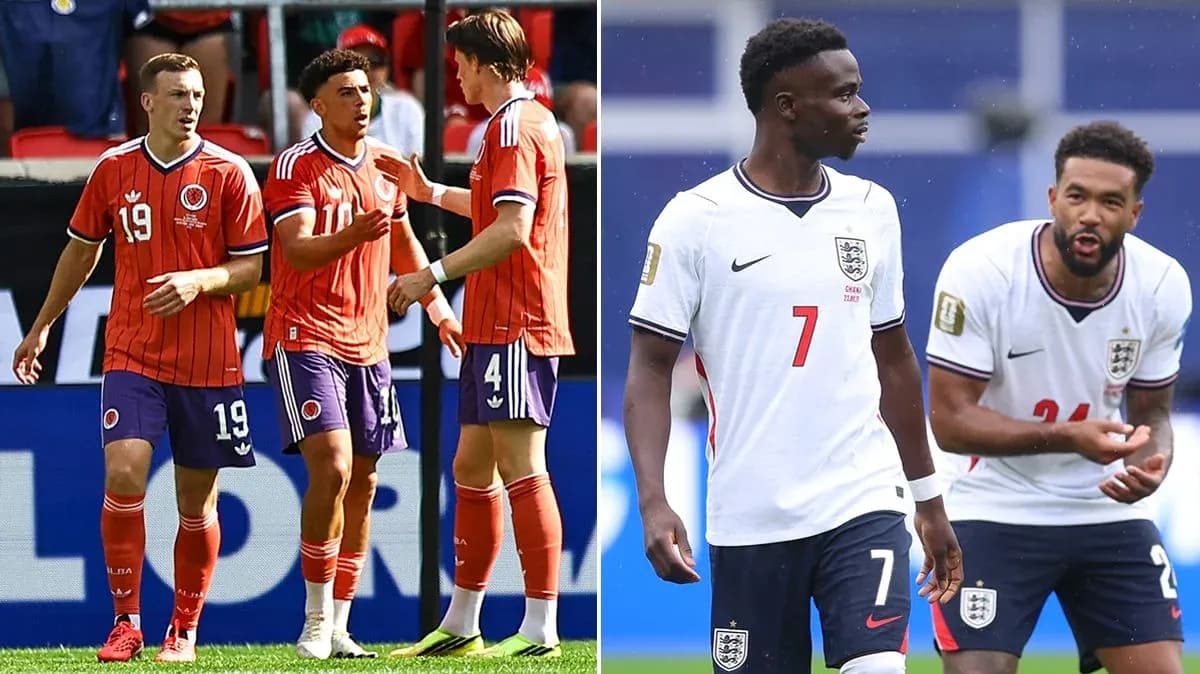
World Cup Drama: England's Draw and Scotland's Challenge Against Brazil
The World Cup’s third round of group games is here, and the tournament is starting to bite. England have hit their first bump. Scotland are staring down Brazil. And everywhere you look, storylines are beginning to sharpen.
Bellingham urges England to ‘roll with it’ after Ghana stalemate
England’s 0-0 draw with Ghana in Boston felt flat, a night when the Three Lions had control but not conviction. They left without the win that would have sealed a place in the last 32, and with a nagging sense of déjà vu.
Jude Bellingham, man of the match and emotional barometer of this side, called it “second game fever” – a label that fits all too neatly. This was England’s fourth straight draw in the second match of a major tournament, stretching back to Euro 2020. The pattern is no coincidence any more; it’s a habit.
Bellingham’s message, though, was not one of panic. England, he insisted, have to “roll with it”, absorb the frustration and move on before Saturday’s meeting with Panama. That game now becomes a reset button as much as a qualification decider.
The performance against Ghana was stodgy but not chaotic. England controlled counters, created half-chances, hit the bar through Nico O’Reilly and, late on, watched Harry Kane lash over from seven yards – the sort of chance he normally buries with his eyes shut.
Kane shrugs off miss and talk of ‘over-reliance’
Kane, 32 and still the fulcrum of England’s attack, is not dwelling on that late miss. He knows the script: when he scores, he carries a nation; when he doesn’t, the questions arrive.
“It’s part of a striker’s life,” he said afterwards, refusing to indulge in self‑recrimination. “Nine times out of 10 I score.” This time he didn’t. England dropped points. The noise grew.
Both Kane and Bellingham’s midfield partner Eberechi Eze pushed back at the idea that this team leans too heavily on its No 9. Eze, who again showed why Thomas Tuchel trusts him between the lines, pointed to the depth of attacking options and creativity around Kane. The numbers back that up from the Croatia win. The optics from Ghana, where Kane “hardly got a kick” until that late chance, don’t.
That tension – between the idea of a multi-faceted attack and the reality of a side that still seems to wait for its captain to decide games – will hang over England until someone else delivers in a tight moment.
Fitness worries and disciplinary tightrope for England
Tuchel has more immediate concerns than narratives. Declan Rice left Boston Stadium with his leg strapped after limping off late on, having been one of England’s better performers. Reece James, who completed the full 90 minutes, will also be assessed after his recent problems at Chelsea.
Early indications suggest no long-term issue for Rice, but with qualification almost secured, both could be rested against Panama. That decision carries a twist of its own. Rice picked up England’s first yellow card of the tournament for a foul on Jerome Opoku, and another booking would rule him out of the second round. Under FIFA rules, two yellows before the end of the group stage trigger a one-game ban, with cautions wiped afterwards.
Rice, then, is balancing fitness, form and the risk of suspension at the very point England need rhythm.
Bellingham at centre of growing World Cup row
Bellingham’s night did not end with the final whistle. Reports from Spain claim Paraguay have lodged a formal complaint with FIFA after the midfielder escaped punishment for covering his mouth while speaking to Ghana’s Jordan Ayew.
The controversy stems from a new rule for this World Cup: players can be sent off for hiding their mouths during confrontations. Paraguay’s Miguel Almiron became the first to see red under the regulation in a heated clash with Turkiye, his dismissal confirmed after a VAR review.
In Bellingham’s case, FIFA officials deemed his exchange with Ayew to be a friendly chat, without animosity, and therefore not in breach of the law. Paraguay’s federation argue the law is being applied inconsistently. The complaint lands at a time when England’s every move already feels magnified.
Ronaldo roars back, Portugal breathe easier
While England huffed and puffed, Cristiano Ronaldo announced himself back on the World Cup stage with a brace in Portugal’s 5-0 demolition of Uzbekistan. It was the response he needed after a poor showing against DR Congo and calls for him to be dropped.
Ronaldo declared he was “back”, and Bruno Fernandes admitted the dressing room felt the same. Portugal’s captain remains their reference point in attack, and his double eased the tension heading into Saturday’s Group K decider against Colombia in Miami.
Fernandes, who created Ronaldo’s second, spoke of the relief at seeing their talisman scoring again. Portugal, already ominous in their 5-0 win, now look like a side with their main man locked in.
Scotland’s date with Brazil – and history
If England’s draw felt like a stall, Scotland’s night in Miami against Brazil looks like a crossroads. Steve Clarke’s side arrive with their World Cup hopes on a knife-edge after a laboured 1-0 win over Haiti and a damaging 1-0 defeat to Morocco, sealed by Ismael Saibari’s strike inside 70 seconds.
The equation is brutal in its simplicity. Beat Brazil and Scotland are through, with a chance to top Group C if Morocco slip against Haiti. A draw would almost certainly be enough, taking them to the prized four-point mark that usually guarantees progression as one of the best third-placed teams. Even a narrow defeat could keep them alive, with three points and a goal difference of -1 potentially sufficient to squeeze into the round of 32.
The bookmakers make Brazil heavy favourites. The Tartan Army are not listening.
Miami has turned tartan. Kilts, bagpipes, beer and a fanbase that has charmed both Boston and Florida have taken over the beaches and the bars. Local police and UK officers have praised Scotland supporters for creating an “unforgettable atmosphere” without trouble. On the pitch, though, there is no room for romance.
Ancelotti’s warning and Neymar’s return
Brazil, five-time champions and now finding their rhythm after a 3-0 win over Haiti, are not treating this as a formality. Carlo Ancelotti, who has seen enough tournaments to know danger when he smells it, called Scotland “fighters” and highlighted the experience of Scott McTominay and John McGinn.
“Easy games at the World Cup were finished a long time ago,” he said. He is not wrong.
Ancelotti also confirmed that Neymar is available for the first time at this World Cup after recovering from a calf problem. The forward trained fully this week and is “fit and able and ready to play”. Whether he starts or appears from the bench, his presence changes the mood and the threat level.
One absentee is Barcelona’s Raphinha, ruled out with a hamstring injury. Brazil lose a runner but regain a conductor. For Scotland’s defence, that is hardly a fair trade.
Scotland, scheduling and the spectre of Gijón
Scotland’s game against Brazil kicks off at the same time as Morocco vs Haiti. That is no accident. Since the “Disgrace of Gijón” in 1982, when West Germany and Austria were accused of playing out a mutually convenient 1-0 result to eliminate Algeria, FIFA have scheduled final group games simultaneously to reduce the risk of collusion.
The rule still stands, but this tournament has already tested it. A storm-delayed clash between France and Iraq stretched almost four hours from kick-off, raising questions about what might happen if extreme weather disrupts decisive group finales. Article 12.4 of the regulations insists on simultaneous kick-offs “unless stipulated otherwise by Fifa (e.g. in cases of force majeure)”.
For now, Scotland know only this: take something from Brazil, or keep any defeat as slender as possible, and the dream of a first-ever World Cup knockout appearance stays alive.
England and Scotland on collision course
Away from the training pitches and press rooms, another storyline is quietly building. With England top of Group L and Scotland currently third in Group C, the two old rivals are on course to meet in the last 16 in Mexico City on July 6.
That scenario is fragile. England still have work to do against Panama, especially with key players nursing knocks and Rice walking a disciplinary tightrope. Scotland must survive Brazil. Results elsewhere could twist the bracket.
But the possibility is there: England, trying to shake off their “second game fever”, and Scotland, trying to break a lifetime of group-stage exits, colliding in the knockout rounds under the Mexican sun.
For now, the World Cup rumbles on. England need a reset. Scotland need a result. Brazil welcome Neymar back. Ronaldo believes he is reborn. The margins are shrinking, the stakes rising.
Who blinks first?
Related News

Raphinha’s Hat-Trick Powers Barcelona to 7-2 Victory Over Racing Santander
Carabao Cup Fourth Round Draw: Liverpool Set to Clash with Chelsea, Arsenal to Face Fleetwood Town
Key Football Matches to Watch in Azerbaijan This Autumn
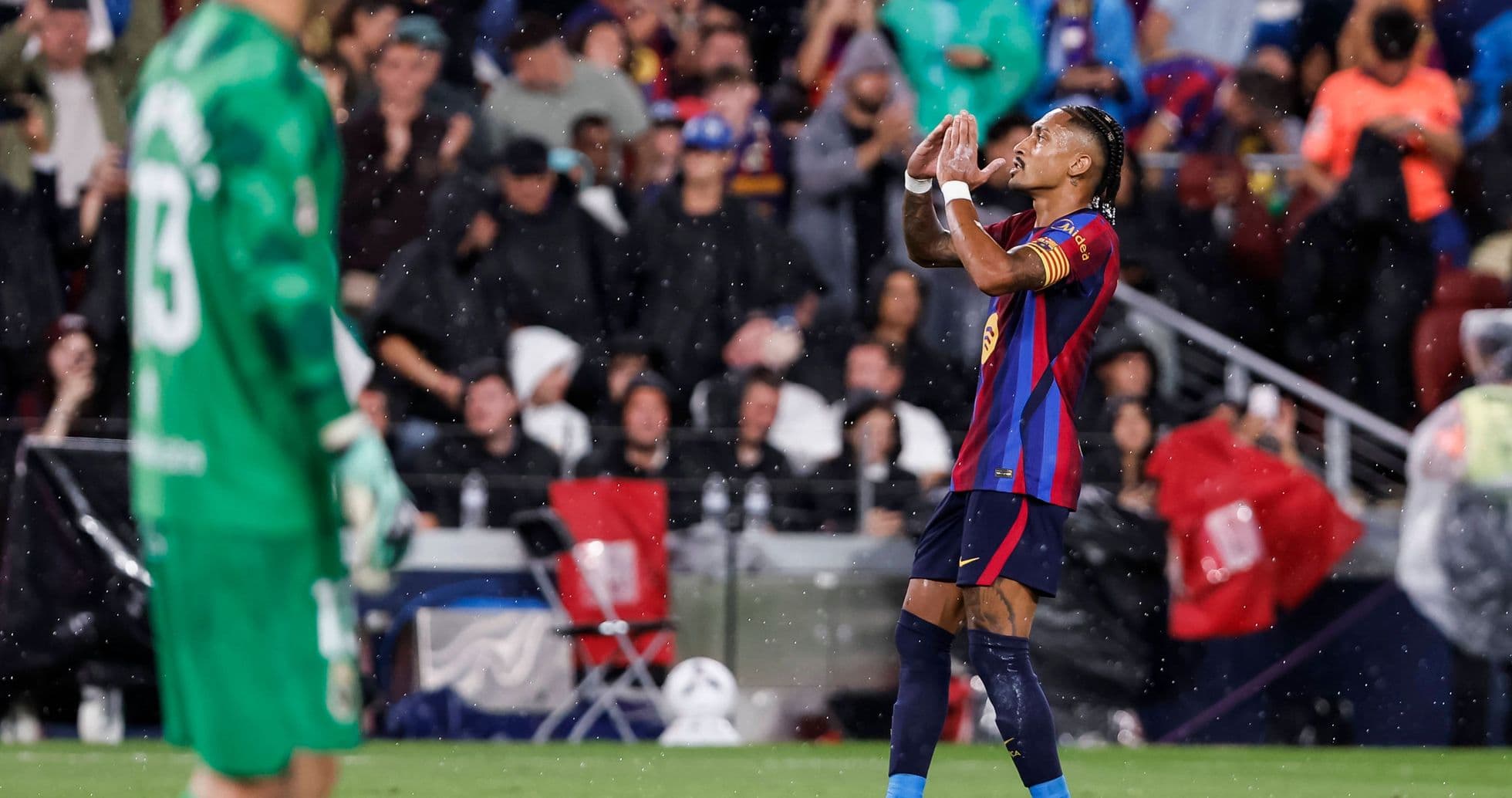
Raphinha's Hat-Trick Drives Barcelona to 7-2 Triumph Over Racing Santander
Hansi Flick Leads Barcelona to Record-Breaking Seven Wins in a Row

Gavi Reflects on Injury Return as Barcelona Dominate Racing Santander 7-2