
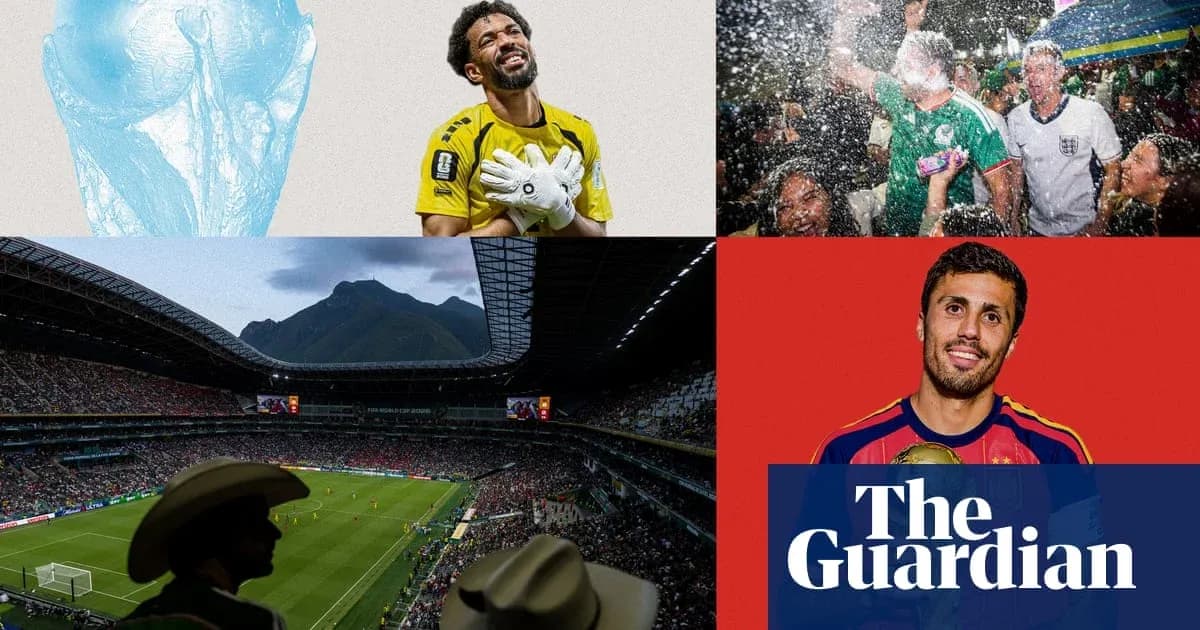
World Cup 2023: A Tournament of Surprises and Unpredictability
The numbers will say this was a high‑scoring World Cup, that the heavyweights largely showed up, that the hosts coped. The memories will say something else. They’ll say it was the tournament where Germany finally blinked in a shootout, where Cape Verde refused to act their size, where a 40‑year‑old goalkeeper and a deep‑lying metronome stole the stage from the marketing darlings.
They’ll say it was weird. Gloriously, relentlessly weird.
Matches that bent reality
Ask 10 reporters to pick a match of the tournament and you don’t get consensus. You get a collage.
Start with Paraguay 1-1 Germany, settled in a shootout that shredded one of football’s great myths. Germany do not lose penalty shootouts. They’re not supposed to, anyway. Yet in this last‑32 tie they collapsed in spectacular style, the aura evaporating one kick at a time. The drama outstripped games with twice the goals. It felt like watching a sporting law of nature being repealed in real time.
Then there was Algeria 3-3 Austria, a game that began as a conspiracy theory and ended as a fever dream. The expectation was a biscotto, a mutually convenient draw to send both sides through. For a stretch in the second half, that is exactly what it looked like: a polite, pre‑arranged truce. Then stoppage time arrived and the whole thing detonated. Chaos, goals, jeopardy. Not the best match in terms of quality, not even the wildest in pure drama, but nothing else existed on quite that plane of strangeness.
Mexico 2-3 England at the Azteca belonged to a different category altogether. The build‑up started the moment the draw came out, and the stadium – that colossal concrete bowl in Mexico City – lived up to its legend. A thunderstorm delayed kick‑off, tension crackled in the air and Thomas Tuchel’s side were dragged to their physical and emotional limit. England survived the best first half Mexico could throw at them, then clung on in a gripping, draining contest that felt like drinking cortisol neat. For those inside the Azteca, it was a bucket‑list night that justified the hype. For those watching on television, it was pure cinema.
England kept finding the chaos. France 4-6 England veered into the borderline hilarious, a scoreline that looked like a misprint and played like a fevered training drill gone rogue. Egypt 1-1 Iran in Seattle offered a different kind of drama: Iran twice rattling the woodwork in the dying minutes, thinking they had snatched it with a stoppage‑time winner, only to see it ruled out. The draw left an unbeaten Iran, already navigating endless off‑field hurdles, short of the knockout rounds. Cruel doesn’t begin to cover it.
Argentina, the defending champions, lived on the edge so often it began to feel deliberate. Their 3-2 win over Egypt in the last 16 was the full Messi experience: two goals down, staring at flights home, then dragged back from the brink by the captain’s late‑game sorcery. They overturned the deficit and finished the job in normal time, despite refereeing decisions that left Egypt incandescent. Later, Argentina 3-2 Cape Verde became something else entirely – a monument to improbable wonder. Cape Verde, World Cup debutants, stood toe to toe with the holders and were hauled level by Sidny Lopes Cabral’s outrageous equaliser, a strike that instantly joined the tournament’s folklore.
Cape Verde’s story didn’t stop there. Their 2-2 draw with Uruguay in Miami showed a team with attitude and discipline, a side that refused to be overawed. The joy in their football was unmistakable. So was the sense that this was no token presence.
And still the list of contenders grew. England 1-2 Argentina, a rivalry steeped in history, delivered a more familiar kind of tension. Argentina 3-2 Cape Verde split opinion only in the sense that some insisted it wasn’t even a debate: this, they argued, was the game of the tournament. For others, Mexico v England or Argentina v Cape Verde sat at the top of the pile. The fact there were so many plausible answers says everything about the month.
Rodri, Vozinha and a new cast of leading men
On paper, this was supposed to be the World Cup of the megastars. Messi chasing one last blaze of glory. Kylian Mbappé and Erling Haaland shouldering the future. Jude Bellingham stepping into the centre of the English universe.
They all had their moments. Mbappé walked away with the Golden Boot, boosted by that wild third‑place play‑off, but for long stretches he looked the best player on what appeared to be the best team in the competition – until France ran into Spain in the semi‑final. Haaland powered Norway into a historic quarter‑final, leaving with a credible Golden Boot run and a surge in global profile, capped by a second goal against Brazil that was as cold as it was clinical: a low, precise strike from outside the box that sealed a famous upset. Messi, inevitably, authored late‑game revivals and record‑breaking nights, turning early Argentina fixtures into mass pilgrimages. Bellingham, questioned by some before a ball was kicked, became indispensable for Tuchel’s England.
Yet the player who defined this World Cup did so from deeper on the pitch. Rodri, Spain’s captain and midfield fulcrum, stood above the rest. As Spain reverted to a more possession‑driven model, he became their metronome, setting the tempo, exerting control, and exuding the authority of a capitán, líder, leyenda. When contests teetered, when pressure needed to be evaded or transitions snuffed out, no one handled the knife‑edge moments more consistently. He felt like the grown‑up in every room he entered.
There were others who shifted the narrative. Michael Olise was majestic for France, even if a missed hat‑trick against England nagged at the memory. Dani Olmo’s intelligence and movement knitted Spain’s attack together. Pau Cubarsí, barely out of childhood, looked entirely at home on the biggest stage.
Then came the curveball heroes. Vozinha, Cape Verde’s 40‑year‑old goalkeeper, turned into a cult figure. Without a club, he arrived in North America as an unknown to most neutrals and left as the face of one of the tournament’s great fairytales. He frustrated elite opposition, made save after save that belonged in a highlight reel, and carried himself with a quiet charisma that resonated far beyond his island nation. The fact his mother made the improbable journey from Cape Verde to watch him at a World Cup only deepened the sense of something rare unfolding.
Eloy Room, at 37, had his own moment of immortality. His performance for Curaçao against Ecuador broke the World Cup record for saves in a 90‑minute match. He joked afterwards that he deserved a statue back home, but the grin on his face said enough. This was a tournament that kept finding room for late‑career epics.
And then there was Pico Lopes. The Shamrock Rovers defender, representing Cape Verde and his father’s homeland, repeatedly put his body on the line, the kind of unglamorous, uncomplaining work that underpins every surprise story. Whether it earns him a move to a bigger league remains to be seen; being a legend for club and country may prove reward enough.
When the ball left the foot and time stopped
If one moment captured the tournament’s raw, unfiltered wonder, it was Sidny Lopes Cabral leaning back and letting fly against Argentina. A full‑back‑turned‑winger from Cape Verde, standing in extra time of a knockout tie against the world champions, decided to ignore every conservative instinct and hit one from distance.
The ball arced and swerved, completing its curl between a diving Emi Martínez and the far post. For a heartbeat, the stadium seemed to fall silent, everyone processing what they had just seen. Then the sound hit. In living rooms, press boxes and fan zones, people made noises they didn’t know they were capable of. Cabral clasped his hands to his head, disbelieving, before finding his girlfriend in the crowd to share the celebration. It was one of those goals that replays can’t dull.
The strike became the default answer to “goal of the tournament”. Some tried to mount a case for others. Uzbekistan’s Eldor Shomurodov produced an instinctive lob from a tight angle against the Democratic Republic of the Congo, an oddly satisfying, one‑of‑a‑kind finish that deserved more attention than it got. Wilson Isidor’s thunderous long‑range effort for Haiti against Morocco was hit as cleanly as anything seen all month, a goal that would stand comfortably in any World Cup’s all‑time montage. For Haiti, it may become a permanent reference point: if nothing else, they’ll always have that.
Julián Álvarez, relatively subdued for much of Argentina’s campaign, detonated one in extra time against Switzerland, a vicious, swerving strike from distance that lit up a cauldron‑like night in Kansas City. Kerim Alajbegovic, an 18‑year‑old from Bosnia and Herzegovina, slalomed through defenders and lashed in off balance against Qatar, justifying the buzz that followed him into the tournament. Johan Manzambi’s run and pass to set up Breel Embolo against Algeria belonged to a different art form entirely, a reminder that the assist can be as breathtaking as the finish.
Harry Kane chipped in with a signature moment too, his second against DRC a clinical illustration of his craft. Somewhere in the mix lurked a disallowed rocket – “was it Uzbekistan?” – that arrowed into the top corner only to be scrubbed from the record. The fact people kept bringing it up, even stripped of consequence, said plenty about the standard.
But every conversation kept looping back to Cabral. The context, the distance, the technique, the stakes. A World Cup knockout, Cape Verde against Argentina, and a ball that seemed to bend the laws of physics and logic in one audacious swing.
Beyond the pitch: pilgrimages, pancakes and floodwater
For all the tactical diagrams and xG charts, this World Cup also belonged to the off‑beat details – the little human moments that stitched the month together.
In Monterrey, a journalist stood knee‑deep in raging floods waiting for a bus, having gone to the stadium only to retrieve a mislaid iPad he would then lose again in Houston a week later. In Dallas, the flyovers outside the city took on a strange, stark beauty after countless trips to and from the grounds.
At the Azteca, Mexico’s win over Ecuador produced a noise that felt almost physical, a wall of sound that rattled bones and redefined what “atmosphere” means. Those early Argentina games, especially Messi’s record‑breaking night against Austria in Dallas, turned stadiums into shrines. People didn’t just attend; they made pilgrimages.
Elsewhere, the tone could shift from epic to absurd in a heartbeat. Senegalese journalists calmly shared a packet of malted milks during their anthem before a collapse against Belgium. In another corner of the schedule, an eight‑a‑side kickabout with Danny Cipriani – once a Tottenham trainee, briefly a teammate of Harry Kane – lodged itself in the memory as firmly as any group‑stage fixture.
Scotland’s return to the World Cup after 28 years brought its own theatre. Players ran out to warm up to Scotland the Brave, piped into Foxborough, the sense of occasion palpable. What followed on the pitch is best left unexamined, but for a few minutes before kick‑off, it felt like the sport had rewound to a more innocent age.
Cape Verde’s story kept looping back to family. Vozinha’s mother, against all odds, made it from the islands to North America to watch her son keep goal on the biggest stage of all. Nestory Irankunda, scoring for Australia against Turkey, revived Tim Cahill’s iconic corner‑flag celebration in what felt like a ceremonial handover between generations.
For some, the personal highlight was simpler: pancakes at Mile End Deli, a chow mein bridge, shouting “HELLO NEW YORK!” at a live show in Manhattan. For others, it was standing in a sixth‑floor window overlooking the route of the Spain team bus, the same vantage point from which Lee Harvey Oswald shot JFK, and watching a modern motorcade glide past.
In Kansas City, where England were based, locals embraced the visitors with warmth that cut through the logistical grind. In Toronto, Canada’s first World Cup game on home soil delivered a match‑day buzz that didn’t fade even after a draw with Bosnia and Herzegovina. Across US host cities, strangers struck up conversations about football in bars, on trains, in queues – a welcome jolt of connection in an increasingly inward‑looking era.
Hosts under the microscope
Staging a World Cup across the USA, Mexico and Canada always threatened to turn the tournament into a test of logistics as much as football. It did. Travel was punishing, distances vast, and too many stadiums sat marooned miles from city centres. Public transport in parts of the US barely existed in any meaningful sense, with Florida and Boston traffic drawing particular ire.
Yet the people, more often than not, made up for the infrastructure. In the US, hotel staff, bartenders and even the occasional reality‑TV face went out of their way to be welcoming. There was a recurring refrain from locals: “We hope you’re enjoying this – and that you know this isn’t us,” a nod to the country’s political fractures. In Canada, around Canada Day in Toronto, there was a hunger to be recognised as a genuine football nation, not just a co‑host. Mexico, with its fervent, febrile football culture, felt like the spiritual heartbeat of the event, even if it sometimes seemed overshadowed by its neighbours.
The footballing verdict on the hosts was mixed. The USA produced some of the prettiest football their men’s national team has ever played, only to fall short against Belgium and rue a missed chance to do something greater. The broader system still looks in need of an overhaul, from player development architecture to the identity of the head coach. Canada, under Jesse Marsch’s high‑octane touchline persona, were thrilling at times and ruthless in a 6-0 dismantling of Qatar. Mexico barnstormed their group, outclassed an improving Ecuador and pushed England to the brink before running out of ideas in the final half‑hour.
Off the field, not everything sat comfortably. The Folarin Balogun saga, with the US administration’s intervention and Fifa’s compliance, left a lingering stench, a reminder of how power can bend sporting rules. Fifa’s decision to seize direct control of tournament organisation rather than empower a local committee served as another cautionary tale.
Yet for all the missteps, something important shifted. The scale of interest in soccer across North America felt different this time – deeper, more organic. In cities such as Vancouver and Seattle, where downtown stadiums and existing football cultures meshed seamlessly with the World Cup, the tournament felt like a natural extension of local life. In sprawling metropolises like Dallas and San Francisco, it arrived more as a month‑long novelty, tolerated rather than fully embraced. Even so, the conversations, the full bars, the packed fan zones told their own story.
The World Cup that refused to behave
When the dust settles, statisticians will catalogue the goals, the cards, the distances run. They’ll note that Rodri ran this World Cup from midfield, that Mbappé, Haaland and Messi all had their say, that Germany finally cracked from 12 yards.
But the enduring images will be stranger, more human. Sidny Lopes Cabral clasping his head in disbelief. Vozinha’s mother in the stands. A soaked reporter in Monterrey, clutching an iPad doomed to be lost again. Bagpipes in Foxborough. Malted milks in the press box. A middle‑aged goalkeeper and a tiny island nation refusing to play their assigned roles.
Football’s biggest stage is supposed to follow a script: giants stride, minnows make up the numbers, stars sell the story. This time, the script kept tearing. The question now is simple: after a World Cup this odd, this sprawling, this defiantly unpredictable, who would dare try to write the next one in advance?
Related News
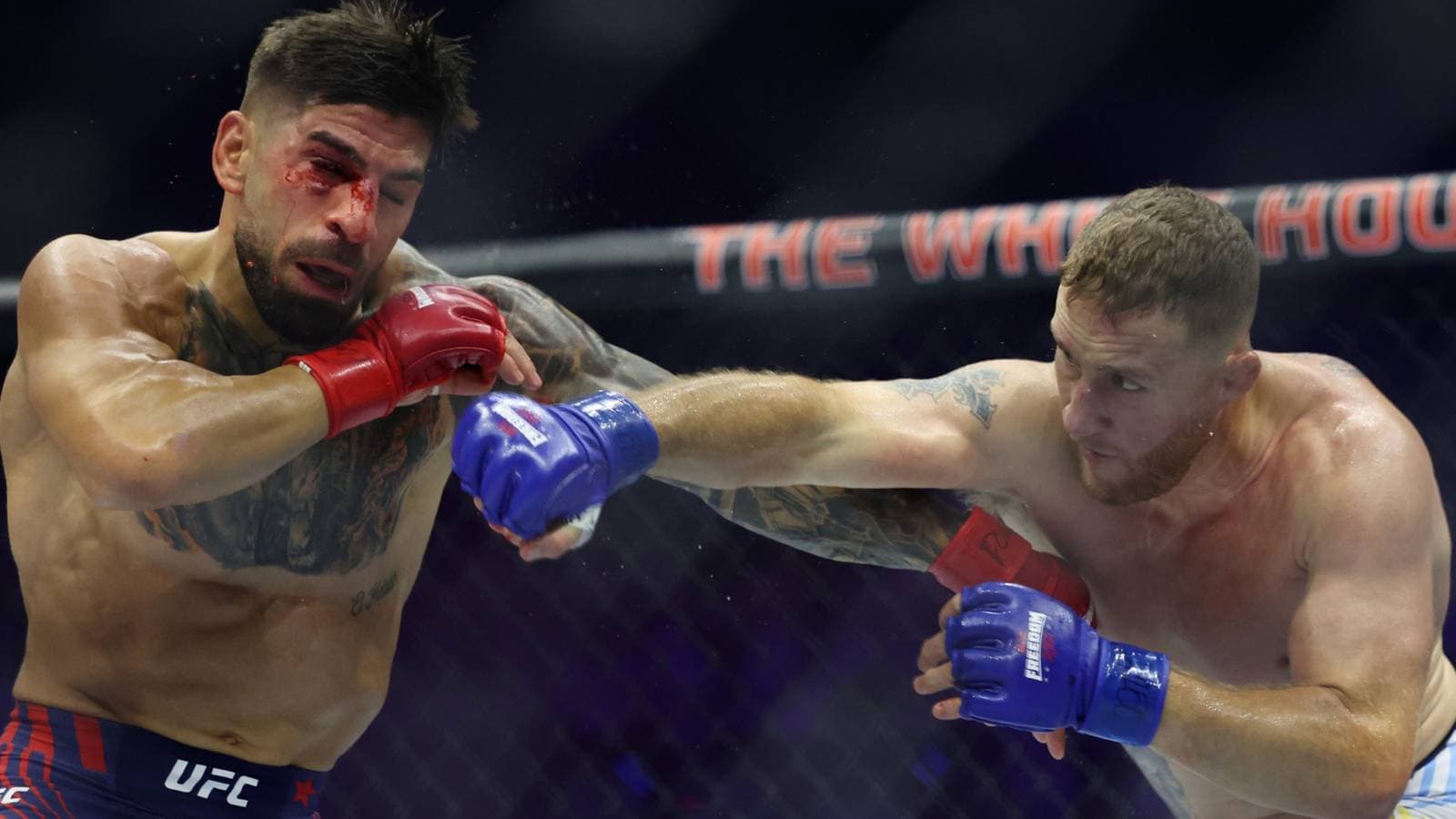
Ilia Topuria Accuses Justin Gaethje After UFC Defeat

Tyson Fury vs Anthony Joshua Fight Date and Venue Confirmed
Switzerland Calls Up In-Form Sion Striker Winsley Boteli for Nations League
Bournemouth Secures Historic 2-1 Win Over Real Sociedad in Spain
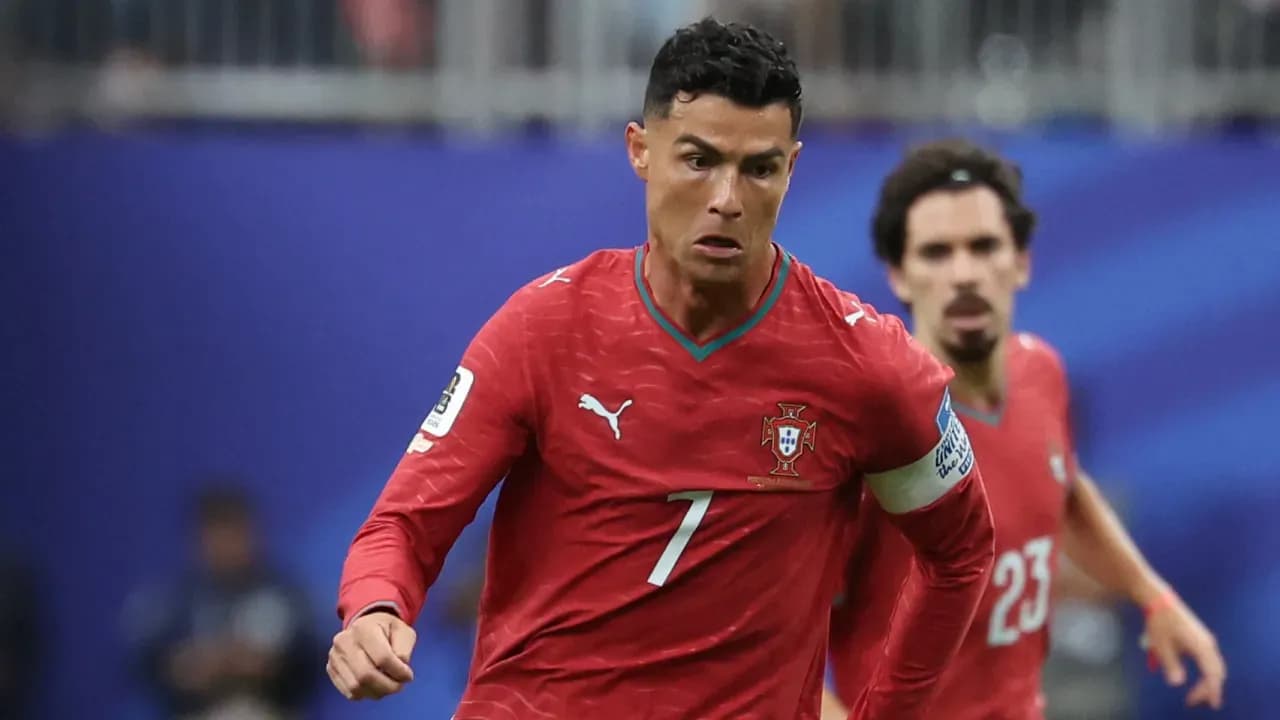
Portugal Announces Squad for 2026 UEFA Nations League; Cristiano Ronaldo Expected to Play

Raphinha Channels Ronaldo Nazario as Barcelona's Leading Striker After Position Change