
West Ham's Championship Journey: A Reckoning Begins
Ten summers on from the move to the London Stadium, West Ham begin life back in the Championship with a Carabao Cup tie that feels like a cold slap of reality. Portsmouth in the first round, not a Premier League rival under the lights. A decade of uneasy tenancy, and now a hard relegation landing.
The game itself almost feels like a sideshow. The real noise is in the boardroom and in the stands.
A club using the Championship – or trapped by it?
Some clubs drop, reset and roar back. West Ham did it in 2011-12 under Sam Allardyce, using the Championship as a springboard. The bookmakers say they are favourites to do it again in 2026. On paper, this should be a one-year exile.
But this summer has not felt like a reset. It has felt like a reckoning.
Instead of clarity, West Ham have stumbled through turbulence and power plays. Relegation from the Premier League has collided with a crisis of ownership, the mood around the club darker than at any point since they left the Boleyn Ground.
Sullivan told to stay away – and likely to walk in anyway
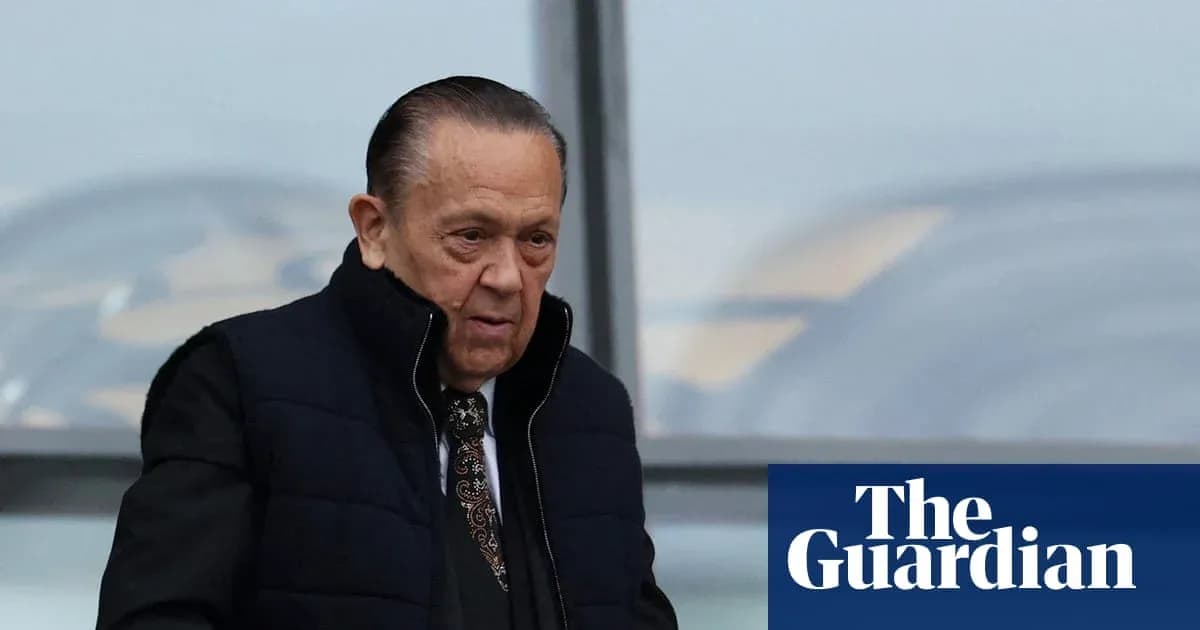
Portsmouth will bring 9,000 fans to east London on Saturday. The more intriguing question is whether David Sullivan will be there.
The London Stadium’s operators have recommended the club’s former joint-chair, still a 38.8% shareholder, stays away because of “potential for demonstrations and anti-social behaviour by some spectators”. A fans advisory board has warned his presence would cause “offence and upset”.
Sullivan is expected to come anyway.
He wants, it is suggested, to experience the season as a supporter, to wait and watch before any move to sell. It would be a brazen decision. On 25 May, as relegation was confirmed despite a home win over Leeds, he had to leave early for his own safety.
Now he returns to a stadium where he is the lightning rod for almost everything that has gone wrong.
Allegations, exits and a vacuum at the top
In early June, a BBC Panorama documentary carried allegations of sexually exploitative and predatory behaviour towards women over several decades. Sullivan denies them. On the eve of the broadcast he stepped down from his role “to avoid disruption to the club while he addresses the matter privately”.
The damage to his standing among supporters was already done. Many blamed him for the club’s sharp decline since the high of winning the Europa Conference League in May 2023. The £100m received for Declan Rice that summer evaporated in a recruitment strategy that never came close to replacing him. The sense of waste still stings.
Jarrod Bowen, one of the heroes of Prague and now club captain, has committed to stay and lead the push for promotion. His loyalty offers a rare anchor in a shifting landscape.
For years Sullivan effectively acted as director of football, cutting across the football department and exasperating those who had to work around him. His closest ally, Karren Brady, resigned in April as the clouds gathered, ending a working partnership stretching back to 1990. The old guard is splintering, but not yet gone.
50,000 season tickets – and one overwhelming demand
On the terraces, the picture is more straightforward. Around 50,000 season tickets have been sold for the promotion bid. The appetite is there. So is the anger.
The loudest, most consistent message from the fanbase is simple: they want Sullivan out completely.
His decision to step down from his role brought a flicker of hope, a sense that a new era might finally be coming. Potential buyers circled. Yet the ownership jigsaw has only become more complex, not less.
Kretinsky, Gold’s stake and Staveley enters the frame
For many, the obvious successor looked to be Daniel Kretinsky, the Czech billionaire and Royal Mail owner who bought 27% of West Ham in 2021. When Sullivan stepped back, the expectation grew that Kretinsky would move for control.
Instead, this week he trimmed his share to just under 25%, transferring 2% to fellow Czech entrepreneur Jakub Havrlant. It was not a retreat, but a calculated move.
The key lies in the 25% stake held by the late David Gold and now controlled by his daughter, co-chair Vanessa Gold. Kretinsky holds first refusal on that block. If he bought it on top of his original 27%, he would cross the 50.1% threshold and trigger a formal takeover offer. By shifting 2%, he can buy the Gold stake, stay below that line and avoid that obligation.
That strategy puts him squarely in the path of another familiar football powerbroker.
Last weekend, Amanda Staveley resurfaced. After leaving Newcastle in July 2024, having played a central role in bringing in Saudi Arabia’s Public Investment Fund, she is looking for her next project. She was linked with a Tottenham takeover last September. Now she is eyeing West Ham, and it is suggested she could again lean on similar funding channels.
Among Newcastle supporters, her departure has been lamented. Among West Ham’s, some hope her energy and connections could jolt the club back to life. But her ambitions collide directly with Kretinsky’s rights over the Gold shares. Sullivan, with his 38.8%, still holds the casting vote over what comes next.
Staveley’s next move will not just shape a boardroom. It could define the club’s next decade.
Nuno stays, transfers stall, nerves fray
While the ownership chess match plays out, Nuno Espírito Santo remains in the dugout. Many expected him to go after relegation. He has stayed, his calm presence badly needed at a club that veers towards panic at the first sign of trouble.
On the pitch, the rebuild has barely started. Free agent Joël Veltman, the experienced former Brighton and Ajax defender, is the first arrival of the summer.
The outgoings tell their own story. Mateus Fernandes has gone to Tottenham, Crysencio Summerville to Al-Hilal, for a combined £140m – roughly a season’s worth of Premier League TV money. Homegrown midfielder Freddie Potts has joined Club Brugge for £10m, a move that has jarred with supporters who wanted to see academy talent leading the revival.
Needs must. Relegation strips away financial comfort. To bring in, West Ham have had to sell.
There is interest in Troy Parrott, Ireland’s World Cup playoff hero now at AZ Alkmaar, as Nuno looks for a striker to carry the load in the Championship. Convincing players to drop down a division, though, is never straightforward, even for a club of West Ham’s size.
The fixture list offers little respite: Burnley, Charlton, Watford and Wolves all before 1 September. It is a start that could either steady the ship or rip open the anxiety.
Karim Virani, once a club employee who left in 2020 and later worked at Rangers, has returned as interim chief executive. His job is to stitch together some kind of unity in a club fraying at the edges.
A stadium still not home
Beyond the football, the stadium itself keeps reminding West Ham of their uneasy reality.
This summer, the London Stadium has hosted Take That, Metallica and a Diamond League meeting where Josh Kerr broke the world mile record. A bid has now been confirmed to stage the 2029 World Athletics Championships, following a long impasse between the club and the venue’s owners.
Ten years on from leaving the Boleyn Ground, West Ham still play in a stadium that does not fully feel like theirs. That was the deal Sullivan, Gold Sr and Brady struck. Many fans have never forgiven them for it.
Now Sullivan walks back into that arena as a deeply unpopular figure, facing a fanbase that has sold out season tickets but has little patience left. The Carabao Cup tie with Portsmouth is only the first act.
Promotion, protest, or something messier in between – which story will define West Ham’s season?
Related News
Carlos Alcaraz Urges Tennis Organizers to Stop Matches Finishing in the Early Morning
Carlos Alcaraz Frustrated by 3:30 a.m. US Open Finish: 'Too Much'
Jannik Sinner Set for ATP 500 Return in Beijing with Novak Djokovic Also Competing
Meet Iva Jovic: The Rising American Tennis Talent
Flavio Cobolli Shares Insights on Training with Jannik Sinner Ahead of His Tennis Return
Till vs Romero: Fight Details, Undercard, and Viewing Info for This Weekend