
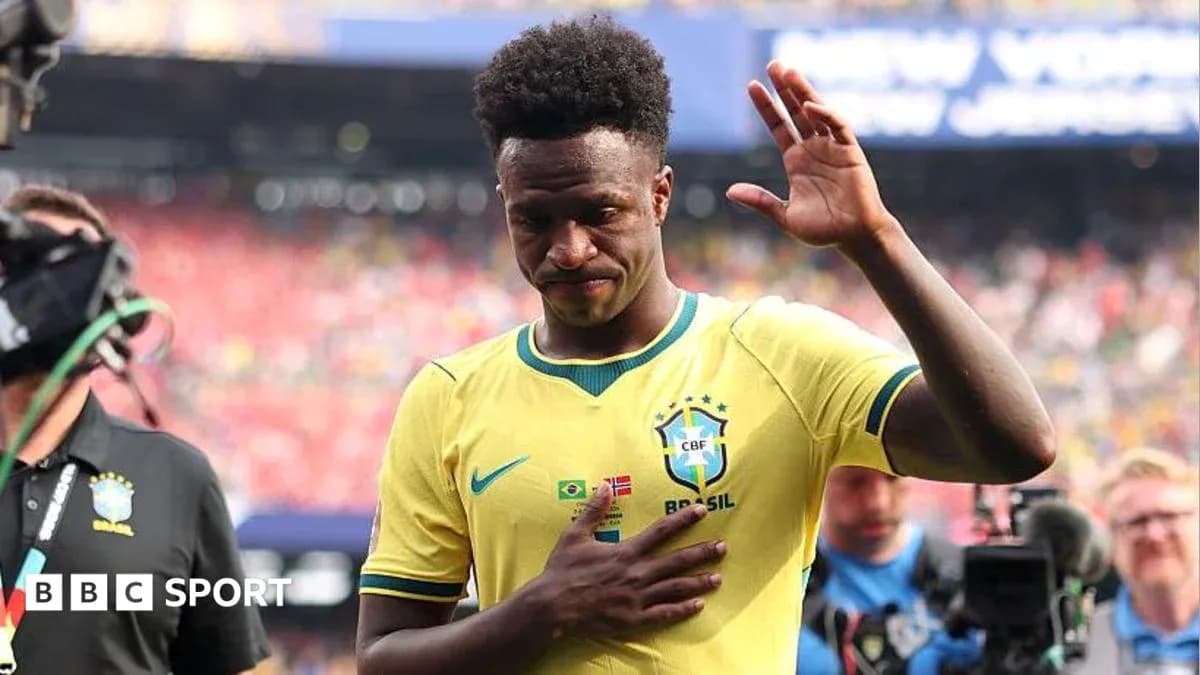
Vinicius Jr and the Premier League's Star Dilemma
If Vinicius Jr had walked into London Colney this summer, it would have felt like a rupture in the modern order of things. A genuine, fully-formed global superstar choosing Arsenal, and by extension the Premier League, right at the height of his powers.
Arsenal were ready. The Brazil forward was lined up as their priority if he ever chose to walk away from Real Madrid. At 26, with multiple Champions League titles behind him and his name etched into every major conversation about the world’s best, he was open to the idea.
Then came the decision that really matters. A new contract at the Bernabeu, running to 2032. Door closed.
And with that, one of football’s strangest contradictions came back into focus.
The richest league without the biggest stars
No league spends like the Premier League. No domestic competition is talked up as fiercely, sold as aggressively, watched as widely. England’s top flight is marketed as the pinnacle, and on most weekends, it looks like it.
Yet when the Ballon d’Or shortlist appears, when the true A‑list names are in their pomp, they tend to be elsewhere.
Since 1992, only three men have lifted the Ballon d’Or while playing for an English club: Michael Owen with Liverpool in 2001, Cristiano Ronaldo at Manchester United in 2008, and Rodri with Manchester City in 2024. Three decades, three winners.
Premier League clubs have no trouble hoarding elite centre-backs and goalkeepers. The defensive backbone of the modern game is heavily painted in Premier League colours. The scarcity lies higher up the pitch, where the most coveted forwards and creators still drift towards Madrid, Barcelona, Bayern, or the occasional project in Paris.
The league has become brilliant at something else instead: turning talent into superstardom.
A league that makes, not takes
The pattern stretches back to the early years of the competition.
Dennis Bergkamp arrived at Arsenal from Inter Milan, his reputation dulled after a difficult spell in Italy. In north London he morphed into one of the most influential players the league has ever seen.
Eric Cantona had shown flashes in France and at Leeds, but it was at Manchester United that he became the defining symbol of Sir Alex Ferguson’s first great Premier League side.
Thierry Henry? Another reclamation project. Underwhelming at Juventus, reinvented at Arsenal as one of his generation’s most devastating forwards.
Ronaldo came to United as an 18‑year‑old from Sporting, a raw, thrilling winger. Five years later he was a Ballon d’Or winner and, almost immediately, a Galactico at Real Madrid.
Erling Haaland fits the same arc. When Manchester City plucked him from Borussia Dortmund in 2022, he was already one of Europe’s most coveted young strikers. But he had not yet become this – the ruthless, record-breaking number nine terrorising defences in England and beyond.
The Premier League is the crucible. It takes the gifted and hardens them into global icons.
What it rarely does is sign them once they are already fully formed.
Vinicius and the one that got away
That is what makes Vinicius such a revealing case. This is not a rising star. This is a player who has already scored in Champions League finals, already carried Real Madrid through the sharpest end of the season, already become one of the sport’s most recognisable faces.
Persuading someone at that level to swap the Bernabeu for the Emirates, or anywhere else in England, remains an enormous challenge.
There have been exceptions. There always are. The clearest comparison is Andriy Shevchenko’s move from AC Milan to Chelsea in 2006. He arrived at 29, only two years removed from winning the Ballon d’Or and fresh from finishing fifth in the 2005 vote. At the time, it felt like a seismic capture: a global superstar still close enough to his peak to bend a title race.
Others came later in their careers. Ruud Gullit and George Weah both joined Chelsea, but after their very best years. Ronaldo returned to Manchester United at 36. Zlatan Ibrahimovic rocked up at Old Trafford at 34. Jurgen Klinsmann signed for Tottenham at 30.
Big names, big noise. Yet by the time they reached England, the summit had already been scaled somewhere else.
From Serie A’s throne to the Premier League’s machine
The contrast with the era that preceded the Premier League boom is stark.
In the 1980s and 1990s, Serie A sat alone at the top of the club game. Italy had the money, the glamour, the tactical edge – and, crucially, the stars.
Diego Maradona left Barcelona for Napoli and turned a southern club into a global phenomenon. Brazil’s Ronaldo moved from Barcelona to Inter at his explosive peak. Michel Platini, Marco van Basten, Lothar Matthaus, Zinedine Zidane – all spent some of their finest years in Italy.
Now the financial power lies in England, but the market behaves differently.
Premier League clubs still spend eye-watering sums, yet those fees are often spread across deep squads or recycled within the division. Alexander Isak, Morgan Rogers, Elliot Anderson, Moises Caicedo, Declan Rice and Jack Grealish have all moved between Premier League sides for more than £100m.
Others, like Liverpool’s Florian Wirtz, arrive with huge reputations from abroad, but with the sense that the real peak is still to come rather than already in the rear-view mirror.
The model is clear: not one Galactico, but a battery of them. Eighteen to twenty-two elite players, all capable of starting, all required to survive a 60-game season of relentless intensity.
Haaland, Madrid and the ceiling
Haaland himself is the counterargument and the warning rolled into one.
City signed him at 21. In England, he has become one of the most feared strikers in the world, his numbers bordering on absurd. On paper, that is exactly the kind of coup Premier League power is supposed to deliver.
Yet even Haaland’s story circles back to Madrid.
During the 2026 World Cup, his father Alfie spoke to DAZN and was asked about the idea of his son one day playing at the Bernabeu. His answer was simple enough: Haaland was happy at City, tied to a long contract… but any player wants to play for Real Madrid.
It was not a transfer tease. It was something more revealing: an admission of hierarchy.
England provides the stage. It forges the superstars. It gives them the money, the exposure, the competition. What it still struggles to do is convince those already at the summit to climb down from Madrid’s mountain and build their legacy here – or to stop the ones it creates from eventually looking towards that same white shirt.
Vinicius Jr staying put until 2032 only underlines the reality. The Premier League may be the game’s economic engine, but when the very best imagine the peak of their careers, how many picture themselves under floodlights in England, and how many still see the Bernabeu?
Related News
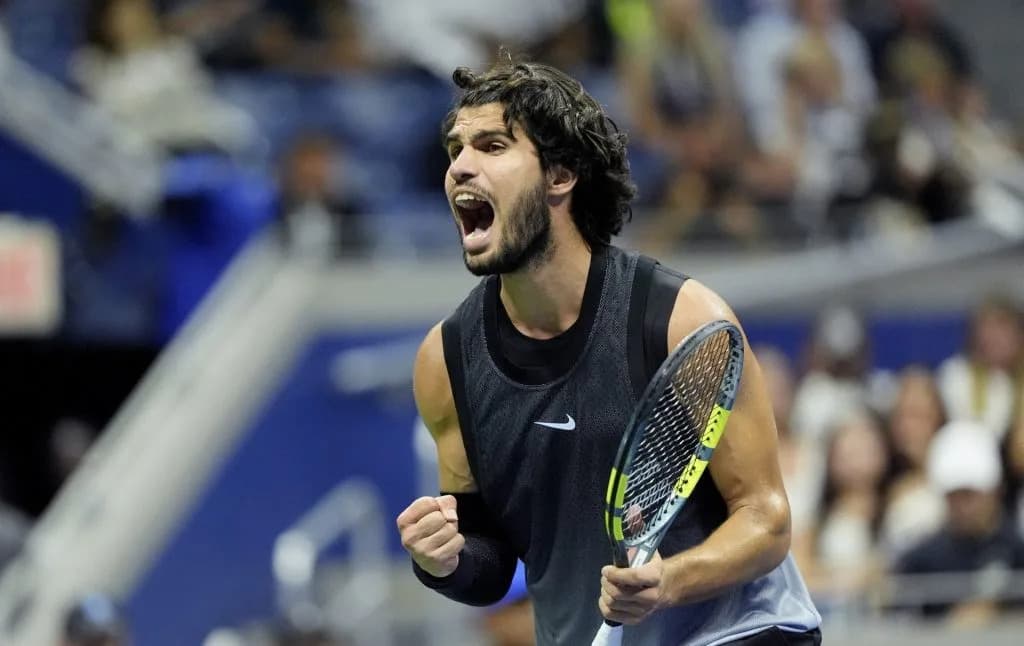
Carlos Alcaraz Urges Tennis Organizers to Stop Matches Finishing in the Early Morning
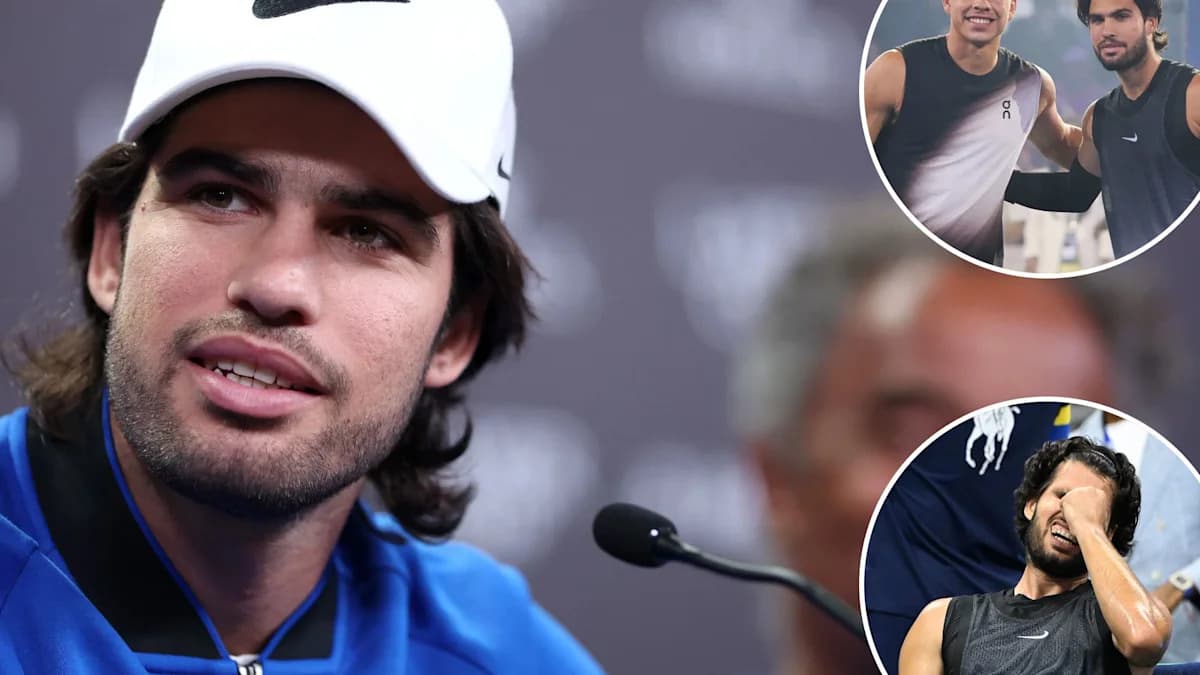
Carlos Alcaraz Frustrated by 3:30 a.m. US Open Finish: 'Too Much'
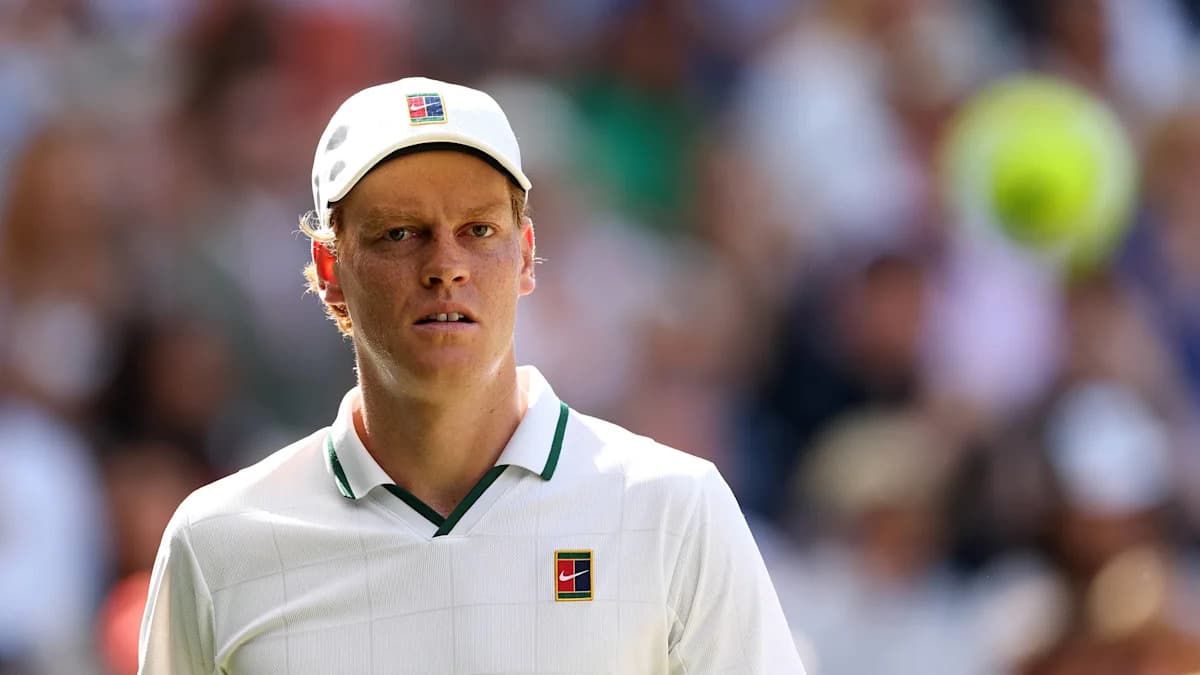
Jannik Sinner Set for ATP 500 Return in Beijing with Novak Djokovic Also Competing

Meet Iva Jovic: The Rising American Tennis Talent

Flavio Cobolli Shares Insights on Training with Jannik Sinner Ahead of His Tennis Return

Till vs Romero: Fight Details, Undercard, and Viewing Info for This Weekend