
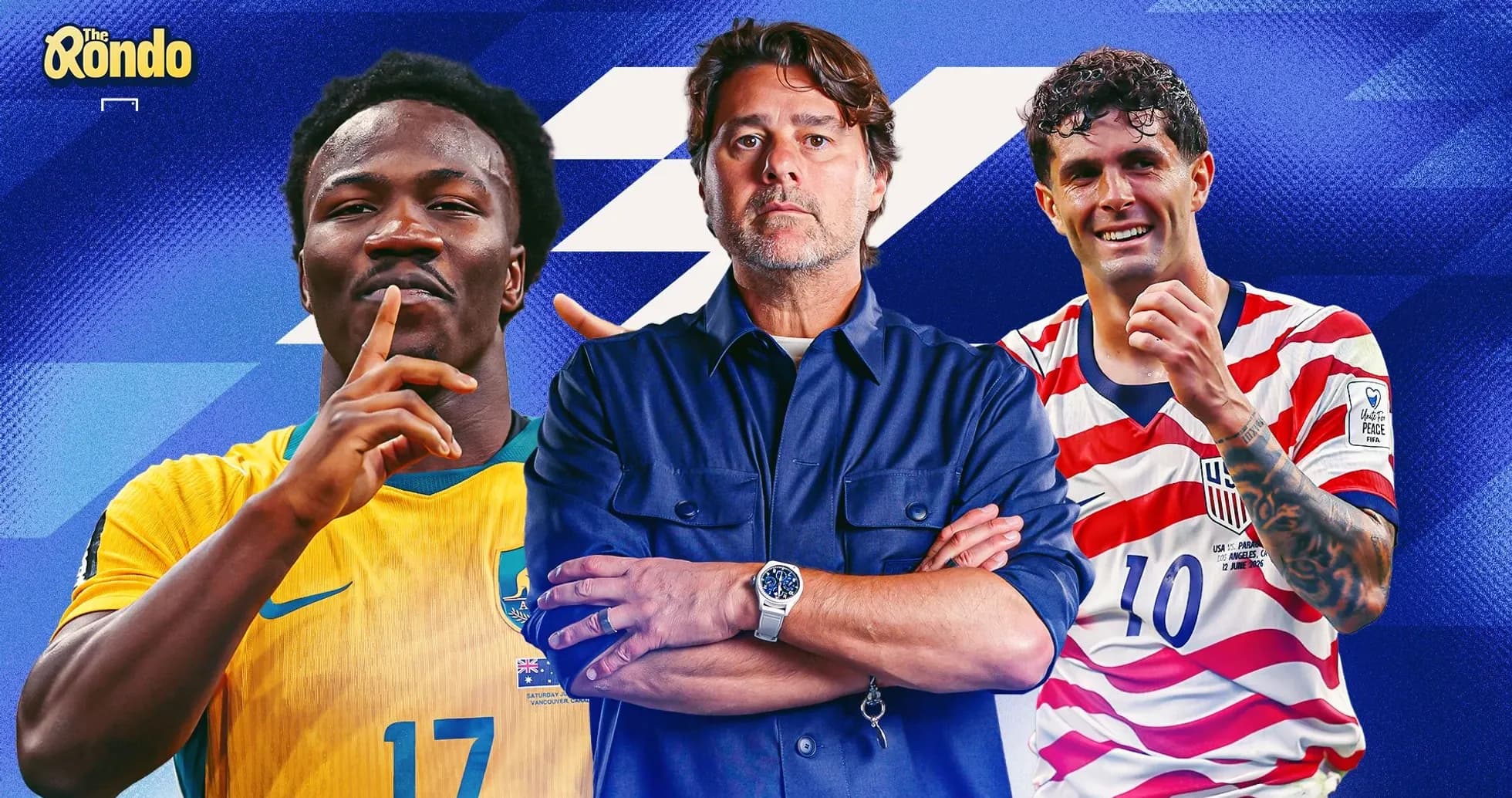
USMNT vs Australia: Can the U.S. Handle Expectations?
The United States walk into this one as clear favourites. Everyone knows it. The question is whether they handle that weight or let another opportunity slip.
After dismantling Paraguay with a performance full of power and control, the expectation is simple: repeat that level, beat Australia, and all but lock up the group. The mood around the camp reflects that confidence. The analysis from those watching closely does too.
Tom Hindle doesn’t see much room for doubt. For him, this should be “comfortable enough” if the U.S. hit anything close to the standard they set in their opener. The pre-game noise, the back-and-forth and the needle, only adds spice. On paper, the Americans just have more.
Ryan Tolmich agrees on the outcome, not the route. He sees a tight, bruising contest, the kind that gets decided by the few players capable of ripping open a game in a single moment. Australia have some of those. Nestory Irankunda proved it against Turkey. The U.S., though, seem to have more match-winners and, crucially, should be wiser after watching Turkey pay for their own arrogance.
Alex Labidou leans the same way: U.S. win, but not without drama. In his script, it goes to the wire, with Gio Reyna providing the late, decisive act in what he calls a “redemption arc.” The sense is clear: this isn’t a stroll, but it is a test the U.S. should pass.
The Pulisic problem
Then comes the cloud over all of it: Christian Pulisic.
“Losing your best player ain’t good,” Hindle says, and there’s no need to dress it up. This squad has depth at striker. It does not have another Pulisic. He is the hub, the spark, the player who ties together almost everything the U.S. do in the final third. Without him, they are simply not the same team.
That leaves Mauricio Pochettino with a decision that could shape the tournament. Does he roll the dice, use Pulisic now, try to secure the win and then rest him in the final group game? Or does he take the long view and wrap him in cotton wool? Hindle would start him, get the job done, and then hide him away for two weeks. But Pochettino is the one who has to live with the consequences.
Tolmich is bluntly worried. Australia will be difficult to break down, and there are few in this squad who can unbalance a defender the way Pulisic can. The opening goal against Paraguay was the perfect example: one flash of individual quality to create the moment that made everything else possible. Even within the team, that status is acknowledged. Asked on Friday who is the best U.S. player at beating a defender one-on-one – “after him, of course” – Sergiño Dest didn’t hesitate: Pulisic. If he can’t go, someone else has to find a way to make Australia uncomfortable.
Labidou’s concern stretches beyond this match. He believes the U.S. can beat Australia without their star man. The bigger fear is what it means for the ceiling of this campaign. This team looks like it might be on the verge of doing something special. To actually do it, they need their best player on the pitch, not in the treatment room.
Australia’s wild card
This Australia side is a strange one. As Hindle points out, it’s not a generation stacked with Premier League regulars, and that often leads to lazy assumptions. The European lens can be blinding. It doesn’t mean this group is “rubbish.”
What they do have is a livewire in Nestory Irankunda on the left. He will give Dest plenty to think about. His pace, directness and willingness to run at people could become a genuine problem if the U.S. back line leaves space.
Tolmich zeroes in on that exact threat. The U.S. defense has been “a little bit sloppy” in recent months, and it’s no secret this back line can be exposed by raw speed. Irankunda has that in abundance. Put him in a foot race with Tim Ream and the outcome feels inevitable. Chris Richards is just back from an ankle injury, and the U.S. fullbacks love to bomb on. That leaves room for Irankunda to explode into. If he breaks out, Tolmich warns, he’ll do it fast.
Labidou, while agreeing on Irankunda’s danger, looks elsewhere for Australia’s key figure: Mathew Ryan. The veteran goalkeeper has played at a high level in Europe and has been notably confident all week about his team’s chances. Against Paraguay, Matt Freese barely had a save to make. If this match tightens up and swings on a single stop, Ryan’s experience could tilt the balance.
Who decides it for the U.S.?
For the U.S., this feels like a game where the stars have to be stars.
Hindle’s answer to the question of which American attacker is most important is simple: “All of them.” Australia are not an ultra-defensive side, but they will sit in a back five and dig in. That places the onus on the U.S. difference-makers to find solutions in the final third. Pulisic, if fit, is the obvious one. Behind him, Hindle wants more from Malik Tillman on the ball. Tillman’s off-ball work against Paraguay was “elite,” but he didn’t quite deliver when possession came his way. A goal or an assist here could transform his confidence and, by extension, the U.S. attack.
Tolmich turns to Folarin Balogun. Paraguay left space; Australia probably won’t. That shifts the burden onto a striker who can operate in tight games, hold the ball, and bring others into play. If Pulisic is missing, the responsibility multiplies. Balogun has to become the focal point, the one who either finishes the move or knits together the attack.
Labidou circles back to Tillman, especially if Pulisic is limited or absent. Against Paraguay, Tillman did everything but score, and Pochettino might have stumbled onto something by using the Leverkusen man as a No. 8 rather than a classic No. 10. If he sustains that form, Labidou believes the U.S. should have “no issues” closing out the group.
Stakes beyond three points
So what if they don’t win?
Hindle calls that scenario “bad, but not the end of the world.” In this kind of tournament, three points might still be enough to squeeze out of the group. From a pure numbers standpoint, it wouldn’t be fatal. From a momentum standpoint, it would be a blow. The ideal is to stroll into the final group game needing nothing, or at least not needing a win. Get it done early. Take the stress out of it.
Tolmich is harsher. Dropping points here would make topping the group “pretty bad” news, likely setting up a collision course with Argentina later on. This match, in his eyes, doesn’t just shape the group. It shapes the entire bracket and the path this team has to walk.
Labidou widens the lens to the last two decades. A failure to win the group wouldn’t be “devastating,” but it would feel familiar. The U.S. have had chance after chance to take that next step, only for setbacks or underperformances to drag them back. U.S. Soccer poured significant resources into appointing Pochettino. They need this team to win the group to show that investment is paying off, that this program is finally capable of pushing on rather than stalling at the same old ceiling.
The opportunity is right in front of them. Beat Australia, control the group, and send a message that this era is going to be different. Now the question is whether the USMNT can turn expectation into statement – or whether another “nearly” moment is about to be added to the pile.
Related News
Raphinha’s Hat-Trick Powers Barcelona to 7-2 Victory Over Racing Santander
Carabao Cup Fourth Round Draw: Liverpool Set to Clash with Chelsea, Arsenal to Face Fleetwood Town
Key Football Matches to Watch in Azerbaijan This Autumn
Raphinha's Hat-Trick Drives Barcelona to 7-2 Triumph Over Racing Santander
Hansi Flick Leads Barcelona to Record-Breaking Seven Wins in a Row
Gavi Reflects on Injury Return as Barcelona Dominate Racing Santander 7-2