
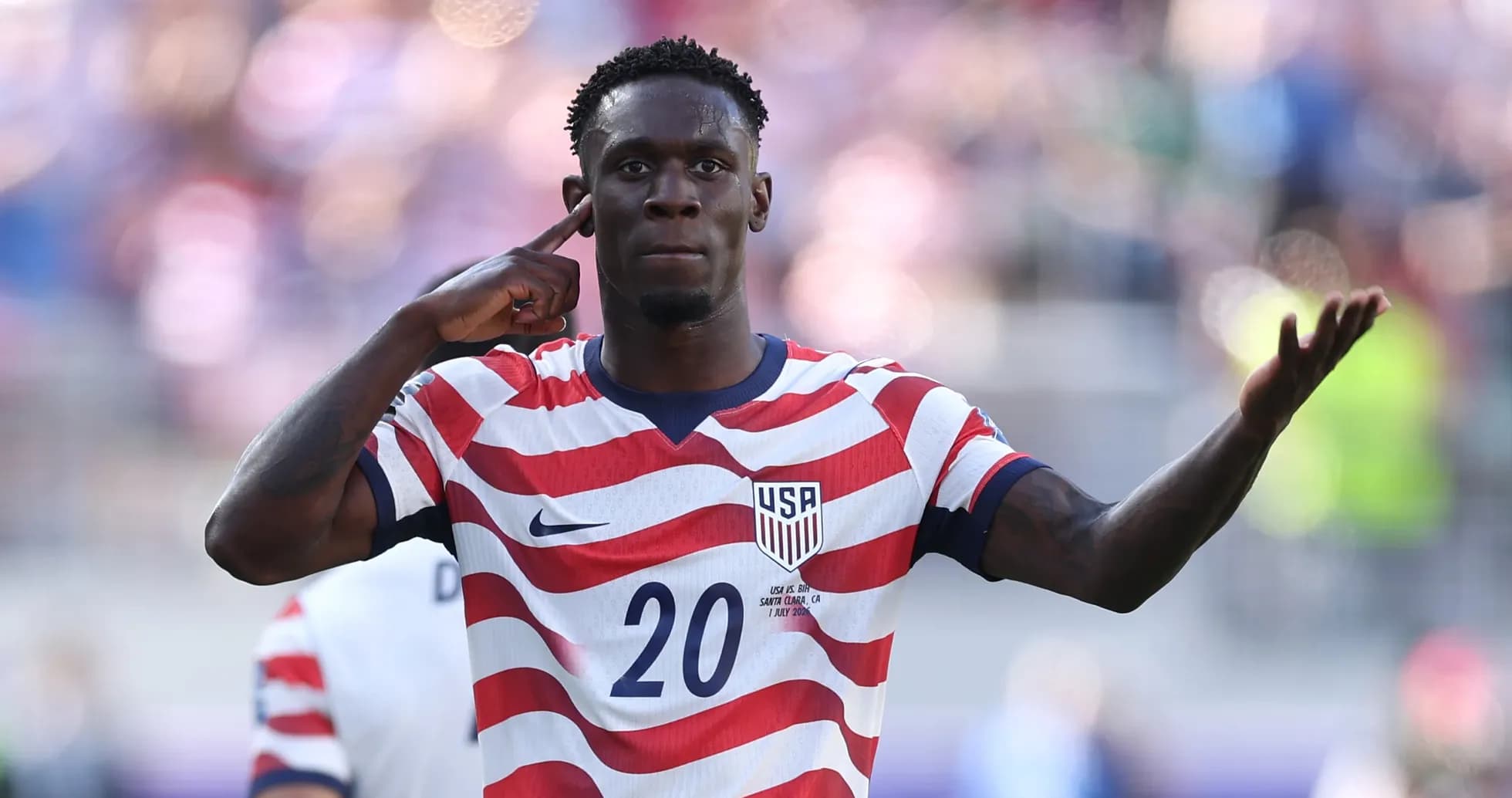
USA vs Belgium: World Cup Knockout Preview
Under the lights of Lumen Field, with its towering stands and deafening acoustics, USA and Belgium step into a World Cup knockout tie on 7 July 2026 knowing there is no safety net, only the stark clarity of the Round of 16 and a place in the quarter-finals on the line.
Season Context
For USA, this World Cup has already showcased an attacking edge: 8 goals scored and 4 conceded across 3 matches (goal difference +4) have carried them to 6 points in Group D and first place in the section. With 2 wins and 1 defeat from those 3 games, they arrive in the knockouts as a group winner expected to play on the front foot again.
Belgium have navigated Group G with a more controlled balance, collecting 5 points from 3 matches to top their group as well. They have scored 6 and conceded only 2 (goal difference +4), remaining unbeaten with 1 win and 2 draws. The numbers hint at a side that knows how to manage tight games on the biggest stage.
Form & Momentum
USA’s form string reads “WLWW”, a sequence that underlines both their threat and their volatility (2 wins and 1 loss in 3 group matches, plus prior momentum). With 8 goals in 3 games, they are averaging roughly 2.7 goals scored per match and 1.3 conceded (8 for, 4 against, 3 played), an attacking profile that justifies describing them as adventurous going forward (2.7 goals scored per game) but slightly open at the back (1.3 goals conceded per game). The last-five model rates USA’s recent run at 75% form, with a 67% attack index and 73% defense index, pointing to a side that can hurt opponents but must stay switched on defensively.
Belgium arrive with the form string “WWDD”, a pattern that suggests consistency and resilience (unbeaten with wins followed by draws). Their 6 goals in 3 group matches give them an average of 2.0 scored per game, while just 2 conceded works out at 0.7 per match (6 for, 2 against, 3 played), supporting the idea of a controlled, balanced team (2.0 goals scored and 0.7 conceded per game). The prediction model’s last-five data scores Belgium at 67% for overall form, with a 60% attack index and 73% defense index, underlining a solid defensive base and enough firepower to edge close contests.
Head-to-Head Patterns
The recent history between these nations has been dominated by Belgium’s cutting edge. In their latest meeting, Belgium beat USA 5-2 in Atlanta in a high-scoring encounter at Mercedes-Benz Stadium (2-5, Friendlies, season 2026, March 2026) — a reminder of how ruthless Belgium can be when space opens up, even if that result came in a non-competitive setting. On the biggest stage, the memory that still lingers is Belgium’s extra-time win in Brazil: at Itaipava Arena Fonte Nova (Salvador, Bahia), Belgium, as the designated home team, defeated USA 2-1 after extra time in a World Cup knockout tie (2-1, World Cup, season 2014, July 2014). The prediction model’s head-to-head index leans entirely towards Belgium (h2h index 0% vs 100%), reflecting that recent competitive and friendly edge, even though only one of those matches was in this competition.
Tactical Preview
USA’s statistical profile points to a side that embraces proactive, attacking football. Their team statistics show 10 goals scored and 4 conceded across 4 World Cup matches in the broader sample, with their strongest results coming at “home” settings where they have recorded a biggest win of 4-1. The lineup data suggests flexibility: USA have alternated between 4-3-3 (used 2 times), 4-2-3-1 (1 time), and 3-5-2 (1 time), indicating a willingness to adjust structure while maintaining an aggressive attacking posture (2.5 goals per game across 4 matches in the wider stats sample). Key to their threat is F. Balogun, an attacker with 3 goals in 3 appearances and a rating of 7.23, who has generated 8 shots with 4 on target and drawn 7 fouls, marking him as a central reference point in the final third. However, F. Balogun is listed as a missing player for this fixture due to a red card, removing USA’s top scorer (3 goals) and one of their primary penalty-box presences just when they need him most.
Without F. Balogun, the creative burden will fall more heavily on players like C. Pulisic (midfielder), G. Reyna (midfielder), and T. Weah (attacker), all of whom are available in the squad list and likely to rotate across the attacking band in a 4-3-3 or 4-2-3-1. The defensive unit, built around experienced figures such as T. Ream and supported by full-backs like S. Dest and A. Robinson, will need to tighten up against a Belgian side that has shown late-game scoring power (Belgium’s goals model leans towards strong output across 4 matches with 9 goals total).
Belgium’s tactical identity is more stable and structured. Their statistics show a clear commitment to a 4-2-3-1 system, used in all 4 recorded lineups, which allows them to combine a double pivot for control with an advanced line of three behind a central striker. Across those 4 matches, Belgium have scored 9 and conceded 4, mirroring USA’s goals-against figure but with a slightly lower scoring average (2.3 per game) that still reflects a dangerous attack. The presence of K. De Bruyne in midfield gives Belgium a creative axis, while J. Doku and L. Trossard add dribbling and movement from wide or half-spaces. Up front, R. Lukaku offers a focal point who thrives on service into the box.
Defensively, Belgium’s numbers show only 4 goals conceded across 4 matches in the broader sample, with one clean sheet and no defeats, underlining their stability. N. Ngoy, a defender with 4 tackles, 1 block, and 3 interceptions in just 156 minutes, illustrates the intensity of their back line, even though he has also collected one red card in this World Cup. The balance between an organized 4-2-3-1, a strong defensive index (73% in the last-five model), and experienced midfield control suggests Belgium will be comfortable allowing USA to have spells of pressure before striking through transitions and late surges.
Statistical Snapshot
- Competition: World Cup, season 2026 — 7 July 2026.
- Venue: Lumen Field, null.
- Prediction: Win or draw — Double chance : draw or Belgium.
- Win Probabilities: Home 10% / Draw 45% / Away 45%.
- Model: USA 47.4% — Belgium 52.6%.
Betting Verdict
The prediction model strongly leans towards Belgium avoiding defeat, with only a 10% win probability for USA against a combined 90% for draw or Belgium, and a comparison index that gives Belgium a slight overall edge (52.6% vs 47.4%). The odds market reflects a finely balanced contest, with home prices for USA ranging roughly from 2.56 to 2.81 (implied probability around 35.6–39.1%), and away prices for Belgium between roughly 2.50 and 2.70 (around 37.0–40.0%), while the draw trades in the 3.25–3.50 band (about 28.6–30.8%). Belgium’s unbeaten run (“WWDD”), their superior head-to-head record in competitive play, and USA’s loss of F. Balogun (3 goals, 1 red card) all strengthen the case for siding with the visitors on a safety-first angle. In this context, the advised route is to follow the model and back “Double chance: draw or Belgium”, trusting Belgium’s defensive solidity (only 2 goals conceded in 3 group matches) and knockout experience to see them through a tense night at Lumen Field.
Related News

Thomas Tuchel Reflects on England's 10-Man World Cup Triumph and a Surprising Regret

Robert Moreno Takes Over as Interim South Korea Coach After World Cup Setback

Jude Bellingham Returns to Form with Real Madrid After World Cup Success

Chloe Kelly, Beth Mead & 13 Lionesses Who Must Shine in the Upcoming WSL Season for England’s 2027 World Cup Bid

Barcelona Cancels World Cup Tribute Amid Political Tensions
Messi Breaks Record for Most Penalties Taken and Missed in FIFA World Cup History