
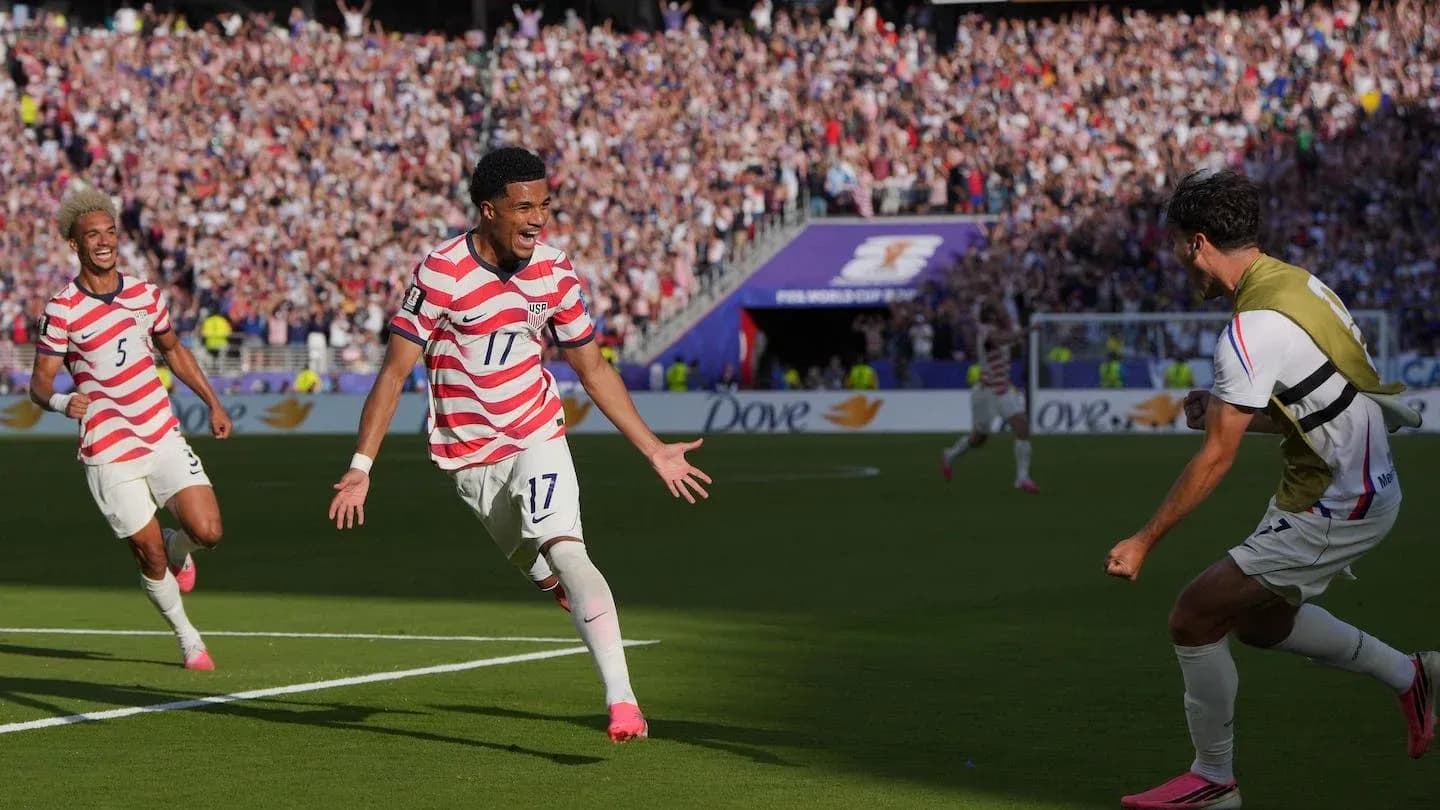
USA Triumphs Over Bosnia & Herzegovina in World Cup Round of 32
Levi’s Stadium under the California lights felt less like neutral ground and more like a proving ground. In the World Cup Round of 32, USA and Bosnia & Herzegovina walked out with sharply contrasting identities already etched by the group stage: USA as high-octane hosts of Group D, Bosnia & Herzegovina as the bruised but dangerous survivor from Group B. By the final whistle, a 2–0 USA win confirmed the trajectory many had sensed from the numbers, but the tactical story started long before kickoff.
USA's Profile
Heading into this game, USA carried the profile of a front‑foot tournament side. Overall this campaign they had played 4 matches, winning 3 and losing 1. At home they had been perfect: 3 home games, 3 wins, no draws or losses. The attacking return was emphatic. Overall they had scored 10 goals and conceded 4, a goal difference of +6. At home they had scored 8 and conceded just 1, while on their travels they had 2 scored and 3 conceded. Their attacking averages underlined the intent: 2.7 goals per game at home, 2.0 away, 2.5 overall. Defensively, they were almost miserly at home with 0.3 goals conceded per game, compared to 3.0 away and 1.0 overall. This was a side built to dominate in front of their own crowd.
Mauricio Pochettino leaned into that identity with a bold 4‑3‑3. M. Freese started in goal behind a back four of A. Robinson, T. Ream, C. Richards and A. Freeman. In front of them, the midfield triangle of T. Adams at the base with W. McKennie and M. Tillman offered both bite and progression. The front line was all about vertical threat and combination play: S. Dest high on the right, C. Pulisic inverted from the left, and F. Balogun through the middle.
The absences of M. McKenzie (bruised foot) and C. Roldan (muscle bruise) trimmed some depth from USA’s defensive and midfield rotations, but did not alter the core identity. With 2 clean sheets at home already in this campaign and zero matches where they had failed to score, Pochettino could afford to double down on an aggressive game plan.
Bosnia & Herzegovina's Profile
Bosnia & Herzegovina arrived with a more fragile statistical profile and a different emotional weight. Overall they had played 4 matches, winning 1, drawing 1 and losing 2. At home they had 1 win from 1, but on their travels they had 3 away games without a victory: 0 wins, 1 draw, 2 defeats. The goal numbers painted the picture of a team that could strike, but struggled to control games. Overall they had scored 5 and conceded 8, a goal difference of -3. At home they had 3 scored and 1 conceded; away they had 2 scored and 7 conceded. Their attacking average dipped sharply away from home: 3.0 goals per game at home, but only 0.7 away, 1.3 overall. Defensively, they were leaking 2.3 goals per game away, compared to 1.0 at home and 2.0 overall.
Sergej Barbarez responded to that vulnerability with a conservative 5‑3‑2. N. Vasilj was shielded by a back five of S. Kolasinac, S. Radeljic, T. Muharemovic, N. Katic and A. Dedic. In midfield, A. Gigovic, I. Sunjic and K. Alajbegovic were tasked with compressing central spaces and disrupting USA’s rhythm. Up front, E. Dzeko and E. Demirovic offered a classic “target plus runner” pairing: one to pin the centre‑backs, one to exploit any disorganisation.
Disciplinary Considerations
Discipline loomed as a quiet subplot. USA’s yellow card distribution showed a tendency to get drawn into battles after the break: 40.00% of their yellows arrived between 46–60 minutes, with further spikes at 16–30 minutes and 76–90 minutes (both 20.00%). They had already seen one red card in the 61–75 minute window. Bosnia & Herzegovina’s profile was even more combustible late on: 37.50% of their yellows came between 76–90 minutes, with 25.00% between 46–60, and they had a red card recorded in the 76–90 window. This hinted at a match that might grow increasingly stretched and fractious as legs tired.
The Key Matchups
Within that landscape, the “Hunter vs Shield” duel centred on F. Balogun against Bosnia & Herzegovina’s away‑day defence. Balogun entered the knockout round as USA’s leading scorer with 3 goals overall from 3 appearances, supported by 8 total shots and 4 on target. His all‑round centre‑forward play was evident in 27 duels contested, 10 won, and 7 fouls drawn. He was also walking a disciplinary tightrope: 1 yellow and 1 red card already this tournament. Yet the matchup favoured him. Bosnia & Herzegovina’s away defence had been porous, conceding 7 goals in 3 away games at an average of 2.3 per match, and they had yet to keep a clean sheet anywhere this campaign.
On the other side, the “Shield” for Bosnia & Herzegovina was built around T. Muharemovic at the heart of the back line. Across the tournament he had amassed 157 passes with an 84% accuracy, 1 successful block, and 8 interceptions, winning 16 of 24 duels. But he too carried disciplinary baggage: 1 red card already in this World Cup. Against a USA front three designed to drag centre‑backs into wide and vertical spaces, his positioning and restraint were always going to be tested.
In the engine room, T. Adams versus I. Sunjic framed the midfield battle. Adams, anchoring USA’s three, had to connect a side that thrives on home‑field tempo with a back line that, overall, had conceded just 4 goals across 4 matches. Sunjic’s mandate was more destructive: break up USA’s rhythm, protect the channels in front of Muharemovic and Radeljic, and deny Pulisic and Dest the half‑spaces where they are most dangerous.
Late Game Patterns
The late‑game patterns suggested a clear tactical intersection. USA, with their tendency to collect cards but maintain control at home, were likely to keep pressing into the final quarter. Bosnia & Herzegovina, whose disciplinary spikes and previous red card came in the 76–90 window, risked losing structure just as USA’s bench options—R. Pepi, T. Weah, B. Aaronson, A. Zendejas—could inject fresh running and pressing.
With neither side awarded or missing a penalty in the tournament so far, this tie was always more likely to be decided in open play than from the spot. USA’s overall attacking averages and their home defensive solidity pointed toward a game in which they would both create and limit chances. Bosnia & Herzegovina’s away numbers suggested they would struggle to sustain pressure and might be forced into deeper and deeper blocks.
In the end, the 2–0 scoreline in San Francisco reflected the underlying trends. USA’s high‑tempo 4‑3‑3, powered by Balogun’s penalty‑box presence and Pulisic’s gravity on the ball, broke down a Bosnia & Herzegovina side that could not translate their home scoring form to the American west coast. The Round of 32 became less an upset battleground and more a confirmation: USA’s campaign, built on ruthless home performances and a sharp leading striker, is calibrated for the later rounds, while Bosnia & Herzegovina’s structural and away‑day frailties proved too much to mask on the biggest stage.
Related News
Thomas Tuchel Reflects on England's 10-Man World Cup Triumph and a Surprising Regret

Robert Moreno Takes Over as Interim South Korea Coach After World Cup Setback

Jude Bellingham Returns to Form with Real Madrid After World Cup Success

Chloe Kelly, Beth Mead & 13 Lionesses Who Must Shine in the Upcoming WSL Season for England’s 2027 World Cup Bid

Barcelona Cancels World Cup Tribute Amid Political Tensions
Messi Breaks Record for Most Penalties Taken and Missed in FIFA World Cup History