
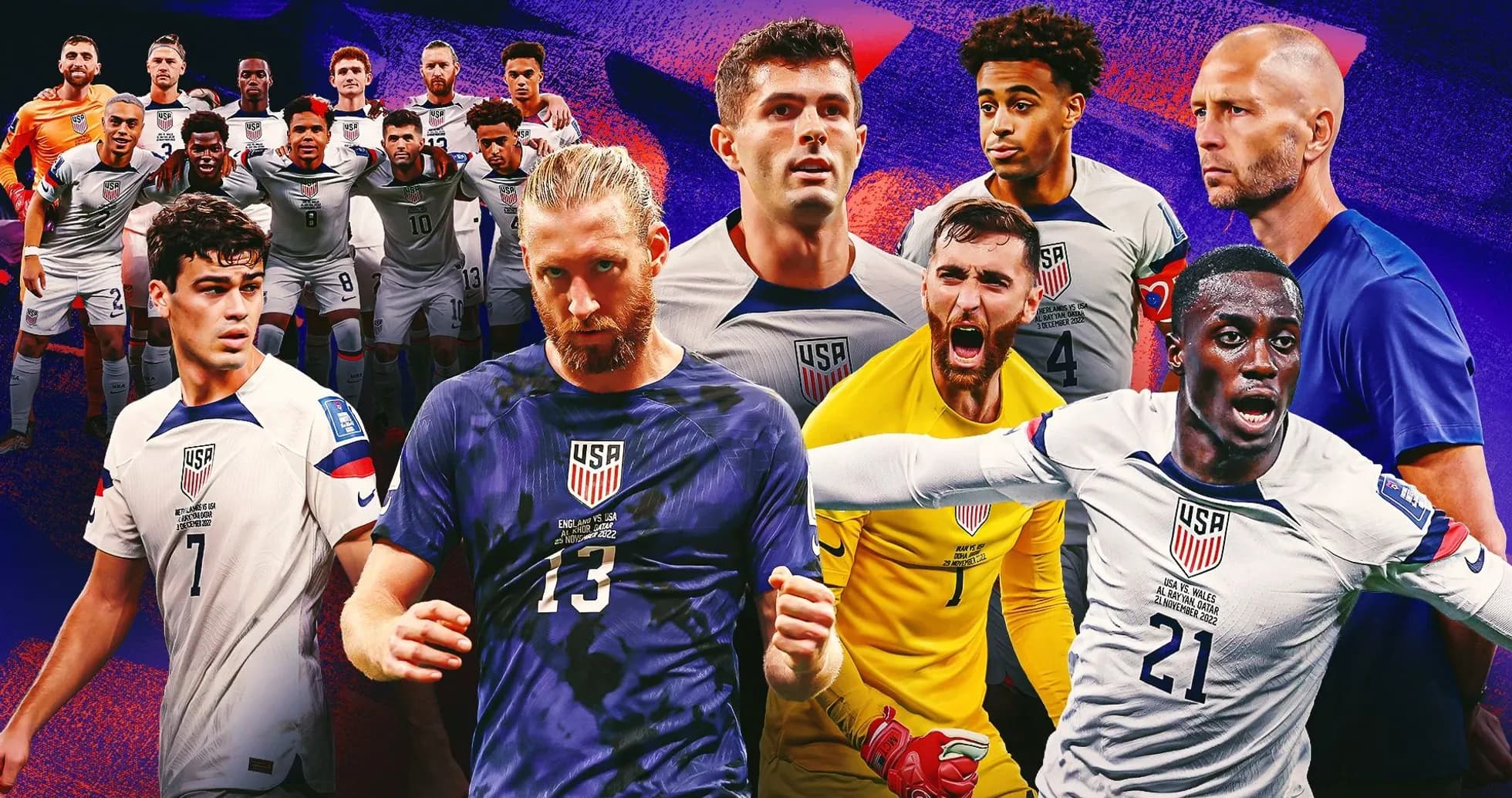
U.S. World Cup Journey: Memories and Lessons from Qatar 2022
On the eve of Wales, in a hotel room in Qatar, Gregg Berhalter shrank 92 years of U.S. World Cup history into a single number.
He called the 26 players into a circle and handed each of them their place in the lineage.
Walker Zimmerman’s was 152.
“He said, ‘Each one of you guys has been assigned a number specific to you, and it represents what number you are representing the U.S. in a World Cup,’” Zimmerman remembers. “For me, it was 152.”
Back in his room, the jersey was waiting. Name, number, and a tiny piece of immortality.
You’re the 152nd man to do this. That’s it.
“When you think about it, you’re like, ‘152, that’s it?’” Zimmerman says. “You realize you’re in such an elite group of players who have ever gotten the chance to do it. That, for me, was pretty special.”
A generation that grew up together
For much of that squad, the number on the back wasn’t the only thing that bound them together. Tyler Adams, Christian Pulisic and Weston McKennie had come through the youth ranks side by side, handed the keys to a program still haunted by the failure of 2018. Tim Weah, Josh Sargent and Sergino Dest had their own shared history in U.S. colors.
By the time they landed in Doha, they weren’t just teammates. They were chapters in the same story.
“Those are the best memories,” Adams says. “That’s why you played soccer, to get to the point of playing pro. Now, I make amazing memories playing pro, but my memories with Weston are always going to be more valuable as a kid. It’s the memories of us getting to that stage, even more than where we are now.”
There was no gentle ramp-up. No long pre-tournament camp. Players stepped off club flights and straight into the most intense month of their careers.
“It’s so quick,” Tim Ream says. “It was a little more condensed than a regular World Cup. You’re in such a bubble at the time. The games are late, so it’s weird because you’re playing at 10 PM, so it switches our body clocks. We’re staying up until three in the morning, we’re all over the place.”
Breakfast at noon. Lunch at four. Training in the evening. Sleep, if you could find it, somewhere in between.
Sargent tried to slow the blur.
“I have a good mental coach that I work with, and we made that a big priority,” he says. “It’s going to be a stressful time, you’re going to be nervous, but make sure that, while you’re there, take some deep breaths and be grateful and take it all in.”
The schedule didn’t care. Three group matches in eight days. Wales. England. Iran. Training sessions, ice baths, tactical meetings, late-night meals. Days bled into each other.
“Looking back now,” Haji Wright says, “the World Cup was like a fever dream. It went by so fast.”
Joe Scally never left the bench, but even from the periphery, the force of it all hit him.
“A World Cup is a World Cup,” Scally says. “There’s nothing better in sports than a World Cup, so to be there was an awesome experience… but it also lit a fire underneath me.”
He watched the anthems, the full stadiums, the eyes of the world locked on the pitch, and felt the ache of wanting to be in the middle of it.
“Of course, I was a part of it,” he says, “but not on the field.”
Three goals, three very different memories
Before Qatar, only 22 American men had scored at a World Cup. Three more joined that club in 2022. Same tournament, same jersey, but the way they remember their goals could hardly be more different.
Weah went first.
Against Wales, in the opener, Pulisic burst through midfield and slipped him in. One touch, then a cool finish across the keeper. In that instant, the U.S. wasn’t just back at a World Cup. It was back on the scoreboard.
“Leading up to that World Cup, I dreamt of scoring,” Weah says. “Years were passing by, and I literally always dreamt of that one moment at a World Cup, how it would feel, how I would celebrate. For it to become a reality… it was amazing.”
Just playing in a World Cup would have been enough. Scoring in one? That was the boyhood fantasy realized.
Pulisic’s goal carried a different weight. Different cost, too.
The U.S. went into the third group game needing a win against Iran. No safety net. No room for error. In the first half, Pulisic crashed into the box to meet a cross, smashed the ball over the line, and collided brutally with goalkeeper Alireza Beiranvand.
The ball went in. The captain stayed down.
He’d scored the goal that dragged the U.S. into the knockouts, but he didn’t get the celebration, the iconic image that might one day define his international career. Instead, he got a hospital visit, a pelvic injury, and a FaceTime back to the locker room once the job was done without him.
“It would have been, and it was, a huge moment,” Pulisic told GOAL in 2024. “Normally it would have been… I would have been excited. I would have had a pretty cool celebration with the team… Unfortunately, I just had to celebrate that one lying in the goal.”
He doesn’t dwell on what might have been.
“I hope to have many big moments,” he said. “I want to go in and I want to win these tournaments. At the end of the day, people will talk about that and that’s what they’ll remember.”
Wright’s goal came with a twist. It was the strangest of the three: a hopeful flick, a mishit that somehow looped over the Dutch goalkeeper in the Round of 16. For a few seconds, it felt like the game might tilt.
“It felt crazy,” he says. “After it went in, I kind of felt like the momentum might change a little bit and felt we might get another opportunity.”
The chance never came. The U.S. went out 3-1, and Wright’s World Cup goal lives in his mind as a moment he still can’t fully hold onto.
“I don’t really have a memory of the moment of it because it was a happy and a sad moment,” he says. “Being a World Cup goalscorer is amazing. Being knocked out of that same game, though? What happened after the goal? The emotions that I felt? That’s what I remember.”
Time, and social media, have softened the edges. Clips still pop up on timelines. Fans still tag them in videos from bars and living rooms across America.
“We were just seeing the reactions online,” Weah says. “Seeing the fans back home when I scored or when Christian scored, it was amazing… just to see the impact that we have and the representation that we have in our country.”
Those were the loud memories. The ones that get replayed. For many in that squad, the ones that matter most happened far from the cameras.
Finding quiet in the noise
DeAndre Yedlin knew both sides of a World Cup. In 2014, he was the kid off the bench. In 2022, he was the lone veteran who’d done it before.
After every game in Qatar, he led a group of players back out onto the pitch. Not to run, not to stretch. Just to stand there.
“It feels like adversity gets multiplied by 10 because there’s always a camera on you, always a microscope on you, and everybody has an opinion,” Yedlin told GOAL in 2024. “I think it’s important to find that space and peace.”
For him, that meant reminding himself what all of this really was.
“At the end of the day, maybe as bad as it sounds, but we’re literally just entertaining people,” he said. “That can bring inspiration, that can bring hope… but at the end of the day, that’s what it is. For me, it’s always just about keeping that perspective.”
Others sought their own pockets of calm. Sargent tried to stay off his phone. Cristian Roldan avoided his room, choosing the company of teammates instead. Ream locked into tunnel vision so tightly that, now, he only sees “glimpses” when he looks back.
There are parts none of them will forget.
Qatar itself made sure of that. The call to prayer rolling across Doha. Souks and old markets a short drive from brand-new stadiums. A city that seemed to breathe on World Cup time, every street and restaurant bending back toward the games.
“I enjoyed every bit of it,” Matt Turner says. “Honestly, it was so cool to be in a culture I’ve never experienced before… It was special because we were in this foreign land all together… and we had just this rock solid bubble.”
Doha became a tournament-long backdrop. The real world kept turning around them, but inside the U.S. camp, life shrank to two places: the training ground and the hotel.
Sergino Dest found his refuge on the rooftop.
“I was just living in that moment,” he says. “I would just sit there, drink my water, and watch these people enjoy life… I remember being like, ‘This is it.’”
He’d open the balcony door and listen to the city.
“In the afternoon, you could just open the window and hear the sound of life,” he says. “That’s what I miss most about it.”
Inside, the soundtrack changed: matches on TV, laughter, the crack of pool balls, the ping of table tennis, video game trash talk. The Players’ Lounge, carved out inside the Marsa Malaz Kempinski on The Pearl, became the beating heart of the U.S. World Cup.
Unlike most tournaments, they never moved hotels. No packing, no new rooms, no new routes to training. The place became a kind of home.
Yunus Musah felt it so strongly that he went back a year later.
“Everything was like a throwback,” he said in 2025. “The smell! I could smell it again… I would just walk around, and it felt like I was experiencing all of those moments from the World Cup all over again.”
For Adams, that lounge was where the real bonds formed.
“We had so much downtime with one another that it really just allowed us to connect,” he says. “That Players’ Lounge, watching games of the World Cup, taking it all in, no noise, it was like our own little sanctuary.”
Berhalter wanted it that way.
“Gregg made it a priority that team camaraderie and the time we spent together was valued and sacred,” Adams says. “It just felt that, during the World Cup, I got even closer to some guys that I didn’t even know I could get closer with.”
The competition never stopped. If it wasn’t a World Cup match, it was a movie night. If it wasn’t a movie, it was pool, ping-pong, or video games.
“Sean Johnson and DeAndre Yedlin had their crazy style of pool that they were playing,” Zimmerman recalls. “It was basically snooker. They barely hit the ball and just tried to make you lose by scratching.”
Roldan tried to squeeze every second out of it.
“I remember being around the boys in the Players’ Lounge and making sure I didn’t spend any time in my room and didn’t take any moment for granted,” he says.
The other team in the stands
On the night of the Wales game, Zimmerman walked out for the anthems and looked for one specific section.
Not the bench. Not the VIPs. The family block.
Mothers, fathers, partners, kids. Friends who’d driven them to early practices, coaches who’d opened doors, siblings who’d shared backyards and basements. If the players had numbers, that section had fingerprints.
“Everyone’s story is tied up with what that group of supporters has done to get us into this spot,” Zimmerman says. “All of the sacrifices that those people made, those families, to get you to where you are on the field.”
Ream remembers the rare hours when those people crossed the line into the bubble.
“For me, I think the only times that really do stick out, obviously aside from the games, were the times where we had those few hours of downtime and the families could come over,” he says. “Those were the only moments where you felt you could actually sit back and breathe.”
It didn’t just deepen the bond between players and their own families. It changed how they saw each other.
“We were all really close already,” Weah says, “but having that period of time to connect and meet everyone’s family, share our lives together, that was amazing… It’s one of those memories that, even when you’re old and gray, you’ll remember those moments.”
Life has moved since then. Some of those players are fathers now. Some have watched their kids grow into an age where they can understand what a World Cup is. Others have married, built new support systems, new motivations.
Roldan feels that shift more than most. His daughter is almost two.
“I’ve had this late surge because I’ve had my daughter around,” he says. “It doesn’t matter how I compete; I come home and she just wants to see me. She doesn’t care if I win or lose.”
That’s changed how he looks at 2026.
“Part of my motivation to extend my career and continue to play at a high level is that I want her to watch me play,” he says. “I want her to watch daddy play.”
Sebastian Berhalter lived Qatar from the stands, too, but with a different lens. He wasn’t a player, not yet. He was a son.
“Going to that World Cup was so special,” he says. “Seeing your dad coach against some of the best teams in the world was something I’ll never forget.”
The fracture and the fallout
Not every story from that winter fits neatly into nostalgia.
For Gio Reyna, Qatar became something else entirely: a tournament he’d dreamed of starring in that instead turned into a crash course in frustration, scrutiny and what it means to be part of a national team when the whole country is watching.
He arrived nursing injuries. His role shrank. Emotions spilled over. His limited minutes, questions about his response in training, and the Reyna family’s decision after the tournament to inform U.S. Soccer of a decades-old domestic violence incident involving Gregg Berhalter turned a football story into something far more complicated.
It was messy. It was public. It lingered.
Berhalter returned to the job in 2023, then departed after the 2024 Copa America. Mauricio Pochettino now holds the whistle. Reyna remains in the player pool, trying to turn a painful chapter into a lesson.
“I think just individually and collectively, we were all very, very young and maybe a little bit inexperienced at the time,” Reyna said. The U.S. ran into a Netherlands team that was “a little bit more experienced, a little bit better, a little bit more savvy with the game,” and that was that.
“It’s a World Cup. Obviously, it’s an amazing experience. I learned so much from that,” he said. “You learn that it’s about just trying to do whatever you can to help the team. This is your whole country that’s fighting something.”
Now the next one is on home soil.
“This one is in our home country, too, so it would be a dream come true just to be there,” Reyna said. “It’s just about the collective.”
He left Qatar carrying something heavier than most: the knowledge that a World Cup can expose as much as it rewards.
The ones who never got there
There’s another group still shadowing 2022. The ones who watched it from the outside.
Miles Robinson was supposed to be there. He’d been central to qualifying, a near-lock for the final squad, until his Achilles tore in May. Qatar vanished in an instant.
When the tournament kicked off, he had a choice: shut it out or dive in.
“Man, I was outside watching that sh*t,” he told GOAL with a smile. “We were partying, watching, cheering on my guys. I really wanted to experience that real-life energy because that’s who I am.”
Chris Richards never got that runway. A hamstring injury at Crystal Palace came just weeks before the roster drop. It was always going to be tight. It wasn’t tight enough.
“I’m in London watching the boys kill it at the World Cup,” he remembers. “I was so, so happy for them, but for myself, it was lonely.”
He forced himself to a pub for one of the games. It still hurt.
“I didn’t want anything to do with soccer,” he says. “It was a dream I had always had, and it felt like it just got ripped away from me right before it.”
Mark McKenzie’s pain was different. No injury. Just a name missing when the list came out.
“Missing out on the 22 World Cup? It ripped me apart, bro,” he says. “It was gutwrenching because I was so close… When you get that call that you’re not going, that you weren’t selected, it’s a punch to the stomach.”
With time, he’s tried to see the lesson in it.
“It puts everything in perspective in life,” he says. “Okay, maybe I put too much onus on this, so much that I lost who I was, lost focus on the small areas of my game or my life that I need to improve.”
Now, the man making those calls is Pochettino. Another 26 names. Another set of lives about to be altered.
From prelude to main event
For Adams, the scale of what Qatar meant didn’t land until he went home. A simple walk through New York changed.
“From a notoriety standpoint, people all of a sudden knew who I was walking back home in the streets of New York City,” he says. “It’s a city that I never imagined I’d get recognized in, and people are recognizing you.”
He had a first child on the way, a career in Europe, and a new level of visibility to navigate. The World Cup does that. It rearranges everything.
Now the U.S. is preparing to host the tournament. 2022 feels less like an isolated story and more like a prologue.
How this team handles the pressure of a home World Cup will define a summer and, quite possibly, a generation. The sport in America is still growing, not fully grown, and this time the U.S. is not just a participant. It’s the stage.
“It’s an amazing feeling, but also a responsibility at the same time,” McKennie says. He thinks back to the players he watched as a kid, the limited windows into their lives. Now, every moment is online.
“Hopefully, people see that there is a pathway out there for them,” he says. “It may not look exactly like mine or Christian’s or Chris Richards or the people they look up to, but the ultimate thing is to believe in yourself and bet on yourself always.”
Soon, 26 more players will step into that circle, get their number, and feel the weight of it. Some will arrive with Qatar already etched into their memories. Others will be walking into their first World Cup, wide-eyed.
Some will start every game. Some won’t see the field. All of them will leave different.
For the class of 2022, that winter in Qatar is now a shared scar and a shared treasure. For some, it was the pinnacle. For others, it was only the beginning. None of them think it can ever truly be replicated.
“I can understand how people call it emotionally draining,” Wright says. “After it was over, it felt like soccer had changed me, in a way, and now you find yourself chasing that same feeling. It’s hard to get that feeling again outside of a World Cup.”
Turner feels it too.
“I had some amazing experiences,” he says. “That’s why I need to get back there, because I really want that feeling again.”
The fever dream is over. The next one is already knocking.
Related News
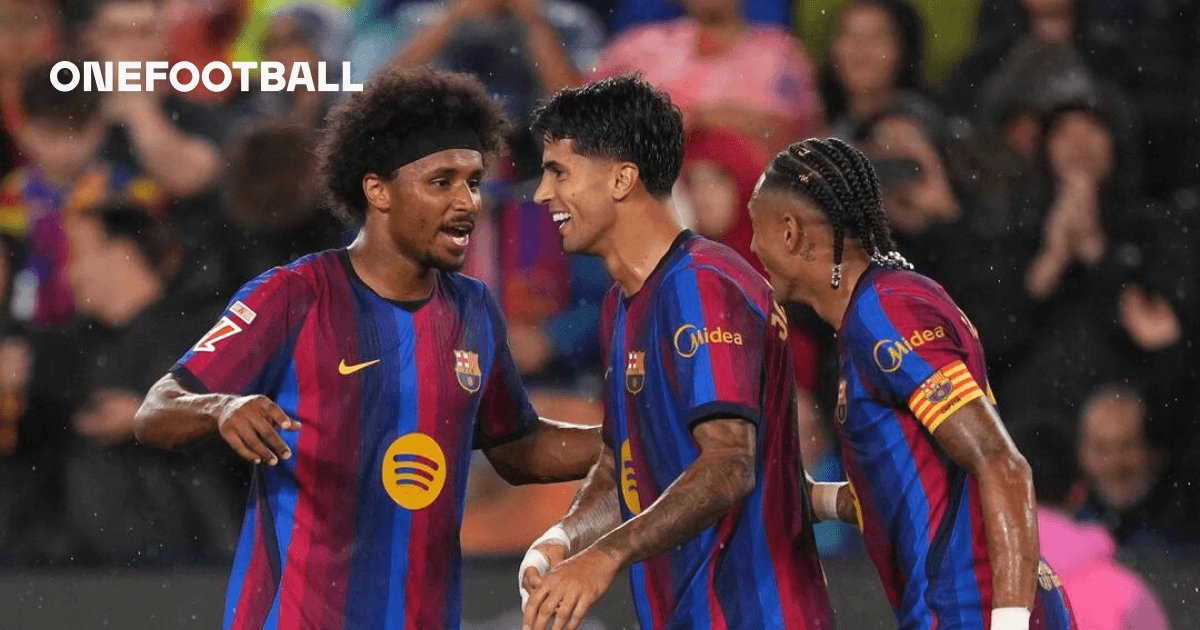
Raphinha’s Hat-Trick Powers Barcelona to 7-2 Victory Over Racing Santander
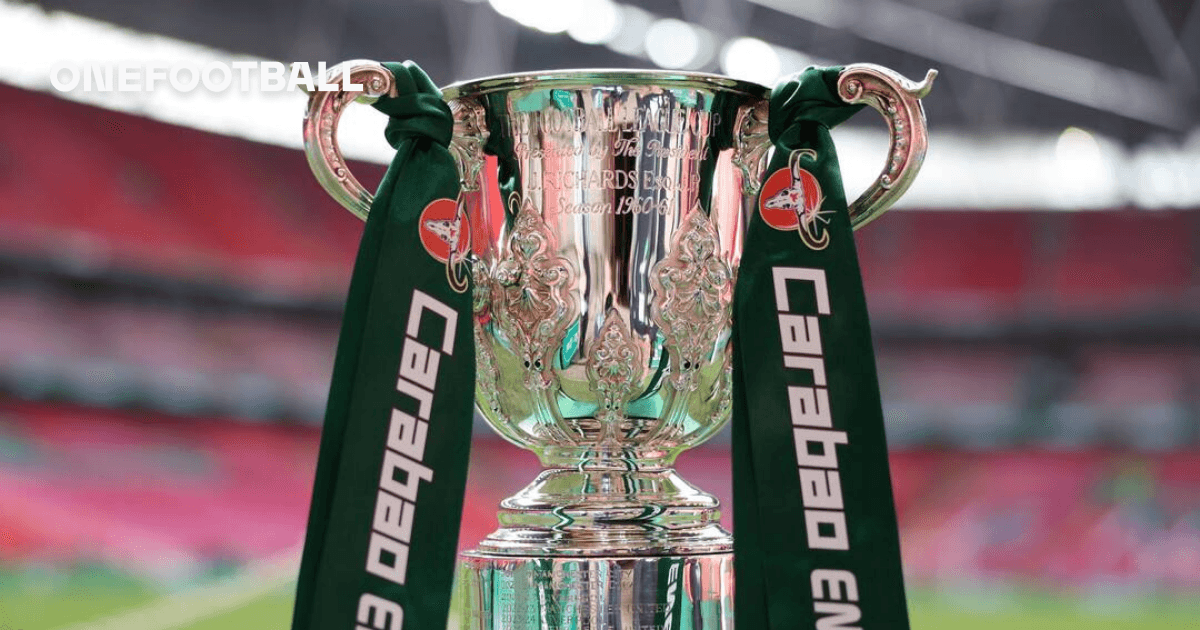
Carabao Cup Fourth Round Draw: Liverpool Set to Clash with Chelsea, Arsenal to Face Fleetwood Town
Key Football Matches to Watch in Azerbaijan This Autumn
Raphinha's Hat-Trick Drives Barcelona to 7-2 Triumph Over Racing Santander
Hansi Flick Leads Barcelona to Record-Breaking Seven Wins in a Row
Gavi Reflects on Injury Return as Barcelona Dominate Racing Santander 7-2