
U.S. Men's National Team Advances Without Pulisic
SEATTLE — No Christian Pulisic. No problem — at least for now.
The U.S. men’s national team marched into the World Cup knockout rounds on Friday night with a controlled, professional 2-0 win over Australia, a result that underlined the depth of this squad and pushed aside any early panic about their missing star.
They did it with a deflected own-goal, a 21-year-old making his own name, and a performance that rarely looked in doubt.
Life without Pulisic
Pulisic, the heartbeat of this team for the better part of a decade and now a key figure at AC Milan, watched from the sidelines with a calf injury. His 33 goals in 87 international appearances tell you what was missing on the pitch.
In past eras, that kind of absence might have rattled the U.S. Instead, it seemed to harden them.
The Americans, already buoyed by a 4-1 win over Paraguay on June 12, needed just 11 minutes to tilt the night their way. Folarin Balogun, again the live wire in attack, tore down the left side, driving at Australia’s back line with the same conviction that brought him two goals against Paraguay.
His low, driven ball into the box was aimed for Ricardo Pepi, starting in Pulisic’s place. It never got there. Australia defender Cameron Burgess, stretching to cut it out, diverted the ball past his own goalkeeper and into the net.
Not the prettiest goal this team will ever score. But it was ruthless, direct, and exactly what the moment required.
Freeman steps out of the shadow
The early breakthrough settled the U.S., and from there they dictated the tempo. Australia, usually rugged and resilient on this stage, struggled to pin the Americans back for any sustained spell.
Then came the moment that will live much longer than a simple group-stage win.
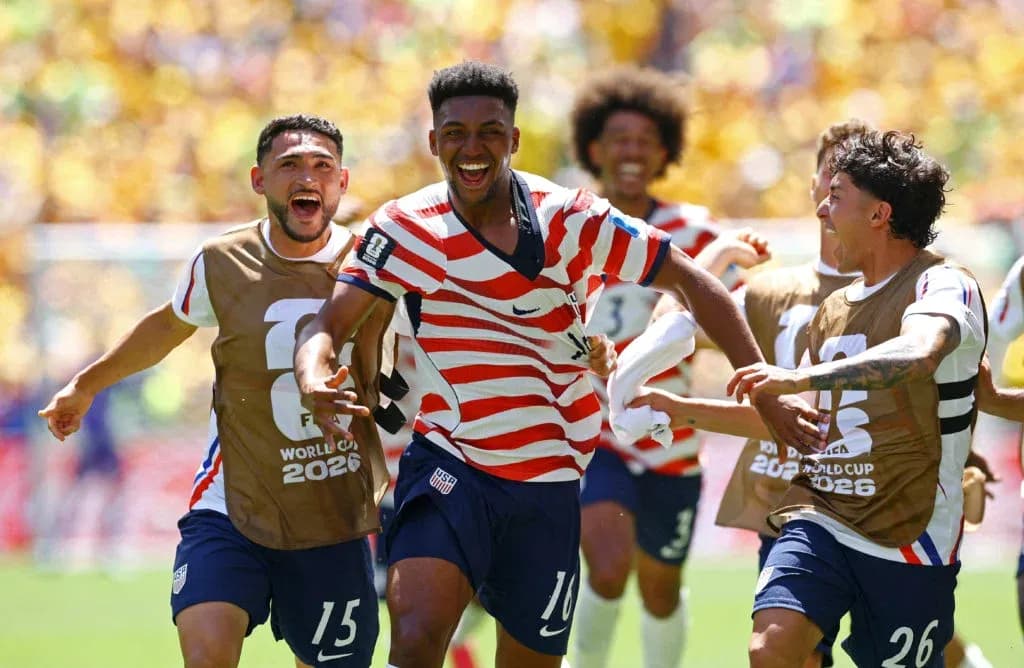
In the 43rd minute, from a set piece, the ball dropped kindly after a deflected effort by Sergiño Dest. Alex Freeman reacted first. The youngest player in the squad, just 21, and the son of Super Bowl champion Antonio Freeman, rose and guided his header home.
His first World Cup goal. A 2-0 lead. A statement.
The celebrations paused briefly as the referee waited on a video review, but the decision went the Americans’ way and the roar inside the stadium rolled back over the pitch.
This was not a cameo from a kid along for the ride. It was a coming-out moment on the biggest stage.
A different kind of host nation
By halftime, the U.S. had one foot in the knockouts. By the final whistle, they had something more: a landmark.
For the first time, the Americans clinched a World Cup knockout berth after just two group matches. The last time they hosted the tournament, in 1994, they edged through as one of the best third-place teams before bowing out to eventual champions Brazil in the round of 16.
This feels different. Sharper. Less dependent on one talisman, more on a full squad that can absorb the loss of a player as influential as Pulisic and still find solutions.
Balogun again stretched defenses. Pepi, even without getting the final touch on that opener, occupied Australia’s center backs. Dest’s involvement on the second goal highlighted the attacking threat from fullback. And in Freeman, the U.S. unearthed another young piece who doesn’t seem interested in waiting his turn.
The knockout rounds will ask harder questions than Australia managed on this night. Pulisic’s fitness will loom over everything from here. But as the Americans walked off with six points from six and a place already secured in the next phase, one thing was clear.
This is no longer a team defined only by who’s missing. It’s defined by who keeps stepping up.
Related News

Raphinha’s Hat-Trick Powers Barcelona to 7-2 Victory Over Racing Santander
Carabao Cup Fourth Round Draw: Liverpool Set to Clash with Chelsea, Arsenal to Face Fleetwood Town
Key Football Matches to Watch in Azerbaijan This Autumn
Raphinha's Hat-Trick Drives Barcelona to 7-2 Triumph Over Racing Santander
Hansi Flick Leads Barcelona to Record-Breaking Seven Wins in a Row
Gavi Reflects on Injury Return as Barcelona Dominate Racing Santander 7-2