
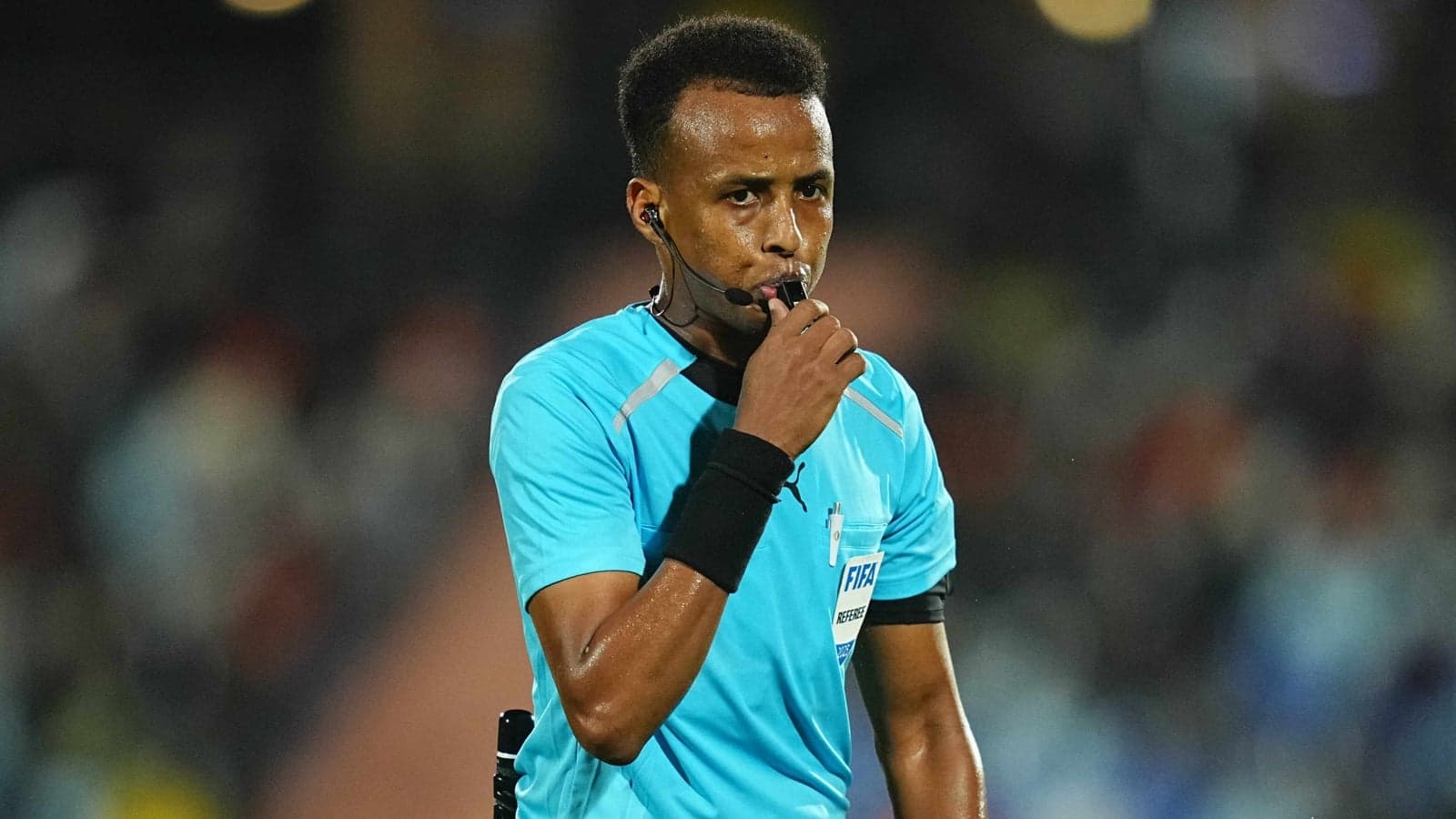
US Border Restrictions Impact World Cup Participation
In a World Cup year already thick with politics, the United States has drawn a hard line at its own border.
Andrew Giuliani, executive director of the White House Task Force for the World Cup, has defended the decision to deny visas to Somali referee Omar Artan and several members of Iran’s support staff, insisting the moves are rooted in security, not sport.
Speaking at an event hosted by the Atlantic Council in Washington, Giuliani underlined the scale of the operation so far.
"To this point we've had 35 teams that have come into the United States," he said. "No players, no coaches have been denied. There have been some officials that have been denied, and for good reason."
Those “officials” include Artan, a history-maker turned away at the airport.
Somali referee blocked at the border
Artan, named men’s referee of the year in 2025 by the Confederation of African Football and poised to become the first Somali to officiate at a World Cup, was stopped on arrival in Miami and refused entry. He has since returned home, publicly thanking FIFA for its support.
A US State Department official said the referee was “associated with suspected members of terrorist organisations,” a designation that, under US law, makes him “ineligible for admission to the United States”.
Giuliani, son of former New York mayor Rudy Giuliani, was pressed specifically on Artan’s case. He framed the decision as part of a broader effort to protect the tournament.
"We're striking that balance between making sure that any bad actors that... try to come into the country under the guise of the World Cup will not get access to the United States," he said.
The backdrop is already fraught. Somalia remains on a US travel ban list introduced under President Donald Trump’s administration as part of a wider immigration crackdown. Artan’s case now sits at the intersection of that policy and the sport’s biggest stage.
Iran pushed to the margins
Iran, who will play all three of their group matches on American soil, have also felt the weight of US restrictions.
Because of the ongoing military conflict between the two countries, the Iranian national team has been forced to base its pre-tournament training camp in Mexico rather than in the United States itself. The Iranian football federation has complained that its allocation of tickets for supporters has been revoked and that some members of the team’s support staff have been denied visas.
Giuliani confirmed a split approach.
"All the Iranian coaching staff is coming in," he said, before drawing a clear line. There are "some Iranian officials that are not coming in – again for very good reason".
He would not spell out those reasons in detail. "I can't get into the particulars," he said, but added that "there are some people that claim that they are coaches that may not be coaches".
The message was unmistakable: the US intends to scrutinise every accreditation and every job title, especially where Iran is concerned.
Giuliani stressed that President Trump wants a "level playing field" for all World Cup teams, while at the same time ensuring that "people that are directly working, let's say, with the IRGC (Islamic Revolutionary Guard Corps) have no ability to access the United States of America".
Security first, spectacle second
On the broader security picture, Giuliani struck a confident tone. He said there are currently "no credible threats" to the tournament, but made clear that the US intelligence apparatus is fully engaged and will remain so "between now and whenever the final goal is scored on July 19."
He described the intelligence community as having "tripled down" on its monitoring efforts, a phrase that underlines the scale of the security operation surrounding a World Cup hosted, in part, by a country locked in open confrontation with one of its participants.
The football will go on. The visas, clearly, will not be handed out so easily.
Related News

Raphinha’s Hat-Trick Powers Barcelona to 7-2 Victory Over Racing Santander
Carabao Cup Fourth Round Draw: Liverpool Set to Clash with Chelsea, Arsenal to Face Fleetwood Town
Key Football Matches to Watch in Azerbaijan This Autumn
Raphinha's Hat-Trick Drives Barcelona to 7-2 Triumph Over Racing Santander
Hansi Flick Leads Barcelona to Record-Breaking Seven Wins in a Row
Gavi Reflects on Injury Return as Barcelona Dominate Racing Santander 7-2