
Tuchel and Bellingham: Navigating Tension Ahead of Semi-Final
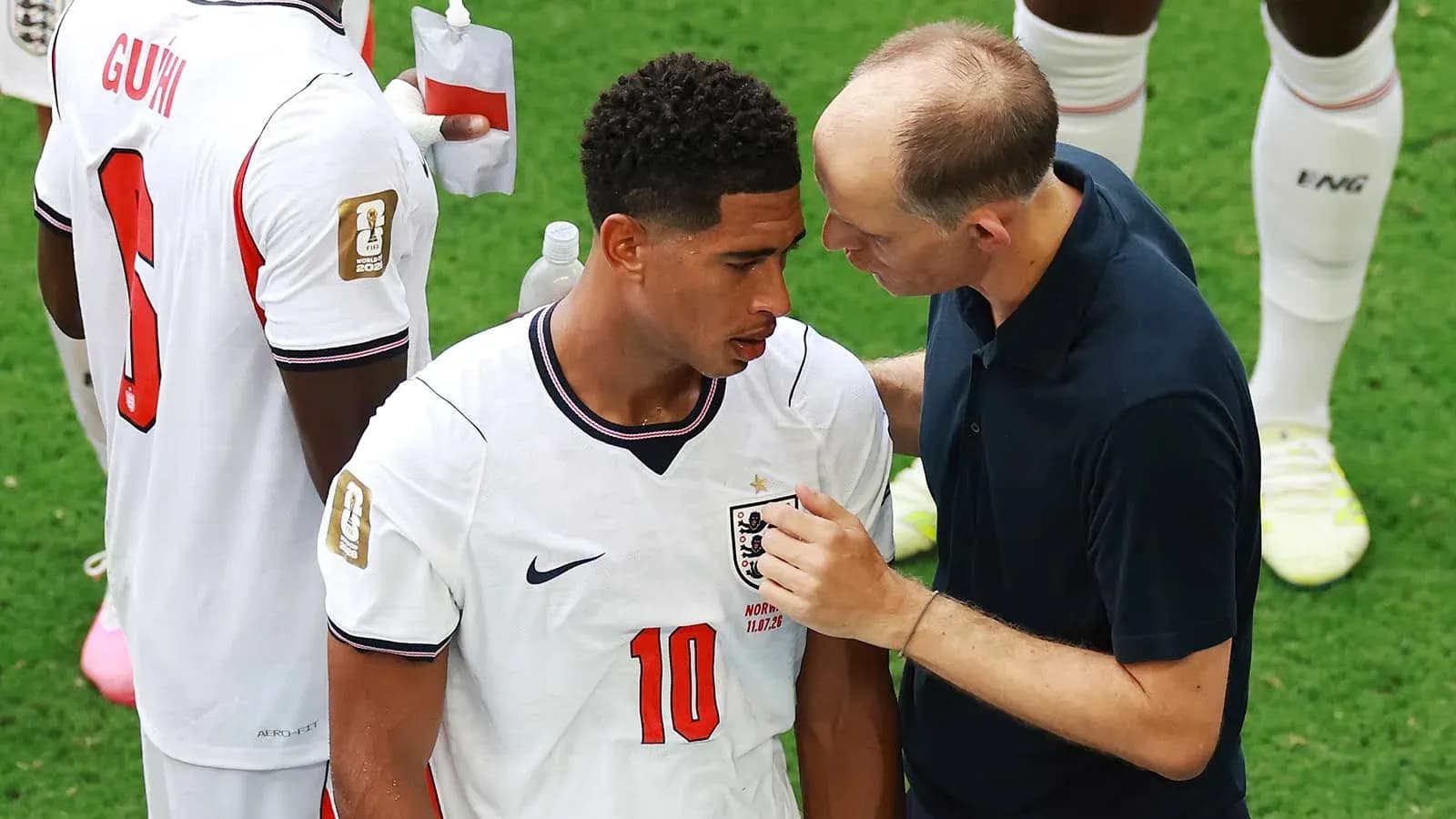
Thomas Tuchel walked into England’s semi-final week with a storm already swirling around him and his star midfielder. He insists it is all noise.
The relationship between the German coach and Jude Bellingham has been prodded and pulled apart for months, ever since Tuchel’s mother described some of the midfielder’s on-field antics as “repulsive” last summer. An apology followed. The story never really went away.
It flared again after England’s gruelling 2-1 extra-time win over Norway in the quarter-finals. England were through. The mood should have been buoyant. Tuchel cut against the grain.
He admitted he was “not happy with the team performance”, a blunt assessment after 120 minutes of knockout football. Bellingham, who had once more dragged his side through a tight game, pushed back in his own interviews, calling for more positivity from the coach.
For a camp already under the microscope, it was fuel on an old fire.
Tuchel moved quickly. The next day he gathered the squad, determined to suffocate the story before it grew legs ahead of the semi-final against Argentina.
“I wonder who blows these things up, eh?” he told talkSPORT. “So, there is nothing to blow up and if it's blown up, it's blown up in the media, of course.”
He was not there to chastise Bellingham. He was there to protect him.
Tuchel framed the midfielder’s reaction as the natural spillover from a brutal night.
“What do you expect of a player that just played 120 minutes and gave literally everything,” he said, explaining how a selective version of his comments had been put to Bellingham. The coach had praised him as “world class”, highlighted “world class actions”. Those parts never reached the player in the flash interview.
“If you just cut all this and tell him 'oh, your coach said you were sloppy' what do you expect?” Tuchel continued. “Yeah, of course you get the comment that you get and then you try to blow it up and people try to create misunderstandings and cracks where no cracks are.”
The theme was clear: context stripped, tension manufactured.
Tuchel stressed that both he and Bellingham are cut from the same competitive cloth.
“We come from the same place. We come from being competitive and I am a competitive coach. I push this team to the limit and that was my assessment,” he said. The problem, in his eyes, lay in the way the question was framed to his player.
“I think the question was unfair in this moment towards Jude because he cut all the compliments out of my assessment and just asked about the critical points, so I can understand. What do you expect of a player that just gave everything and stands there in front of a microphone in a flash interview?”
Bellingham, still hot from the game, had gone a step further. In his post-match comments he appeared to jab at Tuchel’s modest playing background, suggesting “maybe he doesn't know what it's like to play in those kind of conditions” or to face a striker of Erling Haaland’s level.
For many coaches, that would sting. Tuchel brushed it aside.
He dismissed the notion that his lack of an elite playing career undermines his authority or understanding of the game. The bond with Bellingham, he insisted, remains strong despite the public back-and-forth.
“It's just what it is but we're as close as ever, and close more than ever before,” he said. “You can see that on the field. The energy and mentality in camp is excellent in the last days and we are ready to go for it tomorrow.”
There is a sincerity when Tuchel talks about his path to the England dugout. He still carries the air of someone who never expected to be here.
“I would still like to have a player's career, that was my dream,” the former Chelsea manager admitted. “I never thought about being a coach, never dreamt about being a coach on that kind of level, so I think this is basically the dream.”
He described how the scale of it all still hits him on the touchline.
“I just feel also on the sideline very humbled, and from time to time it just strikes me on the sideline right before the match 'I couldn't play here on this occasion.'”
Yet humility does not drift into insecurity. Tuchel is adamant that tactical sharpness is not reserved for those who once dominated the pitch.
“I don't think that you have to play [to be a coach],” he said, before delivering the line that summed up his stance with a wry smile. “A funny quote, you don't have to be a horse to be a good jockey!”
On the eve of a semi-final against Argentina, the narrative around England could easily have been about a rift between coach and talisman. Tuchel has chosen a different story: a fiercely driven manager and an equally driven midfielder, occasionally clashing in public, but still pulling in the same direction when it matters most.
Related News
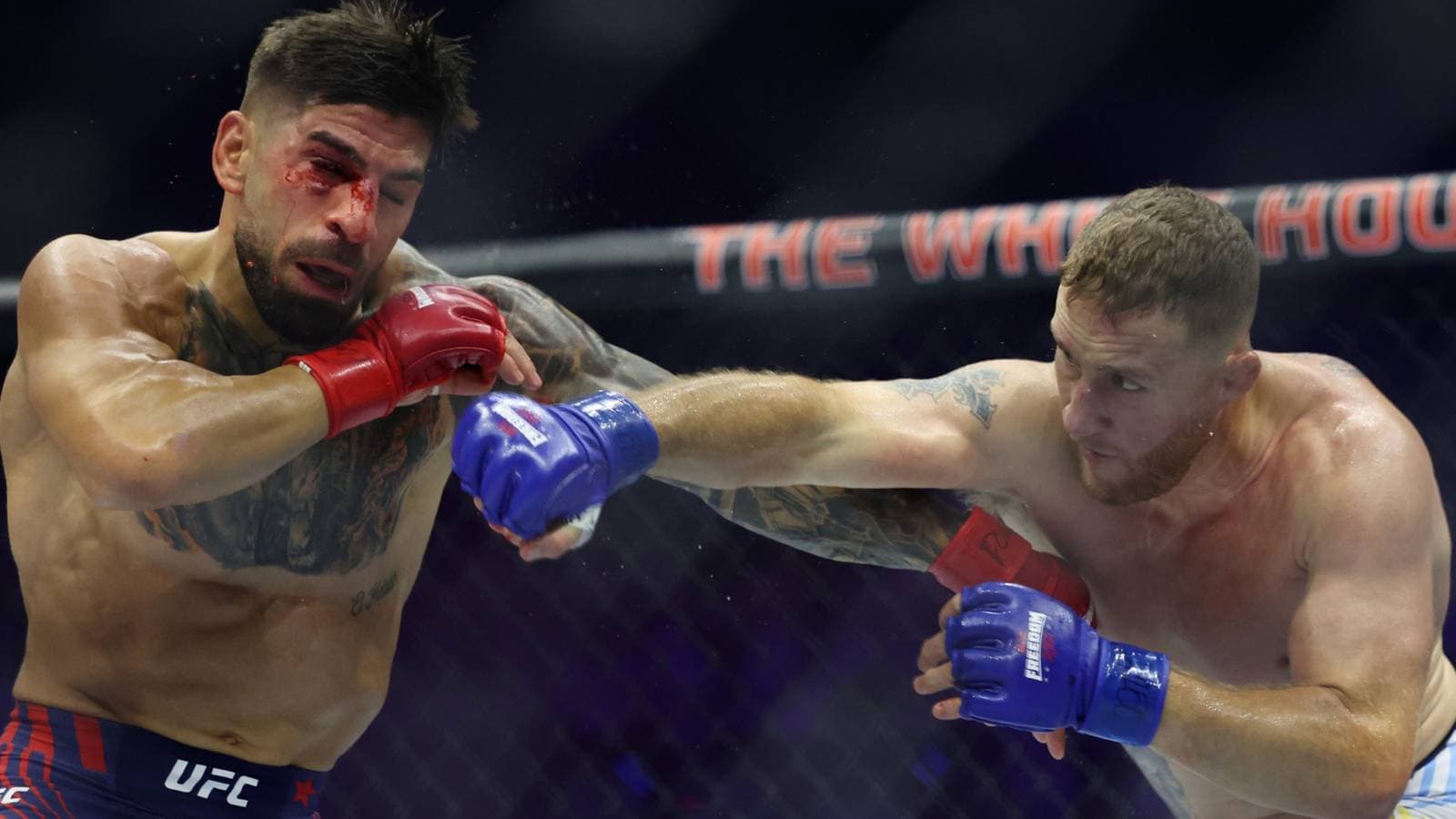
Ilia Topuria Accuses Justin Gaethje After UFC Defeat

Tyson Fury vs Anthony Joshua Fight Date and Venue Confirmed
Switzerland Calls Up In-Form Sion Striker Winsley Boteli for Nations League
Bournemouth Secures Historic 2-1 Win Over Real Sociedad in Spain
Portugal Announces Squad for 2026 UEFA Nations League; Cristiano Ronaldo Expected to Play

Raphinha Channels Ronaldo Nazario as Barcelona's Leading Striker After Position Change