
Tottenham's Ruthless Review After a Broken Season
Tottenham have started pulling apart the wreckage of their Premier League season. Not with a token statement or a glossy presentation, but with a full-scale internal inquest that stretches from the dressing room to the stadium turf itself.
They survived by two points. Two. On a final day played with a relegation shadow on the wall, only Roberto De Zerbi’s late surge – 11 points from the last six games – dragged them clear of a catastrophe that would have defined a generation. The club’s response has been blunt: almost everything is up for inspection.
A season that forced a reckoning
This was not a near-miss they could brush off as bad luck. Four head coaches in 12 months. A squad ravaged by injuries more than any other Premier League side. A sporting director whose position is now hanging by a thread.
Johan Lange, the man nominally in charge of the football operation, is under serious pressure. The Dane’s role is expected to change, possibly into a supporting or handover position, with Spurs actively hunting what they describe internally as a “world-class” sporting director to take control of a fractured structure.
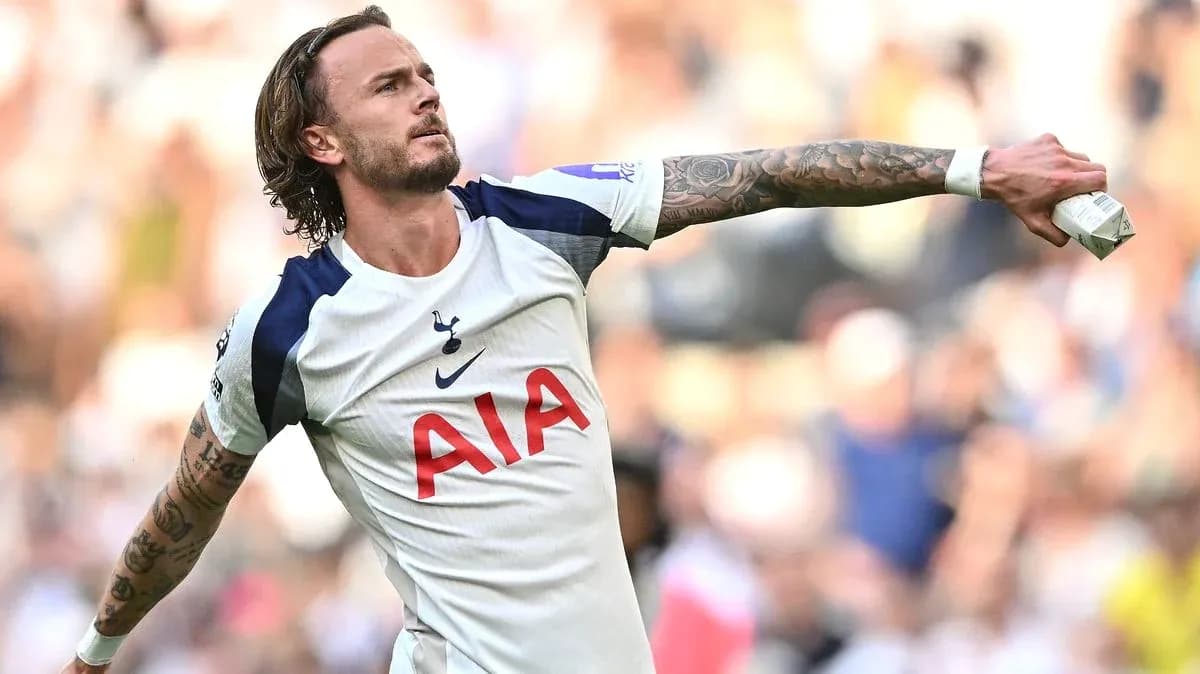
The numbers behind the crisis are brutal. Tottenham finished just above the trapdoor and did so while losing key players for long stretches. James Maddison, only recently back after a partially torn anterior cruciate ligament gave way completely last summer, did not sugarcoat it.
“Our situation with the injuries has been worse than any other club,” he said after the win over Everton. “People try and say ‘Oh, but we’ve got this and that’, but ours is astronomical, and we need to look at why that is.”
That line has become a mission statement. Spurs are now looking at everything.
Enter Dan Lewindon: the fixer
The man leading the overhaul is Dan Lewindon, the new performance director who arrived from the City Football Group in February. He walked through the doors at Hotspur Way the day before Thomas Frank left the club and quickly found a high-profile side operating with low-level cohesion.
The medical and performance departments, once a model of stability under Geoff Scott, have been in turmoil. Scott, who ran medicine and sports science for more than two decades, left in 2024 and is now at Nottingham Forest. His departure was followed by a rapid churn: director of performance services Adam Brett and head of sports science Nick Davies both exited after only a year in their posts.
Nick Stubbings came in last summer as the men’s medical lead, following Frank and a cluster of former Brentford staff across London. But it is Lewindon who has been handed the keys to redesign the system.
His background spans football, tennis and rugby at elite level. Spurs believe that blend of science, medicine and performance will finally tackle the injury crisis that has left them with double figures of absentees for long stretches across three straight seasons.
Crucially, De Zerbi has already clicked with him. The pair are said to be in regular dialogue about how to drag Tottenham’s medical and performance set-up up to the standard of the game’s super clubs. The head coach has found an ally who speaks his language: detail, marginal gains, individual care.
Non-executive chairman Peter Charrington has publicly backed the revolution, confirming plans to “modernise our football operation, with a significant focus on raising standards across medical and performance”. Inside the building, that’s not a slogan. It’s a threat to the status quo.
De Zerbi’s quiet authority
De Zerbi’s impact has not been limited to the touchline. The 46-year-old has impressed staff behind the scenes by refusing to gamble recklessly with players, even under intense pressure to get results in the run-in.
Those who have sat in meetings with him describe a coach who wants information, not excuses. He has pushed for detailed feedback before making calls on when to bring players back, repeatedly stressing the individual’s long-term health over the short-term chase for three points.
He has also taken on part of the psychological load himself. Frequent one-to-one meetings, video packages of players’ best moments at Spurs and former clubs, and a constant effort to rebuild shattered confidence underpinned that late-season revival. The message: you’re better than the table says you are.
But he knows that is not enough.
The pitch under the microscope
In a move that underlines the depth of the review, Spurs are even investigating their own pitch.
The Tottenham Hotspur Stadium’s retractable surface, which slides under the South Stand to allow NFL games and concerts, is being examined as a possible factor in a worrying run of serious knee injuries. The club has suffered five ACL injuries in recent years, a number senior figures accept is far too high.
Real Madrid, who also use a retractable pitch, have endured a similar spike. Tottenham do not want to write that off as coincidence.
Early independent tests on matchdays have so far shown no measurable difference in bounce or spring between the stadium surface and the training pitches at Hotspur Way. That has not closed the case. More detailed, long-term analysis is planned to probe whether anything in the mechanics or maintenance of the surface contributes to the problem.
Some injuries, they accept, are simply cruel. Xavi Simons and Wilson Odobert’s ACL problems fall into that category. The handling of Simons’ injury at Molineux, when he wanted to continue but could not, has been reviewed internally and backed. The view is that the physios acted with appropriate caution and did not worsen the damage.
Still, the pattern is too stark to ignore. So the club is refusing to.
Killing off ‘Spursy’: the mental reset
This is not just a story of muscles and ligaments. It is a story of mentality.
Tottenham have lived for years under the sneer of ‘Spursy’ – a label attached to their tendency to unravel under pressure. Lewindon has been a driving force behind a move to appoint a new lead psychologist to work full-time with players and the staff around them.
The brief is clear: help the squad handle the psychological strain of top-level football and break the cycle of self-doubt and collapse.
De Zerbi, again, is on board. He has told people inside the club that he sees himself as part-coach, part-psychologist. The individual meetings, the tailored video clips, the insistence on treating players as people first and athletes second – all of it feeds into a wider plan to harden a group that has too often wilted.
A new model: pods, trust and tougher profiles
One of Lewindon’s biggest structural changes will be the way Spurs manage injuries and recovery. The club is moving towards a pod-based model: small groups of four to six players surrounded by a dedicated physio and sports scientist.
Instead of staff being spread thinly across the entire squad, each pod will receive focused, almost bespoke attention. Like a teacher with fewer pupils, the idea is to build a deep understanding of each player – their body, their position, their training history, even their life off the pitch.
That should lead to smarter decisions on workloads, rehab and preparation. It also dovetails neatly with De Zerbi’s conviction that Tottenham must know their players as individuals – their families, their stresses, their tactical roles – if they are to push them to elite levels.
Trust is another fault line being addressed. At times, some players have leaned more on medics from previous clubs or their national teams than on Spurs’ own staff. That is not unusual in modern football, where many stars employ personal performance teams, but it can create confusion and conflicting advice.
Tottenham want to change the dynamic. The aim is a single, unified treatment and performance plan agreed by club staff, external specialists and international set-ups. One roadmap, multiple experts, no mixed messages.
Once Lewindon’s review is complete, personnel changes are expected. New voices, fresh ideas, tighter integration between departments. Recruitment strategy will not escape scrutiny either. There is an acceptance that Tottenham must target more robust players who can withstand the physical demands of De Zerbi’s intense style.
Paying the price for chaos
Inside the club, there is also a blunt admission: the managerial carousel has done damage.
Each new head coach brought different training methods, different physical demands, different expectations. Sessions changed, intensity spiked, and players, desperate to impress the new man, pushed themselves to and beyond their limits. The result was predictable – and painful.
Tottenham cannot afford a repeat. Not financially, not competitively, not emotionally.
They know that giving De Zerbi a fitter, more consistently available squad is the quickest way to ensure this season’s flirtation with disaster is not repeated. Nobody expects overnight miracles. Cultural and structural shifts of this scale take time to bed in.
But the direction is set. The excuses have been stripped away. The question now is not whether Spurs are willing to change, but whether this sweeping reset can finally turn a fragile club into one that stops breaking – in body and in mind – when it matters most.
Related News

Raphinha’s Hat-Trick Powers Barcelona to 7-2 Victory Over Racing Santander
Carabao Cup Fourth Round Draw: Liverpool Set to Clash with Chelsea, Arsenal to Face Fleetwood Town
Key Football Matches to Watch in Azerbaijan This Autumn
Raphinha's Hat-Trick Drives Barcelona to 7-2 Triumph Over Racing Santander
Hansi Flick Leads Barcelona to Record-Breaking Seven Wins in a Row
Gavi Reflects on Injury Return as Barcelona Dominate Racing Santander 7-2