
Terry Butcher champions Jude Bellingham as England's warrior
Terry Butcher knows what real blood and thunder looks like. He wore it.
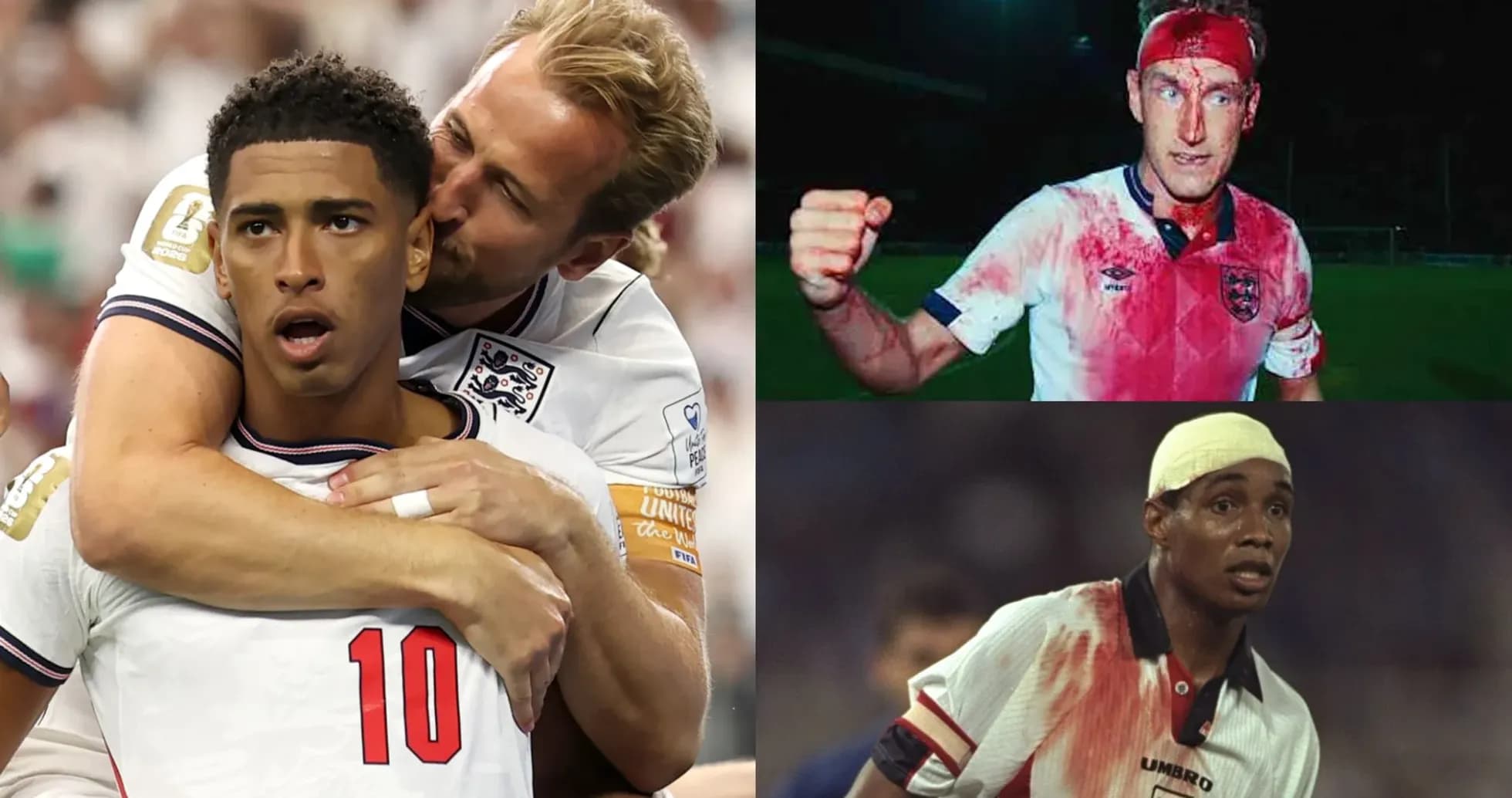
September 1989, Stockholm. England against Sweden. A clash of heads left the centre-half’s face split and his white shirt soaked. He refused a substitution. Refused a clean kit. By the end, the iconic Three Lions top had turned almost entirely red. The image became a symbol of an era when defenders didn’t just play through pain; they seemed to feed off it.
That night has followed Butcher ever since, a shorthand for a certain kind of English hardness. The same spirit people saw in Paul Ince, head bandaged and bloodied against Italy in Rome, dragging England to the 1998 World Cup. Stuart Pearce, snarling through tackles and penalties alike. Men who treated international football as a duty rather than a date in the diary.
So who carries that flame now?
Asked who in the current England setup would be willing to put everything on the line for the team, Butcher did not hesitate for long. Speaking as part of Domino’s “Shirtiette” campaign – which leans into the joy of getting messy in your colours – he landed on a name already central to the national conversation.
“The biggest warrior we've got at the moment? I’d probably say Jude Bellingham, someone like that,” he told GOAL.
Bellingham, 21 years old and already the heartbeat of this England side, fits the profile Butcher admires.
“He'd be more of a warrior, he does get worked up and he's fiery. I like that. Perhaps sometimes too fiery, but that's the way he plays. He lives on the edge sort of thing. He wants to put himself about and gets frustrated like everybody else. I think Jude would be the one for me.”
It is a striking endorsement. The man whose face once became a crimson banner for English resistance now looks at a generational talent in midfield and sees not just flair, but fight.
“The game is a different animal now”
Butcher is under no illusions: players like him, Ince and Pearce belong to a different footballing landscape.
“Yeah, it's faded out of the game because the game is a different sort of animal now,” he said when asked if that breed has been phased out. “It's more technical. It's more about ways of playing rather than just getting stuck in.”
He doesn’t say it with bitterness, more with the blunt realism that defined his playing days. The sport has moved on. Coaching is dominated by structure, patterns, “creating overloads and all the technical terms”, as he puts it. Full-blooded duels have been replaced by rehearsed rotations. The crunching tackle is now a risk calculation.
“There's no sort of real physicality in football. It's all about the technique,” he continued. The exception, in his eyes, comes from the chaos of dead balls. “The nearest that comes to our day is probably on set plays and particularly corners when everybody seems to take on a wrestling image and try and bundle people to the ground.”
He accepts much of this evolution as positive. Better pitches, better coaching, better understanding of player welfare. But he still believes something vital has been lost.
“The game has changed and you can see that it's changed for the better in many instances, but I just think a bit more physicality would certainly help. It certainly helps with the fans because the fans always like to see someone getting stuck in, but you can't do that now because you do run the risk. If you do intimidate players and if you do throw your weight around, then you're in danger of getting not a yellow card, but a red card.”
The blood-stained shirt that once made him a national icon would now be a trigger for immediate substitution and medical protocols. The warrior culture has been regulated, almost sanitised. Yet England, he argues, still need warriors – just in a modern form.
“No leaders at the back” – Butcher’s worry for England
England’s long wait for a major trophy has stretched into a seventh decade. With every near-miss, the conversation returns to character. Who leads? Who organises? Who takes responsibility when the pressure rises and the legs tighten?
Asked directly whether there is a commanding presence in the current defensive unit, someone capable of marshalling the back line and plugging leaks, Butcher was brutally clear.
“No, I don't think there is. I don't think there's been anybody there for a long, long time.”
He talks about a culture that has faded as much as any individual. In his day, accountability came with volume.
“I think gone are the days when you can speak harshly at players. I had Bryan Robson, he used to speak harshly at me if I did something wrong and then I'd have a go back at him if he did something wrong - but he didn't do anything wrong generally so I didn't have to go back at him! But you let your feelings be known vocally, very quickly and very strongly.”
That edge, that internal policing, feels diluted to him.
“Nowadays you don't do that,” he said. One of the reasons, he suggests, lies in the tactical shift at set plays. “Particularly on set plays, in the corners and free-kicks, they don't mark a specific opponent. They are zonal, so there's no need for them to shout or do anything else.”
The criticism cuts deeper than marking schemes.
“I think the way that football is now, players are too nice with each other. There's no one demanding more of each other. There's no leaders in the group. It's players and just a bunch of individuals getting on with it. They may say things in the dressing room, but on the pitch there doesn't seem to be anyone that really does shout and point a finger.”
There is one partial exception.
“[Jordan] Pickford does that sometimes and he points a finger. Not many in the England team do. It's just a case of getting on with their job and being the best that they can be themselves.”
For Butcher, that is not enough. He craves noise. Confrontation. Standards set in real time, not in post-match debriefs.
“I liked the vocal side. I enjoyed it. I enjoyed praising people as well as also shouting at them to urge them on, ‘come on lads’ and all that sort of thing. You see it occasionally, but not very often. I'd like to see it more.”
In an era of carefully curated brands and social media diplomacy, his words land like a challenge to a generation raised on different codes.
Bellingham, Rice, and life after Kane’s armband
Leadership for England right now is defined by Harry Kane. Record goalscorer, 81 and counting. Captain. Spokesman. The calm at the centre of every storm. But time moves quickly in international football, and the question of his eventual successor will not go away.
Could Bellingham, the fiery warrior in Butcher’s eyes, grow into that role?
“I was the captain of a few clubs and I used to kick doors down and I used to be vocal and I used to swear at referees and all these kinds of things. Not what you would really expect a captain to do, but that was what it was in those days,” Butcher admitted, drawing a sharp contrast between his era and the modern image of the armband.
He sees a pathway for Bellingham, but not yet.
“I think Bellingham will in time mature, particularly on the international scene. I think then he could be eligible for the captaincy. I think at the moment he's one of the lieutenants, one of the wingmen, he's underneath that captaincy level.”
Declan Rice, he suggests, looks the more obvious heir in the short term.
“Declan Rice would be an obvious candidate for a captaincy, particularly following in the footsteps of Harry Kane,” he said.
Yet Butcher suspects that moment might still be some way off. Kane, in his view, has years left at the top.
“Harry Kane could play forever. The way he's going about his business, the way he looks after himself, the way he behaves, he’s like [Cristiano] Ronaldo and he could play forever. Harry didn't have much pace to lose, but his brain seems sharper, his reactions seem sharper. I think that he's got a lot more to do.”
So the picture is clear. Kane as the enduring standard-bearer. Rice as the natural organiser. Bellingham as the explosive lieutenant, growing towards a future captaincy if his temperament refines with age.
What Butcher wants, above all, is for one of them – or all of them – to inject more visible authority into an England side he still views as too quiet when it matters.
New Jersey, new legends?
The next test arrives on Saturday. England close out their Group L campaign at the 2026 World Cup against Panama in New Jersey, a fixture that should be routine on paper but rarely feels that way in the reality of tournament football.
Kane will lead the line. Bellingham will roam and rage between the lines. Rice will anchor. Thomas Tuchel, in charge and under scrutiny, will demand not just control but a performance that stirs something both in the stadium and back home.
England do not just need results now. They need symbols. Nights that live beyond the scoreline. Images that stick in the mind the way Butcher’s bloodied shirt once did.
The game has changed. The laws have tightened. The shirts, thankfully, stay clean.
But on a hot night in New Jersey, with a World Cup group on the line and a nation restless for a trophy, someone in white will still have to show they are prepared to go where it hurts, take responsibility, and drag others with them.
Who wants to be that warrior now?
Related News
Raphinha’s Hat-Trick Powers Barcelona to 7-2 Victory Over Racing Santander
Carabao Cup Fourth Round Draw: Liverpool Set to Clash with Chelsea, Arsenal to Face Fleetwood Town
Key Football Matches to Watch in Azerbaijan This Autumn
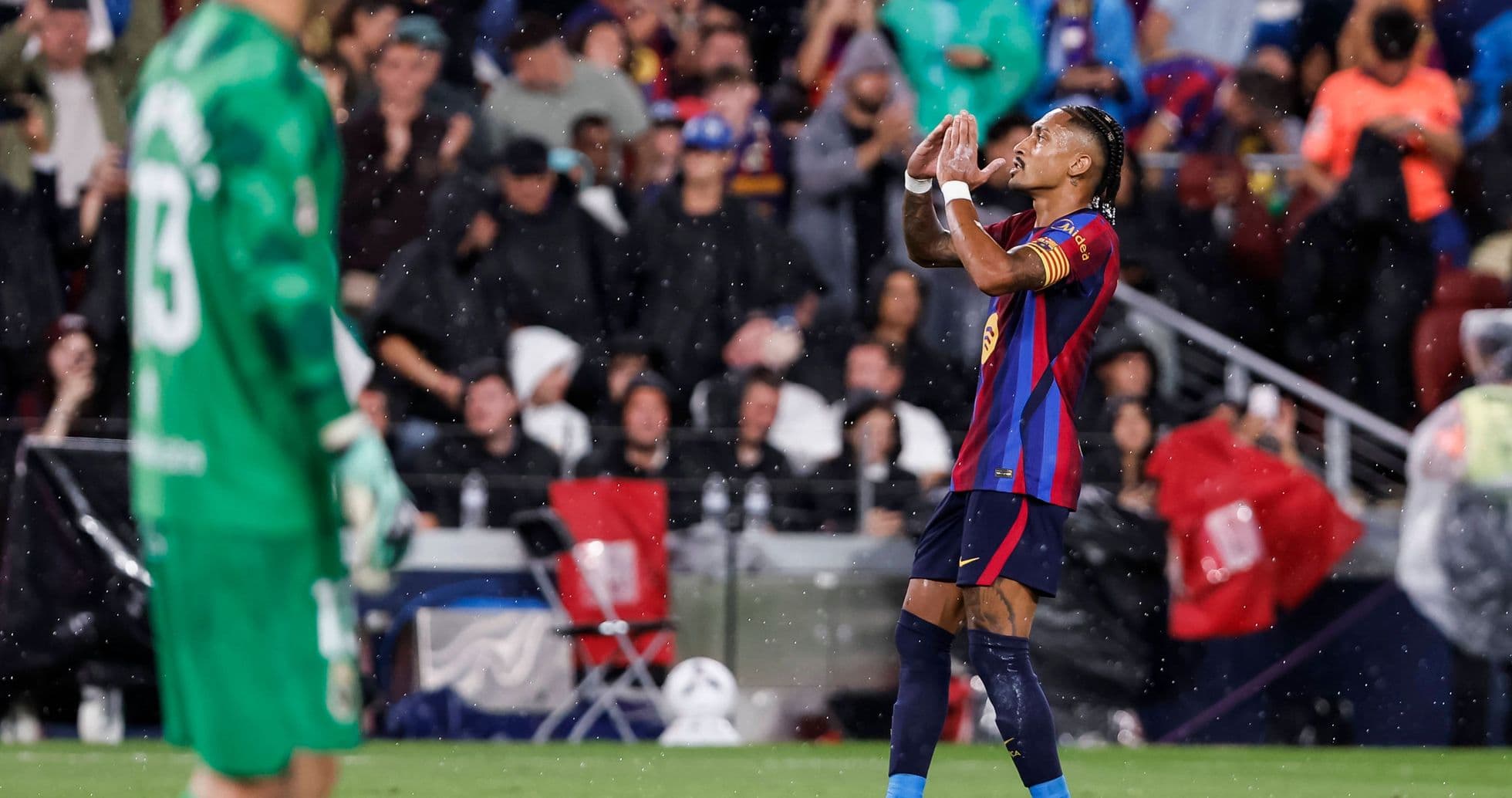
Raphinha's Hat-Trick Drives Barcelona to 7-2 Triumph Over Racing Santander
Hansi Flick Leads Barcelona to Record-Breaking Seven Wins in a Row
Gavi Reflects on Injury Return as Barcelona Dominate Racing Santander 7-2