
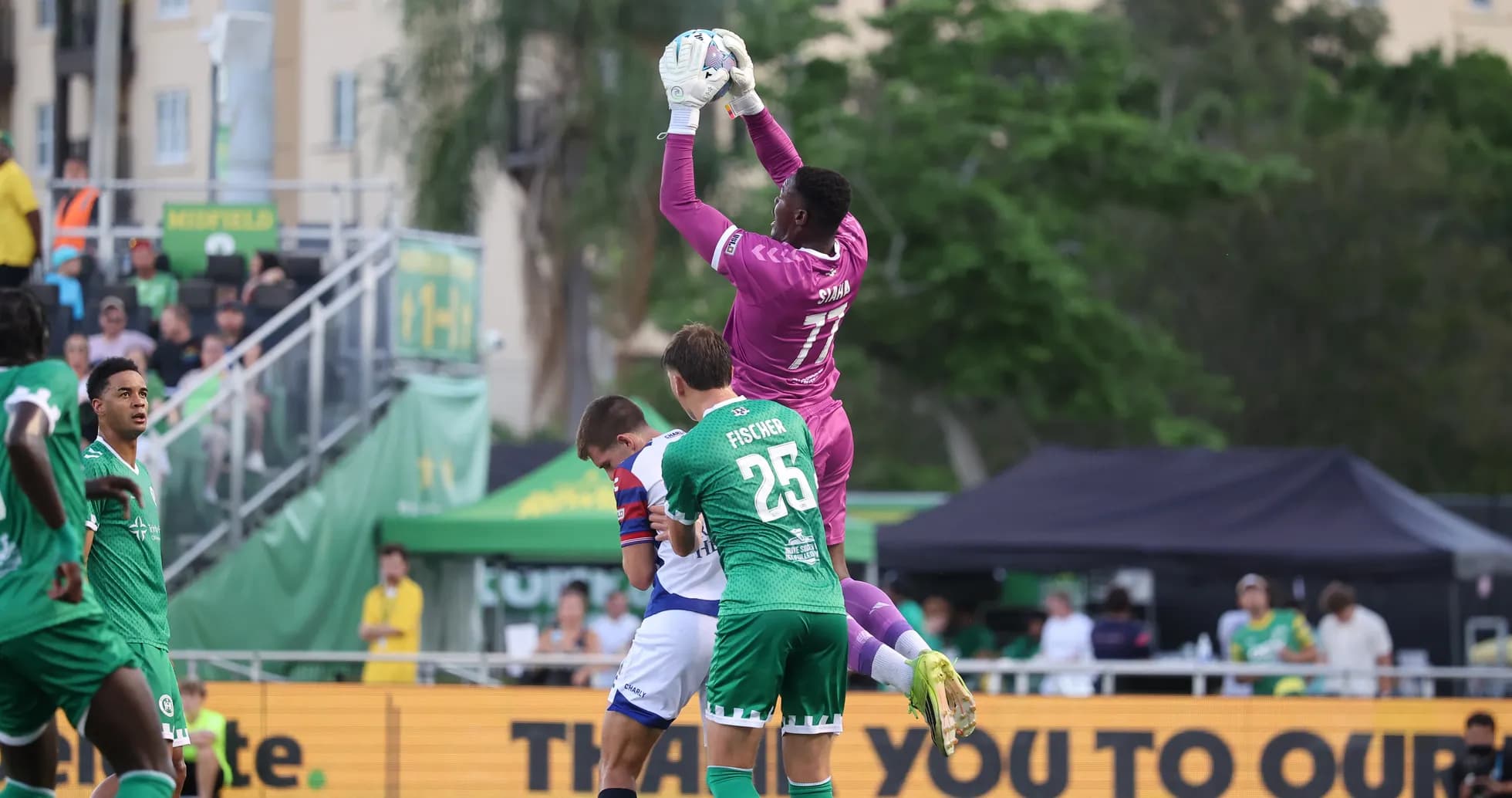
Tampa Bay Rowdies Stunned by Hartford Athletic in USL Championship Clash
On a humid night at Al Lang Stadium, the league leaders were reminded that group-stage football in the USL Championship offers no certainties. Tampa Bay Rowdies, top of USL 1 heading into this game with 28 points and a total goal difference of 13 (21 goals for, 8 against), were edged 1–0 by a Hartford Athletic side that arrived in St. Petersburg sitting 7th, compact, disciplined, and quietly efficient.
The fixture, finished in regular time under the watch of referee B. Jensen, split neatly along the fault line already visible in the standings. Tampa Bay’s season-long identity has been built on control and balance: overall they average 1.6 goals for and concede only 0.6, with a particularly sharp edge at home where they score 2.0 and allow 0.9. Hartford, by contrast, are more pragmatic: overall they score 0.9 and concede 0.9, but their strength lies on their travels, where they average 1.0 goal for and just 0.5 against. This was an away side built to frustrate, and over 90 minutes they did exactly that.
I. The Big Picture: Leaders Blunted, Travelers Rewarded
Tampa Bay’s form line of “WWWWDDWDWWWDL” tells the story of a side that rarely falters. At home, they had won 4, drawn 2, and lost only 1 of 7 heading into this game, with 14 goals scored and 6 conceded. Hartford’s away record, though, hinted at danger: 3 wins, 2 draws, and only 1 defeat from 6, with 6 goals scored and 3 conceded. This was not a mid-table side coming to bunker in; this was a playoff-chasing unit comfortable in hostile environments.
The starting XI from Dominic Casciato leaned into Tampa Bay’s technical core. A. Pack and S. Cruz anchored from deep, with B. Schaefer and N. Dossantos providing the defensive platform. In front of them, the creative axis of L. Perez, Pedro Becker, E. Conway, M. Micaletto and Mattheus was tasked with supplying M. Myers, the central reference point. It was a side designed to dominate territory, recycle possession, and gradually suffocate an opponent.
Brendan Burke’s Hartford, meanwhile, came with a clear away-day blueprint. A. Siaha in goal was shielded by a rugged line featuring A. Diz, J. Scarlett, B. Fischer and B. Njie. Ahead of them, J. Moreira and S. Anderson offered defensive industry, while S. Careaga and B. Coffey provided connective tissue in midfield. Out wide, E. Samadia and M. Ngalina were the out-balls and counter threats, the players meant to turn rare transitions into decisive moments.
II. Tactical Voids and Discipline: Margins in the Dark Arts
With no official list of absentees, both coaches appeared close to full strength, which made the tactical choices more revealing. Casciato opted for a heavily possession-oriented unit, but the Rowdies’ season-long disciplinary pattern hinted at a vulnerability in games where they chase. Their yellow-card profile shows a clear late-game surge: 24.32% of their cautions arrive between 76–90 minutes, with another 21.62% from 61–75. When matches get stretched, Tampa Bay get edgy.
Hartford’s card distribution is even more telling. They spike in three key windows: 46–60 (21.43%), 76–90 (21.43%), and 91–105 (21.43%), suggesting a team that walks the tightrope in the second half. More significantly, their red-card data shows dismissals clustering late, with 50.00% of reds between 76–90 and 50.00% between 91–105. They live dangerously when protecting leads.
In this match, Hartford’s ability to manage that edge without tipping into chaos was central. They absorbed pressure without giving away the kind of reckless challenges that might have handed Tampa Bay a route back, especially in the closing stages where the Rowdies’ frustration usually spikes.
III. Key Matchups: Hunter vs Shield, Engine Room vs Enforcer
The “Hunter vs Shield” narrative here was structural rather than individual, with no top-scorer data to spotlight a single marksman. Tampa Bay’s attack, averaging 2.0 goals at home, is usually varied and multi-sourced. Hartford’s away defence, conceding only 0.5 per game on their travels, is one of the league’s most miserly units. That collision defined the night.
At the back for Hartford, J. Scarlett and B. Fischer formed the core of the “Shield”. Their task was to track the movements of M. Myers and deny him clean touches in the box, while full-backs A. Diz and B. Njie had to step out to confront the creative half-spaces where L. Perez and M. Micaletto like to operate. The visitors’ season-long record of 4 away clean sheets from 6 matches underlined that this was not a one-off rearguard; this is a system drilled to close lanes and compress space.
In the “Engine Room”, the duel between Tampa Bay’s technical midfield and Hartford’s combative core was decisive. Pedro Becker and Mattheus sought to dictate rhythm, threading passes between the lines, while E. Conway and L. Perez looked to drift into pockets and pull markers out of shape. For Hartford, J. Moreira and S. Anderson were the enforcers, tasked with breaking up play and channelling Tampa Bay’s possession into less dangerous zones. S. Careaga and B. Coffey added the connective passes that turned clearances into structured counters, often using the pace and directness of M. Ngalina and E. Samadia to stretch the field.
Hartford’s success lay in keeping Tampa Bay’s creators facing away from goal. Without space between the lines, Myers was frequently isolated, and the Rowdies’ usual multi-angle attacks were reduced to hopeful deliveries and shots from distance.
IV. Statistical Prognosis and What Comes Next
From a statistical lens, Tampa Bay’s total profile still screams contender. Overall, they have 8 wins, 4 draws and just 1 loss from 13, with 7 clean sheets and only 1 match in which they have failed to score. Hartford, though, are built for nights like this: 4 wins, 5 draws and 2 losses from 11 overall, 6 clean sheets, and a defensive structure that travels exceptionally well.
Following this result, the xG balance—though not explicitly provided—would logically tilt toward Tampa Bay in volume, but Hartford’s model is based on shot quality, not quantity. Their away defensive average of 0.5 goals conceded, married to an attack that is opportunistic rather than prolific, makes them a classic knockout-style spoiler even in a group-stage context.
Tactically, Tampa Bay will look at this as a warning. When denied early breakthroughs, their late-game card spikes and emotional load can blunt their precision. Hartford, on the other hand, leave Al Lang Stadium with their identity reinforced: compact, disciplined, and ruthlessly effective on their travels.
In a playoff-bracket imagination, this reads like a 1/8 final rehearsal. The league leaders learned that control does not always equal victory; Hartford proved that in the margins between structure and suffering, a single goal can redraw the narrative of a night.
Related News
San Antonio Triumphs Over Colorado Springs in USL Championship Clash
Charleston Battery's Dominance Over Loudoun United: A Tactical Analysis
Orange County SC Triumphs 4-2 Over Miami FC in USL Showdown
Colorado Springs vs San Antonio Match Preview
Colorado Springs vs San Antonio: USL Championship Clash Preview
Miami FC vs Orange County SC Match Preview