
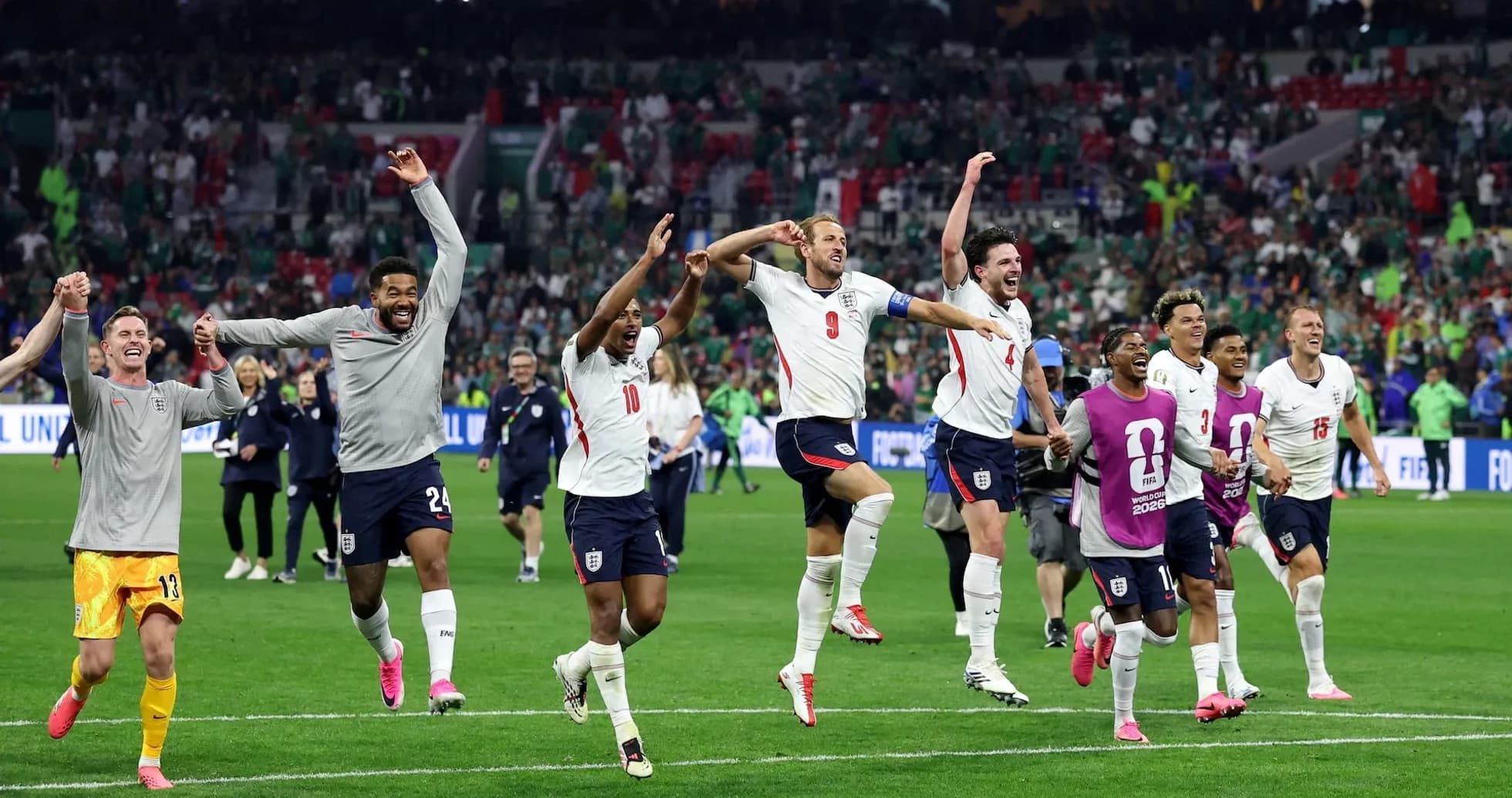
Tactical Analysis: Mexico vs England at Estadio Azteca
Mexico’s 3-2 defeat to England at Estadio Azteca was a tactical paradox: Mexico controlled territory, tempo and the ball, yet England controlled the scoreboard and key moments. Across 90 minutes in this World Cup Round of 16 tie, the game became a study in how structure in possession can be undone by transition vulnerability and elite individual quality.
Mexico lined up in a 4-3-3 under Javier Aguirre, with Raúl Rangel in goal behind a back four of Jorge Sánchez, César Montes, Johan Vásquez and Jesús Gallardo. The midfield trio of Gilberto Mora, Erik Lira and Luis Romo was designed to secure central control and feed an aggressive front three of Roberto Alvarado, Raúl Jiménez and Julián Quiñones. The structure worked with the ball: Mexico finished with 67% possession, 455 passes and a 92% pass completion rate (420 accurate), reflecting a patient, technically secure approach that tried to progress methodically through the thirds.
England, under Thomas Tuchel, set up in a 4-2-3-1 that was far more oriented toward compactness and vertical threat. Jordan Pickford (England) anchored a back line of Jarell Quansah, Ezri Konsa, Marc Guéhi and Nico O’Reilly, screened by the double pivot of Declan Rice and Elliot Anderson. Ahead of them, Bukayo Saka, Jude Bellingham and Anthony Gordon supported Harry Kane as the lone striker. With only 33% possession and 244 passes (195 accurate, 80%), England ceded the ball by design, but their structure was built to spring quickly into space once they regained it.
The statistical shot profile underlines the tactical story. Mexico generated 20 total shots to England’s 6, with 12 of Mexico’s efforts coming inside the box. Yet both teams recorded 5 shots on target. England took just 4 shots inside the box, but their chance quality was high and ruthlessly exploited. Mexico’s 7 blocked shots show how often England’s low block and last-line defending managed to get bodies in front of efforts, even as Mexico probed around the area.
Expected goals (xG) reinforce how fine the margins were: Mexico’s xG of 1.87 versus England’s 1.55 suggests a contest that, on underlying chances, was close and arguably slightly tilted toward Mexico. However, England’s finishing efficiency and composure from Bellingham and Kane turned a marginal xG edge for Mexico into a decisive scoreboard advantage. Both goalkeepers posted the same goals prevented figure (-0.15), indicating that neither Raúl Rangel (Mexico) nor Jordan Pickford (England) significantly outperformed or underperformed the quality of shots faced; the difference lay in shot selection and execution further up the pitch.
In possession, Mexico’s 4-3-3 often morphed into a 2-3-5 in attack. The full-backs, Sánchez and Gallardo, pushed high to pin England’s wingers, while Mora and Lira formed a platform behind Romo, who stepped into the right half-space. Quiñones and Alvarado held wide positions, with Jiménez occupying the central defenders. This spacing created sustained pressure and a barrage of crosses and cut-backs, reflected in Mexico’s 12 corner kicks to England’s 2. Yet, despite the territorial dominance, Mexico struggled to consistently disorganize England’s compact central block, often being forced into lower-value shots or blocked efforts from crowded zones.
England’s defensive scheme was clear: a narrow 4-4-1-1 out of possession, with Bellingham dropping close to Rice and Anderson to crowd the middle. The back four stayed relatively deep, minimizing the space behind for Quiñones and Alvarado. When England won the ball, their first look was forward into Kane’s feet or into the channels for Saka and Gordon. This directness is visible in the low shot volume but high efficiency: England needed only 6 shots to score 3 times.
The early yellow card for Rice for “Roughing” at 1' did not fundamentally alter England’s midfield aggression, but it did encourage slightly more conservative pressing, with England choosing their moments rather than engaging in constant duels. The red card to Quansah for “Serious foul” at 54' forced a structural adjustment: Tuchel reshaped the back line and sacrificed attacking width, bringing John Stones on for Saka and later Djed Spence for O’Reilly. England effectively transitioned into a deeper, more compact low block, protecting the central lane and inviting Mexico to attack from wide areas, trusting Guéhi, Konsa and the full-backs to deal with crosses.
Mexico’s substitutions were clearly aimed at increasing attacking punch and central penetration. Edson Álvarez for Montes at 46' signaled a shift toward an even more aggressive midfield presence, with Álvarez stepping into build-up and allowing full-backs to remain high. The double change at 61'—Santiago Giménez for Mora and Brian Gutiérrez for Romo—tilted the structure toward a 4-2-4 in many phases, with dual strikers (Jiménez and Giménez) and wide threats occupying England’s back line. Later introductions of Álvaro Fidalgo for Sánchez and Guillermo Martínez for Quiñones added fresh legs and technical quality but did not fundamentally change the pattern: Mexico camped in England’s half, England defended the box.
Discipline became a secondary tactical layer. Mexico’s 14 fouls to England’s 7 reflect their urgency in counter-pressing and their attempts to stop transitions at source. The yellow cards to Sánchez and Vásquez for “Unsportsmanlike conduct” late on underlined a rising frustration as Mexico chased the game. England, meanwhile, accumulated four yellows and a red, but their fouls were often tactical, breaking rhythm and slowing Mexico’s momentum when necessary.
In goal, Raúl Rangel (Mexico) made 2 saves, while Jordan Pickford (England) made 3. Given the shot-on-target parity (5 each), England’s back line did more work in front of their goalkeeper—through blocks and forcing lower-quality angles—while Mexico’s higher defensive line and more open structure in transition left Rangel exposed to fewer but clearer English chances.
Ultimately, the statistical verdict is stark: Mexico’s dominance in possession (67%), shots (20–6), corners (12–2) and passing accuracy (92% vs 80%) did not translate into progression. England, with less of the ball and fewer actions in the final third, converted their 1.55 xG into three goals and survived with 10 men. This match at Estadio Azteca becomes a textbook example of how control of space, transition sharpness and penalty-box efficiency can outweigh territorial and statistical control in knockout football.
Related News

Thomas Tuchel Reflects on England's 10-Man World Cup Triumph and a Surprising Regret

Robert Moreno Takes Over as Interim South Korea Coach After World Cup Setback

Jude Bellingham Returns to Form with Real Madrid After World Cup Success

Chloe Kelly, Beth Mead & 13 Lionesses Who Must Shine in the Upcoming WSL Season for England’s 2027 World Cup Bid

Barcelona Cancels World Cup Tribute Amid Political Tensions
Messi Breaks Record for Most Penalties Taken and Missed in FIFA World Cup History